
Why “Dry Skin” Is Often More Than Just Dryness
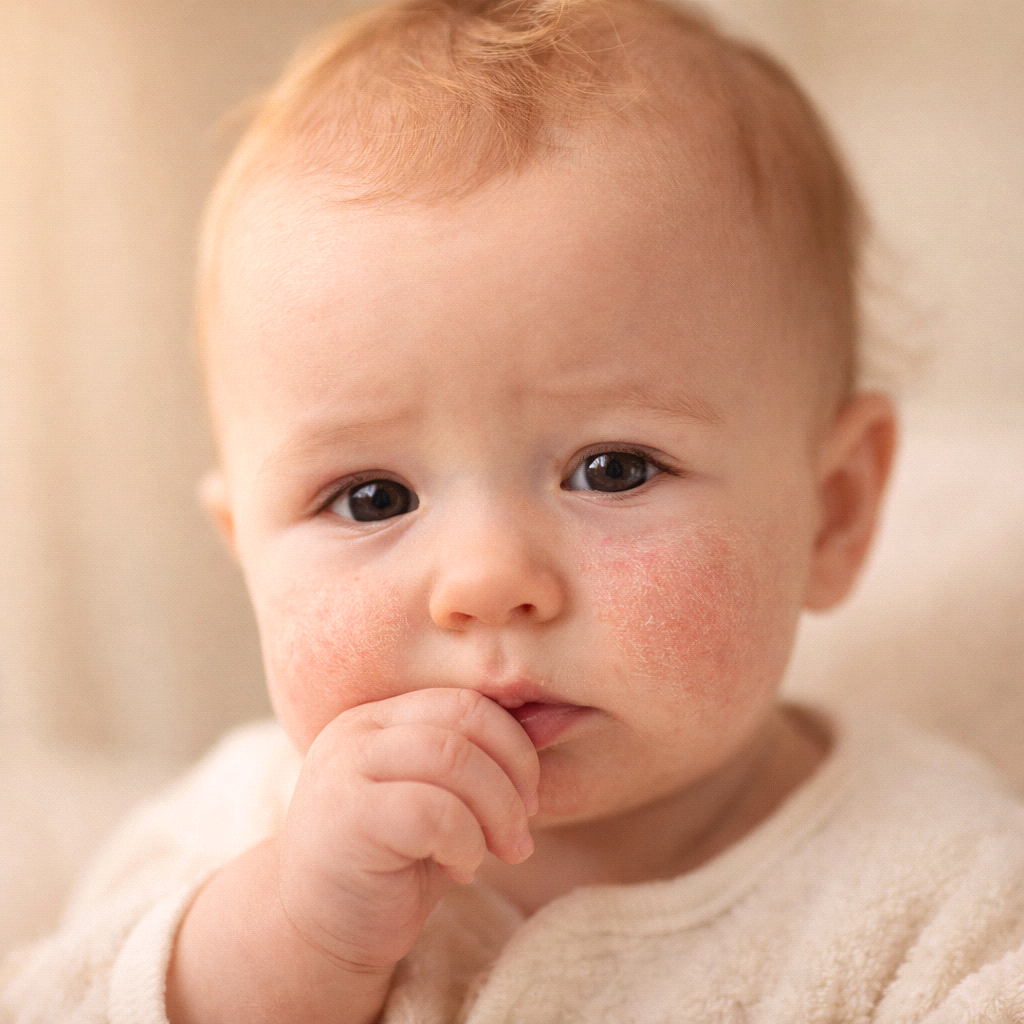
When your baby’s skin first starts feeling rough, flaky, or a little tight, your first reaction is usually the same as every other parent’s. You look at the dry patches and think, “It’s probably just dry skin.” Maybe you pick up a baby lotion from the supermarket or use the moisturiser recommended by your midwife or pharmacist. After all, we’ve always been told that dry skin simply needs more moisture. It sounds logical, it’s reassuring, and in many cases it’s exactly the advice parents receive from the very beginning. The assumption is simple: apply a good cream, keep the skin moisturised, and everything should gradually settle down.
Sometimes that’s exactly what happens. But for many babies, the story doesn’t end there. The dryness keeps coming back, new patches begin to appear, or the skin gradually becomes more sensitive over time. What initially looked like a minor inconvenience slowly becomes something that demands far more attention than anyone expected. Parents often find themselves buying one product after another, hoping each new cream will finally be the one that makes a lasting difference.
The surprising reality is that what looks like ordinary dry skin is often the body’s first way of telling us that something deeper is happening. The skin may be showing early signs that its protective barrier isn’t functioning as well as it should. At the same time, the baby’s developing immune system, skin microbiome, gut, and surrounding environment may all be influencing how the skin behaves. Long before eczema becomes obvious, these systems are already interacting with one another behind the scenes. By the time the familiar red, itchy rash appears, the underlying process has often been developing quietly for weeks or even months.
Research over the past decade has completely changed the way scientists think about baby eczema. Studies following babies from birth have found that increased water loss through the skin often occurs long before visible eczema develops. Babies who appear to have “just dry skin” may already be experiencing subtle changes in their skin barrier, immune activity, and microbial balance. These changes are usually invisible to the naked eye, yet they can influence how the skin responds as a child grows. In other words, dry skin isn’t always the beginning of the problem—it may be the first visible sign that the process has already started. That is a very different way of looking at what many parents have always considered a simple cosmetic issue.
The numbers tell a similar story. Around 15 to 20 percent of babies in many parts of the world develop eczema, and the number continues to rise. Most cases begin before six months of age, often starting with nothing more than dry, sensitive skin. Researchers now describe what they call a pre-clinical stage, where measurable changes are already occurring before eczema becomes obvious. During this early stage, the skin barrier becomes weaker, moisture escapes more easily, and the immune system begins responding differently to the outside world. By recognising these early changes, researchers hope to better understand why some babies develop ongoing skin problems while others do not.
This doesn’t mean parents should panic every time they notice dry skin. In fact, dry skin is extremely common in newborns because their skin is still adapting to life outside the womb. During the first year of life, the skin barrier continues to mature, natural moisturising factors increase, and the protective fats within the skin gradually become more organised. For many babies, this process happens smoothly and the dryness settles naturally over time. But for others—particularly those with a family history of eczema, allergies, or asthma—that development may be less straightforward. Their skin barrier can remain more fragile, allowing moisture to escape while making it easier for irritants, allergens, and microbes to enter.
Once the skin barrier becomes compromised, a cycle often begins. The skin loses water more quickly, making it feel dry and tight. Dry skin becomes irritated more easily, leading to inflammation that weakens the barrier even further. That weakened barrier allows even more moisture to escape, creating the perfect conditions for itching, scratching, and repeated flare-ups. Over time, what started as simple dryness can develop into a frustrating cycle that feels increasingly difficult to break. Understanding that cycle is one of the first steps toward understanding eczema itself.
This broader perspective also helps explain why moisturisers sometimes seem to work brilliantly for a while before their effect gradually fades. Moisturisers play an essential role in supporting the skin barrier, and for many babies they make a significant difference. However, if other factors such as immune activity, microbial balance, or environmental triggers continue placing stress on the skin, moisturisers alone may not be enough to create lasting stability. That doesn’t mean the cream has failed. It simply means the skin may need support that goes beyond replacing lost moisture.
The encouraging news is that this isn’t a reason to feel discouraged—it’s actually a reason to feel hopeful. Most babies with dry or sensitive skin never go on to develop severe eczema. Their skin barrier continues to strengthen, their immune system matures, and their bodies become better equipped to deal with the outside world as they grow. Understanding why dryness occurs simply gives parents the opportunity to support that process more effectively. Instead of seeing dry skin as something to hide or temporarily soften, it becomes something worth paying attention to because it may be providing valuable information about your baby’s developing skin.
Ready to Look Beyond the Skin?
If this article has changed the way you think about baby eczema, I invite you to continue the journey by downloading my free ebook, Beyond the Skin Barrier. It explains the science behind baby eczema in simple, practical language and explores how the skin barrier, immune system, gut, microbiome, and environment work together to influence your child’s skin health. You’ll also learn about the philosophy behind the Itch-A-Bye™ Skin Trifecta Method™ and why taking a broader view of eczema can help parents make more informed decisions. The book is completely free and has been written specifically for parents who want to understand why their child’s skin behaves the way it does—not just how to manage the next flare-up. If you’re ready to move beyond guesswork and gain a deeper understanding of your child’s skin, download your free copy today. Visit www.itchabye.com/free-book and start reading Beyond the Skin Barrier.