
Baby Skin Isn’t Just Smaller Adult Skin – Here’s Why That Matters
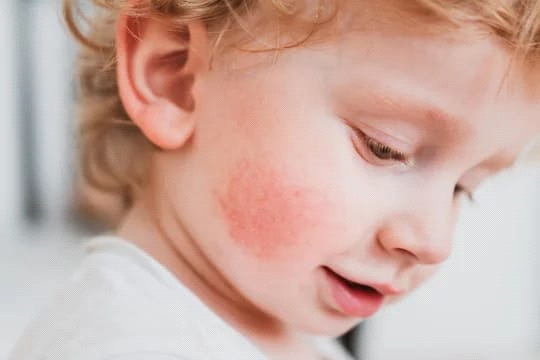
When you look at your baby’s skin, it’s easy to assume you’re simply looking at a smaller version of your own. It feels soft, delicate, and incredibly smooth, so it seems reasonable to think it works in much the same way as adult skin. In reality, nothing could be further from the truth. Baby skin is built differently because it has an entirely different job to do during the first months of life. It is making one of the biggest transitions the human body will ever experience, from floating safely in warm amniotic fluid to suddenly facing air, clothing, changing temperatures, soaps, microbes, and countless new environmental challenges. That remarkable transition means your baby’s skin is still under construction, learning how to protect itself while adapting to a completely new world.
During those first weeks after birth, your baby’s skin is surprisingly vulnerable. The outermost layer of the skin, known as the skin barrier, is thinner than it is in adults and has not yet fully matured. Scientists often describe this barrier as being built like a brick wall, where the skin cells are the bricks and special fats act as the mortar that holds everything together. Those fats include important substances such as ceramides, cholesterol, and free fatty acids. In newborns, there is simply less of this protective “mortar,” and what is present has not yet organised itself into the strong, waterproof barrier found in older children and adults. Research has shown that it can take several months before these protective fats reach the balance needed to create a fully functioning skin barrier.
One of the easiest ways researchers measure how healthy that barrier is involves something called transepidermal water loss, or TEWL. While the name sounds technical, the idea is actually quite simple. It measures how much water naturally escapes through the skin into the air. Healthy skin holds moisture inside while allowing only a small amount of water to evaporate. Newborn skin, however, loses water much more quickly, sometimes two or three times faster than adult skin, even when it looks perfectly healthy. Studies have found that babies with higher water loss shortly after birth are more likely to develop eczema and other skin problems later in infancy, suggesting that the skin barrier may already be under strain before parents notice any visible symptoms.
Another important part of healthy skin is something parents rarely think about; its natural acidity. While a baby is growing inside the womb, the skin has a nearly neutral pH. After birth, however, the skin gradually becomes mildly acidic, usually reaching a pH between 4.5 and 5.5. This slight acidity plays a surprisingly important role because it helps organise the protective skin fats, supports beneficial bacteria, discourages harmful microbes, and allows old skin cells to shed naturally. When the skin remains too alkaline, whether from harsh soaps or other factors, the barrier becomes weaker and less efficient at protecting the body. Over time, that weaker barrier makes it easier for irritation, inflammation, and unwanted bacteria to gain a foothold.
The skin also depends on a remarkable protein called filaggrin, although most parents have never heard its name. Filaggrin helps keep skin cells tightly packed together and eventually breaks down into tiny molecules that act like natural sponges, drawing water into the skin and helping it stay hydrated. Some babies inherit changes in the gene responsible for producing filaggrin, making them more likely to experience dry skin and eczema. However, genetics are only part of the story. Many babies without these genetic changes still develop dry, sensitive skin, reminding us that environmental influences, early life experiences, and the developing skin barrier all play important roles as well. Healthy skin is shaped by far more than a baby’s DNA alone.
This explains why a little dryness immediately after birth is often perfectly normal. During the first weeks and months of life, your baby’s skin is actively building stronger defences and becoming better equipped to cope with the outside world. For many babies, that development happens naturally and the dryness gradually disappears without causing further problems. For others, however, the process doesn’t progress quite as smoothly. When the skin continues losing moisture too quickly, or the barrier struggles to mature properly, dryness may persist and become the first visible sign that the skin needs additional support. In many cases, the dryness itself isn’t the problem, it is simply the earliest clue that the barrier is still struggling to do its job.
Researchers have been able to observe this process by following babies from birth through their first year of life. Interestingly, babies who later developed eczema often showed subtle differences long before any obvious rash appeared. Their skin lost more water, the protective fats developed more slowly, and the normal turnover of skin cells was altered, even in areas that appeared perfectly healthy. In other words, the visible eczema was only the final chapter of a story that had already been unfolding beneath the surface for months. By the time redness and itching appeared, the skin barrier had often been under pressure for quite some time.
Some babies begin life with even greater challenges. Babies born prematurely have an even thinner skin barrier, sometimes consisting of only a few layers of skin cells, making water loss significantly higher than in full-term infants. Even babies born at full term may experience delays in skin development if they were delivered by caesarean section, received antibiotics shortly after birth, or were formula-fed instead of breastfed. These early experiences can influence how the skin and gut become colonised by beneficial microbes that help guide the development of both the immune system and the skin barrier. None of these factors guarantees that a baby will develop eczema, but together they help explain why every baby’s skin journey is unique.
Perhaps the most important lesson is that your baby’s skin is not passively sitting there becoming dry. It is actively learning, adapting, and building one of the body’s most important protective systems. Every day, it is responding to new environments, new microbes, changing temperatures, clothing, bathing routines, and countless other experiences. When that construction process is interrupted, dryness is often the very first signal parents notice. Rather than seeing dry skin as nothing more than a lack of moisture, it helps to recognise it as part of a much bigger developmental story. Understanding that story allows parents to care for their baby’s skin with greater confidence and a much clearer sense of what the skin is actually trying to achieve.
Ready to Look Beyond the Skin?
If this article has changed the way you think about baby eczema, I invite you to continue the journey by downloading my free ebook, Beyond the Skin Barrier. It explains the science behind baby eczema in simple, practical language and explores how the skin barrier, immune system, gut, microbiome, and environment work together to influence your child’s skin health. You’ll also learn about the philosophy behind the Itch-A-Bye™ Skin Trifecta Method™ and why taking a broader view of eczema can help parents make more informed decisions. The book is completely free and has been written specifically for parents who want to understand why their child’s skin behaves the way it does—not just how to manage the next flare-up. If you’re ready to move beyond guesswork and gain a deeper understanding of your child’s skin, download your free copy today. Visit www.itchabye.com/free-book and start reading Beyond the Skin Barrier.