
Why “Just Moisturise” Isn’t the Whole Answer: Looking Beyond Dry Skin
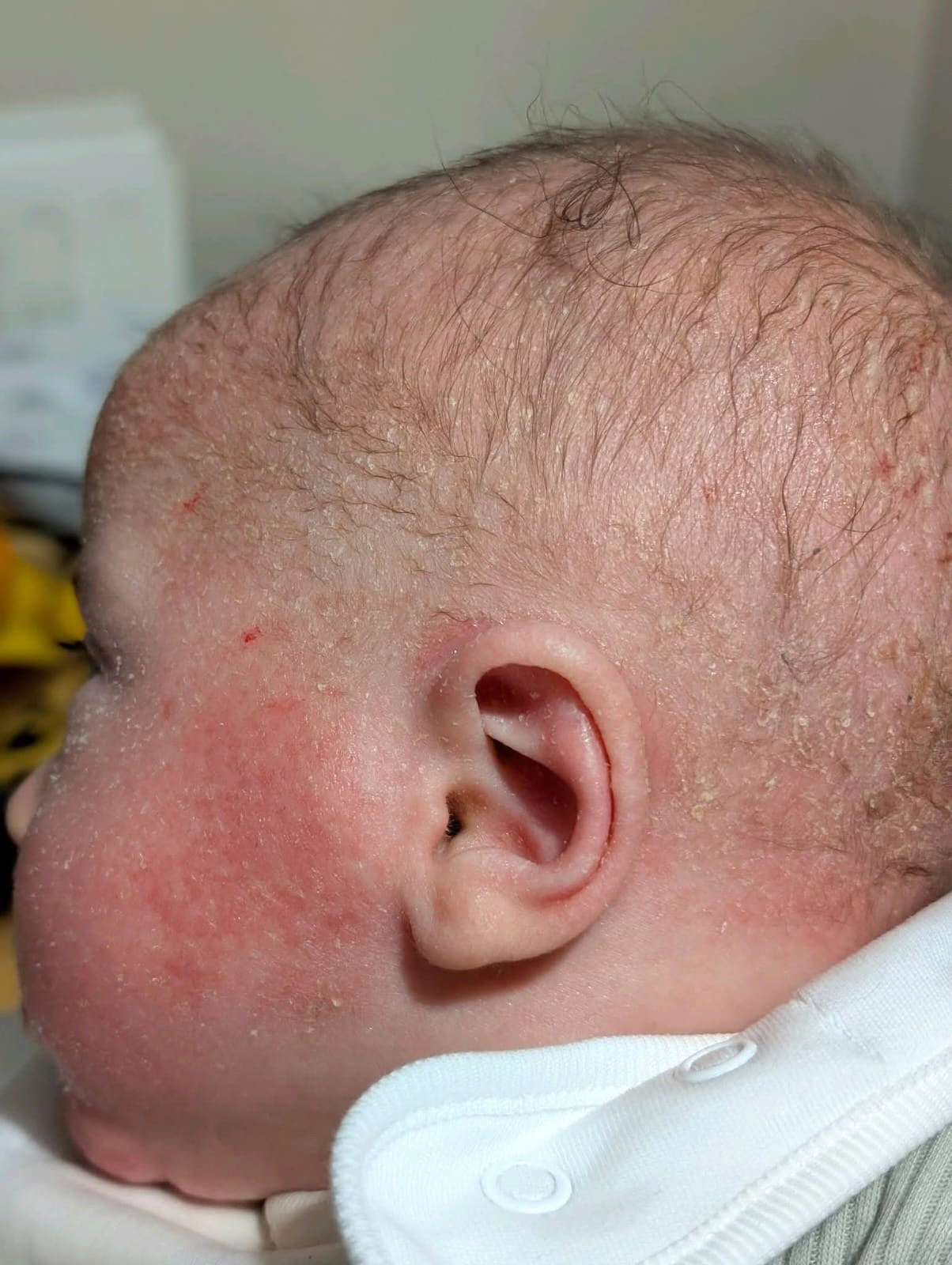
If you’ve ever asked for advice about your baby’s dry skin, you’ve probably heard the same recommendation over and over again: “Just apply a thick moisturiser several times a day.” It’s one of the most common pieces of advice parents receive from doctors, pharmacists, family members, and other parents. To be fair, there is some truth behind it. Moisturisers play an important role in protecting the skin barrier, reducing water loss, and making the skin feel softer and more comfortable. Some research has even shown that applying a moisturiser daily from birth may slightly reduce the risk of eczema in babies who are already considered high risk. But while moisturisers can be incredibly helpful, they rarely explain the whole story.
Think of a moisturiser as repairing the surface of a wall after it develops small cracks. It can temporarily seal those cracks, helping to keep moisture inside and making the wall look stronger. However, if the foundation beneath the wall continues to shift, those cracks are likely to return. The same principle applies to baby skin. A moisturiser may improve dryness by replacing lost moisture and strengthening the outer layer for a time, but it doesn’t necessarily address the underlying reasons the skin barrier became weak in the first place. That’s why many parents experience a familiar pattern: the skin improves while the cream is being used consistently, only to become dry and irritated again as soon as conditions change.
Researchers are also learning that not every moisturiser affects the skin in exactly the same way. Some products may alter the skin’s natural acidity or influence the delicate balance of beneficial microbes that live on its surface. Others provide temporary hydration without fully restoring the complex mixture of protective fats that healthy skin naturally produces. A major review of eczema treatments published in recent years concluded that while basic moisturisers remain an essential part of skincare, they often struggle to completely rebuild the skin barrier in babies with more persistent skin problems. The result is that improvements may be noticeable but sometimes short-lived. For families dealing with recurring dryness, that can become an exhausting cycle of temporary relief followed by another flare-up.
Perhaps the biggest limitation of the “just moisturise” approach is that it focuses almost entirely on what is happening on the outside of the body. We now know that baby skin is influenced by far more than the products applied to it. Early changes in the skin microbiome, differences in gut bacteria, the way a baby is born, exposure to antibiotics, feeding practices, nutrition, environmental chemicals, and even small amounts of food proteins can all influence how the skin barrier develops. These factors interact closely with the immune system during the first months of life. When that balance is disrupted, one of the earliest signs is often persistent dryness. In many ways, the skin is simply reflecting what is happening within a much larger biological system.
The growing understanding of the gut-skin connection has opened up exciting new possibilities. Instead of focusing only on the skin itself, researchers are beginning to look at ways of supporting the body’s internal environment as well. Several newer studies have explored combining high-quality barrier creams with probiotics or prebiotics designed to encourage a healthier gut microbiome. The early findings are encouraging. While the moisturiser helps strengthen the skin barrier from the outside, supporting the gut appears to influence the immune system in ways that may reduce inflammation and improve the skin’s ability to retain moisture. Although research in this area is still evolving, it reflects a much broader way of thinking about eczema than was common just a decade ago.
Another fascinating discovery comes from studying modern eczema medications. Some of the newest treatments work by blocking specific immune signals involved in inflammation rather than simply treating the skin surface. Researchers have found that these medicines can improve the skin barrier not only where eczema is visible, but also in areas of skin that appear completely normal. That finding tells us something important. Even skin that looks healthy may already be experiencing subtle changes beneath the surface. It reinforces the idea that eczema is not simply a collection of isolated patches on the skin but a condition involving the skin barrier, immune system, and the body as a whole.
None of this means parents should stop using moisturisers. Quite the opposite. A good barrier cream remains one of the most valuable tools for protecting and supporting dry, sensitive skin. The difference is understanding what a moisturiser can and cannot do. It is one important piece of the puzzle, but it is rarely the entire solution. When parents begin looking beyond the surface and considering the skin barrier, immune system, gut health, microbiome, nutrition, and environmental influences together, the recurring patterns of eczema often begin to make much more sense. That broader understanding doesn’t replace good skincare—it makes good skincare far more meaningful.
Perhaps the simplest way to think about dry skin is this. Dryness is often a symptom rather than the underlying problem itself. Wiping up water on the kitchen floor may make the mess disappear for a while, but if the tap is still running, the puddle will keep coming back. The same principle often applies to eczema-prone skin. Moisturising the surface is important, but understanding why the barrier became weak in the first place offers a much better opportunity for long-term improvement. When we support both the skin and the systems influencing it, we move beyond simply managing dryness and begin supporting healthier skin from the inside out.
Ready to Look Beyond the Skin?
If this article has changed the way you think about baby eczema, I invite you to continue the journey by downloading my free ebook, Beyond the Skin Barrier. It explains the science behind baby eczema in simple, practical language and explores how the skin barrier, immune system, gut, microbiome, and environment work together to influence your child’s skin health. You’ll also learn about the philosophy behind the Itch-A-Bye™ Skin Trifecta Method™ and why taking a broader view of eczema can help parents make more informed decisions. The book is completely free and has been written specifically for parents who want to understand why their child’s skin behaves the way it does—not just how to manage the next flare-up. If you’re ready to move beyond guesswork and gain a deeper understanding of your child’s skin, download your free copy today. Visit www.itchabye.com/free-book and start reading Beyond the Skin Barrier.