
Is Baby Eczema Really Genetic? Here’s What the Science Actually Says
One of the first things many parents hear after their baby develops dry or eczema-prone skin is, “It runs in the family.” If a parent or close relative has eczema, asthma, or allergies, it’s easy to assume the outcome was inevitable. Many families are left feeling that the problem is already written into their child’s DNA and that all they can do is manage symptoms as they appear. That belief is understandable because genetics certainly do play an important role. But it is also an incomplete picture. Modern research is revealing something far more encouraging: while genes can influence how a baby’s skin develops, they do not determine the entire story, and they certainly don’t remove every opportunity parents have to make a positive difference.
The gene that receives the most attention in eczema research is called filaggrin, often shortened to FLG. Filaggrin produces a protein that helps skin cells fit tightly together, creating a strong protective barrier that keeps moisture inside while blocking irritants, allergens, and microbes from getting in. As the protein naturally breaks down, it also produces substances that help the skin attract and retain water, keeping it hydrated and resilient. When a baby inherits a version of the FLG gene that doesn’t function as effectively, the skin barrier can begin life at a disadvantage. Water escapes more easily, dryness develops more quickly, and the skin becomes more vulnerable to everyday environmental exposures. Studies have shown that these FLG changes are found in many children with moderate to severe eczema and are associated with an earlier onset of symptoms and a higher risk of food allergies.
At first glance, that sounds like strong evidence that eczema is simply inherited. But this is where the story becomes much more interesting. Not every baby who carries an FLG mutation develops eczema, and many children who do develop eczema have completely normal FLG genes. Researchers have even followed babies with these genetic changes during their first months of life and found that some showed perfectly normal skin barrier function early on. Others, despite having no detectable FLG mutation, still went on to develop persistent eczema. Clearly, genetics alone cannot explain why one baby develops eczema while another does not. The genes may load the gun, but they don’t always pull the trigger.
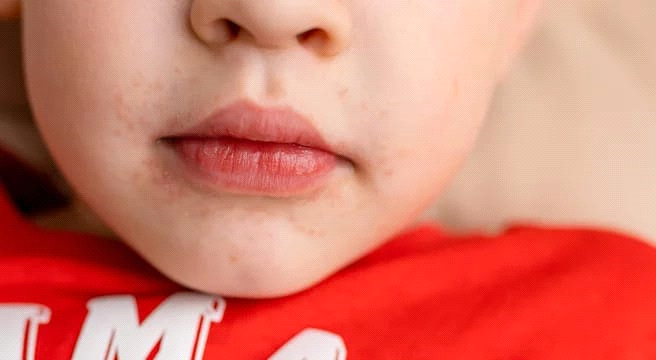
Researchers have also discovered that subtle changes often begin long before eczema becomes visible. In babies who later develop eczema, the skin may process filaggrin more slowly, produce fewer protective skin fats called ceramides, and lose moisture more rapidly, even when the skin still looks completely healthy. These changes can often be detected within the first few months of life and, in some cases, shortly after birth. The cheeks, one of the earliest places where eczema commonly appears, seem especially vulnerable because they are constantly exposed to drool, food, weather, and friction. By the time redness and itching become obvious, the skin barrier has often been under pressure for quite some time. Once again, the science reminds us that eczema develops gradually rather than appearing overnight.
If genetics create the starting point, the immune system often determines how the story unfolds. A baby’s immune system is incredibly active during the first years of life, constantly learning what is harmless and what might pose a threat. In babies who are more likely to develop eczema, that learning process sometimes becomes unbalanced, favouring what scientists call a Type 2 (Th2) immune response. This pattern encourages allergic inflammation and makes the skin more reactive than it needs to be. Skin cells begin releasing chemical messengers such as TSLP and IL-33, which activate immune cells and prepare the body to respond more aggressively. Remarkably, these immune signals can already be present long before parents notice the first visible signs of eczema.
Scientists now describe this hidden stage as the preclinical phase of eczema. During this period, babies may already have higher water loss through the skin, lower levels of protective ceramides, slower filaggrin processing, and increased immune activity, despite their skin appearing almost completely normal. Some studies have even detected elevated inflammatory markers in babies’ cheeks during the first few months of life before eczema develops. These discoveries are changing the way researchers think about eczema. Rather than seeing the rash as the beginning of the disease, they now recognise it as one of the later stages of a process that has been unfolding quietly beneath the surface. That shift in understanding opens the door to supporting the skin much earlier than was previously thought possible.
Perhaps the strongest evidence that genes are only part of the story comes from twin studies. Identical twins share virtually the same DNA, yet they don’t always develop eczema in the same way. One twin may experience persistent eczema while the other has only mild symptoms—or none at all. If genetics were the only factor, identical twins would almost always follow the same path. Instead, researchers consistently find that environmental influences interact with genetic risk throughout early life. This is one of the clearest demonstrations that our environment can influence how genetic tendencies are expressed.
Researchers have identified several everyday factors that appear to influence this gene-environment interaction. Some studies suggest that early exposure to cats may increase eczema risk in children carrying certain FLG mutations, although findings have not always been consistent across different populations. Hard water, air pollution, and chemicals such as phthalates found in some plastics and household products may place additional stress on an already fragile skin barrier. On the other hand, longer periods of breastfeeding have been associated with a lower risk of eczema in some babies carrying FLG mutations. While no single factor guarantees a particular outcome, these findings demonstrate that everyday experiences can either add to the burden on the skin or help support its development. In other words, genetics may influence susceptibility, but the environment still matters enormously.
One particularly encouraging area of research focuses on the microbiome. Several studies have found that when mothers took specific probiotics during pregnancy and while breastfeeding, their babies had a lower risk of developing eczema even when they carried FLG mutations. Perhaps most remarkably, the protective effect appeared to be similar whether or not the baby had the genetic mutation. This suggests that supporting the developing microbiome and immune system may help reduce some of the disadvantages created by inherited risk. While research in this field continues to evolve, it offers genuine hope that genes are not the final word. Biology is far more adaptable than we once believed.
The immune system itself also remains highly adaptable throughout infancy. Babies are not born with a fully developed immune system. Instead, their immune cells spend the first months and years of life learning which substances are harmless and which genuinely require a defensive response. When the skin barrier is weakened, allergens from foods, dust, pollen, and the surrounding environment can enter through the skin more easily. This early exposure may encourage the immune system to become overly sensitive, helping explain why some children later develop food allergies as well as eczema. Researchers increasingly believe that, for many babies, sensitisation begins through the skin long before certain foods are ever eaten.
The most important message for parents is this: genetics are real, but they are not destiny. Some babies are born with skin barriers that are naturally more fragile, and some immune systems are more likely to develop allergic inflammation. But those inherited tendencies are constantly interacting with factors that parents can influence, including feeding choices, microbial exposure, nutrition, the home environment, skincare, and the overall health of the developing skin barrier. Understanding this interaction replaces the feeling of helplessness with something far more valuable—perspective. Rather than believing eczema is simply “in the genes,” parents can begin supporting the many biological systems that help those genes express themselves in healthier ways. That shift from genetic inevitability to informed action is one of the most hopeful developments in modern eczema research.
Ready to Look Beyond the Skin?
If this article has changed the way you think about baby eczema, I invite you to continue the journey by downloading my free ebook, Beyond the Skin Barrier. It explains the science behind baby eczema in simple, practical language and explores how the skin barrier, immune system, gut, microbiome, and environment work together to influence your child’s skin health. You’ll also learn about the philosophy behind the Itch-A-Bye™ Skin Trifecta Method™ and why taking a broader view of eczema can help parents make more informed decisions. The book is completely free and has been written specifically for parents who want to understand why their child’s skin behaves the way it does not just how to manage the next flare-up. If you’re ready to move beyond guesswork and gain a deeper understanding of your child’s skin, download your free copy today. Visit www.itchabye.com/free-book and start reading Beyond the Skin Barrier.