
Baby Eczema Flare Checklist: 10 Things to Check Before Changing Products
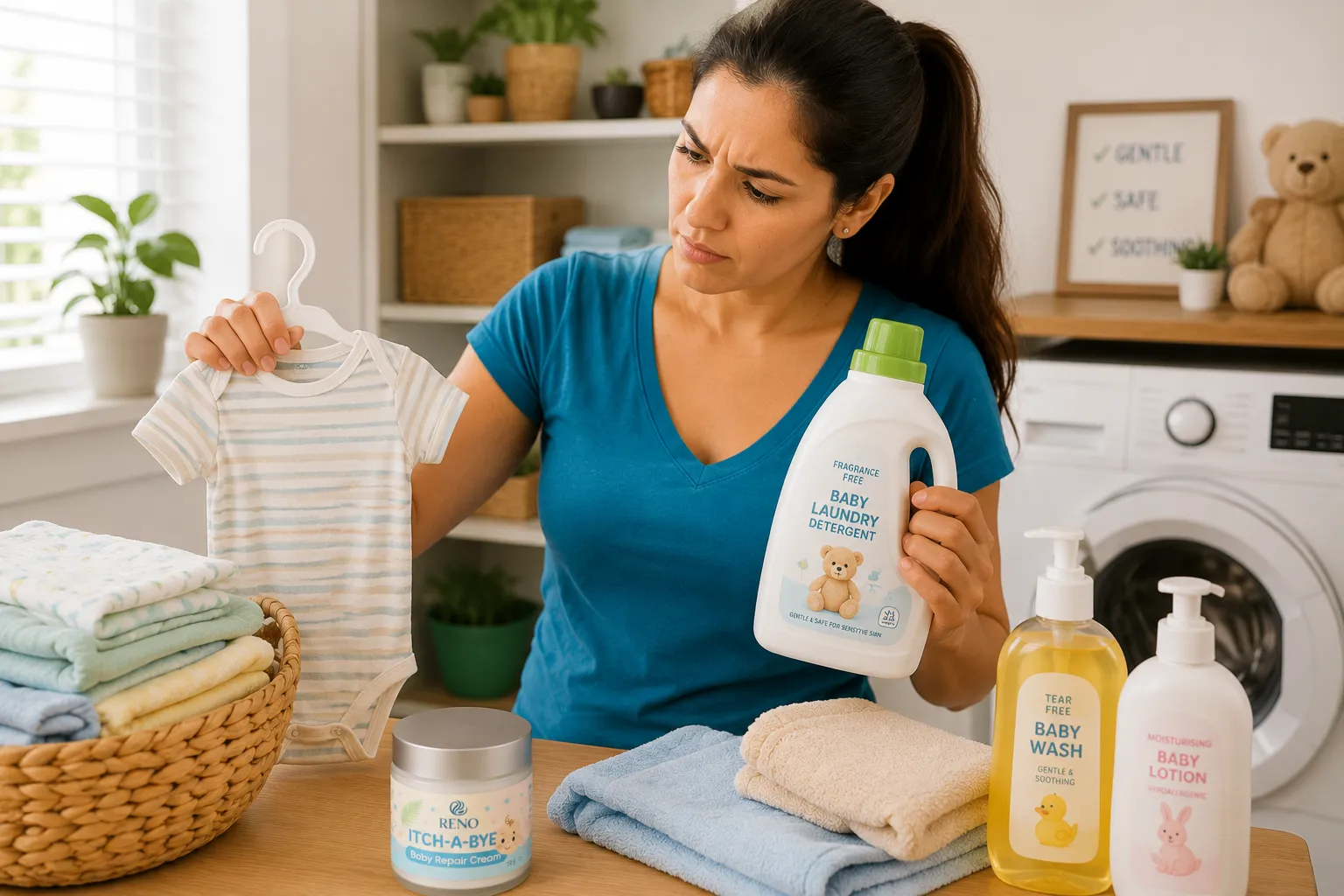
When your baby’s skin suddenly becomes drier, redder or much itchier, it is natural to look straight at the cream you have been using. You may wonder whether it has stopped working, whether your baby has suddenly become sensitive to it or whether you need to find something stronger. That reaction makes sense because the cream is the part of the routine you can see and control most easily. But a flare does not necessarily mean the product has failed.
Baby skin is constantly responding to what is happening around it, and sometimes several small changes occur before parents notice the skin becoming uncomfortable. The weather may have changed, your baby may be sweating more, swimming lessons may have started or teething may have dramatically increased drooling. Bath time may have become longer, new foods may be touching the face or a different laundry product may have entered the house. Before replacing a product that your baby previously tolerated well, it can be extremely useful to investigate what else changed first.
1. Has the Weather Changed?
Think back over the days immediately before the flare and consider what happened to the weather. Cold air, wind, low humidity, indoor heating, hot days and air conditioning can all change the environment surrounding your baby’s skin. A skincare routine that seemed perfectly adequate several weeks ago may suddenly be working against very different conditions. The product may not have changed at all, but the demands being placed on the skin may have increased.
Winter can be particularly challenging because babies may move repeatedly between cold outdoor air and heated indoor environments. During warmer months, sweat, heat and additional bathing can create an entirely different set of pressures. Pay particular attention to exposed areas such as the cheeks as well as places where heat can become trapped beneath clothing. Before deciding that the moisturiser has stopped working, ask whether the weather changed before your baby’s skin did.
2. Has Your Baby Been Hotter or Sweating More?
Babies cannot simply remove their jumper, kick off a heavy sleep sack or tell you that the bedroom feels too warm. They may become hot while sleeping, sitting in a car seat, being carried against an adult or spending time in a warm pram. Sweat can then collect around the neck, back, chest and skin folds, especially underneath clothing. For some babies with dry or eczema-prone skin, this can make itching considerably more noticeable.
Look at when the scratching becomes worse rather than concentrating only on what the skin looks like. Does your baby become itchier during sleep, after a long car journey or after being bundled up for an outing? Do the neck, back or areas behind the knees become warm or damp? If heat appears to be part of the pattern, reducing unnecessary overheating may be more useful than immediately replacing the cream.
3. Has Bath Time Changed?
Sometimes parents blame the moisturiser even though the biggest change happened before the moisturiser was applied. Baths may have become longer, the water may be warmer or your baby may suddenly be bathing every day instead of several times a week. You may also be using more cleanser, shampoo or bubble bath without thinking of it as a major change. Each of these things can alter what already dry skin experiences.
Water itself is not automatically the problem, and bathing can be an enjoyable and useful part of a baby’s routine. However, prolonged hot baths and unnecessary cleansing can place additional pressure on a vulnerable skin barrier. Think about the temperature, duration and products involved rather than focusing only on what you apply afterwards. A shorter bath with comfortably warm water, gentle cleansing and careful drying may tell you more than immediately buying another moisturiser.
4. Has Anything New Been Added to the Bath?
New products often enter a baby’s routine without parents thinking of them as a significant skincare change. Someone gives you a beautifully scented baby wash, you buy a different shampoo or a new bubble bath happens to be on special. Because these products are rinsed away, it is easy to assume they cannot be connected to a flare. Yet shampoo can run over the neck and back, while bath products can contact much of the body.
This does not mean that every new product is going to irritate your baby’s skin. What matters is the timing between introducing something and noticing a change. If your baby’s skin was relatively settled before a new bath product arrived and then became uncomfortable afterwards, that is useful information. Removing that one new variable may teach you considerably more than replacing every product in the bathroom.
5. Has the Laundry Routine Changed?
Your baby may spend almost the entire day in contact with something that has been through the washing machine. Clothes, pyjamas, bibs, sheets, sleep sacks, towels and blankets can all carry residues from the products used to wash them. A new detergent, fabric softener, fragrance booster or laundry sanitiser therefore deserves consideration when skin suddenly changes. Parents can easily overlook laundry products because they are never applied directly to the baby.
Think about whether you recently changed brands, opened a different formulation or started adding something extra to the wash. Even increasing the amount of a familiar laundry product may be worth considering if the timing fits. If you suspect the laundry routine, simplify it rather than changing the cream, bath products and washing powder simultaneously. The fewer things you alter at once, the easier it becomes to understand what your baby’s skin is telling you.
6. Has Clothing or Bedding Changed?
Sometimes the problem is not what has been applied to the skin but what has been rubbing against it for hours. A new outfit may contain rough seams, a jumper may feel scratchier or a sleep sack may trap considerably more heat than the one it replaced. Tight elastic around the wrists, ankles or waist can also repeatedly rub the same area. When the skin is already dry, small amounts of friction can become much more noticeable.
Look at the location of the flare and ask whether it corresponds with something touching that area. Redness around a waistband, irritation beneath a collar or scratching where a seam repeatedly rubs can provide useful clues. Also consider whether new bedding is making your baby warmer during sleep. The pattern on the skin can sometimes tell you more than the product sitting on the bathroom shelf.
7. Has Your Baby Been Drooling More?
Teething can completely change the environment around a baby’s face. Saliva may suddenly spend hours sitting around the mouth, chin, cheeks and neck, while wet bibs repeatedly rub against the same areas. Parents then wipe the face more frequently, creating another source of friction on skin that may already be dry. It is easy to look at the resulting redness and assume the face cream has stopped working.
If the flare is concentrated around the mouth, chin or neck, pay close attention to drooling. Change very wet bibs when necessary and gently pat rather than repeatedly rubbing the skin. Look inside the neck folds as well, because moisture can remain there even when the visible skin appears dry. Sometimes supporting the skin means managing what is repeatedly happening around it rather than simply applying more cream.
8. Has Food Contact Increased?
Starting solids changes far more than what goes into your baby’s stomach. Food suddenly appears on the cheeks, chin, hands, neck and sometimes almost everywhere else. Your baby may smear food across their face, mix it with saliva and then rub the mixture into already dry skin. Afterwards, the same areas may be wiped several times to remove the mess.
If redness or dryness appears mainly around the mouth and cheeks, think carefully about what happens during meals. Repeated local contact with food and frequent wiping can irritate vulnerable skin without necessarily meaning your baby has a food allergy. Be gentle when cleaning the face and look for patterns between particular meals and skin changes. Concerning reactions involving symptoms beyond the area of contact are different and should be assessed appropriately.
9. Has Swimming or Water Play Increased?
Swimming is another change that parents can easily overlook because the skin may look completely normal while the baby is still in the pool. Chlorinated water, prolonged water exposure, wet swimwear, sunscreen and towel drying may all become part of the same experience. Dryness or itching may not become obvious until later that evening, making the connection surprisingly easy to miss. If swimming lessons recently started around the same time as the flare, include them in your investigation.
Compare swimming days with days when your baby has not been in the pool. If the skin repeatedly becomes drier or itchier afterwards, establish a simple routine that you can follow consistently. Rinse the skin with fresh water where practical, gently dry it and provide appropriate moisturising and barrier support before putting on comfortable clothing. This is also why Itch-A-Bye Baby Repair Cream can be useful to keep in the swim bag for children whose skin tends to become dry or uncomfortable after swimming.
10. Has Scratching Become Part of the Flare?
Sometimes the original skin change is relatively small, but the scratching that follows makes it look dramatically worse. An itchy patch is scratched, the surface becomes more disrupted and the damaged area becomes increasingly uncomfortable. The baby scratches again, and a cycle begins that can continue even after the original trigger has passed. Parents may understandably look at the worsening skin and conclude that their moisturiser has failed.
This is the familiar itch-scratch cycle: itch → scratch → barrier disruption → more discomfort → more scratching. Keep your baby’s fingernails comfortably short and look for scratch marks, tiny scabs or areas where the surface has been broken. Do not treat scratching simply as behaviour that needs to be stopped, because it is also valuable information. The more useful question is often what is making the skin uncomfortable enough for your baby to keep scratching.
Before You Change the Cream, Ask a Different Question
When a flare appears, the obvious question is, “Has this product stopped working?” A more revealing question may be, “What changed around my baby’s skin before the flare began?” Perhaps nothing about the skincare routine changed at all. Instead, the weather changed, swimming started, drooling increased or your baby began wearing warmer clothing.
Sometimes the product really is the problem and should be reconsidered. But sometimes it is being blamed for circumstances it did not create and cannot control. A moisturiser cannot cool an overheated baby, remove detergent residue from clothing or stop saliva sitting around the mouth. Understanding that distinction can save parents from endlessly jumping from one product to another.
The Skin Threshold Model Can Help Explain What Is Happening
In Beyond the Skin Barrier, we explore an idea we call the Skin Threshold Model. Imagine your baby’s skin as having a certain capacity to cope with everyday pressures before dryness, itching or irritation becomes more noticeable. One warm bath may not cause a problem, and neither may one hot afternoon or one swimming lesson. But the situation can change when several pressures arrive together.
Imagine a baby beginning the week with slightly dry skin while the weather suddenly becomes colder. The heating goes on, baths become warmer, teething increases drooling and swimming lessons happen on Saturday. By Sunday, the baby’s skin is much itchier and the parent understandably thinks the cream has stopped working. Another possibility is that the skin has simply experienced enough accumulated pressure to cross its individual threshold.
Avoid the Product Carousel
A flare can create an understandable urge to start trying everything. Cream A is used for two days, followed by Cream B, a new cleanser, another bath oil and eventually a completely different laundry detergent. If the skin improves, you have no idea which change mattered. If it becomes worse, identifying the problem becomes even more difficult.
Unless there is an obvious reason to stop something immediately, try to make changes deliberately. Remove unnecessary pressures and keep as much of the existing routine stable as possible while you observe what happens. If you decide to introduce something new, consider changing one significant variable at a time. A slower approach can actually produce answers faster because it gives you useful information.
When the Product Itself Deserves Attention
There are times when the cream or another skincare product genuinely should move to the top of your list. If redness, stinging, swelling or worsening irritation repeatedly appears shortly after application, pay attention to that timing. The same applies if the flare began soon after introducing a completely new product and is concentrated where that product is being used. Those patterns provide information that should not be ignored.
A previously tolerated product can also feel different when the skin barrier becomes significantly more damaged. This is another reason context matters when evaluating a flare. Rather than assuming every worsening episode proves that the product has failed, consider the relationship between application and symptoms. If you are concerned about a persistent or significant reaction, appropriate professional assessment can help clarify what is happening.
Introduce New Products Methodically
When you genuinely decide that something in the routine needs to change, resist the temptation to replace everything at once. Introducing one new skincare product at a time makes it much easier to understand how your baby responds. A small patch trial on a limited area may also be useful before applying an unfamiliar cosmetic product broadly. It cannot guarantee that irritation will never occur, but it can reduce the amount of skin initially exposed.
Give yourself enough time to observe what happens rather than judging an entire routine after a single application. Look at comfort, dryness, itching and any visible changes rather than focusing on one measure alone. If the skin reacts badly, you will have a much clearer idea of what changed. Methodical skincare may feel slower, but it removes much of the guesswork.
Moisturiser Is Only One Part of the Strategy
Moisturising dry skin matters, but moisturiser cannot solve every pressure acting on the skin. It cannot remove a rough seam, cool an overheated bedroom or prevent chlorine from remaining on the skin after swimming. It cannot stop a wet bib rubbing beneath the chin or reduce unnecessary scrubbing during bath time. Expecting one cream to compensate for every environmental pressure can lead to disappointment even when the product itself is doing exactly what it was designed to do.
A stronger approach combines topical support with reducing unnecessary pressures around the skin. That may mean adjusting bath temperature, changing damp clothing, managing heat or making cleaning around the mouth gentler. It may also mean recognising that different pressures can occur simultaneously. The cream then becomes part of the strategy rather than being expected to carry the entire strategy.
Repair, Nourish and Defend
Our approach to dry, itchy and eczema-prone skin is built around three connected principles: Repair, Nourish and Defend. Repair focuses on supporting the skin barrier so it can better perform its fundamental protective role and reduce unnecessary moisture loss. When that barrier becomes compromised, simply adding moisture repeatedly may not address the whole problem. Supporting the barrier itself therefore becomes an important part of the routine.
Nourish goes considerably further than hydration alone. It means providing the skin with a combination of moisturising, emollient, soothing, conditioning and antioxidant ingredients that create a supportive environment for normal skin function. Defend recognises that skin is also interacting constantly with bacteria, fungus, other microbes and environmental pressures. Together, these three principles encourage us to think beyond how soft the skin feels immediately after applying a moisturiser.
Why Itch-A-Bye Uses Ingredient Synergy
Itch-A-Bye Baby Repair Cream was developed for dry, itchy and eczema-prone baby and young children’s skin around this Repair, Nourish and Defend philosophy. Rather than building the formulation around one fashionable hero ingredient, we selected ingredients that could perform different but complementary roles. The intention was to create a system in which hydration, emollient support, soothing ingredients, conditioning ingredients, antioxidants and plant botanicals work alongside one another. That synergy is central to how we think about nourishment.
Glycerin and Hyaluronic Acid provide humectant support by helping attract and retain moisture. Black Seed Oil provides emollient support and contains naturally occurring compounds including thymoquinone, which has attracted scientific interest for antioxidant, anti-inflammatory and antimicrobial activity. MSM contributes soothing and conditioning support, while Allantoin is valued for its calming and skin-supportive properties. Vitamins C and E add further antioxidant support within the wider formulation.
The Botanicals Are There for a Reason
The formulation also brings together carefully selected plant extracts including Centella asiatica, Chamomile, Licorice, Scutellaria baicalensis, Green Tea, Rosemary, Polygonum cuspidatum and Ginger. These plants contain naturally occurring compounds that have been investigated for properties including soothing, antioxidant and anti-inflammatory activity. We did not include botanicals simply to make the ingredient list sound natural or impressive. Their role is to contribute additional forms of support within the wider formulation.
This becomes particularly relevant when you consider what dry, itchy skin may be dealing with at the same time. Moisture may be escaping more readily while friction, scratching, environmental exposure and microbial contact are adding further pressure. No single ingredient needs to pretend to do everything. The strength of the formulation philosophy lies in allowing different ingredients to earn their place by contributing different forms of support.
Keep a Seven-Day Flare Diary
If you cannot work out what changed, stop relying entirely on memory and start writing down what happens. For seven days, record where the flare appears, when scratching is worst and whether the skin looks better or worse than the previous day. Also note swimming, baths, weather, heat, drooling, new foods, clothing changes, laundry changes and anything new applied to the skin. You do not need a complicated chart for this to be useful.
A few sentences each evening may reveal a pattern that was invisible when every day was considered separately. Perhaps the flare becomes worse after swimming, or the cheeks deteriorate on days when drooling is particularly heavy. Maybe the baby becomes much itchier after warm nights or the hands improve over the weekend when they are washed less frequently. Patterns give you something concrete to investigate instead of repeatedly guessing.
Photograph the Skin Rather Than Relying Only on Memory
Skin changes can happen gradually enough that parents struggle to remember exactly what an area looked like several days earlier. Taking one photograph each day in similar lighting and from approximately the same position can create a useful visual record. You may discover that an area is actually becoming smaller even though your baby had a particularly itchy afternoon. Alternatively, the photographs may reveal gradual expansion that was difficult to notice from day to day.
Photographs should support observation rather than replace appropriate assessment when it is needed. Their value is in helping you see direction and pattern more clearly. They can also make it easier to explain what has been happening if you later discuss the flare with a health professional. Sometimes yesterday’s photograph is considerably more informative than yesterday’s memory.
Do Not Judge the Entire Routine From One Bad Day
Baby skin can fluctuate even when parents are doing everything consistently. One difficult afternoon does not automatically mean that the entire skincare routine has failed. Look at the direction of travel over several days rather than judging everything from the worst moment. Ask whether itching is progressively increasing, new areas are appearing or the skin is gradually settling.
A rough evening after swimming is different from a flare that becomes steadily worse for a week. An itchy night during unusually hot weather is different from persistent itching that repeatedly disturbs sleep regardless of conditions. Patterns, duration and severity all provide context. The objective is not to ignore a bad day but to understand what that bad day means.
When a Flare Needs More Than Home Skincare
Some changes deserve more than another round of product experimentation. Increasing warmth, swelling, pain, significant weeping, blistering or heavy crusting should be taken seriously, particularly when the skin is becoming progressively worse. Repeated bleeding, deep cracks or substantial skin breakdown also deserve appropriate assessment. These changes are different from an otherwise well baby experiencing familiar mild dryness.
Pay attention to the baby as well as the skin. A baby who develops fever, appears generally unwell or has significant swelling alongside worsening skin symptoms should be appropriately assessed. Sudden widespread symptoms, facial swelling or breathing difficulty following an exposure require prompt medical attention. Knowing when a situation has moved beyond ordinary home skincare is an important part of caring for eczema-prone skin.
Frequently Asked Questions
Why Did My Baby’s Eczema Suddenly Flare When We Did Not Change Products?
Skincare products are only one part of what your baby’s skin experiences each day. Weather, heat, sweat, bathing, swimming, clothing, drooling, food contact, laundry products and scratching may all influence the skin. Sometimes several of these change around the same time and their combined effect becomes noticeable as a flare. Look at what changed around your baby before assuming that a previously tolerated product has suddenly stopped working.
Can Weather Suddenly Make Baby Eczema Worse?
Changes in temperature and humidity can alter the environment surrounding the skin. Cold weather and indoor heating may contribute to dryness, while hot weather can bring more sweating and overheating. Some babies therefore seem to have more difficult skin during particular seasons or abrupt weather changes. If the timing of a flare matches a significant environmental change, include that information when investigating what happened.
Can Overheating Make My Baby Itch More?
Heat and sweat can make already dry or irritated skin feel much more uncomfortable for some babies. Check the bedroom temperature, clothing, bedding, car seat and situations where your baby is held closely for long periods. Look particularly around the neck, back and skin folds for warmth or dampness. Reducing unnecessary overheating may remove one important pressure without requiring a complete change of skincare products.
Should I Stop My Baby’s Moisturiser During a Flare?
Not automatically, particularly if the same product has been used comfortably for some time. Look first at whether something else changed around the baby at approximately the same time as the flare. However, if applying a product repeatedly appears to cause immediate stinging, redness, swelling or worsening irritation, that pattern deserves attention. Persistent or significant reactions should be appropriately assessed rather than repeatedly testing the same product on uncomfortable skin.
Can Chlorine Trigger Itching Later in the Day?
Some children appear drier or itchier after swimming, and the change may not become obvious until hours after leaving the pool. That delay can make swimming easy to overlook when parents are trying to understand a flare. Compare swimming days with non-swimming days and observe whether a consistent pattern emerges. Rinsing, gentle drying and prompt barrier support afterwards can become part of a simple post-swim routine.
Could Drooling Be Making the Skin Around My Baby’s Mouth Worse?
Heavy drooling can repeatedly expose the cheeks, chin and neck to saliva while wet bibs and frequent wiping add friction. This can be particularly noticeable during teething or developmental stages when babies constantly put things into their mouths. Managing dampness and making cleaning gentler may therefore be just as important as what is applied afterwards. Look at the location and timing of the irritation to see whether saliva exposure fits the pattern.
Should I Change the Laundry Detergent During a Flare?
If you recently introduced a new detergent, fabric softener or fragrance product and the timing corresponds with the flare, it is reasonable to consider that change. If nothing about the laundry routine has changed, however, replacing it simply because the skin is worse may add another unnecessary variable. Try to avoid changing the laundry routine, moisturiser, cleanser and bath products simultaneously. A more controlled approach makes it easier to discover what actually matters.
Should I Start a Completely New Skincare Routine?
A completely new routine can sometimes create more uncertainty than answers. If several products are changed together and the skin improves, you will not know which change helped. If the skin becomes worse, identifying the cause becomes equally difficult. Unless there is a clear reason for immediate change, simplify the routine and introduce major changes one at a time.
Can I Use Itch-A-Bye as Part of the Routine?
Itch-A-Bye Baby Repair Cream was developed specifically around our approach to dry, itchy and eczema-prone baby and young children’s skin. It combines Black Seed Oil, MSM, Allantoin, Hyaluronic Acid, Glycerin, antioxidant vitamins and carefully selected plant botanicals within the Repair, Nourish and Defend framework. It can form part of a wider barrier-support routine when your child’s skin tolerates it comfortably. The important point is to combine topical support with investigating the environmental pressures surrounding the skin rather than expecting any cream to control every possible trigger.
When Should a Baby Eczema Flare Be Assessed?
A flare deserves closer attention when it becomes severe, rapidly worsens or repeatedly interferes with sleep, feeding or normal activity. Significant broken skin, increasing warmth, pain, swelling, weeping, blistering or heavy crusting are also reasons to seek appropriate assessment. A baby who appears generally unwell or develops fever alongside worsening skin changes should not simply be assumed to have ordinary dryness. If something about the flare looks or feels substantially different from your baby’s usual pattern, seeking appropriate advice is sensible.
Before You Replace the Product, Investigate the Flare
When your baby’s skin suddenly becomes worse, buying something new can feel like taking control of the situation. Sometimes changing a product is exactly the right decision, but sometimes the most valuable action is to investigate first. Check the weather, heat, bath, laundry, clothing, saliva, food contact, swimming and scratching. Then ask yourself what changed immediately before the skin changed.
This is the thinking behind the Skin Threshold Model explored more deeply in Beyond the Skin Barrier. A flare does not necessarily mean that one product suddenly failed; sometimes several everyday pressures have accumulated until vulnerable skin can no longer comfortably manage them. Understanding those pressures gives parents something much more useful than another round of random product switching. It gives them a way to start making sense of the pattern.
When topical support is needed, Itch-A-Bye Baby Repair Cream brings together our Repair, Nourish and Defend approach through Black Seed Oil, MSM, Allantoin, Hyaluronic Acid, Glycerin, antioxidant vitamins and carefully selected plant botanicals. But even the best topical routine becomes more useful when it is combined with understanding what the skin is facing every day. That is why our approach begins with the barrier but does not end with the jar. Before asking “What should I buy next?”, ask the question that may reveal far more: “What changed before my baby’s skin changed?”