
Bubble Bath and Baby Eczema: What Parents Should Know
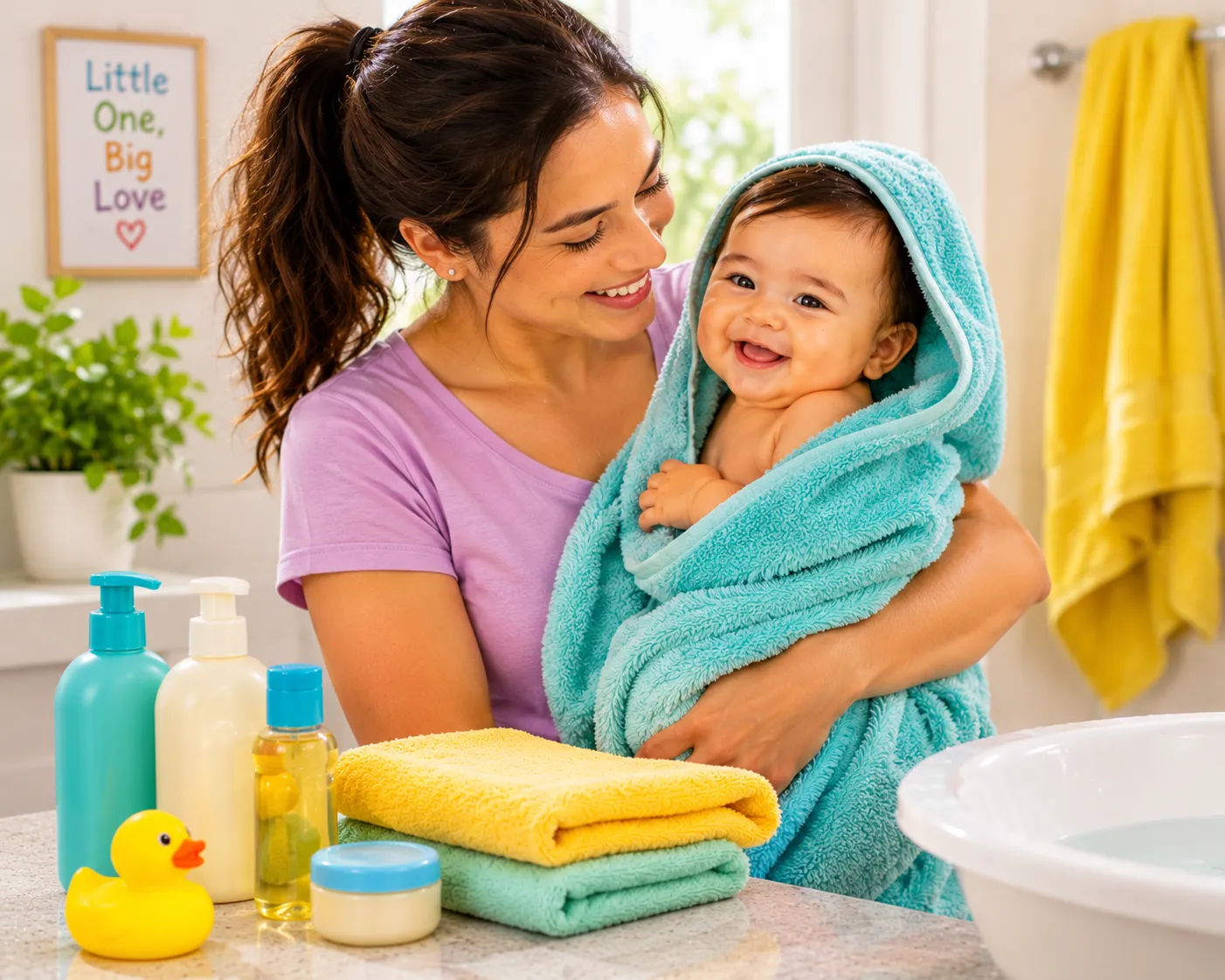
There is something almost irresistible about giving a baby a bubble bath. The bubbles make bath time feel playful, your baby splashes around happily, and for a few minutes an ordinary evening routine becomes something special. But if your baby has dry, itchy or eczema-prone skin, you may notice something less enjoyable afterwards: their skin seems drier, they start rubbing or scratching, or bedtime suddenly becomes much more uncomfortable. That can leave parents wondering whether the bubble bath they thought was harmless could actually be adding to the problem.
The answer is that bubble bath is not automatically bad for every baby with eczema-prone skin, but it can introduce several pressures that vulnerable skin may not particularly appreciate. The cleanser that creates the bubbles, the amount used, fragrance, the temperature of the water and how long your baby stays in the bath can all matter. Sometimes it is not one ingredient causing the problem at all, but several small things happening together. Understanding that distinction can help you make bath time gentler without turning it into something stressful.
Why Can Bubble Bath Be Hard on Dry, Eczema-Prone Skin?
To understand the problem, it helps to forget about the bubbles themselves for a moment. Bubbles are created because cleansing ingredients called surfactants reduce the surface tension of water and allow foam to form. Surfactants are useful because they help remove oils, sweat and dirt from the skin, but some cleansing systems can also remove more of the skin’s protective surface lipids than vulnerable skin comfortably tolerates. For a baby whose skin barrier is already struggling to hold onto moisture, that extra cleansing pressure can matter.
This does not mean that surfactants are inherently harmful or that every foaming product should be avoided. Modern cleansers can be formulated with considerably milder surfactant systems than traditional soap, and the complete formulation matters enormously. The difficulty with bubble bath is that parents often use enough product to create a bath full of foam, meaning the baby’s entire body may remain immersed in diluted cleanser for quite some time. That is very different from using a small amount of mild cleanser briefly on the areas that genuinely need washing.
The Problem May Be the Way We Use Bubble Bath
Think about what usually happens when we prepare a bubble bath. We pour the product under running water, often adding a little more because the first amount has not produced enough bubbles. The baby then sits, splashes and plays in that water, sometimes for twenty or thirty minutes because they are having such a wonderful time. During that entire period, their skin remains in contact with the cleansing solution.
For a baby with healthy, resilient skin, that may cause no obvious difficulty at all. But eczema-prone skin can behave differently because its barrier may already be more vulnerable to moisture loss and environmental irritation. A product that seems perfectly harmless on one child may leave another child’s skin feeling dry, tight or uncomfortable. The question is therefore not simply, “Is bubble bath safe?” but “How does my baby’s particular skin respond to it?”
More Bubbles Do Not Mean a Better Bath
Parents naturally want the bath to look fun, and a thin layer of bubbles can quickly become half a bottle of product when you are trying to create that perfect foamy bath. Unfortunately, your baby’s skin receives no additional benefit from having more bubbles. Increasing the amount of bubble bath simply increases the concentration of cleansing ingredients and other substances in the water. For skin that is already dry, reducing unnecessary exposure is usually a more sensible approach.
This is one of those situations where less really can be more. Your baby does not need to emerge from the bath squeaky clean, and their skin certainly does not need to have every trace of natural oil removed. The objective is to remove sweat, food, saliva, dirt and contamination where necessary while disturbing the protective barrier as little as reasonably possible. Bathing should leave vulnerable skin comfortable rather than stripped.
Fragrance Deserves Particular Attention
Many bubble baths are designed as much around the sensory experience as the cleansing itself. They may smell like lavender, fruit, flowers or something deliberately created to produce that familiar “clean baby” fragrance. The problem is that fragrance does not actually contribute anything necessary to getting your baby’s skin clean. For children with eczema-prone or easily irritated skin, it is therefore an additional exposure worth thinking about.
That does not mean every fragranced product will irritate every baby. Skin responses vary enormously, and some children may appear to tolerate a particular fragranced bath product without difficulty. But if your baby regularly becomes itchy, dry or uncomfortable after bathing, simplifying the routine can make it easier to identify unnecessary pressures. Choosing fragrance-free products is one relatively simple place to start.
“Natural” Bubble Bath Is Not Automatically Gentler
Parents understandably gravitate towards products labelled natural, organic, botanical or plant-based, particularly when buying something for a baby. But those words do not tell you whether the finished cleanser will be gentle on your child’s skin. Plants contain biologically active compounds, and essential oils or botanical fragrances can still cause irritation or sensitivity in some people. Natural and gentle are therefore not interchangeable terms.
What matters more is the purpose and construction of the complete formulation. A mild, fragrance-free cleansing product with a carefully designed surfactant system may be much more appropriate for dry skin than a strongly fragranced “natural” bubble bath containing numerous essential oils. Rather than judging a product by how wholesome the front label appears, consider what happens to your baby’s skin after using it. Your baby’s skin response is ultimately more informative than the marketing language on the bottle.
Could Bubble Bath Be Making Your Baby Itchier at Night?
This is where things become particularly interesting because parents do not always connect nighttime scratching with something that happened during the bath. Your baby may look perfectly comfortable when you lift them out of the water. An hour later, however, they are warm under their pyjamas and bedding, and suddenly the rubbing and scratching begin. It can feel as though the itching has appeared from nowhere.
But bath time may have contributed one part of a much larger picture. Cleansing may have removed some protective surface oils, warm water may have increased heat, towel drying may have added friction, and the skin may now be sitting underneath warm clothing. Once your baby becomes hotter in bed, itch can become more noticeable and scratching introduces another physical pressure. What looks like a nighttime problem may sometimes have started earlier in the evening.
This Is Exactly Where the Skin Threshold Model Becomes Useful
Imagine your baby’s skin as having a threshold for how much pressure it can comfortably tolerate at a particular moment. Dryness adds some pressure, heat adds some more, and bubble bath may contribute additional cleansing exposure. Towel friction, warm pyjamas, sweat and scratching can then continue filling the imaginary bucket. Eventually the combined load may become greater than the skin comfortably handles.
The important point is that none of those things necessarily has to be “the cause” of your baby’s eczema. Your baby may tolerate a bubble bath perfectly well when their skin is calm, the weather is cool and everything else is going smoothly. The same bath during a period of dryness, hot weather, teething, increased saliva or repeated scratching may produce a very different experience. Instead of endlessly searching for one hidden trigger, sometimes it is more useful to reduce several pressures at the same time.
Should You Stop Bubble Baths Completely?
Not necessarily, and turning every childhood pleasure into something forbidden can make caring for eczema-prone skin unnecessarily exhausting. If your baby occasionally has a bubble bath and their skin remains comfortable afterwards, there may be no obvious reason to panic about it. But if you repeatedly notice increased dryness, redness, rubbing or scratching afterwards, that pattern deserves your attention. Your baby’s skin may simply be telling you that this particular part of the routine is not helping.
One practical approach is to temporarily remove bubble bath while keeping the rest of the routine relatively consistent. Use comfortably lukewarm water, keep bathing reasonably short and use a small amount of mild soap-free cleanser only where it is genuinely needed. Observe what happens over several baths rather than judging everything from one evening. If the skin seems consistently more comfortable, you have learned something useful about your child’s threshold.
Bath Temperature Matters More Than Many Parents Realise
A lovely warm bath feels soothing to an adult, particularly on a cold evening, so it is easy to assume the same temperature is ideal for a baby. But dry and eczema-prone skin may not appreciate prolonged exposure to very warm water. Heat can make itching more noticeable, and long hot baths can contribute to the loss of moisture from already vulnerable skin. Comfortably lukewarm water is generally a gentler starting point.
You also do not need to keep your baby soaking until the water becomes cold. Bathing can be short enough to clean the skin while still giving your baby time to enjoy the experience. If your child loves playing in water, you can make those minutes enjoyable without turning every bath into a prolonged soaking session. The goal is not to eliminate bath time but to make bath time work better for vulnerable skin.
Be Gentle With the Towel Too
The bath ends, your baby comes out dripping wet, and instinct tells you to rub them quickly with a towel before they become cold. Unfortunately, vigorous towel drying adds friction at exactly the moment when dry skin may already feel vulnerable. The cleanser may have removed some surface oils, warm water may have softened the outer skin, and now rubbing introduces another mechanical pressure. For a baby who already scratches, that can be particularly unhelpful.
Instead, wrap your baby comfortably and gently pat away excess water. Pay attention to folds and areas that genuinely need to be dried, but avoid treating the skin as though it needs polishing. This small change costs nothing and requires almost no additional time. Gentleness after the bath matters just as much as gentleness in the bath.
What You Put Back Onto the Skin Matters Too
Much of the conversation about bathing focuses on what we should remove: soap, fragrance, excessive cleanser, hot water and long soaking. But once your baby leaves the bath, the question changes completely. You have finished taking things away from the skin, and now you need to think about what vulnerable skin may benefit from receiving. This is where our approach to baby skincare becomes much broader than simply choosing a moisturiser.
When we developed Itch-A-Bye Baby Repair Cream, our philosophy was not to search for one fashionable hero ingredient and build everything around it. Dry, itchy and eczema-prone skin can be dealing with several pressures simultaneously, so we wanted ingredients with different but complementary roles. Some ingredients support hydration, others provide soothing and conditioning properties, while others bring antioxidant, anti-inflammatory or antimicrobial properties documented in ingredient research. We bring those different functions together through our Repair, Nourish and Defend philosophy.
REPAIR: Supporting Skin After Bath Time
The first thing dry skin obviously needs after bathing is help maintaining hydration. This is why ingredients such as Hyaluronic Acid and Glycerin have important roles within the Itch-A-Bye formulation. Both are humectant ingredients that help support water retention in the outer skin, which makes sense when bathing and cleansing may have left vulnerable skin needing additional hydration. But our Repair philosophy was never intended to stop at simply adding water.
We also selected Allantoin because of its well-established skin-conditioning and soothing role and its research in skin-recovery contexts. Centella asiatica brings another profile, with naturally occurring compounds studied in relation to inflammatory pathways, antioxidant activity and skin recovery. These ingredients are not there because we expect each one to perform every function. They are there because repairing vulnerable skin is a bigger job than simply making it feel moisturised for a few hours.
NOURISH: Why We Mean Much More Than Hydration
This is an important distinction in the way we talk about Itch-A-Bye. When we say Nourish, we do not simply mean putting moisture back into dry skin. Nourish means providing vulnerable skin with a deliberately selected combination of topical ingredients that offer different forms of supportive care. That includes humectants, conditioning oils, vitamins, soothing ingredients, antioxidants and botanicals selected for complementary properties.
Think about what your baby’s skin may have just experienced during bath time. It has been exposed to water, perhaps cleanser, changes in temperature and then towel contact, and it will shortly encounter clothing, bedding, heat, sweat and normal environmental exposure again. Hydration is clearly important, but it represents only one piece of that picture. Our formulation philosophy asks what other useful forms of topical support we can intelligently provide alongside hydration.
Why Black Seed Oil Matters to Our Ingredient Philosophy
Black Seed Oil, Nigella sativa, is particularly important to the way we think about Nourish. We did not include it simply because adding an oil makes a cream feel richer or more luxurious. Black Seed Oil contains naturally occurring bioactive constituents, particularly thymoquinone, and the ingredient has been studied for anti-inflammatory, antioxidant and antimicrobial properties. That gives it a very different profile from an ingredient included purely to attract water to the skin.
This is exactly why we do not want every ingredient in Itch-A-Bye doing the same thing. Hyaluronic Acid can contribute strongly to hydration, while Black Seed Oil brings a different range of properties to the formulation. Allantoin contributes another kind of support, and Centella contributes something different again. The differences between the ingredients are part of the reason we selected them.
MSM Adds Another Layer of Support
MSM, or methylsulfonylmethane, is another ingredient that reflects this philosophy. MSM has attracted research interest particularly around inflammatory and oxidative processes, giving it a different role from a straightforward moisturising ingredient. When dry skin is also being subjected to heat, friction and scratching, we believe there is value in thinking beyond moisture alone. The formulation becomes more interesting when complementary functions are deliberately brought together.
This is where the concept of ingredient synergy becomes central to Itch-A-Bye. We are not claiming that one ingredient magically solves everything, because that is not how we designed the product. Instead, different ingredients contribute different strengths within the same formulation. Different ingredients, different functions, one deliberately designed system.
Our Botanical Complex Was Not Chosen for Decoration
Botanical ingredients are often scattered through skincare formulations because they sound attractive on a label. That is not the philosophy we wanted to follow. Chamomile has research around soothing and anti-inflammatory properties, while Green Tea contains polyphenols widely investigated for antioxidant and anti-inflammatory activity. Licorice contains constituents studied for anti-inflammatory, antimicrobial and other biological properties.
Scutellaria baicalensis contributes flavonoids including baicalin and baicalein, while Rosemary, Ginger and Polygonum cuspidatum bring still more diverse plant compounds into the formulation. We do not suggest that every botanical does exactly the same thing, because there would be little point in selecting a diverse botanical complex if they did. Their areas of activity can overlap while still providing different strengths and phytochemical profiles. The objective is not the longest ingredient list; it is a formulation in which the ingredients make sense together.
Think of It as a Team Rather Than a Hero Ingredient
Skincare marketing often encourages us to ask which single ingredient is doing the work. Is it the Black Seed Oil, the Hyaluronic Acid, the MSM, the Allantoin or the Centella? Our answer is that this is the wrong way to think about the formulation. A good team is valuable precisely because different members can perform different jobs.
Hyaluronic Acid does not need to behave like Black Seed Oil, and Black Seed Oil does not need to behave like Allantoin. MSM does not need to replace Centella, while Vitamin C and Vitamin E can contribute antioxidant support without pretending to be humectants. Each ingredient can bring something useful while complementing the others around it. For us, the formulation itself is the hero.
DEFEND: Because Bath Time Does Not End Your Baby’s Skin Challenges
Once your baby is clean and dressed, their skin immediately returns to the real world. It encounters hands, clothing, bedding, saliva, food, sweat, dust and the enormous community of microorganisms that normally exists on human skin and throughout our environment. Most of those microorganisms are simply part of ordinary life, and the goal should never be to sterilise healthy skin. But the skin barrier plays an important defensive role at that boundary.
When skin becomes very dry, irritated or repeatedly scratched, thinking about that protective environment becomes particularly relevant. This is why our Defend philosophy considers ingredients whose constituents have been investigated for antimicrobial properties as well as other supportive functions. Black Seed Oil and several botanicals within the formulation contribute to that thinking. Defend is therefore not an afterthought; it is part of how we selected the ingredients in the first place.
What Defend Does and Does Not Mean
Black Seed Oil has research relating to antibacterial and antifungal activity, while constituents found in botanicals including Scutellaria, Licorice, Rosemary and Ginger have also attracted antimicrobial research interest. Those properties help explain why these ingredients fit our formulation philosophy for vulnerable skin. They also complement the hydration, soothing, conditioning and antioxidant functions contributed elsewhere in the formula. This is another example of why ingredient synergy matters to us.
That does not mean Itch-A-Bye is an antibiotic or antifungal medicine, and it does not mean a cosmetic cream should replace appropriate care for an established skin infection. The ingredient research helps explain why we selected particular ingredients and what properties interested us when designing the formulation. Our objective is to support vulnerable skin rather than pretend one cream can perform every medical function. That distinction allows us to talk meaningfully about ingredient science without turning the finished product into something it is not.
A Simple Bath Routine for Dry, Eczema-Prone Baby Skin
You do not need to transform your bathroom into a laboratory. Start with comfortably lukewarm water, keep the bath reasonably short and avoid automatically filling the water with large amounts of foaming product. Where cleansing is needed, use a small amount of a mild, soap-free and preferably fragrance-free cleanser, then rinse it away properly. When bath time is finished, gently pat rather than vigorously rub the skin dry.
Then move promptly from cleansing to supporting the skin. This is a natural point in the routine to apply Itch-A-Bye Baby Repair Cream to dry, itchy and eczema-prone areas, particularly when bath time tends to leave the skin feeling vulnerable. Rather than thinking only about replacing lost moisture, our approach is to provide a broader combination of supportive ingredients through Repair, Nourish and Defend. The bath removes what needs to come off; thoughtful skincare afterwards helps support what the skin needs to do next.
Watch the Pattern, Not Just One Bath
If you are trying to work out whether bubble bath bothers your baby’s skin, look for patterns rather than expecting one dramatic reaction. Does your child seem to scratch more on bubble-bath nights? Does the skin feel noticeably rougher afterwards, or do previously calm areas become redder before bedtime? Does reducing the amount of bubble bath, shortening bath time or removing fragrance appear to change anything?
Parents often know their child’s patterns better than anyone else because they see what happens night after night. A simple observation repeated over several evenings can sometimes reveal more than constantly changing five products at once. Keep the rest of the routine reasonably stable while testing one change, and see what happens. Your baby’s skin can give you useful information when you give yourself enough time to notice it.
Bubble Bath Is Only One Piece of the Puzzle
It can be tempting to discover one possible trigger and suddenly make it responsible for everything. But eczema-prone skin is rarely that simple. Your baby may be experiencing dryness, heat, sweat, saliva, friction, clothing, scratching, environmental exposure and cleansing pressure at the same time. Removing bubble bath may reduce one pressure without eliminating all the others.
That is not evidence that the change “didn’t work.” Within the Skin Threshold Model, reducing one pressure can still be useful because it lowers the total load the skin is dealing with. Sometimes the biggest improvement comes not from finding one dramatic hidden culprit but from making five small parts of everyday life gentler. Bubble bath may simply be one of those adjustable pressures.
So, Can a Baby With Eczema-Prone Skin Have a Bubble Bath?
Possibly, but there is no requirement for bubble bath to be part of your baby’s skincare routine. If your child tolerates an occasional mild, fragrance-free bubble bath without increased dryness or itching, there may be no reason to treat bubbles as something frightening. If you repeatedly notice that their skin becomes drier, itchier or more uncomfortable afterwards, however, removing it is a very reasonable experiment. Your baby’s individual response matters more than whether another child can tolerate the same product.
The bigger lesson is to think about the whole bath rather than the bubbles alone. Consider the cleanser, fragrance, amount used, water temperature, bathing time, towel friction and what goes onto the skin afterwards. Each seems like a small detail, but vulnerable skin experiences all of them together. When several small pressures are reduced, bath time can become considerably more comfortable.
Make Bath Time Fun Without Making Skin Work Harder
Your baby should still be able to splash, laugh and enjoy being in the water. Caring for eczema-prone skin does not mean turning ordinary childhood experiences into a long list of things parents should fear. It simply means recognising that vulnerable skin sometimes benefits from a gentler version of the same routine. Less cleanser, fewer unnecessary ingredients, comfortable water and less friction can make a meaningful difference.
And when the bath is over, our philosophy is equally simple: do not think only about what you have washed away. Think about what you can thoughtfully put back through ingredients selected for complementary purposes. Repair the vulnerable barrier, Nourish with more than moisture alone, and Defend by supporting the skin’s protective environment. That is the thinking behind Itch-A-Bye and the reason we believe good baby skincare should be about much more than simply making dry skin feel moisturised.