
Can Shampoo Cause Itchy Skin on a Baby’s Face and Neck?
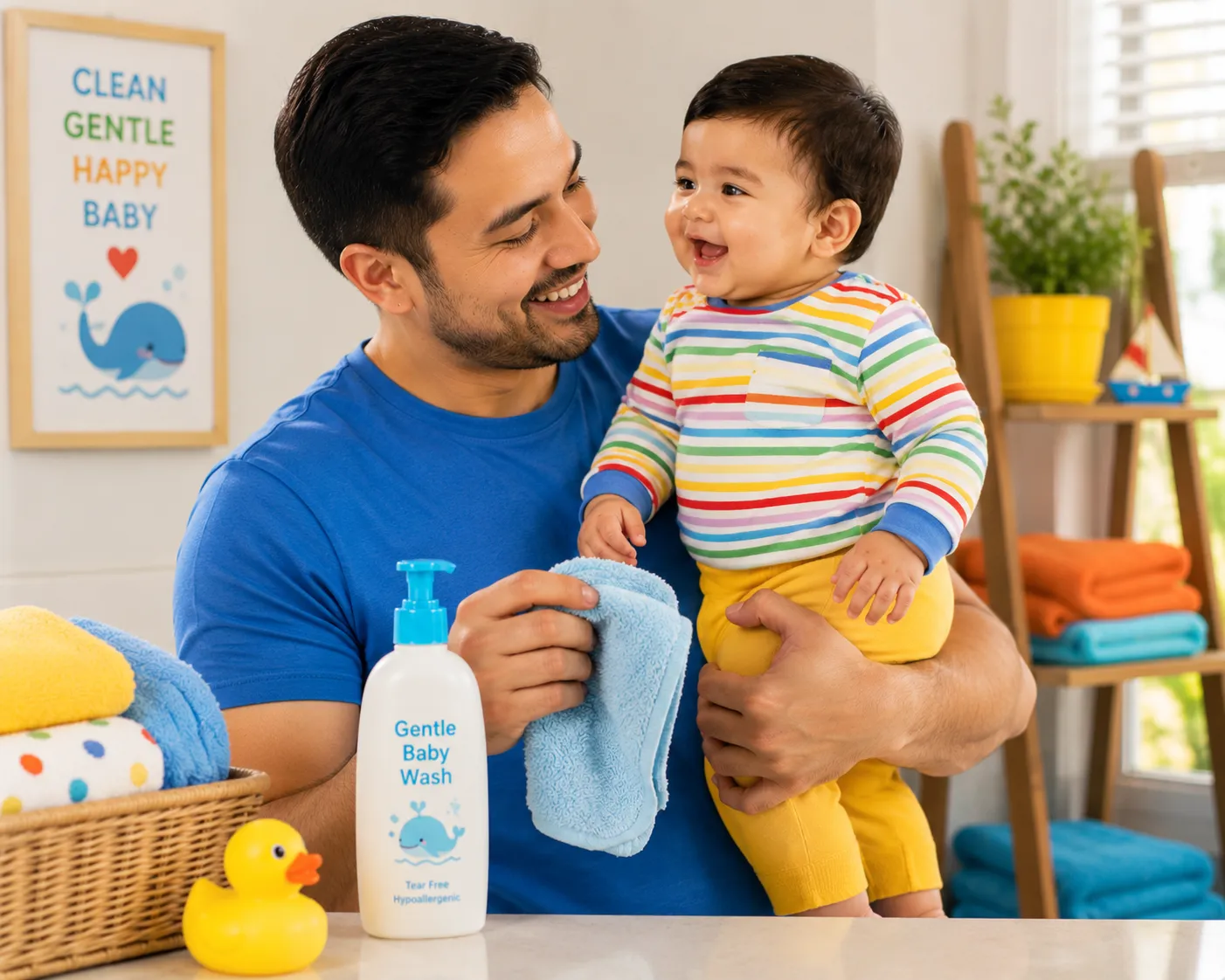
You wash your baby’s hair, rinse it carefully and everything seems perfectly normal. Then later that evening, you notice them rubbing their cheeks, scratching around their neck or becoming unusually restless when you put them to bed. Perhaps the skin around the hairline looks a little drier, or the folds of the neck appear redder than they did before the bath. It is easy to focus on creams, clothing, food or laundry products and never think about the shampoo you rinsed through their hair an hour earlier.
But yes, shampoo can sometimes contribute to itchy skin on a baby’s face and neck, particularly when the skin is already dry, irritated or eczema-prone. Shampoo does not remain neatly confined to the scalp when you rinse it away. It can travel across the forehead, around the ears, down the cheeks, behind the neck and into the little folds underneath the chin. For vulnerable skin, that brief exposure can sometimes become another pressure worth paying attention to.
Shampoo Doesn’t Only Touch Your Baby’s Hair
Think about what actually happens when you wash your baby’s hair. You massage shampoo into the scalp, add water and then rinse everything away. Unless your baby is sitting perfectly upright with their head tilted backwards, some of that diluted shampoo is almost certainly travelling across other areas of skin. The forehead, cheeks, ears, shoulders and neck can all be exposed.
For many babies, this causes no obvious problem at all. But when the cheeks are already dry or the neck is irritated by heat, sweat, saliva or friction, shampoo becomes another possible pressure on an already vulnerable area. The reaction does not necessarily have to be immediate or dramatic for the exposure to matter. Sometimes the clue is simply that your baby’s skin seems consistently itchier after hair-washing days.
Why Can Shampoo Make Vulnerable Skin Feel Itchy?
Shampoo has a very different job from a moisturiser or skin cream. It is designed to remove oils, sweat, dirt and residue from the hair and scalp, primarily using cleansing ingredients known as surfactants. Surfactants are necessary for effective cleansing, but different surfactants and formulations vary considerably in how they interact with skin. A product that cleans effectively can still be more cleansing than dry facial or neck skin needs.
This becomes especially relevant when your baby’s skin barrier is already vulnerable. Dry skin may lose water more easily and can be less comfortable when repeatedly exposed to cleansing products, heat and friction. If shampoo regularly runs across an already dry cheek or remains inside an irritated neck fold, it can add another challenge to that area. The shampoo may not be the whole problem, but it can sometimes become part of the problem.
The Neck Can Be Particularly Vulnerable
A baby’s neck can become a collection point for almost everything. Milk, dribble, sweat, food and moisture can accumulate in the folds, particularly in younger babies with those wonderfully chubby little necks. Friction occurs as the folds rub together, while warm weather or heavy clothing can make the area even more humid. Then shampoo runs down from the scalp during bath time and enters the same environment.
If shampoo is not rinsed completely from those folds, small amounts of cleanser or fragrance may remain against already vulnerable skin. Moisture, friction, heat and cleanser residue can then act together rather than independently. This is why the neck deserves particular attention during rinsing and drying. Sometimes apparently mysterious neck itching is simply several ordinary pressures meeting in exactly the same place.
Don’t Forget the Hairline and Behind the Ears
Another area parents can easily overlook is the boundary between the scalp and face. Shampoo naturally passes over the forehead and hairline as it is rinsed, and small amounts can also collect behind the ears. If your baby already has dry patches in these areas, repeated cleanser exposure may leave the skin feeling less comfortable. Your baby may then rub their head against you, their mattress or their bedding.
Behind the ears is particularly easy to miss because you cannot always see the area without deliberately looking. Water, sweat and cleanser can remain inside the little crease where the ear meets the head. Gently rinsing and drying this area can therefore become a useful part of the bathing routine. If your baby repeatedly scratches around the ears after bathing, look at where the shampoo and rinse water have actually travelled.
Fragrance Is Another Variable Worth Considering
Many baby shampoos smell beautiful because fragrance has become part of what we associate with a freshly washed baby. But fragrance does not actually clean the hair. For a child whose skin is already dry, itchy or eczema-prone, fragrance therefore introduces another substance that may not be necessary. That does not mean every fragranced shampoo will irritate every baby.
The important thing is to look for a pattern in your own child. If itching around the face, neck or hairline repeatedly seems worse after shampooing, trying a mild fragrance-free product is one way to simplify the routine. You are not automatically proving that fragrance was responsible, but you are removing one unnecessary variable. When vulnerable skin is involved, simplifying the routine can sometimes tell you more than continually adding new products.
Does “Baby Shampoo” Automatically Mean Gentle?
The word baby on the front of a bottle cannot tell you everything about the formulation inside it. Baby shampoos are generally designed with young children in mind, but individual formulations can still differ in surfactants, fragrance, preservatives, pH and other ingredients. One product may suit your baby’s skin extremely well while another apparently gentle product may not. No label can perfectly predict how every baby’s skin will respond.
This is where observation becomes particularly valuable. Does your baby’s forehead seem noticeably drier after shampooing? Do they rub their cheeks or scratch their neck more frequently that evening? Does the pattern change when you use less shampoo, wash the hair less frequently or switch to a milder fragrance-free formulation? Repeated patterns can sometimes tell you much more than the claims printed on the front of the bottle.
More Shampoo Does Not Mean Cleaner Hair
Parents can easily use more shampoo than a baby actually needs. We squeeze a generous amount into our hands because that is how we wash our own hair, then work it into a large lather before rinsing. But babies generally have much less hair, produce less scalp oil and use none of the styling products adults regularly wash away. Their shampoo requirements can therefore be very different from ours.
Using a smaller amount means there is less cleanser to rinse away and potentially less product travelling across vulnerable skin. Concentrate shampoo where it is actually needed, rinse carefully and avoid adding more simply because you have not created dramatic foam. Foam does not tell you how clean your baby’s scalp has become. Your baby’s hair does not need to disappear underneath a mountain of bubbles to become clean.
Does Your Baby Need Shampoo During Every Bath?
There is no universal rule saying every baby’s hair must be shampooed every night. How frequently it needs washing depends on age, hair, scalp, activity, weather and what your baby has actually been doing. A sweaty toddler who has spent the afternoon playing outside may have different cleansing needs from a young baby who has spent most of the day indoors. Routine should follow need rather than habit.
If your baby’s face or neck seems particularly dry after hair washing, reducing unnecessary shampoo exposure is one variable worth investigating. This does not mean allowing the scalp to become dirty or ignoring a genuine scalp problem. It simply means asking whether shampoo is actually required during every single bath. Sometimes one of the gentlest skincare decisions is deciding that a product does not need to be used today.
The Way You Rinse Can Make a Difference
Imagine pouring rinse water directly over the top of your baby’s head. Shampoo travels forward across the forehead, sideways towards the ears and backwards down the neck. Some inevitably reaches the face and body. If your baby has vulnerable skin in those areas, changing the direction and thoroughness of rinsing can reduce unnecessary exposure.
Where practical, gently position your baby’s head so rinse water travels backwards rather than directly across the face. Use enough clean water to remove the shampoo properly instead of leaving diluted residue in the hair or skin folds. Check behind the ears and around the neck before finishing the bath. Choosing a gentler shampoo helps, but rinsing it away properly matters too.
Even Your Hands Can Transfer Shampoo
There is another route shampoo can take that has nothing to do with rinse water. You massage shampoo into your baby’s hair and then immediately use those same hands to wipe their face, support their neck or clean around their mouth. Small amounts of cleanser can therefore be transferred directly onto areas you were trying to protect. It is remarkably easy to do because bath time tends to move quickly.
Simply rinsing your own hands after shampooing your baby’s hair can reduce that transfer. You can then clean your baby’s face with fresh water rather than hands still coated with cleanser. It is a tiny adjustment that costs nothing and takes only seconds. Caring for eczema-prone skin often involves several small adjustments rather than discovering one enormous solution.
Shampoo May Not Be the Only Thing Happening
Suppose your baby’s neck becomes itchy after their evening bath. It would be tempting to blame the shampoo immediately, but perhaps the bath water was also warmer than usual. Perhaps the neck folds remained damp, the pyjamas were warm, your baby was teething and producing more saliva, and they became sweaty shortly after going to bed. Shampoo is now only one part of a much bigger picture.
None of those pressures necessarily needs to be severe enough to create an obvious problem independently. Dryness may be present alongside moisture, heat, saliva, friction and scratching. Shampoo exposure may simply add another small amount of pressure to skin already dealing with everything else. This is why endlessly searching for one single eczema trigger can sometimes become so frustrating for parents.
This Is Where the Skin Threshold Model Helps
In our book, Beyond the Skin Barrier, we explore what we call the Skin Threshold Model. Imagine your baby’s skin as having a changing threshold for the pressures it can comfortably tolerate. Dryness may already have filled part of the imaginary bucket, while heat, sweat, friction, saliva and scratching add a little more. Shampoo exposure may simply become the next small addition.
This helps explain why the same shampoo can appear perfectly fine one week and seem problematic another week. Your baby’s underlying skin condition and the pressures surrounding it may have changed. Instead of asking only, “Is this shampoo causing my baby’s eczema?”, it can be more useful to ask, “Could this shampoo be adding unnecessary pressure to skin that is already struggling?” That shift in thinking is one of the central ideas we explore throughout Beyond the Skin Barrier.
For parents who want to understand this broader approach to dry, itchy and eczema-prone baby skin, you can get a free copy of Beyond the Skin Barrier here: https://itchabye.com/beyond-the-skin-barrier/. The book explores the Skin Threshold Model and the wider pressures that can influence vulnerable baby skin. It is designed to help parents connect the dots rather than focus on one possible trigger in isolation. You can read more and get your copy directly from the Itch-A-Bye website.
Why the Face Can React Even When the Scalp Seems Fine
Parents sometimes find this confusing because the scalp appears perfectly comfortable while the cheeks become dry or itchy after shampooing. But different areas of your baby’s body experience very different environmental conditions. The face is exposed to saliva, food, wiping, weather and frequent touching, while the neck experiences moisture, warmth and friction within its folds. Those areas may therefore already be under greater pressure before shampoo ever reaches them.
A shampoo can consequently appear well tolerated on the scalp yet be less comfortable when repeatedly washed across vulnerable facial skin. This does not necessarily mean the shampoo is defective or inherently harsh. It means the context in which the product meets the skin matters. The same formulation can encounter very different skin environments only a few centimetres apart.
What Should Parents Look for in a Baby Shampoo?
For a baby with dry, itchy or eczema-prone skin, simplicity is a sensible place to begin. Look for a mild shampoo designed for babies and consider a fragrance-free option if your child’s surrounding skin seems easily irritated. Avoid assuming that more foam, stronger fragrance or a longer ingredient list means better cleansing. The objective is effective cleansing with as little unnecessary exposure as reasonably possible.
Then judge the shampoo by what happens after you use it. Look at the scalp, but also examine the forehead, cheeks, behind the ears and around the neck. Notice whether scratching becomes more frequent after hair washing and whether changing the product, amount or washing frequency alters that pattern. The best shampoo for your baby is ultimately one their scalp and surrounding skin tolerate comfortably.
What Happens After the Bath Matters Too
Once the shampoo has been rinsed away, the job is not finished. Gently pat the face, behind the ears and around the neck rather than rubbing those areas vigorously with a towel. Make sure the neck folds are comfortably dry rather than leaving water trapped between the skin surfaces. Then consider what the dry and vulnerable areas of your baby’s skin need next.
This is where we believe parents should think beyond simply replacing moisture. Dry, itchy and eczema-prone skin may simultaneously be dealing with barrier vulnerability, friction, scratching and environmental pressures. When we developed Itch-A-Bye Baby Repair Cream, we wanted the formulation to reflect that broader picture rather than behave as just another basic moisturiser. Our formulation philosophy became Repair, Nourish and Defend.
REPAIR: Supporting Vulnerable Skin After Cleansing
After bathing and cleansing, supporting hydration is an obvious starting point for dry skin. Hyaluronic Acid and Glycerin are included within Itch-A-Bye because of their ability to support hydration and water retention in the outer skin. When a baby’s cheeks or neck repeatedly become dry, helping maintain hydration becomes an important part of supporting the barrier. But our Repair philosophy was never intended to stop at water alone.
We also selected ingredients such as Allantoin and Centella asiatica because they bring different properties into the formulation. Allantoin is widely used for its soothing and skin-conditioning properties, while Centella contains naturally occurring compounds that have been studied in relation to skin recovery, inflammatory pathways and antioxidant activity. They complement the humectants rather than simply repeating their function. Repair, in our formulation philosophy, means supporting vulnerable skin from several directions.
NOURISH: Much More Than Moisturising
When we use the word Nourish, we mean considerably more than simply putting moisture back into the skin. Vulnerable skin may benefit from hydration, but it may also benefit from conditioning oils, soothing ingredients, vitamins, antioxidants and carefully selected botanical compounds. Our goal was to combine topical ingredients offering different forms of support rather than create another cream whose entire story begins and ends with moisture. This becomes particularly relevant after cleansing, when substances have just been removed from the skin’s surface.
Think of Nourish as supplying different forms of topical support to skin that still has a lot of work to do. Your baby’s skin must retain water, remain comfortable underneath clothing, recover from everyday rubbing and scratching and continue functioning as a protective boundary between your child and the outside world. One ingredient cannot intelligently perform all of those jobs. That is why ingredient synergy sits at the centre of the Itch-A-Bye formulation.
Black Seed Oil Brings Something Different
Black Seed Oil, Nigella sativa, is particularly important to that philosophy because its role extends beyond simply behaving as an oil. Its naturally occurring constituents, particularly thymoquinone, have been studied for anti-inflammatory, antioxidant and antimicrobial properties. Those areas of research made Black Seed Oil especially interesting when we were thinking about dry, itchy and vulnerable skin. It contributes something quite different from a straightforward humectant.
That difference is exactly what we wanted. Hyaluronic Acid can contribute strongly to hydration while Black Seed Oil brings a different profile, and Allantoin provides another form of support again. MSM, vitamins and the botanical complex add still more complementary properties. We do not need one ingredient pretending to do everything when carefully selected ingredients can work together.
MSM Adds Another Piece to the Formulation
MSM, methylsulfonylmethane, was selected for another set of reasons. It has been studied particularly in relation to inflammatory and oxidative processes, giving it a different profile from the hydration-focused ingredients within the formula. For skin that is dry while also being rubbed, scratched or exposed to everyday environmental pressures, that distinction matters to our formulation philosophy. We are trying to support a complicated biological surface rather than simply make it feel moisturised.
This is why we repeatedly return to the idea of synergy. MSM does not need to replace Black Seed Oil, and Black Seed Oil does not need to replace Hyaluronic Acid. Allantoin, Centella and our vitamins bring still more complementary properties into the formulation. Different ingredients contribute different strengths, while the formulation brings those strengths together.
The Botanicals Were Selected for Different Reasons Too
Our botanical complex follows the same principle. Chamomile has research around soothing and anti-inflammatory properties, while Green Tea contains polyphenols widely investigated for antioxidant and anti-inflammatory activity. Licorice contains constituents studied across anti-inflammatory, antimicrobial and other biological activities. These areas can overlap, but the ingredients themselves are not identical.
Scutellaria baicalensis, Rosemary, Ginger and Polygonum cuspidatum bring still more diverse plant compounds and areas of scientific interest. We do not claim that every botanical performs every possible function because that would undermine the reason for selecting a diverse combination in the first place. We chose ingredients whose properties could complement one another within a broader formulation. For us, the formulation itself is more important than any single hero botanical.
DEFEND: Thinking About the Skin’s Protective Environment
Your baby’s skin does not become isolated from the world after bath time. Their face encounters your hands, saliva, bedding, food and the surrounding environment, while their neck sits underneath clothing and naturally encounters sweat and microorganisms. Human skin normally coexists with enormous microbial communities, and the objective is certainly not to sterilise it. But vulnerable or repeatedly scratched skin still has an important protective job to perform.
Our Defend philosophy therefore considers ingredients whose constituents have been investigated for antimicrobial properties alongside their other supportive functions. Black Seed Oil has research relating to antibacterial and antifungal activity, while compounds found in botanicals including Scutellaria, Licorice, Rosemary and Ginger have also attracted antimicrobial research interest. Those properties help explain why we selected them as parts of a broader formulation for vulnerable skin. Defend means supporting the skin’s protective environment rather than trying to turn everyday skincare into a disinfectant.
The Formulation Is the Hero
It is tempting to ask which ingredient in Itch-A-Bye is the most important. Is it Black Seed Oil, MSM, Hyaluronic Acid, Allantoin, Centella or one of the botanicals? We think that question misses what makes the formulation interesting. Different ingredients were selected because we wanted them contributing different strengths.
A football team containing eleven goalkeepers would have plenty of goalkeeping ability but would not be a particularly effective team. Formulation works in much the same way. Hydration, conditioning, soothing, antioxidant support and the other properties we considered during development do not all need to come from one ingredient. The formulation, rather than one fashionable hero ingredient, is the strategy behind Itch-A-Bye.
A Simple Hair-Washing Routine for Eczema-Prone Babies
Keep hair washing purposeful rather than automatic. Use a small amount of mild baby shampoo when the scalp and hair genuinely need cleansing, and consider fragrance-free formulations for babies whose surrounding skin is easily irritated. Rinse carefully so shampoo travels away from the face where possible, then check behind the ears and inside the neck folds. Rinse your own hands before touching your baby’s face again.
After the bath, gently pat rather than rub vulnerable areas and avoid leaving dampness trapped inside neck folds. If the cheeks, hairline or neck are dry and itchy, this is also a natural time to provide appropriate skincare support. The objective is to move from cleansing into supporting the skin rather than continuing to strip, rub and expose it. Wash what needs washing, rinse properly, then support vulnerable skin.
Watch What Happens on Shampoo Days
If you suspect shampoo is contributing to your baby’s facial or neck itching, you do not need to change ten things tomorrow. Start by watching the pattern and comparing hair-washing days with non-hair-washing days. Look particularly at scratching, rubbing, redness, dryness and bedtime comfort. Patterns that repeat several times are generally more informative than one unusual evening.
If a pattern begins to emerge, make one sensible change and observe again. That might mean using less shampoo, washing the hair less frequently, switching to a milder fragrance-free formulation or changing the way you rinse. Keeping the rest of the routine reasonably stable makes the result easier to interpret. Sometimes the answer becomes clearer when you stop changing everything at once.
When the Neck Looks More Than Simply Dry
Ordinary dryness and mild irritation are one thing, but the neck folds deserve closer attention if the skin becomes increasingly painful, swollen, weepy or crusted, develops pustules or appears to be rapidly worsening. Scratching can damage already vulnerable skin, while warm, moist folds can develop problems that require more than routine skincare. If something looks significantly different from your baby’s usual dry-skin pattern, it is sensible to have it properly assessed. The same applies if your baby seems unwell alongside the skin changes.
This does not mean parents should panic whenever a neck fold becomes red. Babies commonly experience irritation in areas repeatedly exposed to saliva, moisture, heat and friction. The important thing is recognising when the pattern has moved beyond the ordinary irritation you know into something more concerning. Good skincare also means recognising when skincare alone may not be enough.
So, Can Shampoo Cause Itchy Skin on a Baby’s Face and Neck?
Yes, shampoo can sometimes contribute to facial or neck itching, particularly when it repeatedly comes into contact with skin that is already dry, irritated or eczema-prone. The cleansing system, fragrance, amount used, frequency of washing, rinsing technique and whether residue remains in skin folds can all influence the experience. But shampoo may also be only one pressure among several. Heat, sweat, saliva, friction, dryness and scratching may all be happening at the same time.
That is why we would not immediately label one bottle of shampoo as the single cause of every flare. Look at the pattern, simplify unnecessary exposures and make hair washing as gentle and targeted as possible. Then think carefully about what happens to the skin after cleansing. Reducing pressure while supporting vulnerable skin can be more useful than endlessly searching for one perfect culprit.
Want to Understand What Else Could Be Affecting Your Baby’s Skin?
Shampoo is only one of the everyday pressures parents often overlook. In Beyond the Skin Barrier, we explore the bigger picture behind dry, itchy and eczema-prone baby skin, including barrier vulnerability, environmental pressures, the itch-scratch cycle and the Skin Threshold Model. The book was created to help parents move beyond endlessly asking, “What is the one thing causing this?” and begin looking at how several pressures may be interacting. You can get your copy and explore the approach in much greater detail at https://itchabye.com/beyond-the-skin-barrier/.
If you are looking for the cream we developed around our Repair, Nourish and Defend formulation philosophy, you can also learn more about Itch-A-Bye Baby Repair Cream, its ingredients and how we designed it for dry, itchy and eczema-prone baby skin. The complete product information is available directly from the Itch-A-Bye website. Visit https://itchabye.com/product/itch-a-bye-baby-repair-cream/ to discover the cream. There you can explore the product and decide whether it fits your baby’s skincare routine.
Wash the Hair. Protect the Skin.
Your baby’s shampoo has one fairly straightforward job: clean the hair and scalp gently. It does not need to perfume the entire bathroom, create enormous amounts of foam or repeatedly wash across areas that were already clean. The less unnecessary cleansing exposure vulnerable facial and neck skin receives, the simpler the routine becomes. For many families, small changes in product choice, quantity, frequency and rinsing technique may be worth exploring.
And when dry, itchy or eczema-prone skin needs support afterwards, think beyond moisture alone. Our approach with Itch-A-Bye Baby Repair Cream is to combine ingredients selected for complementary purposes through Repair, Nourish and Defend, rather than expecting one hero ingredient to do everything. If you want to understand the thinking behind the wider approach, start with Beyond the Skin Barrier, and if you want to explore the formulation we created from that philosophy, visit the Itch-A-Bye product page. Clean only what needs cleaning, reduce unnecessary pressure, then give vulnerable skin thoughtful support for what comes next.