
Could Food Be Behind Your Baby’s Itchy Skin? What Parents Should Know Before Removing Foods
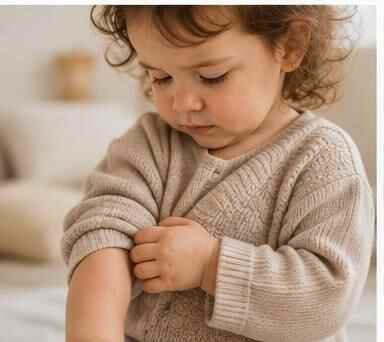
When your baby has been scratching for weeks and the eczema keeps returning, food can quickly become one of the first things you begin to suspect. Perhaps the cheeks become red after breakfast, the scratching seems worse after a bottle, or somebody in a parenting group tells you that removing dairy completely transformed their child’s skin. Before long, milk, eggs, wheat, soy and other everyday foods can all start looking suspicious. When you are watching your baby scratch until they are distressed, removing a food can feel like a simple and logical thing to try. But the relationship between food, allergy and baby eczema is more complicated than simply finding one food and taking it away. Food allergy can be associated with eczema in some babies and young children, particularly when eczema is more severe or difficult to control. However, having eczema does not automatically mean that your baby has a food allergy, and a worsening patch of eczema after eating does not by itself prove that a particular food is responsible. Babies with eczema can also experience flares because of heat, sweat, saliva, scratching, bathing, environmental irritants and problems with the skin barrier. Several of these pressures may be happening at the same time that new foods are being introduced. This is why identifying a genuine relationship with food requires more care than simply blaming whatever your baby ate most recently. Why Food Becomes Such a Powerful Suspect Parents dealing with persistent eczema naturally want to find something they can control. Food feels controllable because it can be identified, removed and replaced, which makes dietary changes seem more straightforward than trying to understand a complex skin condition. If your baby eats yoghurt in the morning and scratches more intensely that afternoon, the connection can feel obvious. But two events occurring close together do not necessarily mean that one caused the other. Eczema naturally fluctuates, and a baby can become itchier during the same day because of warmth, dryness, sweating, rubbing or an existing flare that was already developing. This becomes even more confusing during the introduction of solid foods because many other developmental changes are happening at exactly the same time. Babies may be drooling heavily, rubbing food across their faces, spending more time in highchairs, sleeping differently and becoming much more physically active. Food is now touching the cheeks, chin, neck and hands in ways that did not happen before. Parents may therefore see redness around the mouth after eating and understandably interpret it as an internal allergic reaction. Sometimes, however, the explanation may involve direct contact with already vulnerable skin rather than an allergy to the food itself. Eczema and Food Allergy Are Connected, but They Are Not the Same Thing Eczema and food allergy can occur together, and children with eczema have a higher likelihood of food allergy than children without eczema. This association is especially relevant when eczema begins early, is moderate to severe, or remains difficult to control despite appropriate treatment. But an association does not mean every child with eczema needs foods removed from their diet. Many babies with eczema eat common allergenic foods without those foods causing their skin symptoms. Treating every eczema flare as evidence of food allergy can therefore lead families down an unnecessarily restrictive path. The connection between eczema and allergy is also interesting because the skin barrier itself may be part of the story. When the barrier is damaged, substances from the environment can interact with the immune system differently than they would through healthy intact skin. Researchers have investigated how early skin barrier dysfunction may relate to later allergic sensitisation in susceptible children. This reinforces why good eczema management matters beyond simply making a rash look better. Supporting the skin barrier and obtaining appropriate allergy advice when needed can be complementary rather than competing approaches. What Does a More Immediate Food Allergy Look Like? Some food reactions are much clearer than a gradual eczema flare. A baby may develop hives, facial swelling, vomiting, coughing, wheezing or other symptoms relatively soon after eating a particular food. The reaction may happen repeatedly when that same food is consumed, making the association much more noticeable. These patterns deserve medical assessment rather than repeated experimentation at home. Significant breathing difficulty, collapse or swelling involving the tongue or throat requires urgent medical attention. Eczema alone can be much harder to interpret because it naturally changes from day to day. A baby might eat egg at breakfast and develop worse eczema that evening, but they may also have been hot, sweaty and scratching throughout the afternoon. That does not mean food could not be relevant, but the relationship is less straightforward than an immediate reproducible reaction. This is why parents should avoid diagnosing a food allergy solely from changes in eczema. A healthcare professional can help determine whether the history suggests that allergy testing or specialist assessment is appropriate. Redness Around the Mouth Does Not Automatically Mean Allergy Imagine your baby eating tomato, yoghurt or fruit while already having dry irritated skin around the mouth. The food gets smeared across the cheeks and chin, saliva mixes with it, and then the area is wiped several times during and after the meal. Within minutes, the skin looks redder. It is easy to look at that sequence and conclude that your baby is allergic to the food. But irritated eczema-prone skin can react locally when food, saliva and repeated wiping come into direct contact with it. Contact irritation is different from a systemic food allergy. The distinction matters because unnecessarily removing nutritious foods based solely on local facial redness may complicate your baby’s diet without solving the underlying skin problem. Pay attention to whether symptoms occur only where food physically touched the skin or whether there are symptoms elsewhere on the body. If you are uncertain, photograph the reaction and discuss it with your healthcare professional rather than repeatedly testing the food yourself. A clear record can make the pattern much easier to assess. The Skin Around the Mouth Is Already Under Enormous Pressure The mouth, cheeks, chin and neck are among the busiest areas of a baby’s skin. Saliva sits there, milk spills there, food gets rubbed there, bibs create friction and parents wipe the area throughout the day. If your baby already has eczema on the face, the barrier may be particularly vulnerable to this constant contact. A meal can therefore become a combination of moisture, food contact, wiping and friction rather than a simple test of what happens inside the body after eating. That environment can make facial eczema look much more dramatic. This is especially important during teething, when drooling may increase considerably. A baby can appear to react after every meal simply because each meal adds another layer of contact to skin that has remained damp and irritated all day. Gently blotting rather than repeatedly rubbing the face can reduce some unnecessary friction. Supporting the skin barrier between meals may also help make these patterns easier to interpret. If the same food repeatedly produces broader or immediate symptoms, however, that deserves a different level of attention. Why Removing Dairy Is Not Automatically the Answer Dairy is probably one of the first foods parents hear about when discussing baby eczema online. Stories about eliminating cow’s milk can be compelling, particularly when another parent describes a dramatic improvement. Cow’s milk allergy certainly exists and can affect some babies, but eczema by itself does not establish that milk is the cause. Removing dairy without appropriate guidance can also become nutritionally significant, especially in babies and young children. The younger the child, the more important it is to consider what nutrients are being removed and how they will be replaced. If you suspect cow’s milk or another major food is contributing to your baby’s symptoms, discuss the pattern with a doctor, allergy specialist or appropriately qualified dietitian. This is particularly important before changing infant formula or removing multiple foods from a breastfeeding parent’s diet. A properly planned elimination may occasionally form part of clinical assessment, but it should have a clear purpose, appropriate duration and a plan for what happens next. Indefinite avoidance based on suspicion alone can create more questions than answers. Professional guidance can also help protect your baby’s nutritional needs while the question is investigated. Removing Several Foods at Once Can Make the Mystery Harder When parents become desperate, it is tempting to remove dairy, egg, wheat and soy all at the same time. If the eczema improves two weeks later, however, you still do not know whether one of those foods mattered, whether several mattered or whether the improvement had nothing to do with food. Perhaps the weather cooled down, a flare was appropriately treated or the baby stopped scratching as intensely. Changing too many variables simultaneously makes cause and effect extremely difficult to understand. It can also make feeding a baby unnecessarily complicated. Broad elimination diets can affect energy, protein, vitamins, minerals and the variety of foods a growing child receives. They can also create considerable anxiety around meals for the whole family. Dietary restriction should therefore have a reason rather than simply being used as an open-ended experiment. If food is genuinely suspected, a structured assessment with professional guidance gives you much more useful information. The goal should be to identify a real problem, not to create a longer list of foods everyone is afraid to offer. Do Not Assume the Breastfeeding Parent Must Remove Foods Parents of breastfed babies sometimes feel enormous pressure to change the breastfeeding parent’s diet as soon as eczema appears. Dairy is often removed first, followed by soy, egg, wheat and other foods if the skin does not improve quickly. In some medically assessed situations dietary changes may be appropriate, but maternal restriction should not automatically become the first response to ordinary baby eczema. A breastfeeding parent also needs adequate nutrition, particularly during a physically demanding stage of life. Removing several major food groups without professional support can make that much harder. If you suspect that something in the breastfeeding parent’s diet is genuinely associated with your baby’s symptoms, bring the history to an appropriate healthcare professional. Write down what was eaten, when symptoms appeared and what those symptoms actually were rather than relying on memory after several difficult nights. This can help distinguish a repeated pattern from coincidence. It also provides a much stronger foundation for deciding whether any dietary trial is justified. A structured approach is safer than progressively removing foods because the eczema has not disappeared. Could the Problem Actually Be Heat? Before removing a food, ask what else happened around the time the itching increased. Was your baby sitting in a warm highchair, wearing a bib and becoming hot while eating? Did the neck become sweaty while food and saliva collected beneath the chin? Did your baby become restless and start scratching because they were warm rather than because of something they swallowed? These possibilities are easy to overlook when food is sitting directly in front of you as the most obvious suspect. Our guide Could Heat and Sweat Be Making Your Baby’s Itching Worse? Signs Parents Often Miss explores how temperature can intensify itching in eczema-prone skin. Heat can also combine with moisture and friction around skin folds, creating irritation in predictable areas. If symptoms repeatedly appear during warm meals or immediately afterwards, look at the whole environment. Sometimes changing the temperature or wet clothing reveals more than changing the menu. The food may simply have been present when another pressure was actually increasing. Could Saliva and Face Rubbing Be Confusing the Picture? Babies do not eat neatly, and that matters when you are trying to interpret a possible food reaction. Food becomes mixed with saliva and then spread across cheeks that may already be dry or inflamed. The baby rubs the face with wet hands, wipes it against clothing and may later rub against your shoulder. By the time the meal is finished, the skin has experienced far more than simply eating. Facial redness after meals can therefore have several possible explanations. Our article Baby Rubbing Their Face and Head Until It’s Raw? What That Constant Scratching May Mean looks at the role of rubbing, saliva, heat and eczema around the face. If the redness follows the exact path where food and saliva touched the skin, mention that detail when seeking professional advice. If hives or other symptoms appear away from the contact area, mention that too. The pattern matters far more than simply saying, “My baby gets red after food.” Careful observation can help separate local irritation from a broader reaction. Could the Eczema Already Have Been Flaring? Eczema does not always announce itself with sudden bright redness. Sometimes itching begins before the visible flare becomes obvious. A baby may start scratching or rubbing relatively normal-looking skin, with redness becoming more noticeable hours later. If a meal happens during that period, the food can easily be blamed for a process that was already underway. Timing can create a convincing story even when the biological sequence is different. This is why Baby Itching but No Rash? 6 Reasons Skin Can Itch Even When It Looks Normal is relevant when investigating food. Watch what your baby was doing before the meal as well as afterwards. Were they already scratching during the morning or after waking from a nap? Earlier signs may reveal that the skin was becoming uncomfortable before the suspected food ever arrived. Looking backwards can sometimes change how the entire reaction appears. A Food Diary Can Help, but Only If You Record More Than Food If you decide to keep a diary, do not create a simple list of everything your baby eats. Record the skin as well. Note where the eczema appeared, when scratching started, whether there were hives, vomiting or swelling, and how long symptoms lasted. Also record major environmental changes such as hot weather, poor sleep, heavy drooling or an active eczema flare. This gives the diary context. Photographs can be particularly useful because descriptions such as “very red” mean different things to different people. Take clear photographs when a reaction appears and, if useful, another after it settles. Bring this information to your doctor or allergy specialist rather than using the diary to diagnose the allergy yourself. A good record should improve a professional assessment, not replace one. The aim is to create useful evidence rather than a growing catalogue of fears. What About Delayed Reactions? Not every food-related problem occurs within minutes, which is one reason this subject becomes complicated. Some symptoms can be delayed, and eczema itself naturally fluctuates over longer periods. This makes it much harder to establish cause and effect from observation alone. The longer the time between eating and symptoms, the more other variables can enter the picture. Parents can quickly end up suspecting almost every food the child consumed that day. This is where professional guidance becomes particularly valuable. A clinician can consider the type of symptoms, timing, eczema severity, growth, feeding history and other medical factors. Testing is not automatically useful for every delayed eczema flare, and results need to be interpreted in the context of the child’s history. Testing without a clear clinical question can sometimes create additional confusion rather than certainty. A thoughtful assessment can help decide whether food really deserves further investigation. An Allergy Test Is Not a Simple Yes or No Answer Parents understandably assume that an allergy test will provide a definitive list of foods their baby should never eat. In reality, allergy testing needs careful interpretation. A positive test can indicate sensitisation without necessarily proving that eating the food causes clinical symptoms. Removing foods solely because of test results without considering the child’s history can therefore lead to unnecessary avoidance. The clinical story remains extremely important. This is another reason internet allergy panels and broad screening approaches should be treated cautiously. Testing should answer a meaningful question rather than simply search for anything that produces a positive result. If your baby has significant eczema and you are concerned about food allergy, discuss what type of assessment is appropriate with a qualified healthcare professional. A targeted investigation is usually more useful than trying to test everything. Results need to make sense alongside what actually happens when your baby eats. Do Not Repeatedly Challenge a Suspected Food at Home After a Serious Reaction If your baby has experienced a convincing immediate reaction to a food, repeatedly offering it at home to see whether the same thing happens again can be dangerous. Parents sometimes feel they need to prove the connection before contacting a doctor. You do not. A detailed history of what happened is enough reason to seek professional advice. Further exposure should be guided by an appropriate clinician when a significant allergy is suspected. This is particularly important after breathing symptoms, significant swelling, collapse or a severe widespread reaction. Seek urgent medical help for serious reactions. For less severe but repeatable reactions, contact your healthcare professional for advice about the next step. Food challenges, when required, should be performed under appropriate medical guidance. Safety matters more than proving a theory at home. The Gut-Skin Axis Is Real, but It Should Not Become a Marketing Shortcut Parents searching for eczema answers will quickly encounter claims about “healing the gut.” The gut microbiome and immune system do interact, and researchers continue studying relationships between microbial development, immune signalling, allergy and inflammatory skin conditions. That makes the gut-skin axis an important area of eczema research. It does not mean every baby with eczema has a damaged gut that can be repaired with one supplement. Complex biology should not be reduced to a simple sales promise. The developing immune system is influenced by many factors, and individual babies are different. Probiotics, supplements and dietary interventions should not automatically be added simply because eczema is present. Some questions may warrant professional nutritional or medical guidance, especially when feeding, growth or allergy is involved. Understanding the gut-skin connection should make parents better informed, not more vulnerable to miracle claims. Evidence and individual circumstances should guide decisions. Your Baby’s Skin Barrier May Be Part of the Allergy Story The relationship between the skin barrier and allergy is one of the reasons early eczema care deserves attention. Damaged eczema-prone skin is more permeable than a healthy intact barrier, which changes how the body interacts with the surrounding environment. This has contributed to scientific interest in whether allergen exposure through damaged skin may play a role in sensitisation in susceptible infants. The relationship is complex, but it reinforces the importance of caring for the skin rather than treating it as merely cosmetic. A strong barrier is part of the body’s first line of defence. This is also why constant scratching deserves attention. Scratching physically damages an already vulnerable surface and can perpetuate the itch-scratch cycle. Supporting the barrier, controlling active inflammation appropriately and reducing unnecessary irritation are therefore fundamental parts of eczema management. Food questions matter, but the skin itself should never disappear from the investigation. Both the internal and external picture deserve appropriate attention. Think in Terms of Cumulative Load The threshold model we use in Beyond the Skin Barrier can help make sense of why food sometimes appears to be involved but does not tell the whole story. Imagine that your baby’s skin and immune system are coping with several pressures simultaneously. Dryness adds some load, heat adds more, scratching adds more, saliva adds more and environmental irritants may contribute further. In some babies, a genuine food allergy or sensitivity may add another important pressure. The flare becomes visible when the combined load exceeds the child’s capacity. This helps explain why eczema can appear worse after the same food on one occasion but not another. Perhaps the second occasion happened during hot weather while the baby was already scratching and sleeping badly. The food may be relevant, irrelevant or only one part of a much larger picture. A threshold model encourages investigation without automatically blaming the last thing the child ate. It also helps parents focus on reducing the dominant pressures rather than chasing every possible variable. Removing a Genuine Trigger and Treating Eczema Are Different Jobs Even when a food allergy is confirmed, removing that allergen does not make skin care irrelevant. Your baby can still have eczema-prone skin that requires ongoing barrier support and appropriate treatment. Likewise, excellent skincare cannot make a genuine food allergy safe to ignore. These are different parts of the child’s health and need to be treated accordingly. Parents should not be forced into choosing between a “food explanation” and a “skin explanation.” The same principle applies to prescribed eczema medication. If active inflammation requires treatment, use the treatment according to professional instructions. Do not stop prescribed therapy because you have started investigating food. While the investigation proceeds, the baby still deserves relief from uncontrolled inflammation and itching. Appropriate treatment and careful investigation can happen at the same time. Repair: Support the Barrier While You Investigate The first part of the Skin Trifecta is Repair. If a baby is scratching because the skin is dry and inflamed, the barrier can become increasingly damaged regardless of whether food is involved. Repair focuses on supporting that physical barrier while reducing avoidable friction, harsh cleansing and other external pressures. It also means treating active eczema appropriately rather than waiting for a dietary experiment to solve it. Your baby’s skin needs support while the questions are being answered. This can be especially important around the mouth when solid foods begin. Protecting vulnerable facial skin and gently removing food residue can reduce contact irritation that might otherwise be mistaken for allergy. If the skin is already raw or severely inflamed, seek advice about appropriate treatment. Repair creates a better foundation from which the rest of the pattern can be observed. It also reduces one major source of pressure while other possibilities are being investigated. Nourish: Do Not Let an Eczema Investigation Undernourish Your Baby The second part is Nourish, and here the word has two important meanings. Eczema-prone skin needs consistent topical support to remain hydrated and comfortable. At the same time, a growing baby needs adequate nutrition from an increasingly varied diet. Removing multiple nutritious foods without appropriate substitutes can work against that second need. An eczema investigation should never lose sight of the child’s growth and development. This is one reason professional dietetic guidance can be valuable when several foods genuinely need to be avoided. The goal is not simply to create a list of forbidden foods. It is to make sure the child continues receiving appropriate energy, protein, fats, vitamins and minerals. Nourish means supporting the whole child rather than focusing exclusively on the rash. A nutritionally sound plan is particularly important when restrictions continue for more than a short assessment period. Defend: Broken Skin Needs Support Too The third part is Defend. Eczema that is repeatedly scratched can develop tiny breaks that make the skin more vulnerable to bacteria, fungus and other microbes. Defend means helping the skin defend against bacteria, fungus and other microbes while avoiding harsh stripping that can further damage the barrier. It does not mean trying to sterilise a baby’s skin. Healthy defence begins with supporting the barrier itself. If eczema becomes weeping, painful, swollen, crusted or rapidly worse, medical assessment may be needed because infection can complicate eczema. A dietary change cannot treat a bacterial or viral skin infection. This is another reason parents should avoid interpreting every deterioration as evidence that the baby ate the wrong thing. Sometimes the skin itself needs prompt medical attention. Recognising that distinction can prevent delays in appropriate care. Where Itch-A-Bye Baby Repair Cream Fits Itch-A-Bye Baby Repair Cream was developed as supportive everyday skincare for babies and young children with Dry, Itchy and eczema-prone skin. It is made with all-natural ingredients and plant botanicals and is fragrance free and non-steroidal. Rather than positioning it simply as another moisturiser, we use the Skin Trifecta framework of Repair, Nourish and Defend. Its role is topical skin support, not diagnosing or treating food allergy. This distinction is especially important when parents are investigating possible reactions. Repair supports the vulnerable physical barrier, Nourish supports dry and stressed skin, and Defend helps the skin defend against bacteria, fungus and other microbes. If your baby has active eczema requiring prescribed treatment, Itch-A-Bye should not be used as a reason to avoid that treatment. If your baby has a suspected food allergy, a topical cream cannot make that food safe to eat. You can learn more about the skincare philosophy on our How It Works page. Supportive skincare should sit alongside appropriate medical and nutritional care when those are required. When Should You Ask About Food Allergy? Food allergy deserves particular attention when there is a clear and repeatable reaction associated with eating a specific food. Immediate hives, swelling, vomiting or respiratory symptoms are much more informative than eczema that happens to look worse several hours later. Babies with significant or difficult-to-control eczema may also warrant discussion about food allergy with their healthcare professional depending on their individual history. The decision to investigate should be based on the whole clinical picture. Parents should not feel that they have to solve this alone. Bring photographs and a written history if possible. Record the food, amount eaten, timing of symptoms, what the symptoms looked like and how long they lasted. Mention whether your baby had active eczema before eating and whether there were other factors such as heat or illness. Good information can make a clinical consultation much more productive. A detailed pattern is far more useful than a long list of foods removed on suspicion. When Food Probably Should Not Be Your First Suspect If your baby’s eczema reliably worsens after hot nights, sweaty naps or long periods in a car seat, start by considering heat. If the cheeks worsen during heavy drooling, look closely at saliva and friction. If the skin becomes itchier after bathing, examine water temperature, cleanser and the post-bath routine. If symptoms are concentrated beneath clothing or in bed, laundry products and fabric contact may deserve attention. Patterns involving direct environmental exposures can sometimes be much clearer than patterns involving food. Our wider article series examines many of these everyday pressures because persistent itching rarely deserves a one-dimensional explanation. The purpose is not to dismiss food as irrelevant. It is to stop food from becoming the automatic explanation for every flare. A broader view protects parents from unnecessary restriction while still leaving room to investigate genuine allergy when the evidence points in that direction. The best clue is often the pattern that repeats most consistently. Beyond the Skin Barrier This broader approach is central to our book Beyond the Skin Barrier. The book explores persistent baby eczema through the relationship between the physical skin barrier, immune signalling, the gut-skin axis and microbiome, food sensitivities and allergies, skin microbes, environmental loads and early-life influences. It does not claim that every child’s eczema begins in the gut or that eliminating foods will cure eczema. Instead, it asks parents to look at how several biological and environmental pressures may interact. This creates a more measured way of thinking about recurring symptoms. The threshold model helps explain why different babies can have completely different dominant triggers. Food may be highly relevant for one child and largely irrelevant for another. Heat, saliva, barrier damage or scratching may dominate in somebody else. Understanding those differences is far more useful than applying the same elimination diet to every baby with itchy skin. The goal is to identify the pressures that matter most for the individual child. Parents can read Beyond the Skin Barrier free to explore the full framework. The printed paperback edition is also available on Itch-A-Bye. The purpose of the book is education and better questions, not self-diagnosis. Decisions about significant food restriction, allergy testing and medical treatment should still involve appropriately qualified professionals. Better understanding should support safer decisions rather than encourage unnecessary experimentation. Before You Remove Another Food, Look at the Whole Child If you suspect food is behind your baby’s itchy skin, take the concern seriously without jumping immediately to restriction. Look at what happens, when it happens and whether the reaction is genuinely repeatable. Consider where the rash appears, whether food physically touched that area and whether other symptoms occur at the same time. Also look at heat, saliva, scratching, bathing, laundry exposures and the condition of the skin barrier. The answer may involve food, but it may also involve several pressures working together. Most importantly, do not allow the search for a trigger to leave your baby with untreated eczema or an unnecessarily restricted diet. Support the skin through Repair, Nourish and Defend, use prescribed eczema treatment as directed and seek professional assessment when allergy is genuinely suspected. If a food needs to be removed, there should ideally be a clear reason and an appropriate nutritional plan. If it does not need to be removed, keeping it in the diet can be just as important as taking a genuine allergen out. Safe decisions matter more than finding a quick explanation. Persistent itching is information, but it is not a diagnosis. Food can be part of the eczema story for some babies, yet the skin barrier, immune system, environment and daily triggers still matter. The aim is not to find something to blame. It is to understand what is placing the greatest pressure on your baby’s skin and respond in a way that is safe, measured and sustainable. That broader perspective can help parents move from fear-driven elimination towards more purposeful investigation. This article is educational and informational and is not medical advice. Do not remove major foods, change infant formula, undertake food challenges or alter prescribed eczema treatment based solely on this article. Seek guidance from a qualified healthcare professional for suspected food allergy, significant dietary changes, persistent or severe eczema, infection or concerning reactions.