
Can Hard Water Make Baby Eczema and Itching Worse? What Australian Parents Should Know
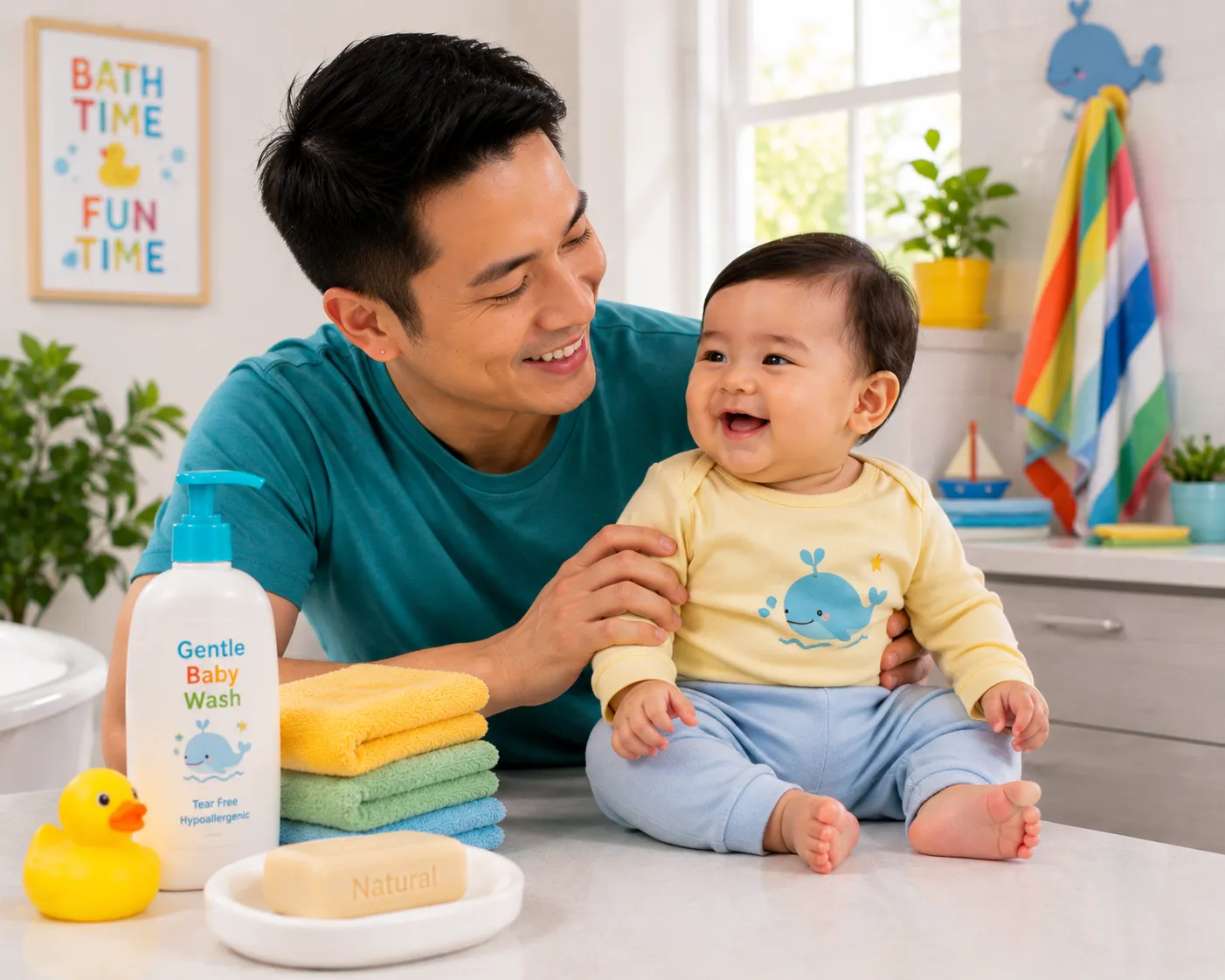
If your baby seems to become itchier after a bath, it is easy to start blaming the soap, the shampoo or even the bath itself. But sometimes parents begin to notice something else: the problem seems worse in one house, one suburb or one city than another. That can lead to a very practical question. Could hard water be making my baby’s dry, itchy or eczema-prone skin worse?
The answer is not completely simple, because hard water does not affect every child in the same way. Research has found associations between harder domestic water and childhood eczema, but that does not mean hard water alone causes eczema or that changing the water will automatically solve it. What it does suggest is that water quality may be one of several pressures acting on already vulnerable skin. For some babies, that additional pressure may be enough to make bath-time dryness or itching more noticeable.
What Is Hard Water?
Hard water contains higher levels of dissolved minerals, particularly calcium and magnesium. These minerals are naturally picked up as water moves through rock and soil before reaching the household supply. Hard water is common in many parts of the world and is not generally considered unsafe to drink. The issue here is not whether hard water is dangerous, but whether it can behave differently on the skin.
Parents often notice hard water in other ways around the home. You may see white scale around taps, marks on shower screens or a film left behind on sinks and kettles. Soap may also feel less foamy, and more product may be needed to create a lather. Those same interactions can matter when you are bathing a baby whose skin barrier is already dry, irritated or eczema-prone.
Why Hard Water May Matter for Baby Skin
A baby’s skin barrier is still developing and is generally more vulnerable than adult skin. It loses moisture more easily and can be more affected by friction, detergents and repeated washing. When skin is already dry or itchy, even small additional pressures can become more noticeable. Hard water may contribute by changing the way cleansers behave and by leaving mineral residues on the skin.
One concern is that soaps and cleansers can react with hard-water minerals and leave more residue behind. That residue may make the skin feel tight, dry or less comfortable after washing. This does not happen dramatically in every child, but it may be more noticeable when the skin barrier is already struggling. In that situation, hard water becomes one more factor added to heat, bathing time, cleanser choice, scratching and overall dryness.
Does Hard Water Cause Baby Eczema?
It is important not to oversimplify this. Eczema is influenced by many factors, including genetics, skin-barrier function, immune activity and environmental pressures. Hard water may be associated with a higher likelihood of childhood eczema in some research, but association is not the same as proof that hard water directly causes it. A child can live in a hard-water area and never develop eczema, while another child can have eczema in an area with softer water.
A better way to think about it is through the Skin Threshold Model. Your baby’s skin may be able to cope with a certain amount of daily stress before dryness, itching or redness becomes obvious. Hard water may not be the whole problem, but it could be one of several small pressures pushing the skin closer to that threshold. That is why looking at the full routine is often more useful than searching for one single culprit.
Why Does My Baby Get Itchy After a Bath?
When itching happens after bathing, there are several possible explanations. The water may be too hot, the bath may be too long, the cleanser may be too harsh or the skin may not be moisturised quickly enough afterwards. Hard water can add another layer by making cleansers harder to rinse away cleanly. The result can be skin that feels dry, tight or slightly irritated after the bath.
Timing can also be misleading. A baby may look completely comfortable while they are still in the bath, then become itchy ten or twenty minutes later as water evaporates from the skin. Scratching may become even more noticeable at bedtime when the child is warm and tired. This is why parents often feel that the itch appeared suddenly, even though the process may have started during the bath.
Is Hard Water the Same as Chlorinated Water?
No. Hard water and chlorinated water are two different things, although they can exist together in the same household supply. Hard water refers mainly to mineral content, particularly calcium and magnesium. Chlorine is commonly added to water supplies to control harmful microorganisms and help keep drinking water safe. The two can therefore affect the skin in different ways.
For some children, chlorine can contribute to dryness or irritation, while hard-water minerals may influence how soap and cleanser behave on the skin. If your baby is already dry or eczema-prone, either of these may become more noticeable. In some households, both may be part of the picture. That is another reason not to reduce the problem to one simple explanation.
Does Hard Water Make Soap Harder to Rinse Off?
This is one of the more practical ways hard water may affect the skin. Minerals in hard water can react with soap and produce residue that does not rinse away as cleanly as it does in softer water. Parents may notice a slightly coated feeling on the skin or that more cleanser seems necessary to get the same effect. Using more cleanser can then create its own problem, especially if the product is strongly fragranced or designed to foam heavily.
For babies with dry or eczema-prone skin, using less cleanser is often more important than trying to create lots of lather. The goal is not to make the baby “squeaky clean.” The goal is to remove sweat, saliva, dirt and other residues without stripping away too much of the skin’s natural protection. That becomes especially important if the household water is already hard.
Which Australian Areas Have Hard Water?
Water hardness varies significantly across Australia, and even within individual states. Some cities and regions have softer water, while others have noticeably harder supplies depending on the local water source and treatment system. Adelaide and parts of South Australia are often discussed in relation to harder water, while water conditions can also vary across parts of Western Australia and regional areas. The exact hardness level can change from one supply zone to another.
If you are concerned, your local water provider is usually the best place to check. Many Australian water authorities publish water-quality reports that include hardness, mineral content and treatment details. Looking at your actual local supply is more useful than assuming an entire city has one identical water profile. If you have recently moved house and your baby’s skin changed soon afterwards, local water quality may be worth adding to your list of observations.
Why Some Parents Notice a Difference After Moving
This is one of the clues that can make parents suspicious of the water. A baby may seem relatively comfortable in one home, then become noticeably drier or itchier after moving to another suburb or state. It is tempting to assume the new water supply must be responsible. Sometimes it may be contributing, but moving also changes many other things at the same time.
The climate may be hotter, colder or drier. The new home may have different air-conditioning, different laundry products, different bath water temperatures or different flooring and dust exposure. A move may also involve stress, disrupted sleep and changes in routine. Water quality can be part of that puzzle, but it is usually better to look at everything that changed rather than focusing on the taps alone.
Can a Water Softener Help Baby Eczema?
This is where expectations need to stay realistic. Water softeners can reduce hardness by removing calcium and magnesium from the water. That may improve how soap behaves and can make water feel different on the skin. However, studies have not consistently shown that installing a water softener improves established eczema severity in children.
That does not mean water softeners are useless. They may still make bathing feel more comfortable or reduce soap residue for some families. But they should not be viewed as a guaranteed eczema solution. If you are considering one mainly for your child’s skin, it makes sense to weigh the cost against simpler routine changes that may provide more immediate benefit.
What About Shower Filters?
Shower filters are often marketed to parents dealing with dry or irritated skin. Depending on the filter, they may reduce chlorine or certain contaminants, but most standard shower filters do not truly soften hard water because they do not remove the main hardness minerals effectively. This distinction matters because “filtered water” and “softened water” are not the same thing. A product may reduce chlorine without changing the water hardness very much at all.
If chlorine appears to be a major concern, a suitable filter may be worth investigating. If hardness is the issue, you need to look specifically at whether the system actually removes calcium and magnesium. Marketing language can make this confusing, so check what the product is designed to reduce before buying it. The most useful question is not “Does this filter help skin?” but “What exactly does this filter remove?”
Before Buying Anything, Change the Bath Routine First
For many families, the simplest improvements are also the most practical. Keep the bath comfortably warm rather than hot and avoid unnecessarily long soaking. Use a gentle cleanser only where it is actually needed rather than washing the whole body aggressively every time. Pat the skin dry instead of rubbing with the towel.
Then moisturise soon after the bath while the skin is still slightly damp. This helps reduce water loss as the skin dries. If your baby regularly becomes itchy after bathing, make this routine consistent for one or two weeks before changing several other things. A predictable routine gives you a much clearer idea of whether the skin is improving.
Do Not Over-Clean Eczema-Prone Skin
Parents are often understandably focused on keeping baby skin clean, especially when there is drool, food, sweat or visible irritation. But over-cleaning can become part of the problem. Strong soaps, repeated washing and too much friction can strip protective lipids from already vulnerable skin. Hard water may make that effect feel even stronger if cleansers are not rinsing away easily.
The skin does not need to feel completely oil-free after a bath. In fact, that “squeaky clean” feeling can sometimes mean the surface has been stripped more than necessary. Gentle cleansing is usually enough for everyday care. This is especially important for babies who are already dry or prone to itching.
Could Laundry Water Matter Too?
Bathing is not the only way hard water comes into contact with your baby’s skin. Clothes, towels, sheets and pyjamas are all washed in the same household water supply. Hard water can affect how detergents rinse from fabrics, potentially leaving more residue behind. That residue may matter more when clothing sits against dry or irritated skin for many hours.
If your baby is itchy after getting dressed or seems worse overnight, laundry is worth including in your observations. Use the minimum effective amount of detergent and avoid overloading the washing machine. Extra rinsing may help if you suspect detergent residue is a problem. Again, the point is not to assume hard water is definitely causing the reaction, but to look for repeated patterns.
How to Test Whether Hard Water May Be Affecting Your Baby
You do not need to run an elaborate experiment. Start by keeping your baby’s routine stable for several days and record how the skin behaves. Then make one small change at a time, such as shortening bath time, reducing cleanser or adding an extra rinse. If possible, you might also compare what happens after bathing in a different location with a different water supply.
Patterns are more useful than isolated events. If the skin is consistently worse after bathing at home but calmer when bathing elsewhere, that becomes interesting. If no difference appears, the water may not be a major factor. The goal is to gather information rather than prove a theory.
The 24-Hour Question
When your baby becomes itchy after a bath, ask yourself what else happened in the previous 24 hours. Was it a hot day? Did they sweat heavily? Were they swimming? Did they wear rough clothing or spend a long time outside? Was there a new food, detergent or skincare product?
This helps prevent the bath from taking all the blame simply because it was the most recent event. Skin often responds to a combination of pressures rather than one isolated trigger. Hard water may be part of that combination, but it may not be the whole story. Looking at the full day gives you a much better chance of spotting what is really changing.
How Itch-A-Bye Fits Into the Bath Routine
For babies with dry, itchy and eczema-prone skin, the period immediately after bathing is an important time to support the skin. Itch-A-Bye Baby Repair Cream was developed around the idea that vulnerable skin often needs more than basic surface moisturisation. Its formulation combines hydrating, soothing and skin-supportive ingredients designed to work together. This supports our Repair • Nourish • Defend approach.
Glycerin and Hyaluronic Acid help attract and retain moisture, while Allantoin supports soothing and skin conditioning. MSM contributes additional calming support, and Black Seed Oil is included for its anti-inflammatory and antimicrobial properties. Vitamin C and Vitamin E derivatives provide further antioxidant and skin-supportive benefits. The cream also includes a carefully selected botanical complex intended to complement the broader formulation.
The aim is not to claim that a cream can change the water coming from your tap. It cannot. The goal is to support the skin after exposure to everyday pressures such as bathing, heat, sweat, friction and dryness. When those pressures repeat day after day, consistent skin support becomes especially important.
A Simple Bath-Time Routine for Dry, Itchy or Eczema-Prone Baby Skin
Keep the water warm rather than hot and avoid unnecessarily long baths. Clean only where needed and use a mild, gentle cleanser rather than heavily fragranced products. Rinse the skin thoroughly and pat dry without vigorous rubbing. Then apply your chosen moisturiser or skin-supporting cream while the skin is still slightly damp.
If you are using Itch-A-Bye, keep it somewhere easy to reach so the post-bath routine becomes automatic. The easier the routine is, the more likely it is to happen consistently. That consistency matters far more than adding several complicated steps. A simple routine repeated every day is often more useful than an elaborate one used occasionally.
When Hard Water May Be Worth Investigating More Closely
Hard water deserves more attention if your baby regularly becomes itchier after bathing and you have already improved the basics. It may also be worth investigating if the problem started after moving house or if several family members notice unusually dry skin in the same home. Visible scale around taps and shower screens can provide another clue. Your local water-quality report can confirm whether your supply is considered soft, moderately hard or hard.
Even then, remember that water hardness is only one factor. The baby’s skin barrier, cleanser choice, bath length, temperature, laundry products and climate may all matter at the same time. The best approach is usually to reduce as many unnecessary pressures as possible. That gives the skin a better chance to stay below its irritation threshold.
Frequently Asked Questions
Can hard water make baby eczema worse?
Hard water may contribute to dryness or irritation in some children, particularly when the skin barrier is already vulnerable. Research has found associations between harder water and childhood eczema, but that does not prove hard water directly causes eczema. For many babies, it is more realistic to view water hardness as one possible pressure among several. The overall bathing and skincare routine usually matters just as much.
Why is my baby itchy after a bath but not before?
Bathing can remove some natural surface oils, and water evaporating from the skin afterwards can increase dryness. Hot water, long baths, harsh cleansers and hard water may all contribute. The itching may not appear until several minutes after the bath has ended. Moisturising promptly after bathing can help reduce this post-bath dryness.
Does chlorine in tap water cause eczema?
Chlorine is used to help keep drinking water safe, and most children tolerate normal treated tap water without a problem. However, some children with dry or eczema-prone skin may find chlorinated water contributes to dryness or irritation. Chlorine is different from water hardness, although both can be present in the same supply. If you suspect chlorine is contributing, look for a repeated pattern rather than assuming it is the cause.
Does a shower filter help baby eczema?
Some filters can reduce chlorine and other substances, which may make water feel more comfortable for certain families. Most standard shower filters do not remove the calcium and magnesium responsible for hard water. This means they may filter the water without actually softening it. Check exactly what the filter removes before expecting it to solve a hardness-related problem.
Should I use bottled water to bathe my baby?
For most families, this is unnecessary and impractical. It is usually more useful to improve bath temperature, shorten bath time, use less cleanser and moisturise promptly afterwards. If you are genuinely concerned about your household supply, check your local water authority’s quality information first. That will give you a much clearer idea of what is actually in the water.
Can hard water affect baby clothes and bedding?
Yes, hard water can affect the way laundry detergent behaves and may increase residue on fabrics. For a baby with dry or itchy skin, detergent residue and rough fabrics can add friction or irritation. Using the minimum effective detergent amount and adding an extra rinse may help. Pay attention to whether itching increases after putting on freshly washed clothing or during sleep.
Is Adelaide water hard?
Water hardness can vary across Adelaide and South Australia depending on the local supply zone and source. Some areas are known for harder water than others. The most reliable way to know is to check the current water-quality information from your local provider. Local data is more useful than relying on a general statement about an entire city.
Can hard water be part of the Skin Threshold Model?
Yes. Hard water can be viewed as one possible environmental pressure affecting already vulnerable skin. It may combine with heat, sweating, bathing, cleanser residue, clothing friction and scratching. None of those factors has to be severe on its own. Together, they may push the skin beyond the point where dryness, itching or redness becomes noticeable.
Related Reading
If your baby regularly becomes itchy after bathing, read Why Does My Baby Get Itchy After a Bath? 7 Bath-Time Mistakes Worth Checking and How to Bathe a Child With Dry, Itchy or Eczema-Prone Skin. You may also find The Skin Threshold Model: Why Baby Skin Can Suddenly Flare helpful because it explains how several small pressures can build up at the same time. These articles work well together because bath-time problems are often not caused by one factor alone. Understanding the combination makes it easier to improve the routine.
For broader trigger tracking, read Baby Eczema Trigger Checklist: A 7-Day Skin Threshold Tracker for Parents. That article can help you record bathing, heat, sweating, swimming, clothing, sleep and other everyday pressures. If you are unsure whether water quality is really affecting your baby, the tracker gives you a practical way to look for repeated patterns. Sometimes the answer becomes much clearer once you stop relying on memory and start looking at the whole week.