
Ingredients Parents May Want to Avoid on Very Dry, Irritated Baby Skin
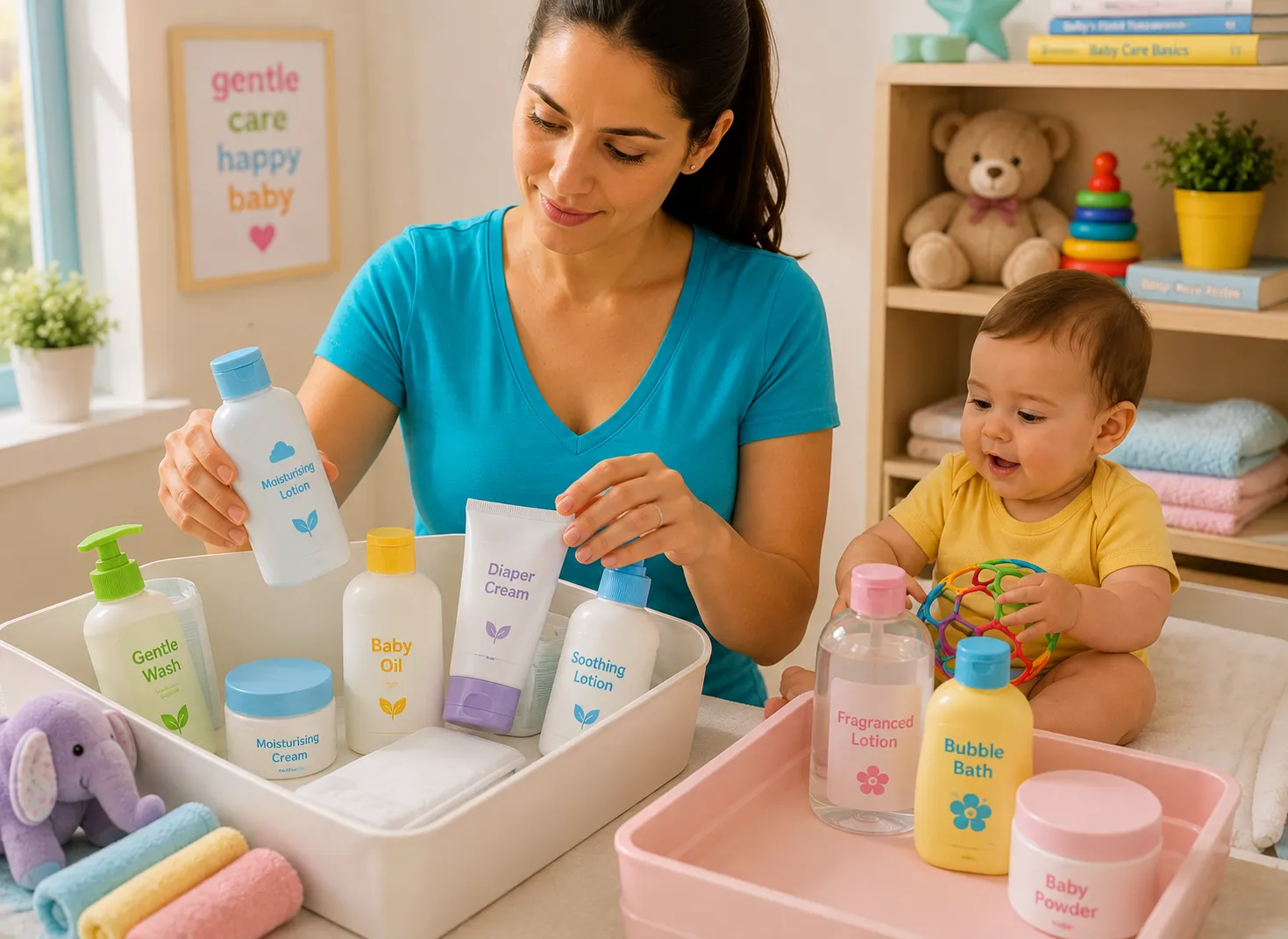
When your baby’s skin is already dry, itchy or irritated, choosing skincare can become surprisingly confusing. You pick up a bottle that says “gentle,” another that says “natural,” and another that says it was made especially for babies. Yet sometimes you use one of these products and your baby’s skin seems even drier afterwards. That is when it can be worth turning the bottle around and looking at what is actually inside.
The important thing is not to become frightened of long chemical names or start believing that every unfamiliar ingredient is dangerous. Most skincare ingredients are there for a reason, and an ingredient that irritates one child may be perfectly well tolerated by another. But when a baby’s skin barrier is already very dry or irritated, there are certain ingredients or product types that may be worth reducing or avoiding. The objective is simple: give vulnerable skin fewer unnecessary things to deal with while you support its recovery.
Why Very Dry Baby Skin Can Suddenly React to Products
Baby skin is still developing, including the barrier that helps keep moisture inside and irritants outside. When that barrier becomes compromised, water can escape more easily and the skin may become dry, rough, itchy and increasingly reactive. Things that normally sit harmlessly on the surface may also become much more noticeable when they encounter cracked or irritated skin. This is one reason a product your baby previously tolerated may suddenly seem uncomfortable.
Think of the skin barrier almost like the wall around a house. If that wall is strong, the things outside have a much harder time getting through, but when gaps begin appearing, the inside becomes more exposed. Very dry skin can behave in a similar way, which is why simply adding product after product does not always solve the problem. Supporting that barrier while reducing unnecessary irritation can be just as important as moisturising it.
If you would like to understand this process more deeply, our free book Beyond the Skin Barrier explores why dry, itchy and eczema-prone baby skin can become caught in recurring cycles. It looks beyond moisturising alone and explores the skin barrier, itching and scratching, environmental pressures, microbiome, immune signalling, food-related questions and the gut-skin connection. It was written for parents who want to understand what may be happening rather than simply moving from one cream to another. Get your free copy of Beyond the Skin Barrier here.
1. Fragrance
Fragrance is probably one of the first things worth reconsidering when your baby’s skin is extremely dry or easily irritated. It can make a baby wash or lotion smell wonderful, but fragrance is not necessary for moisturising or cleansing the skin. Fragrance ingredients can also be a source of irritation or contact allergy for susceptible skin. When the barrier is already struggling, there may simply be little reason to add that extra exposure.
The amount of fragrance reaching your baby’s skin can also be greater than you realise. There might be fragrance in the shampoo, body wash, wipes, moisturiser, bubble bath, laundry detergent and fabric softener used during the same day. Individually, each product may appear perfectly reasonable, but together they create repeated exposure. Simplifying the routine and choosing fragrance-free products can therefore be a sensible experiment when skin is persistently irritated.
2. Essential Oils and Strong Botanical Fragrances
One of the most confusing things about baby skincare is the assumption that “natural” automatically means gentle. Essential oils are natural, but they can contain highly concentrated aromatic compounds that some irritated skin does not tolerate particularly well. Tea tree, peppermint, eucalyptus and citrus oils are examples parents may encounter in supposedly natural skincare products. Applying concentrated essential oils directly to already irritated baby skin is particularly worth avoiding.
This does not mean botanical ingredients themselves are bad, because that would be far too simplistic. A carefully selected botanical extract used as part of a properly formulated cream is very different from rubbing concentrated essential oil onto compromised skin. Concentration, formulation and the combination of ingredients all matter. This is why we believe parents should look at the formulation as a whole rather than judging a product simply because the packaging says “natural.”
3. Cleansers That Leave the Skin Feeling Stripped
Your baby’s skin does need cleaning, but it does not need to feel squeaky clean after every bath. Cleansers work partly by helping remove oils, dirt and other material from the skin, but overly aggressive cleansing can also remove some of the lipids that help support the skin barrier. On skin that is already very dry, repeated stripping can make that tight, uncomfortable feeling even more noticeable. Sometimes parents then apply increasing amounts of moisturiser to compensate for what is happening during bath time.
You do not necessarily need to memorise the names of every surfactant used in skincare to recognise this problem. Pay attention to your baby’s skin immediately after bathing and during the hour that follows. If it regularly looks drier, feels tight or your baby begins scratching soon afterwards, the bathing routine deserves another look. Shorter lukewarm baths and a gentler cleansing routine may sometimes make more difference than adding yet another product afterwards.
4. Drying Alcohols
Seeing the word “alcohol” on an ingredient list understandably makes some parents nervous, but this is one area where reading labels without context can be misleading. Not every alcohol used in skincare is a drying alcohol. Cetyl alcohol, cetearyl alcohol and stearyl alcohol, for example, are fatty alcohols commonly used to help give creams their texture and consistency. They should not automatically be treated as ingredients that need to be avoided.
The ingredients worth paying more attention to are products containing substantial amounts of volatile alcohols that can feel drying or sting when applied to compromised skin. This becomes particularly relevant when the skin is cracked, raw-looking or extremely dry. Instead of simply searching an ingredient list for the word “alcohol,” look at what kind of alcohol is present and how the complete product is formulated. Understanding the difference can save parents from unnecessarily rejecting otherwise useful skincare products.
5. Strong Exfoliating Acids
Adult skincare has made ingredients such as glycolic acid and salicylic acid extremely familiar. Adults may use exfoliating products to improve texture, unclog pores or address particular skin concerns, but those goals are very different from caring for very dry baby skin. A baby’s developing skin barrier does not need an adult-style exfoliating routine simply because these ingredients are fashionable. When the skin is already irritated, simplicity is usually a much more sensible starting point.
This is also a useful reminder that babies do not need miniature versions of adult skincare routines. They do not need complicated collections of serums, acids and active ingredients simply because adults use them. Their skin has different needs, and supporting the developing barrier should remain the priority. When in doubt, ask why an ingredient needs to be on your baby’s skin in the first place.
6. Strongly Scented Bubble Baths
Bath time can be one of the loveliest parts of the day, and there is nothing wrong with wanting your baby to enjoy it. Unfortunately, some of the products that create mountains of bubbles and strong fragrances may not be ideal when the skin is already extremely dry. Bubble baths can contain combinations of cleansing agents and fragrances that increase exposure during the entire time your baby is sitting in the water. A long, hot bath can add another drying influence on top of that.
If your baby’s skin consistently seems worse after bathing, try simplifying the routine for a while and see what happens. Use comfortably lukewarm water, shorten the bath and minimise unnecessary foaming or fragranced products. Gently pat rather than aggressively rub the skin dry, then apply appropriate moisturising support. Sometimes changing what happens during those ten minutes in the bathroom can have an impact on what happens during the next several hours.
7. Products That Consistently Sting or Make the Skin Redder
There is something parents sometimes forget when trying to decipher complicated ingredient labels: your baby’s skin is giving you information too. A product can say “gentle,” “baby,” “natural” or “dermatologically tested” across the front of the bottle and still not suit your particular child’s skin. If the same product repeatedly seems to cause stinging, discomfort or worsening redness, that pattern deserves attention. Marketing language should never matter more than what you repeatedly observe.
This is especially relevant when the skin barrier is already compromised because even ordinarily well-tolerated products may feel uncomfortable on cracked skin. Rather than immediately replacing the product with three others, consider simplifying the routine first. Remove the product that seems to be causing trouble and observe what happens over the following days. Parents can sometimes learn much more from removing something than from continually adding something new.
What About Preservatives?
Preservatives are frequently presented as villains in online skincare discussions, but the reality is more complicated. Any cream or lotion containing water needs protection against unwanted microbial growth during its usable life. A properly designed preservative system therefore performs an important function rather than simply being an unnecessary chemical added to the bottle. Automatically assuming that “preservative-free” means safer can consequently be misleading.
The better approach is to consider the complete formulation, the way the product is manufactured and packaged, and how your child’s skin responds to it. Do not allow an unfamiliar scientific name to frighten you simply because it sounds complicated. Likewise, do not assume an ingredient must be harmless simply because its name sounds natural. Good skincare decisions come from understanding ingredients in context rather than dividing everything into “chemical bad, natural good.”
Look Beyond the Moisturiser
One of the biggest lessons we try to share with parents is that the moisturiser is only one thing touching your baby’s skin. During a normal day there may also be shampoo, wipes, laundry detergent, sunscreen, saliva, sweat, nappies, clothing, bedding and bath products. Add heat, friction, dry air or chlorinated swimming-pool water and the number of pressures surrounding already vulnerable skin begins to grow. Looking at only the moisturiser can therefore mean missing much of the picture.
This idea is central to Beyond the Skin Barrier because recurring dry and itchy skin rarely makes sense when we look only at the last product applied. The book helps parents consider the skin barrier alongside scratching, environmental exposures, microbes, immune signalling, food-related questions and the developing microbiome. Instead of giving parents another enormous list of things to fear, it provides a framework for putting these different pieces together. You can get the complete digital edition of Beyond the Skin Barrier free here.
Try the Simpler-Routine Experiment
If your bathroom cupboard contains six, eight or ten different products for your baby’s skin, it may be worth conducting a simple experiment. Reduce unnecessary fragranced products, keep bathing gentle and stop repeatedly applying products that appear to sting or dry the skin. Then give the simplified routine enough time for you to observe patterns rather than changing something every few hours. The goal is not to create the most impressive skincare routine; it is to create the least stressful environment for vulnerable skin.
Keep in mind that “simple” does not have to mean doing nothing. Very dry skin still needs moisture and barrier support, and irritated skin may need carefully chosen ingredients that help it feel comfortable again. The difference is between giving the skin purposeful support and simply throwing more products at the problem. That distinction became an important part of the philosophy behind Itch-A-Bye Baby Repair Cream.
What We Mean by Nourishing Baby Skin
At Itch-A-Bye, we do not think of Nourish as simply putting moisture onto dry skin. Nourishing also means providing carefully selected ingredients that complement one another and support the conditions vulnerable skin needs. That is why the Itch-A-Bye formulation combines moisturising ingredients with Black Seed Oil, MSM, Allantoin and selected botanical ingredients rather than relying on one fashionable “hero” ingredient. Each ingredient has been selected as part of the wider formulation rather than simply to create another marketing claim.
Hyaluronic Acid and Glycerin provide important moisturising support, while Allantoin is widely used for its soothing and skin-conditioning properties. Black Seed Oil contains naturally occurring compounds that have attracted research interest for anti-inflammatory and antimicrobial properties, while MSM forms another part of our skin-supporting formulation. Vitamin C provides antioxidant support, and our botanical complex brings together carefully selected plant extracts intended to complement these functions. It is the combination and synergy of the formulation that matters to us rather than pretending one ingredient can solve every skin problem.
Why We Created Itch-A-Bye Baby Repair Cream
We developed Itch-A-Bye Baby Repair Cream specifically for babies and young children with dry, itchy and eczema-prone skin. The formulation is fragrance-free and built around the same three-part philosophy that runs through our educational work: Repair, Nourish and Defend. Rather than simply making the surface feel temporarily softer, the aim is to support the developing skin barrier, nourish dry and vulnerable skin and help it defend against bacteria, fungus and other microbial pressures. You can read more about the approach on our How Itch-A-Bye Works page.
If your child has very dry, itchy skin and you are looking for a simple daily cream rather than another complicated routine, Itch-A-Bye Baby Repair Cream is the product we recommend exploring. It is designed for dry, itchy and eczema-prone baby and children’s skin and can be applied in a thin layer to clean, dry skin once daily or as needed. The formulation is fragrance-free and does not rely on steroids, harsh stripping agents or numbing ingredients. Discover Itch-A-Bye Baby Repair Cream here.
Repair. Nourish. Defend.
The philosophy behind Itch-A-Bye becomes much easier to remember when we reduce it to three words: Repair. Nourish. Defend. Repair means supporting the physical skin barrier so that vulnerable skin can hold onto moisture and become less exposed to everyday irritants. Nourish means supplying moisture alongside carefully selected supportive ingredients that help create better conditions for dry and stressed skin. Defend means helping vulnerable skin deal with bacteria, fungus and other microbial pressures without harshly stripping the barrier we are trying to support.
This is also why we believe the cream and the book belong together. Beyond the Skin Barrier helps parents understand the bigger picture surrounding recurring dry, itchy and eczema-prone skin, while Itch-A-Bye Baby Repair Cream provides the topical expression of the Repair, Nourish and Defend philosophy. One is designed to give parents knowledge and a framework for understanding what they are seeing, while the other provides practical daily skin support. Start with the free book or discover Itch-A-Bye Baby Repair Cream.
Sometimes What You Leave Out Matters Too
When your baby is uncomfortable, it is natural to want to find something else to put on the skin. Another moisturiser, another wash and another supposedly miraculous ingredient can feel like another opportunity to finally get things under control. But when skin is already extremely dry and irritated, continually adding products can sometimes make it harder to understand what is helping and what is adding another source of pressure. Simplifying the routine can be a surprisingly powerful place to start.
Read the labels, but do not become frightened by them. Pay attention to fragrance, unnecessary strong actives and products that repeatedly seem to leave your baby’s skin tighter, drier or more uncomfortable. At the same time, think beyond individual ingredients and look at bathing, heat, sweat, clothing, scratching, swimming and everything else surrounding the skin. Because when a baby’s skin barrier is already struggling, what you leave out can sometimes matter almost as much as what you put in.