
Could Itch-A-Bye Cream Be What Your Child Needs After Swimming? Here Are 10 Reasons We Think So
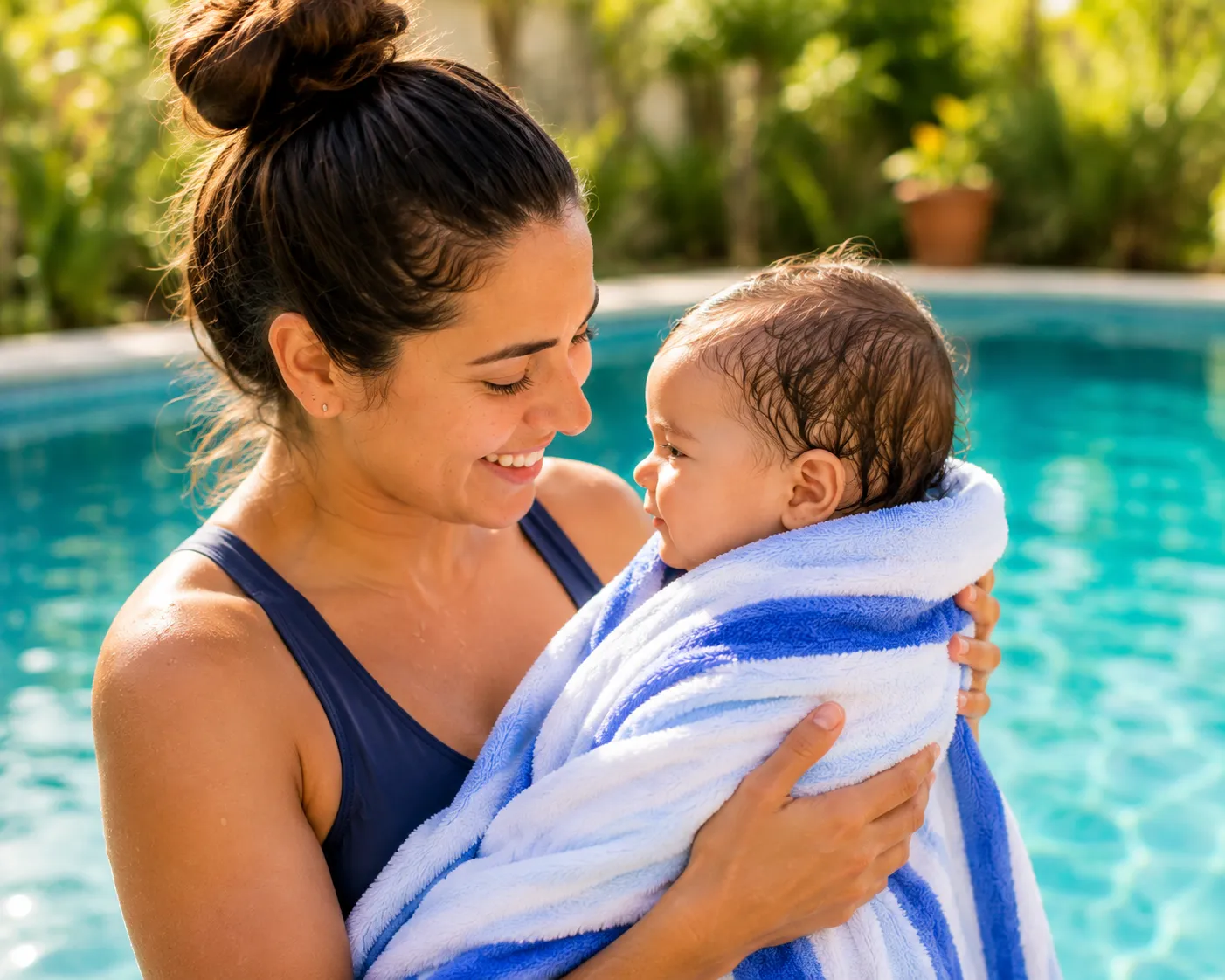
Child after swimming for an article about Itch-A-Bye Cream and after-swim care for dry itchy eczema-prone skin

Swimming should be one of childhood’s pleasures. It builds confidence, encourages movement, creates family memories and gives children an activity they can enjoy for years. But for parents of children with dry, itchy or eczema-prone skin, the period after swimming can sometimes tell a very different story. A child may leave the pool with skin that feels tight, dry or uncomfortable, then begin rubbing or scratching areas that seemed perfectly settled before they entered the water. For some families, this happens so consistently that swimming itself starts to feel like something they have to worry about.

We think there is a better approach than simply accepting that discomfort or keeping children away from swimming altogether. Dermatology guidance supports a straightforward strategy: protect vulnerable skin, rinse promptly after swimming and moisturise soon afterwards. That is precisely where we believe Itch-A-Bye Baby Repair Cream can earn a permanent place in the swimming bag.

We originally developed Itch-A-Bye for babies and young children with dry, itchy and eczema-prone skin, not specifically as a swimming product. But something interesting emerged from the real-world experience of families using it. Parents began telling us how useful they found the cream when their children’s skin became uncomfortable after swimming. Those experiences made us look more closely at why the formulation appears particularly well suited to after-swim care.

The more we examined it, the more logical the fit became. Swimming can create a combination of moisture loss, environmental exposure, warmth, friction and irritation. Itch-A-Bye was deliberately formulated around a combination of ingredients intended to Repair, Nourish and Defend vulnerable skin rather than relying on moisturisation alone. That combination is why we think Itch-A-Bye deserves serious consideration as an after-swim cream.

Reason 1: Dermatologists Already Recommend Moisturising Around Swimming

Perhaps the strongest reason to have a dedicated post-swimming cream is that the basic strategy is not something we invented for marketing. Dermatologists recommend moisturisation as part of swimming care for children with eczema-prone skin. Professional guidance commonly advises applying moisturiser before entering the pool, rinsing the skin afterwards, gently patting it partly dry and applying moisturiser again soon after leaving the water.

That tells us something important. Post-swim moisturising is not merely an optional cosmetic extra for vulnerable skin. It fits comfortably within established professional skincare advice. The question then becomes: if you are going to moisturise after swimming anyway, what kind of formulation do you want to put on skin that may already feel dry, irritated and itchy? That is where we believe Itch-A-Bye becomes especially interesting.

Reason 2: Itch-A-Bye Was Designed for Exactly the Type of Skin Swimming Can Challenge

Swimming does not affect every child in the same way. Plenty of children leave a pool without any noticeable change in their skin. But children whose skin is already dry, easily irritated or eczema-prone may notice the effects much more readily. Pool disinfectants are essential for maintaining safe pool water, but treated water can contribute to dryness or irritation in susceptible skin.

Itch-A-Bye was developed specifically around this broader category of dry, itchy and eczema-prone skin. The underlying needs of post-swim skin overlap closely with the needs that shaped the formulation in the first place. The skin may need hydration because it feels dry, soothing because it feels irritated and support because scratching, friction and environmental exposure have placed additional pressure on it. That is much closer to the philosophy behind Itch-A-Bye than simply saying, “Put some lotion on after swimming.”

Reason 3: Black Seed Oil Gives the Formulation a Particularly Interesting Soothing Foundation

Black Seed Oil, derived from Nigella sativa, is one of the foundation ingredients in Itch-A-Bye. It is also one of the ingredients that makes the formulation particularly interesting when we think about environmentally stressed skin. Scientific research into Nigella sativa has identified biologically active constituents, including thymoquinone, and has investigated anti-inflammatory, antioxidant and antimicrobial properties relevant to dermatological research.

This does not mean that research on an individual ingredient proves what the finished Itch-A-Bye formulation will do in every child. But it helps explain why Black Seed Oil is scientifically interesting as part of a formulation intended for dry and stressed skin. This is precisely how we prefer to discuss ingredients. We do not need to pretend one ingredient is a miracle treatment. We can recognise that an ingredient has useful properties and then combine it thoughtfully with other complementary ingredients.

Reason 4: MSM and Allantoin Add a Second Layer of Skin Support

Black Seed Oil does not carry the formulation alone. MSM and Allantoin form the other two ingredients at the heart of our core formulation philosophy. Allantoin has a long history of use in skincare because of its skin-conditioning and soothing role. It is particularly attractive in products intended for skin that feels rough, dry or irritated because it supports a formulation without requiring the aggressive approach often associated with high-activity skincare.

MSM gives us another complementary component. Rather than building Itch-A-Bye around a single mechanism, we deliberately combined ingredients that contribute different properties within the same formulation. This is an important part of what we mean when we talk about the Skin Trifecta. The aim is not merely to cover the skin with something oily. It is to give vulnerable skin several forms of cosmetic support at the same time.

Reason 5: Glycerin and Hyaluronic Acid Address the Most Obvious Post-Swim Problem: Dryness

After swimming, the most immediate complaint many parents notice is dryness. The skin may feel tight, rough or less comfortable than it did before entering the water. Pool chemicals can contribute to skin dryness, which is why rapid moisturisation after rinsing is commonly recommended.

That is where Glycerin and Hyaluronic Acid become important components of Itch-A-Bye. Both are widely used in skincare for their ability to support hydration. They perform a very different job from the botanical and soothing elements of the formulation. This illustrates our ingredient philosophy perfectly. Post-swimming skin may need more than one thing at once. Our formulation was deliberately built around that reality.

Reason 6: Our Botanical Complex Adds Breadth Rather Than Betting Everything on One Hero Ingredient

Itch-A-Bye also contains an array of botanical ingredients including Centella asiatica, Chamomile, Licorice, Scutellaria baicalensis, Rosemary, Polygonum cuspidatum, Green Tea and Ginger. These ingredients were not included so we could produce an impressive-looking ingredient list. They reflect our preference for creating a formulation in which several ingredients contribute complementary properties.

Different botanicals have been studied for different antioxidant, conditioning and soothing characteristics. That does not mean that every property demonstrated in an isolated laboratory study automatically transfers to a finished cosmetic formulation. What it does mean is that the selection of the ingredients has a rationale. We are combining hydration support, conditioning ingredients, botanical components and the Black Seed Oil, MSM and Allantoin foundation within one cream. That is what we mean by ingredient synergy.

Reason 7: Vitamin E, Ascorbyl Palmitate and the Supporting Ingredients Round Out the Formulation

Itch-A-Bye also contains Tocopherol, or Vitamin E, and Ascorbyl Palmitate, a lipid-soluble Vitamin C derivative, together with Caprylic Acid and the rest of the supporting formulation. These ingredients add further skin-conditioning and antioxidant dimensions.

None of this means we should describe the cream as chemically neutralising chlorine. That would require specific testing of the finished product against chlorine exposure. But there is a much more credible proposition available to us: after the chlorine has been rinsed away, we can give dry and environmentally stressed skin a sophisticated multi-ingredient formulation designed around hydration, soothing, nourishment and support. That is the recommendation we are comfortable standing behind.

Reason 8: Families Have Helped Us Discover How Useful Itch-A-Bye Can Be After Swimming

Some of the most useful things you learn about a product happen after real families begin incorporating it into everyday life. One recurring experience reported to us by parents has been the usefulness of Itch-A-Bye after swimming, particularly where a child tends to develop dryness, itching or irritation following pool exposure. That feedback matters to us because it describes a real-world problem being encountered repeatedly in a very specific situation.

We also need to be clear about what parent feedback represents. Positive customer experiences are not the same thing as a controlled clinical trial, and individual children can respond differently. But dismissing genuine user experience would be equally unhelpful. When families independently begin using a product for the same purpose and report that they find it particularly valuable in that setting, it can reveal an important practical use for the formulation. After-swim care has become one of the uses of Itch-A-Bye that we think deserves much greater attention.

Reason 9: It Fits Perfectly Into a Simple Rinse, Dry, Apply Routine

The best skincare routines are often the ones parents can actually remember and repeat. After swimming, we recommend a very simple sequence. Rinse your child’s skin thoroughly with clean fresh water to remove residual pool water, chlorine compounds, salt or other residues. Pat the skin gently rather than rubbing it vigorously, and change the child out of wet swimwear.

Then apply Itch-A-Bye Baby Repair Cream according to its directions while the skin is clean and before significant dryness or scratching has a chance to develop. We would describe the Itch-A-Bye version very simply: Rinse. Gently dry. Repair, Nourish and Defend.

Reason 10: It Addresses the Skin Rather Than Asking Children to Give Up Swimming

This may be the reason we like most. A child with dry or eczema-prone skin already has enough things that can make everyday family life more complicated. We do not want swimming automatically added to the list of activities parents become afraid to try. Many children with eczema-prone skin can still enjoy swimming when appropriate precautions are taken.

That is the philosophy we want Itch-A-Bye to support. Do not start with “My child’s skin is difficult, so perhaps they cannot swim.” Start with a different question: “How can I prepare and support my child’s skin so swimming is more comfortable?” That is a much more empowering approach.

What We Think Is Actually Happening After Swimming

It is tempting to reduce post-swimming discomfort to one sentence: chlorine dries the skin. There is truth in that, but the real situation can be more complicated. A child may spend thirty minutes immersed in treated water, become warm while playing, experience repeated movement and rubbing against swimwear, then be rubbed with a towel and placed into clothing.

If the skin was already dry or itchy beforehand, the child may then begin scratching. Scratching introduces yet another source of mechanical irritation. Sometimes chlorine is an important component, but the combination of water exposure, treated water, existing dryness, heat, wet fabric, friction, drying and scratching may provide a much better explanation. This is why our solution is also multi-dimensional.

Before Swimming or After Swimming?

There is actually a good case for considering both. Professional eczema guidance commonly recommends moisturising before entering a chlorinated pool to give vulnerable skin an additional protective layer, followed by rinsing and re-moisturising afterwards. For parents whose child reliably develops discomfort after swimming, that gives us a sensible framework.

The most important application, in our view, remains after swimming once residual pool water has been rinsed away. That is when the skin is clean and the opportunity exists to restore moisture and provide the soothing, nourishing support the formulation was created to deliver. Parents should also consider any sunscreen requirements separately and follow relevant child sun-safety guidance.

Why We Would Not Put Itch-A-Bye Directly Over Unrinsed Chlorine

If residual chlorinated water is sitting on the skin, we do not see any advantage in simply covering it immediately with cream. Professional guidance recommends rinsing after swimming, and that makes practical sense. Our preferred approach is to remove the environmental residue first and support the skin second.

Rinse with fresh water. Avoid excessively hot water. Gently pat the skin rather than scrubbing it. Then apply your skincare. That gives Itch-A-Bye clean skin to work with and avoids pretending that the cream itself needs to neutralise pool chemicals.

What About Salt Water?

The same basic philosophy applies to the ocean. Salt water can be uncomfortable on dry, cracked or scratched skin. The beach also introduces other pressures including sand, wind, sun exposure and wet swimwear. Rubbing sandy skin vigorously with a towel can add substantial friction, while leaving salty swimwear against vulnerable skin may add another source of discomfort.

Rinse with fresh water when practical, remove wet swimwear, dry gently and then support the skin. Again, Rinse. Gently dry. Repair, Nourish and Defend.

This Is Exactly Why We Do Not Believe in the One Hero Ingredient Skincare Model

Modern product marketing often finds one attractive ingredient, prints it across the front of the packaging and builds an entire story around it. We deliberately took a different route with Itch-A-Bye. Black Seed Oil matters. MSM matters. Allantoin matters. But so do Glycerin and Hyaluronic Acid when the skin is dry. So do the skin-conditioning and antioxidant components. So does the botanical complex.

That is why the formula contains Black Seed Oil, MSM, Allantoin, Hyaluronic Acid, Glycerin, Ascorbyl Palmitate, Tocopherol, Caprylic Acid, Centella asiatica, Chamomile, Licorice, Scutellaria baicalensis, Rosemary, Polygonum cuspidatum, Green Tea and Ginger. We are not asking one ingredient to do everything. The formulation is the hero.

The Skin Trifecta After Swimming

Our Skin Trifecta philosophy can be particularly easy to understand in the swimming context. Repair means supporting skin that has become dry, stressed or uncomfortable. Nourish means providing moisturising and conditioning ingredients that help support the skin after exposure. Defend reflects our broader formulation philosophy of helping vulnerable skin maintain its protective function and defend against everyday microbial and environmental pressures.

It is the combination that matters. A child emerging from a swimming pool does not necessarily need one more highly aggressive active ingredient. They may simply need residual pool water removed and their vulnerable skin supported intelligently. That is exactly the type of skincare problem Itch-A-Bye was created to address.

What We Can Say With Confidence and What We Should Not Claim

Because this is our product, we think transparency matters. We can confidently recommend Itch-A-Bye as a skincare option for children with dry, itchy and eczema-prone skin, including as part of an after-swimming routine. We can explain the ingredients, the design philosophy behind the formulation and the positive experiences families have shared with us.

What we should not claim without product-specific clinical testing is that Itch-A-Bye chemically neutralises chlorine, prevents eczema, medically treats chlorine-induced inflammation or guarantees that a child will not flare after swimming. That does not weaken the proposition. It makes it more believable.

Could Itch-A-Bye Become Your Child’s Swimming-Bag Essential?

We think there is a strong case for it. A towel goes in the swimming bag. Dry clothes go in the swimming bag. Sunscreen goes in when appropriate. For a child whose skin repeatedly becomes dry, itchy or uncomfortable after swimming, it makes sense that a dedicated skincare product should be there too.

For those families, we believe Itch-A-Bye Baby Repair Cream deserves that place. Not because we are claiming it somehow removes chlorine from swimming-pool water or can prevent every flare, but because professional guidance supports moisturising around swimming, our formulation was specifically designed for dry, itchy and eczema-prone skin, and families using Itch-A-Bye have helped us recognise how useful it can be after swimming.

Beyond the Skin Barrier

Swimming also illustrates one of the central ideas we explore in Beyond the Skin Barrier: Uncovering the Hidden Roots of Dry, Itchy and Eczema-Prone Skin. When a child’s skin becomes uncomfortable after swimming, there may not be one single villain. Chlorinated water may matter. Existing dryness may matter. Heat, friction, wet swimwear and scratching may matter too.

When those pressures are considered together, the problem often becomes easier to understand. Once parents understand the pattern, they can move from endlessly reacting to flares towards creating a deliberate routine around the child’s skin. You can read Beyond the Skin Barrier completely free at www.itchabye.com/free-book.

The Bottom Line

Could Itch-A-Bye Cream be what your child needs after swimming? We think there are very good reasons to consider it. Chlorinated pool water can contribute to dryness and irritation in susceptible skin, while salt water, heat, wet swimwear, friction and scratching can add further pressure. Established eczema-care guidance supports rinsing and moisturising vulnerable skin around swimming.

Itch-A-Bye brings something distinctive to that routine: a formulation developed specifically for dry, itchy and eczema-prone skin, built around Black Seed Oil, MSM and Allantoin, reinforced with Hyaluronic Acid, Glycerin, vitamins and an extensive botanical complex, and organised around our philosophy of Repair, Nourish and Defend. Family experiences have also helped us recognise after-swim care as one of the particularly useful real-world applications of the finished cream.

So when swimming is finished, our approach is deliberately uncomplicated: Rinse away the pool water. Pat the skin gently. Apply Itch-A-Bye. Let your child get back to enjoying being a child.

This article provides general educational information. Itch-A-Bye is a skincare product for dry, itchy and eczema-prone skin and is not presented as a medicine or as a treatment for eczema, allergy, infection or chlorine poisoning. Parent experiences represent individual customer experiences rather than controlled clinical evidence, and results can vary. Seek professional advice for severe, persistent, broken, weeping, infected-looking or otherwise concerning skin.