
Should You Moisturise Baby Skin While It’s Still Damp?
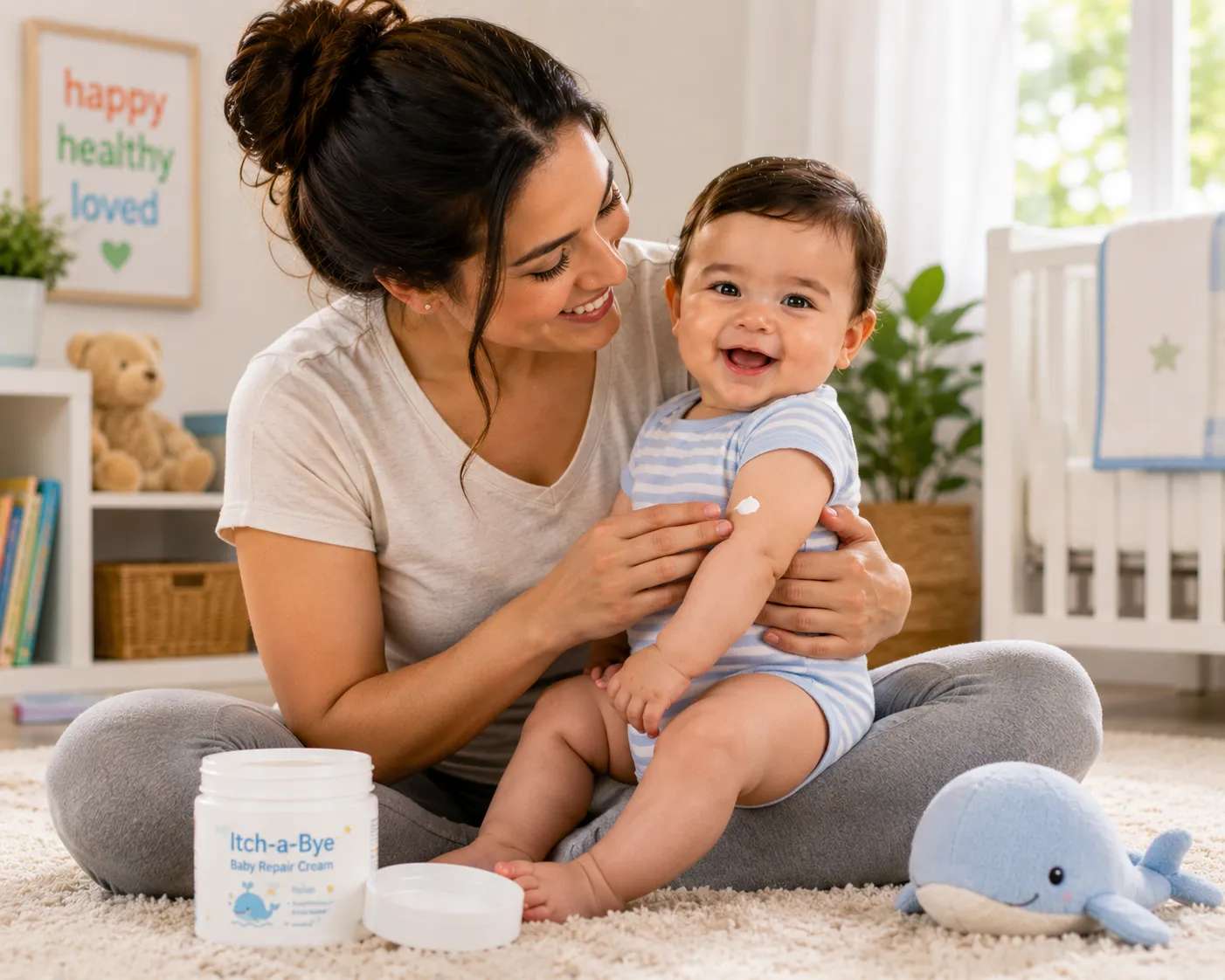
Your baby has just come out of the bath. Their skin is clean, warm and still carrying a little moisture, and you may have heard that this is exactly when moisturiser should be applied. But should you really put cream onto skin before it is completely dry? And if your baby has dry, itchy or eczema-prone skin, could leaving the skin slightly damp actually make a difference?
Yes, applying moisturiser or an appropriate skin-support product while your baby’s skin is still slightly damp can be a useful part of an after-bath routine. The important word, however, is slightly. You are not trying to apply cream over dripping-wet skin or leave moisture trapped inside folds. You are taking advantage of the short period after bathing when some water remains in the outer layers of the skin.
Why Does Baby Skin Feel So Soft Immediately After a Bath?
Water temporarily increases hydration in the outermost layer of the skin. That is one reason your baby’s skin can feel especially soft immediately after bathing, even when it normally feels dry. But that extra water does not necessarily remain there for long. Once your baby leaves the bath, evaporation begins.
For babies with a vulnerable skin barrier, retaining that moisture can be more difficult. The skin may feel comfortable immediately after bathing and then become dry, tight or itchy as it dries. Warm water, prolonged bathing, cleanser use and towel friction can add further pressure. The period immediately after the bath therefore becomes an important transition point in your baby’s skincare routine.
Why Apply Moisturiser Before the Skin Is Completely Dry?
A moisturiser applied soon after bathing can help reduce the amount of water that escapes as the skin dries. This is sometimes described as helping to “seal in” moisture, although that phrase can make the process sound more absolute than it really is. Moisturisers do not permanently lock water inside the skin. They help create conditions that reduce moisture loss and support the outer skin surface.
Applying the product while the skin remains slightly damp can therefore make practical sense. Instead of allowing all the water from the bath to evaporate and then trying to address dryness afterwards, you are supporting the skin during the drying process itself. This is particularly relevant for skin that already struggles with dryness. Think of the bath and the after-bath application as two connected parts of the same routine.
Damp Does Not Mean Wet
This distinction is important. Your baby should not still be dripping with bath water when you apply their skincare. Use a soft towel to gently remove obvious surface water without vigorously rubbing the skin. The aim is to remove excess water while keeping the drying process gentle.
After patting, the larger areas of skin can remain slightly damp when you apply moisturiser or cream. Meanwhile, carefully dry places where water can collect, including the neck folds, behind the ears, armpits and groin. Persistent moisture trapped inside warm folds can create friction and other problems of its own. The goal is comfortably damp skin, not wet skin left sitting beneath clothing.
Should You Pat or Rub Your Baby Dry?
Patting is generally the gentler option for dry, itchy or eczema-prone skin. When you rub a towel repeatedly across the skin, you introduce mechanical friction at precisely the moment when the skin may already be vulnerable. A rough towel can add even more friction, particularly over areas your baby has been scratching. This does not mean you need an elaborate drying technique.
Simply wrap your baby in a soft towel and allow the fabric to absorb much of the water. Gently press or pat where additional drying is needed, particularly around folds. You do not need to polish the skin until every trace of moisture has disappeared. Gentle drying allows you to move naturally from bathing into moisturising without an unnecessary friction-heavy step between them.
How Quickly Should You Apply Moisturiser?
You may have heard of the three-minute rule, which encourages moisturising within approximately three minutes after leaving the bath. The principle is useful, but parents do not need to treat three minutes as a biological deadline. There is no invisible switch that suddenly makes moisturiser ineffective when the clock reaches three minutes and one second. What matters is avoiding an unnecessary delay while vulnerable skin becomes progressively drier.
Have your baby’s skincare product beside the towel before bath time begins. Gently pat your baby dry and then apply the product reasonably promptly while the broader skin remains slightly damp. If your baby needs feeding, a nappy change or immediate comforting and the process takes longer, simply apply the product when you can. A consistent routine matters more than winning a nightly race against a stopwatch.
What If My Baby’s Skin Seems Drier After Bathing?
That is worth observing because the bath itself may be only part of the explanation. Water temperature, bathing duration, cleanser, shampoo, bubble bath, towel friction and the delay before applying skincare can all influence what happens afterwards. Clothing and overheating may then add another layer of pressure. Sometimes several seemingly minor factors are happening within the same ten or fifteen minutes.
Look for patterns over several bath days rather than judging one evening in isolation. Does your baby’s skin become redder after longer baths? Do they scratch after shampooing but not after a water-only rinse? Does the skin seem comfortable until it has completely dried? Those observations can help you understand the routine rather than simply assuming that your baby needs more and more moisturiser.
Moisturising Is Important, but It Is Not the Whole Story
When skin is dry, replacing and retaining moisture is clearly important. But dryness does not exist in isolation from everything else happening to the skin. A baby may also be experiencing scratching, heat, sweat, saliva, friction, environmental irritants and other pressures. The skin barrier itself may already be more vulnerable than usual.
This is why our approach at Itch-A-Bye goes beyond thinking only about moisturising. When we developed Itch-A-Bye Baby Repair Cream, we organised our formulation philosophy around three interconnected ideas: Repair, Nourish and Defend. Hydration plays an important role within that framework, but it is not the entire framework. Our aim is to give vulnerable skin several complementary forms of topical support rather than treating dryness as simply a shortage of water.
REPAIR: Supporting Skin That Struggles to Hold Onto Moisture
A healthy skin barrier helps slow excessive water loss while separating the body from the outside environment. When that barrier becomes vulnerable, dryness can become much easier to see and feel. Bathing temporarily provides water, but the longer-term objective is not simply to keep wetting the skin. We also want to support the environment in which the barrier performs its protective work.
This is one reason Hyaluronic Acid and Glycerin are part of the Itch-A-Bye formulation. Both are humectant ingredients that help attract and retain water, making them particularly relevant to the post-bath period. Applying the cream while the skin remains slightly damp fits naturally with that role. Rather than waiting for the skin to feel completely dry, you are supporting hydration while some of the bath’s moisture is still present.
Allantoin Adds Something Different
Hydration alone was never the only property we wanted from the formulation. Allantoin is valued in skincare for its soothing and skin-conditioning properties and has also been investigated in the context of skin recovery. That gives it a different role from a conventional humectant such as Glycerin. Those differences are important when ingredients are designed to work as a system.
We also include Centella asiatica, a botanical with naturally occurring compounds investigated in relation to skin recovery, inflammatory pathways and antioxidant activity. Again, this is not simply another ingredient added to attract more water. It provides another category of topical support within the formulation. Repair works best when we think beyond the single question of how wet or dry the skin feels at that moment.
NOURISH: This Is Where We Go Beyond Moisturising
When we say Nourish, we do not mean hydration alone. We mean providing vulnerable skin with a deliberately selected combination of topical ingredients that hydrate, condition, soothe and provide antioxidant and other supportive properties. That includes humectants, oils, vitamins and botanical extracts with different strengths. Their value comes partly from what each contributes and partly from how those contributions complement one another.
This becomes particularly relevant after bathing. Your baby’s skin has just encountered water, temperature changes, cleansing and drying and will soon encounter clothing, bedding, heat, friction and perhaps scratching. We want the product applied at this point to do more than simply make the skin feel less dry. Nourish is about supplying broader topical support during a period when vulnerable skin may be dealing with several pressures at once.
Why Black Seed Oil Is Important to the Formula
Black Seed Oil, Nigella sativa, is one of the ingredients at the centre of the Itch-A-Bye formulation. It contains naturally occurring bioactive compounds, including thymoquinone, and has been investigated for anti-inflammatory, antioxidant and antimicrobial properties. Those characteristics are very different from the primary function of Hyaluronic Acid or Glycerin. That difference is intentional.
If every ingredient performed exactly the same job, there would be little reason to build a complex formulation. Black Seed Oil brings a different profile, while other ingredients contribute hydration, soothing, conditioning or antioxidant support. We do not present it as a magical ingredient capable of doing everything by itself. The formulation, rather than one isolated ingredient, is the hero of Itch-A-Bye.
MSM Adds Another Form of Support
MSM, or methylsulfonylmethane, is another ingredient we selected because it brings something different to the formulation. Research has explored MSM in relation to inflammatory and oxidative processes, areas that interested us when considering skin repeatedly exposed to irritation and scratching. Again, this is not the same role performed by a basic moisturising ingredient. It is another piece of the broader formulation strategy.
This is how we think about Nourish in practical terms. We are not trying to stack twenty ingredients that all do exactly the same thing. We are bringing together ingredients with different but potentially complementary properties. The objective is synergy: a formulation in which the combined ingredient system offers broader support than hydration alone.
Our Botanical Complex Was Selected the Same Way
Itch-A-Bye also contains a carefully selected botanical complex rather than a random collection of plant names for the label. Chamomile has been studied for soothing and anti-inflammatory properties, while Green Tea contains polyphenols widely investigated for antioxidant and anti-inflammatory activity. Licorice contains constituents researched across inflammatory and antimicrobial areas, while Scutellaria baicalensis contains flavonoids that have attracted substantial scientific interest. These ingredients do not all have identical profiles.
Other botanicals in the formulation, including Rosemary, Ginger and Polygonum cuspidatum, contribute additional plant compounds and overlapping areas of research. We do not claim that every botanical performs every possible function or that ingredient research proves the finished cream treats eczema. Instead, the research helps explain why different ingredients interested us during formulation. Nourish is therefore an ingredient-synergy concept, not another word for moisturise.
DEFEND: Supporting Skin in Contact With the Real World
The moment your baby leaves the bath, their skin returns to constant interaction with the outside world. Hands touch the skin, clothing rubs against it, saliva reaches the cheeks and neck, sweat can collect in folds and microorganisms naturally live on the skin surface. Healthy skin is not sterile, nor should it be. But the skin remains an important protective interface between the body and that environment.
This is why Defend forms the third part of our approach. Black Seed Oil and several botanicals within Itch-A-Bye contain constituents that have been studied for antimicrobial properties alongside their other characteristics. Those properties helped shape our interest in them as formulation ingredients. Defend means supporting vulnerable skin’s protective environment as it encounters everyday microbial and environmental pressures.
Defend Does Not Mean Sterilising Your Baby’s Skin
We need to make that distinction clear because healthy skin should never be thought of as something that needs to be disinfected every day. The skin naturally hosts communities of microorganisms, many of which are normal parts of the skin ecosystem. Our goal is not to eliminate them. Nor is Itch-A-Bye an antibiotic or antifungal medicine.
Research into antimicrobial properties of individual ingredients should not be confused with evidence that the finished cream treats established infection. If your baby’s skin appears infected, particularly if it becomes increasingly painful, swollen, weeping or crusted, appropriate medical assessment is important. Our ingredient choices are about everyday topical support for vulnerable skin. Defend is a supportive skincare concept, not a claim to medically treat infection.
This Is Where the Skin Threshold Model Helps
Sometimes parents become focused on a single question: What is causing my baby’s skin problem? But vulnerable skin may not always be responding to one isolated pressure. Dryness, heat, sweat, friction, cleanser, saliva, scratching and environmental exposures can occur together. Each may add a little more pressure.
Our Skin Threshold Model provides a simple way of thinking about this. Imagine that your baby’s skin can comfortably tolerate a certain amount of pressure before visible dryness, redness or itching becomes more noticeable. Several smaller pressures can sometimes accumulate until that threshold is crossed. The goal is therefore not necessarily to discover one perfect trigger but to reduce avoidable pressures while improving the skin’s overall support.
Damp-Skin Moisturising Fits Naturally Into This Model
Applying skincare while the skin is slightly damp will not eliminate every factor affecting your baby’s skin. It cannot stop sweating later that evening, remove every environmental irritant or prevent every scratch during sleep. But it may help reduce one pressure: unnecessary moisture loss immediately after bathing. That makes it a useful part of a broader routine.
Combine it with comfortably lukewarm water, gentle cleansing, careful rinsing and patting rather than rubbing. Then think about breathable clothing, bedroom temperature and anything else you have noticed repeatedly affecting your baby’s skin. No single step needs to carry the entire burden. A series of small, sensible decisions can work together in the same way that pressures themselves can accumulate.
What If My Baby Hates Having Cream Applied?
Many babies are not interested in skincare theory when they come out of the bath. They may be hungry, tired, cold or simply determined to roll away while you are trying to apply cream. In that situation, speed and simplicity become more important than creating an elaborate ritual. Have everything ready before your baby enters the bath.
Warm the product between your hands if that makes application more comfortable and use gentle strokes rather than excessive rubbing. Focus first on the areas you know tend to become particularly dry or itchy, then continue as your baby allows. If tonight’s application is imperfect, you can try again tomorrow. A sustainable routine that fits family life is more valuable than a theoretically perfect routine nobody can maintain.
Should You Apply Cream to Every Part of the Body?
That depends partly on your baby’s individual skin and the product you are using. Some babies experience widespread dryness, while others repeatedly develop vulnerable areas around the cheeks, neck, elbows, knees, trunk or other locations. Pay attention to where dryness tends to return rather than treating every baby as though their skin behaves identically. Your baby’s patterns matter.
For Itch-A-Bye, the after-bath period can be a useful time to apply the cream to the dry, itchy or eczema-prone areas you are supporting. Applying it while those broader skin areas remain slightly damp can fit naturally into the routine. You can then dress your baby in comfortable, breathable clothing without unnecessary delay. The process does not need to become complicated to be thoughtful.
What About the Neck, Armpits and Other Folds?
Skin folds deserve slightly different treatment because moisture can remain trapped there. After bathing, gently open and pat dry your baby’s neck folds, armpits, behind the ears and other areas where water tends to collect. Persistent dampness combined with warmth and friction can create an uncomfortable environment. This is different from leaving a broad area of exposed skin slightly damp before moisturising.
Pay particular attention to the neck if your baby dribbles frequently or milk regularly reaches the folds. Saliva, milk, sweat, moisture and friction can sometimes occur together in that small area. Keeping the fold comfortably dry while supporting surrounding vulnerable skin can therefore make sense. “Apply to damp skin” should never be interpreted as “leave wet folds wet.”
What If Moisturiser Seems to Make the Skin Worse?
Do not assume that every product labelled moisturiser will suit every baby. Formulations vary enormously in fragrance, preservatives, botanical ingredients, oils, surfactants and other components. If you repeatedly notice redness, discomfort or itching shortly after applying a particular product, the pattern deserves attention. More product is not necessarily the solution to a product that does not agree with your baby’s skin.
Try to change one variable at a time when possible. Otherwise, replacing the cleanser, shampoo, moisturiser, laundry detergent and pyjamas on the same day makes it almost impossible to know which change mattered. Observe what happens and keep the routine simple enough that patterns can emerge. Skincare should respond to your baby’s skin rather than forcing your baby’s skin to fit a predetermined routine.
A Simple Damp-Skin Routine After Bathing
Prepare the towel, nappy, clothing and skincare product before the bath begins. Use comfortably lukewarm water and keep cleansing gentle, particularly when your baby’s skin is already dry or itchy. When bath time is finished, wrap your baby in a soft towel and gently pat away the excess water. Carefully dry the folds while allowing larger areas to remain slightly damp.
Then apply your baby’s skincare reasonably promptly. If you are using Itch-A-Bye Baby Repair Cream, this is a natural time to apply it to the areas you want to support before dressing your baby. Keep the process calm and avoid vigorous rubbing during either drying or application. Bath, pat, Repair, Nourish and Defend can become one continuous sequence.
So, Should You Moisturise Baby Skin While It’s Still Damp?
Yes, slightly damp skin after bathing can be an excellent time to apply moisturiser or an appropriate skin-support product. The residual water provides an opportunity to support hydration before the skin has completely dried, particularly when the skin barrier is already vulnerable. Just remember that slightly damp does not mean soaking wet. Dry folds properly and avoid vigorous towel rubbing.
Most importantly, do not allow one technique to distract you from the bigger picture. Water temperature, bath duration, cleanser choice, shampoo, towel friction, moisturising, clothing, heat and scratching can all influence how your baby’s skin feels afterwards. Damp-skin moisturising is one useful part of that system. The strongest routine is usually one in which all of those small decisions begin working in the same direction.
Want to Understand the Bigger Picture Behind Your Baby’s Skin?
If you have found yourself asking why your baby’s skin remains dry, itchy or eczema-prone despite doing everything you have been told, we created Beyond the Skin Barrier for parents asking exactly those questions. The book explores the developing skin barrier, immune signalling, environmental pressures, scratching, the microbiome and the gut-skin axis. It also introduces our Skin Threshold Model to help explain why several smaller pressures may sometimes combine. The book helps connect everyday skincare decisions to the wider picture.
You can get Beyond the Skin Barrier at https://itchabye.com/beyond-the-skin-barrier/. To learn more about the formulation we developed around our Repair, Nourish and Defend philosophy, visit https://itchabye.com/product/itch-a-bye-baby-repair-cream/. There you can explore Itch-A-Bye Baby Repair Cream and the thinking behind its combination of Black Seed Oil, MSM, Allantoin, Hyaluronic Acid, vitamins and selected botanicals. The book helps explain the bigger picture, while the cream represents how we translated that philosophy into an everyday skincare formulation.
Don’t Dry Away Every Drop, Then Try to Put It Back
Perhaps the easiest way to remember all of this is surprisingly simple. After bathing, you do not need to vigorously rub your baby’s skin until it is completely dry and then begin trying to replace everything that has just evaporated. Gently remove the excess water, properly dry the folds and use that slightly damp-skin window to apply your chosen skincare. It can become one smooth transition rather than three disconnected steps.
You do not need a stopwatch, an elaborate routine or another parenting rule to worry about. You need a process gentle enough to repeat night after night and flexible enough to work around a real baby and a real family. Pat rather than rub, apply while the broader skin is slightly damp, and think beyond moisturising alone. Then give vulnerable skin the broader support to Repair, Nourish and Defend.