
Signs Scratched Baby Skin May Be Infected
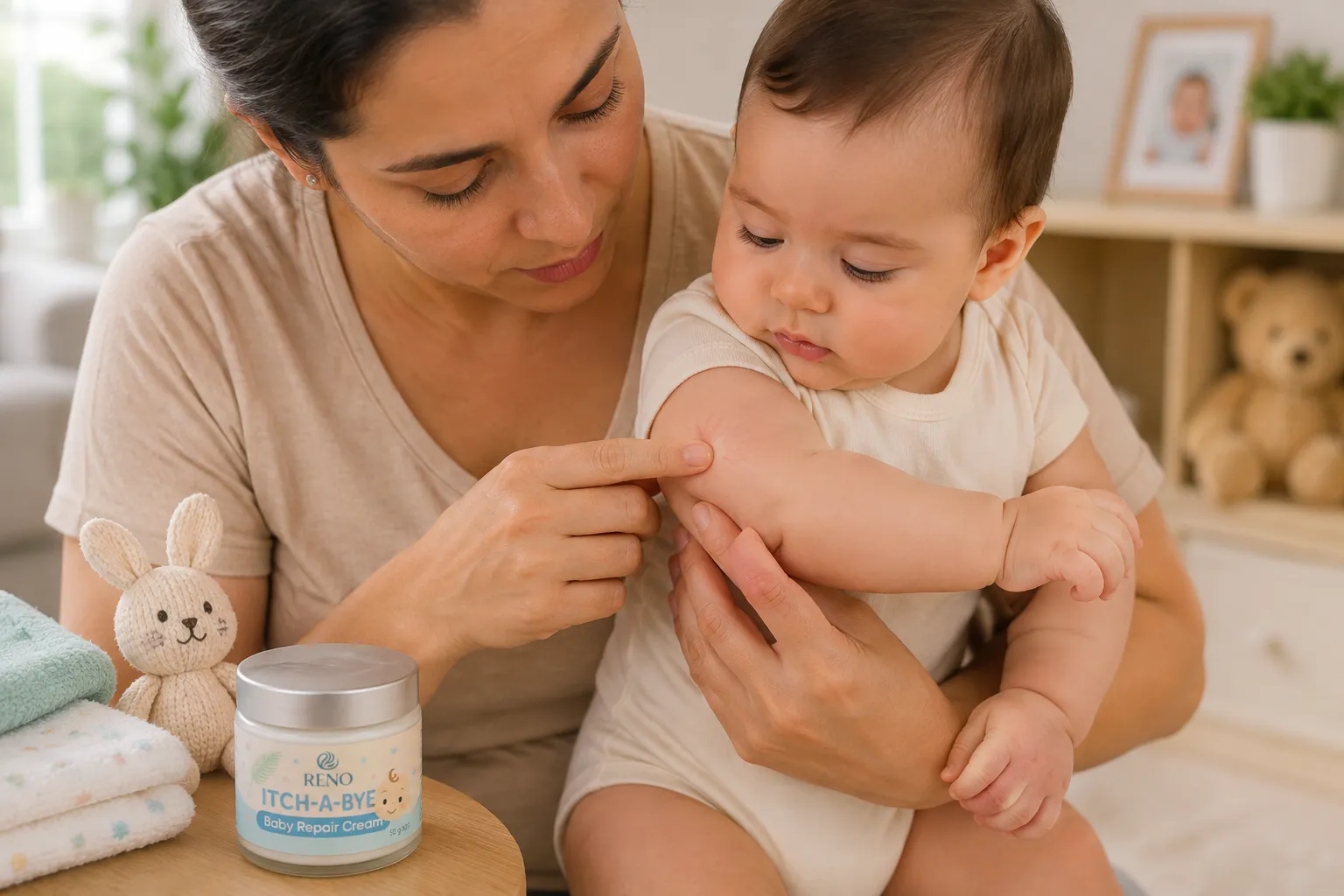
When a baby has dry, itchy or eczema-prone skin, scratching can become almost automatic. Babies do not understand that scratching may make the problem worse, and even very short fingernails can repeatedly damage an already fragile skin surface. What begins as a small dry patch can become red, raw or broken after a difficult night of rubbing and scratching. Most superficial scratch marks settle with gentle care, but sometimes damaged skin begins to behave differently.
That difference matters because the skin barrier is more than a covering. It helps protect the body from the outside environment, including microorganisms that normally live harmlessly on or around us. Once scratching creates tiny openings in the barrier, bacteria can potentially enter damaged areas more easily. Parents therefore need to know what ordinary scratched skin can look like and which changes may suggest that infection is developing.
Scratched Skin Does Not Automatically Mean Infected Skin
Seeing blood on a baby’s pyjamas or small scratches across their cheeks can be frightening, but broken skin does not automatically mean infection. Fresh scratches commonly look red, slightly swollen or irritated immediately after they occur. A small amount of bleeding may also occur where a fingernail has caught the surface. These changes should generally begin settling rather than progressively worsening.
The direction in which the skin is moving is often more informative than how dramatic it looks at one moment. Skin that looks irritated after scratching but gradually becomes calmer is very different from skin that becomes hotter, wetter, more painful or increasingly red over the following hours or days. Parents do not need to diagnose an infection themselves. They need to recognise when the pattern has changed enough to warrant medical assessment.
Why Scratching Can Increase the Risk of Infection
Healthy skin forms a physical barrier between the body and the outside world. Dryness and inflammation can weaken that barrier before scratching even begins. Fingernails can then create additional microscopic and visible breaks through which microorganisms may gain easier access. Repeated scratching can keep reopening those areas before the barrier has had an opportunity to recover.
This helps explain why infection can sometimes develop on top of eczema-prone or persistently itchy skin. The underlying problem may have started with dryness, heat, irritation or another trigger, but scratching creates another layer of difficulty. Once bacteria begin multiplying in damaged skin, the appearance and behaviour of the area may change. Recognising those changes early is important.
Sign 1: Redness That Keeps Spreading
Freshly scratched skin commonly becomes red because scratching itself causes irritation. What deserves closer attention is redness that continues expanding beyond the original scratch or dry patch. You may notice that an area that was small in the morning has become noticeably larger by evening. The redness may also become deeper or more intense rather than gradually fading.
Take particular notice when spreading redness occurs together with warmth, swelling, tenderness, weeping or crusting. That combination is more concerning than redness alone. Taking a photograph can help you determine whether the area really is expanding rather than relying on memory. If redness is spreading quickly, arrange medical assessment rather than simply applying increasing amounts of moisturiser.
Sign 2: The Skin Feels Noticeably Hotter
Inflamed skin can feel warm, particularly immediately after vigorous scratching. However, an affected area that becomes noticeably hotter than the surrounding skin deserves attention. Use the back of your fingers to gently compare nearby unaffected skin rather than repeatedly touching the damaged area. Increasing warmth can be particularly significant when accompanied by spreading redness or swelling.
Parents sometimes focus entirely on what the skin looks like and overlook what it feels like. Temperature can provide another clue that something is changing beneath the surface. A persistently hot, increasingly red and tender area is not behaving like simple dry skin. That is a good reason to speak with a healthcare professional.
Sign 3: Yellow or Honey-Coloured Crusting Appears
One of the changes parents should learn to recognise is yellowish or honey-coloured crusting over damaged skin. A little dried blood from scratching may form a dark scab, which is different from yellow crust that repeatedly develops over an irritated or weeping area. This type of crusting can sometimes occur with bacterial skin infection. It deserves particular attention when it begins spreading.
Do not aggressively scrub crusts away to see what is underneath. Repeated rubbing can further damage an already compromised barrier. Instead, observe whether the crusting is increasing and whether surrounding skin is becoming redder, warmer or swollen. Photographing the area before cleaning or bathing can also give your doctor useful information.
Sign 4: The Skin Begins Weeping or Oozing
Dry skin is, by definition, usually dry. When an area that was previously rough or flaky begins releasing clear, cloudy or yellowish fluid, something has changed. Significant inflammation can cause damaged skin to weep, and infection is one possible explanation that needs consideration. The amount and progression of the fluid matter.
A tiny amount of moisture from a freshly opened scratch is different from an area that repeatedly becomes wet again after being gently cleaned. Watch for weeping that spreads across neighbouring skin or develops alongside crusting, swelling, warmth or pain. Those combinations deserve medical attention. Continuing to experiment with different creams while the skin progressively deteriorates may delay appropriate treatment.
Sign 5: Swelling Is Increasing
Scratching can cause temporary puffiness, particularly when a baby has rubbed the same area repeatedly. More concerning swelling continues increasing or appears disproportionate to the original scratch. The skin may begin looking stretched or raised, and the baby may become uncomfortable when the area is touched. Swelling combined with heat and spreading redness deserves particular attention.
Location also matters. Significant swelling around the eyes, lips or face should be assessed promptly. Sudden facial swelling associated with hives, vomiting, wheezing or breathing difficulty requires urgent medical attention because this could indicate a serious allergic reaction rather than a straightforward skin infection. In that situation, skincare should not delay emergency care.
Sign 6: The Area Becomes Painful or Tender
Dry and eczema-prone skin tends to be associated more strongly with itching than pain. Babies cannot tell you that a particular patch hurts, but their behaviour can reveal tenderness. They may cry when you wash the area, pull away when it is touched or become distressed when clothing rubs against it. A previously itchy patch becoming distinctly painful is an important change.
Pain becomes more concerning when it develops alongside warmth, swelling, crusting or spreading redness. Do not repeatedly press the area to test whether it hurts. One observation is enough. Tell your doctor that the baby’s response to touch has changed because that behavioural detail can help communicate what photographs cannot.
Sign 7: Scratches Stop Healing and Begin Getting Worse
Minor scratches should generally move towards healing. The redness should settle, the surface should close and any small scab should gradually improve. If scratches repeatedly reopen, become wetter or develop increasing inflammation around their edges, something may be interfering with normal recovery. Persistent scratching can certainly contribute, but infection should also be considered when deterioration continues.
This is where daily photographs can be surprisingly useful. When parents look at irritated skin many times each day, gradual changes can be difficult to recognise. Comparing today’s photograph with one from two days earlier may reveal that redness has spread or crusting has increased. That information can also be useful when speaking with your doctor.
Sign 8: New Spots or Lesions Appear Around the Original Area
Pay attention to what is happening immediately around the scratched patch. New inflamed spots, small pustule-like areas, blisters or lesions appearing nearby may indicate that the problem is spreading rather than remaining confined to the original scratch. The speed with which these changes appear is important. Rapidly multiplying lesions deserve prompt assessment.
Blistering deserves particular caution because ordinary dry skin does not typically produce clusters of new fluid-filled blisters. Some infections affecting already damaged or eczema-prone skin can progress quickly. If blistering is spreading or the baby is also feverish or unwell, seek prompt medical care. Do not wait several days simply to see whether moisturising makes it disappear.
Sign 9: Your Baby Develops a Fever
Scratching and ordinary dry skin should not cause a fever. If worsening skin changes occur alongside fever, the situation deserves medical attention. The combination becomes especially important when the skin is also hot, swollen, weeping or rapidly becoming redder. Very young babies with fever require particular caution.
Look beyond the thermometer as well. Is your baby feeding normally, interacting normally and waking as usual? Or are they unusually sleepy, irritable or difficult to settle? A baby who appears generally unwell alongside worsening skin changes should be assessed promptly.
Sign 10: Your Baby Seems Generally Unwell
Sometimes the most important sign is not visible on the skin at all. A baby who suddenly feeds poorly, becomes unusually sleepy, seems less responsive or behaves very differently from normal needs attention. Skin infection can sometimes be accompanied by broader signs of illness. Parents should therefore look at the whole child rather than concentrating only on the damaged patch.
You know your baby’s ordinary behaviour better than anyone examining a photograph online. A meaningful change in that behaviour is useful clinical information. Tell the healthcare professional what has changed and when you first noticed it. If your baby appears seriously unwell, seek urgent medical care.
The Itch-Scratch Cycle Can Turn a Small Problem Into a Bigger One
The challenge with itchy baby skin is that scratching can create its own momentum. Dryness produces itch, the baby scratches, scratching damages the barrier and damaged skin can become even more irritated. That increased irritation can generate more itching, which leads to more scratching. This is the familiar itch-scratch cycle.
Stopping that cycle matters even before infection develops. Keeping nails short, reducing overheating, using soft breathable clothing and consistently supporting dry skin can all reduce some of the pressures driving scratching. Night-time scratching deserves particular attention because babies may scratch repeatedly while parents are asleep. Fresh blood spots or new scratch marks in the morning are useful clues that the cycle is continuing overnight.
Look Under the Fingernails Too
Baby fingernails grow surprisingly quickly and can become sharp even when they do not look long. Rough nail edges can repeatedly cut already irritated skin. Keeping nails carefully trimmed and smooth can reduce the amount of mechanical damage produced during scratching. The aim is not to prevent every touch but to reduce the damage when scratching occurs.
Clean hands and nails also make sense when the skin barrier is broken. Babies touch floors, toys, food, pets and countless other surfaces before touching their faces and bodies. This does not mean parents need to sterilise everything around the child. It simply reinforces why basic hand and nail hygiene becomes particularly useful when scratching has created open areas.
Heat and Sweat Can Keep the Cycle Going
A baby may begin scratching because they are hot rather than because their skincare has suddenly stopped working. Sweat, warm bedrooms, heavy sleepwear and physical activity can increase discomfort in already dry skin. Once scratching begins, the resulting inflammation may make the baby feel even itchier. Parents can then mistake the worsening appearance for proof that they need a different cream.
Before changing the entire routine, look at temperature and clothing. Use breathable fabrics and avoid unnecessary layers when conditions are warm. Keep bedrooms comfortably cool and notice whether scratching consistently becomes worse after sweating. Reducing one recurring pressure can sometimes make it easier for damaged skin to recover.
Bathing Can Affect Already Scratched Skin
Bathing damaged skin requires gentleness. Long hot baths, vigorous washing and repeated use of strongly fragranced cleansers can make already dry skin feel more uncomfortable. Pat rather than rub the skin dry after bathing. Avoid trying to scrub away every flake or crust.
If an area appears infected, however, bath-time adjustments are not a substitute for medical assessment. A doctor may recommend specific management depending on what is causing the problem. Do not improvise with strong antiseptics, essential oils or household remedies on broken baby skin. Products that seem harmless on intact adult skin may sting or irritate damaged infant skin.
Be Careful About Applying Products Directly to Open or Bleeding Skin
When parents see scratched skin, the natural reaction is often to put something on it immediately. But actively bleeding, deeply cracked, weeping or obviously infected skin needs more careful consideration than ordinary dryness. Do not repeatedly layer cosmetic products over an open wound simply because they are described as soothing or natural. The first priority is understanding what is happening to the damaged area.
This distinction is important with Itch-A-Bye Baby Repair Cream as well. Itch-A-Bye is designed to support dry, itchy and eczema-prone skin as part of a consistent skincare routine. It should not be treated as a substitute for medical assessment of actively infected, significantly weeping or seriously broken skin. When those red flags appear, the safest next step is to have the skin properly assessed.
Why the Skin Barrier Matters So Much
The outer skin barrier helps reduce water loss while separating living tissue from the external environment. In babies, that barrier is still developing and can be more vulnerable to repeated environmental pressures. Dryness, friction, saliva, heat, bathing, chlorine and scratching can all increase the workload placed on it. This is why we encourage parents to think beyond the visible dry patch.
Our book, Beyond the Skin Barrier, explores this wider picture in much greater depth. It looks at the developing skin barrier alongside environmental loads, microbes, immune signalling and the factors that can push vulnerable skin towards a flare. Understanding those relationships can help parents move away from treating every episode as an isolated surface problem. It also helps explain why prevention matters before the skin becomes severely damaged.
The Skin Threshold Model Helps Explain Sudden Flares
One concept we explore in the book is the Skin Threshold Model. A baby’s skin may cope reasonably well with one or two pressures but struggle when several occur together. Imagine heat, sweating, swimming, repeated wiping and poor sleep all arriving within the same few days. Scratching may become the final pressure that pushes the skin beyond what it can comfortably tolerate.
This is why a flare can sometimes seem to appear suddenly even though no single new product has been introduced. The problem may be cumulative rather than caused by one obvious trigger. Once scratching breaks the barrier, however, the risk profile changes because microorganisms have easier access to damaged areas. That is when parents need to watch more closely for signs of infection.
Repair, Nourish and Defend Before the Skin Reaches That Point
Our approach to everyday dry, itchy and eczema-prone skin is built around three connected priorities: Repair, Nourish and Defend. Repair means supporting a weakened barrier and reducing unnecessary moisture loss. Nourish means supplying hydration together with ingredients and conditions that support the skin’s recovery. Defend means recognising the skin’s constant interaction with bacteria, fungus, other microorganisms and environmental pressures.
The three parts are designed to work together rather than as separate treatments. A well-supported barrier is less vulnerable to repeated cracking, while properly nourished skin is better positioned to maintain its normal functions. Reducing environmental pressures can then help prevent the cycle from repeatedly restarting. The goal is to support the skin before scratching becomes severe enough to create extensive damage.
How Itch-A-Bye Fits Into That Approach
Itch-A-Bye Baby Repair Cream was developed around this broader Repair, Nourish and Defend philosophy for dry, itchy and eczema-prone baby and young children’s skin. Rather than relying on a single fashionable ingredient, the formulation combines ingredients selected to perform complementary roles. Glycerin and Hyaluronic Acid support hydration, while Black Seed Oil contributes emollient support and naturally occurring compounds that have attracted research interest for their anti-inflammatory and antimicrobial properties.
MSM and Allantoin provide additional soothing and skin-conditioning support, while Vitamin C and Vitamin E contribute antioxidant support. The formulation also contains a botanical complex including Centella asiatica, Chamomile, Licorice, Scutellaria baicalensis, Green Tea, Rosemary, Polygonum cuspidatum and Ginger. These botanicals contain compounds studied for properties that include soothing, antioxidant and anti-inflammatory activity. It is the synergy between these ingredients that matters to our formulation philosophy rather than expecting one ingredient to do everything.
Defend Does Not Mean Treating an Infection at Home
The Defend part of our framework can easily be misunderstood, so the distinction is important. Supporting the skin’s barrier and using ingredients with useful antimicrobial properties is not the same as treating an established bacterial infection. Once skin is clearly infected, medical treatment may be required. A cosmetic skincare routine should not delay that assessment.
This is particularly important when a baby develops spreading redness, honey-coloured crusting, significant weeping, swelling or fever. Those signs move the situation beyond routine skin maintenance. Repair, Nourish and Defend remains useful as a philosophy for supporting vulnerable skin, but established infection belongs in the hands of an appropriate healthcare professional. Knowing where skincare ends is just as important as knowing where it can help.
Take Photographs Before the Skin Changes Again
Skin can change surprisingly quickly, especially when scratching occurs overnight. If you are concerned, take clear photographs in good natural light. Photograph the same area from approximately the same distance so that changes are easier to compare. Including a wider photograph showing the location on the body can also provide useful context.
Do not edit the photographs or apply filters. Record the date and approximate time, particularly if redness appears to be spreading. These images can help a doctor understand what the skin looked like before bathing, cleaning or treatment changed its appearance. Photographs should support medical assessment rather than delay it.
Write Down What Happened Before the Skin Became Worse
A short timeline can reveal information that is easy to forget during an appointment. Note when the scratching became intense, when the skin first broke and when redness, crusting or weeping appeared. Include recent swimming, heat exposure, illness, new skincare, changes in laundry products and unusually restless nights. Also record anything that seemed to make the skin better.
This is exactly why we developed the idea of a Baby Skin Trigger Tracker and a 7-Day Baby Dry Skin Diary. Patterns are easier to see when they are written down rather than reconstructed from memory. The purpose is not to diagnose infection yourself. It is to give your healthcare professional better information.
When to Contact Your Doctor
Contact your doctor when scratched skin is progressively worsening rather than healing. Spreading redness, increasing warmth, swelling, tenderness, yellow crusting, persistent weeping, unusual blisters or repeated breakdown all deserve attention. Significant scratching that continually interrupts sleep or produces bleeding also warrants discussion. You do not need to wait until several warning signs appear together.
Medical assessment becomes more urgent when skin changes occur alongside fever or a baby who seems generally unwell. Very young babies deserve particular caution because their condition can change quickly. Rapidly spreading redness or blistering should also be assessed promptly. If you are uncertain about the severity of what you are seeing, seeking professional advice is reasonable.
When to Seek Urgent Help
Seek urgent medical care if your baby appears seriously unwell, unusually difficult to wake, has breathing difficulty or develops significant sudden facial or tongue swelling. Rapidly worsening skin associated with fever, extensive blistering or severe pain also requires prompt attention. These are not situations in which parents should continue testing skincare products to see what happens. The baby’s overall condition takes priority.
In Australia, parents who believe their child is experiencing a medical emergency should call 000. For less urgent concerns, your GP, paediatrician, pharmacist or other appropriate healthcare professional can help determine what needs assessment. Bringing photographs and a short timeline can make that conversation easier. The important thing is not to allow uncertainty to delay help when your baby appears genuinely unwell.
Frequently Asked Questions
How Can I Tell if My Baby’s Scratch Is Infected?
Look for a change from ordinary scratch healing. Increasing redness, warmth, swelling, tenderness, weeping or yellowish crusting are important signs to notice. The area may also begin expanding rather than gradually becoming smaller. Fever or a baby who seems generally unwell makes medical assessment more important.
Is Redness Around a Baby Scratch Always Infection?
No. Scratching itself commonly produces temporary redness and irritation. What matters is whether the redness settles or progressively spreads and becomes hotter, more swollen or painful. A photograph can help you compare changes over several hours. Persistent deterioration deserves medical assessment.
What Does Infected Eczema Look Like in a Baby?
Possible signs include worsening redness, warmth, swelling, weeping, crusting and increased tenderness over previously eczema-prone skin. The baby may also become significantly more uncomfortable or scratch more intensely. Some infections can produce blisters or other new lesions. Because different skin problems can look similar, a healthcare professional should assess concerning changes.
Is Yellow Crust on Scratched Baby Skin Normal?
A small dark scab can form where a scratch has bled, but yellow or honey-coloured crusting deserves closer attention. It can sometimes be associated with bacterial infection, particularly when the skin is also weeping or increasingly red. Do not aggressively scrub the crust away. Seek medical advice if it is spreading or repeatedly returning.
Can Scratching Cause a Skin Infection?
Scratching can create breaks in the skin barrier, potentially making it easier for microorganisms to enter damaged tissue. That does not mean every scratch becomes infected. Keeping nails short, supporting dry skin and reducing the triggers driving scratching can help minimise repeated damage. Watch damaged areas for progressive changes rather than assuming infection will occur.
Should I Put Antiseptic on Scratched Baby Skin?
Do not automatically apply strong antiseptics or household remedies to damaged baby skin. Some products can sting or further irritate already compromised skin. Minor superficial scratches may simply need gentle care, while suspected infection should be professionally assessed. Follow the advice of your doctor or pharmacist for your baby’s particular situation.
Can I Put Itch-A-Bye on Bleeding Skin?
Itch-A-Bye Baby Repair Cream is intended to support dry, itchy and eczema-prone skin rather than act as a treatment for open wounds or established infection. Avoid treating actively bleeding, deeply broken or significantly weeping areas as though they were ordinary dry patches. Have concerning damaged skin assessed appropriately. Itch-A-Bye can remain part of a broader routine for suitable intact dry and itchy areas when it is well tolerated.
What if My Baby Keeps Scratching the Same Area?
Repeated scratching usually means something continues to drive the itch. Look at dryness, heat, sweat, friction, clothing, bathing, saliva and other recurring exposures. Keeping nails smooth and supporting the skin barrier can reduce some of the damage. If scratching remains intense, repeatedly causes bleeding or interferes with sleep, speak with your doctor.
Does Fever Mean the Scratched Skin Is Infected?
Not necessarily, because babies can develop fever for many unrelated reasons. However, ordinary dry or scratched skin should not itself produce a fever. Fever occurring alongside rapidly worsening, hot, swollen, weeping or crusted skin deserves medical attention. The baby’s age and overall condition are particularly important.
Can Infected Baby Skin Heal With Moisturiser Alone?
Moisturiser supports dry skin and the skin barrier, but it should not be relied upon to treat a suspected established infection. Depending on the cause and severity, medical treatment may be required. Continuing routine moisturising does not replace proper assessment when infection warning signs appear. Seek professional advice when the skin is progressively worsening.
Watch the Direction the Skin Is Moving
Parents do not need to become experts in diagnosing bacterial, viral or fungal skin infections. A simpler and more useful skill is learning to recognise direction. Is the scratched area closing and becoming calmer, or is it spreading, becoming hotter, wetter, more swollen or increasingly painful? Is your baby otherwise behaving normally, or are they beginning to seem unwell?
Those questions can help parents recognise when everyday skin care is still appropriate and when professional assessment is needed. Supporting the skin barrier, reducing scratching and using a consistent Repair, Nourish and Defend approach can help reduce some of the pressures that keep dry, itchy skin cycling. But once damaged skin begins showing signs of infection, the priority changes from finding another skincare solution to making sure the baby receives the right assessment.
That distinction is central to the philosophy behind Beyond the Skin Barrier and Itch-A-Bye Baby Repair Cream. Good skincare is not simply about knowing what to put on the skin. It is also about understanding what the skin is telling you and recognising when something has moved beyond ordinary dryness. When scratched baby skin is getting progressively worse rather than progressively better, pay attention.