
Starting School With Eczema-Prone Skin: A Parent Checklist
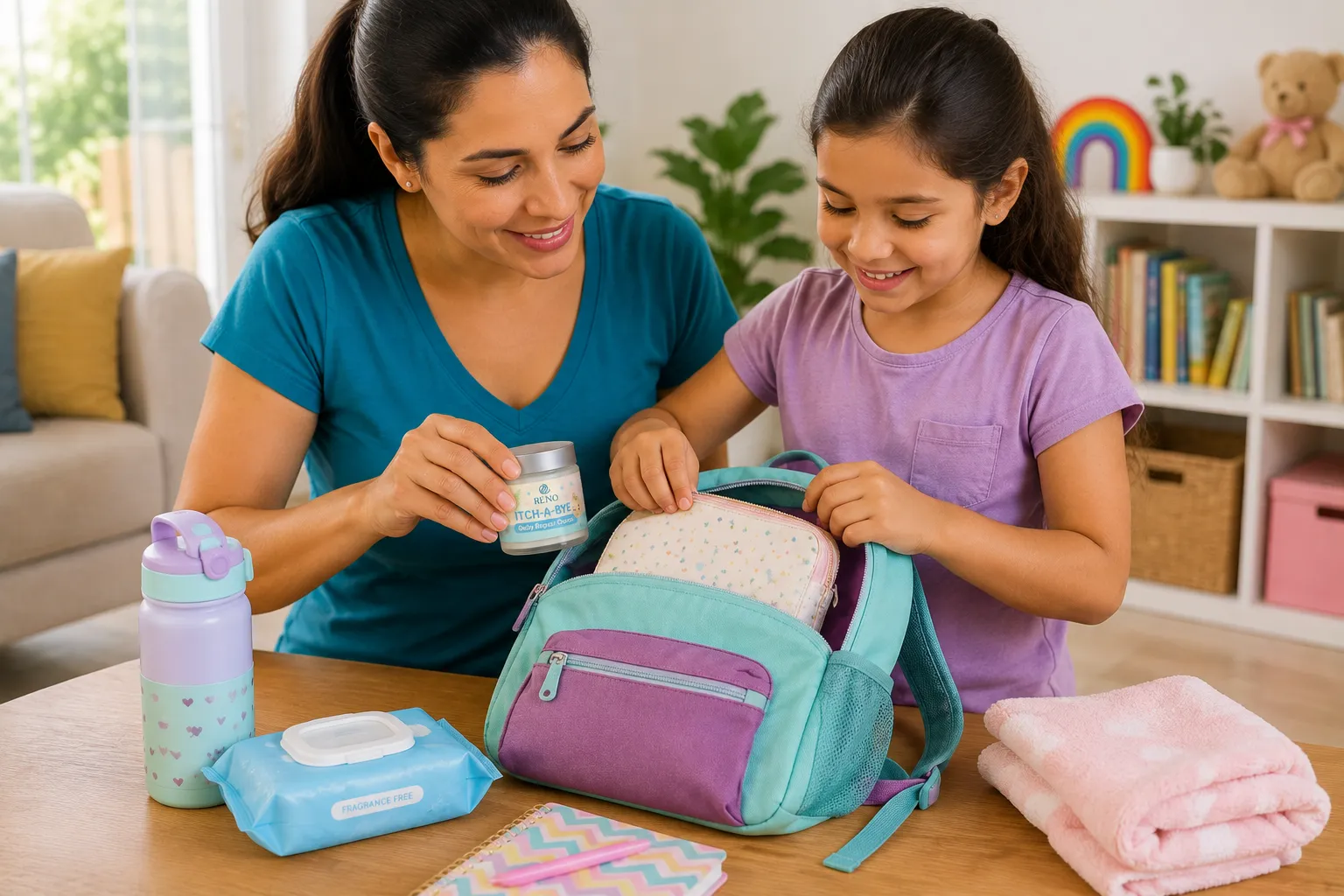
Starting school is a big milestone for any child, but when your child has dry, itchy or eczema-prone skin, there can be another layer of things to think about. Suddenly, you are no longer nearby to notice the first scratch behind the knee, the cheeks becoming dry after lunch or the way your child starts rubbing their wrists when they get hot. School introduces longer days, uniforms, sunscreen, hand washing, sport, playgrounds, grass, sand, food, toilets, air conditioning and sometimes swimming. Individually, these may seem like small things, but for vulnerable skin they can add up over the course of the day.
The good news is that starting school does not have to mean losing control of your child’s skincare routine. By this age, children can also begin taking a more active role in recognising what their skin is telling them. A simple plan shared between the child, parents and school can make everyday skin care far easier to manage. The aim is not to build your child’s school day around eczema, but to make skin care simple enough that it fits naturally into school life.
Before the First Day, Write Down What You Already Know
Parents often carry an enormous amount of information about their child’s skin in their heads without realising it. You may already know that your child’s knees become itchy after running, their hands dry out after repeated washing or their neck becomes uncomfortable when they get sweaty. Perhaps chlorine is a problem, particular sunscreens seem to cause irritation or a certain uniform fabric creates friction. Write these observations down before school starts.
Do not begin by trying to identify every possible eczema trigger on the internet. Start with what you have actually observed in your own child. Which parts of their body usually become dry? What does an early flare look like? What circumstances consistently seem to make their itching worse? These observations will be much more useful to the school than a long generic list of things that might theoretically affect eczema.
1. Tell the School Where Your Child Usually Becomes Itchy
Saying that your child has eczema is useful, but it does not necessarily tell a teacher what to look for. Explain which areas usually become uncomfortable and what happens first. Your child may scratch behind the knees, rub the wrists, pull at the collar of their uniform or repeatedly touch their cheeks. These behavioural clues can appear before dramatic redness develops.
Teachers are not expected to diagnose skin problems, but they can notice patterns. A teacher who knows that your child starts rubbing the backs of their knees when they become overheated may recognise the problem during sport or outdoor play. That small observation can be far more useful than waiting until the skin looks visibly irritated. Make the information specific, practical and easy to remember.
2. Help Your Child Learn Their Own Early Warning Signs
Starting school is a good time to begin teaching children to recognise their own skin. They do not need to understand the biology of the skin barrier. They simply need words for what they are experiencing, such as itchy, hot, dry, sore, tight or stingy. Being able to explain the sensation can help them ask for assistance before they have scratched an area repeatedly.
You can practise this at home by asking simple questions when your child starts scratching. “Does it feel itchy or hot?” and “Where does it feel uncomfortable?” are more useful than repeatedly telling them not to scratch. Over time, children can begin connecting sensations with circumstances. That awareness is an important skill because parents will not always be standing beside them.
3. Check the School Uniform Before School Starts
School uniforms are worn for many hours, often five days a week. That makes fabric, fit, seams, collars, waistbands and temperature surprisingly important for children with eczema-prone skin. A uniform that is slightly irritating for another child may become much more uncomfortable when it repeatedly rubs already dry skin. Tight collars, rough seams and heavy fabrics deserve particular attention.
Have your child wear the complete uniform at home before the first day rather than discovering problems during the first week of school. Let them move, sit, bend, run and play in it. Ask whether anything feels scratchy or uncomfortable. Where school rules permit, a soft breathable layer underneath irritating uniform fabric can sometimes reduce direct friction against the skin.
4. Think About Heat Before the Weather Becomes Hot
Children generate an extraordinary amount of heat when they play. Running at lunchtime, physical education, sitting in a warm classroom and wearing a uniform can create considerably more heat than parents expect. For some children with eczema-prone skin, heat and sweat can make itching much more noticeable. The neck, back, elbows, waistband and backs of the knees are particularly useful areas to watch.
Avoid unnecessary overheating wherever practical. This may mean choosing the lightest permitted uniform options on warm days, using breathable layers and making sure your child understands that a jumper does not have to stay on simply because they wore it to school that morning. Encourage them to drink normally and cool down after vigorous activity. The objective is not to stop physical activity, but to prevent unnecessary heat from becoming another pressure on already vulnerable skin.
5. Have a Sunscreen Plan
Australian schoolchildren spend considerable time outdoors, making sun protection an important part of school life. For a child with dry or eczema-prone skin, sunscreen can also become one of the most frequently applied skincare products they use. If you already have a sunscreen that your child’s skin tolerates well, find out whether the school allows it to be supplied and used. School policies differ, so it is worth asking before the first day.
If your child’s skin begins changing after school starts, do not automatically blame sunscreen, but include it when looking for patterns. Consider where the redness or dryness occurs and whether it corresponds with where sunscreen is applied. Also think about the combination of sunscreen, sweat, heat and repeated rubbing rather than assuming one product must be responsible. Skin rarely experiences one thing in isolation during a school day.
6. Pay Attention to Hand Washing
School means frequent hand washing, and that is important for hygiene. However, repeated exposure to water and cleansing products can contribute to dryness in children whose skin barrier is already vulnerable. The backs of the hands, fingers, knuckles and wrists are common places for parents to notice changes. Small cracks or rough areas may gradually develop rather than appearing overnight.
Check your child’s hands regularly during the first few weeks of school. If they become progressively drier, look at the entire routine rather than simply applying more moisturiser every evening. Ask what products are being used at school and how frequently your child is washing. Appropriate moisturising and barrier support can then become part of the solution rather than waiting until the hands are already extremely dry.
7. Put Sport on Your Skin Checklist
Sport should be part of childhood, including for children with eczema-prone skin. Running, football, athletics and playground activity support physical health, confidence and social development. The issue is not exercise itself, but what may accompany it: heat, sweat, friction, grass, synthetic sportswear and sometimes prolonged periods in damp clothing. These pressures can combine in ways that make already dry skin feel itchier.
Ask your child how their skin feels after sport rather than only looking at it. If itching consistently appears after physical education, look at the location and timing. A dry waistband may point toward friction and sweat, while itching behind the knees may become more noticeable with heat. Recognising the pattern allows you to support the skin without unnecessarily restricting activities your child enjoys.
8. Swimming Days Need Their Own Plan
School swimming can be wonderful, but chlorine and repeated water exposure can be challenging for some children with dry or eczema-prone skin. The effect is not always obvious while the child is still in the pool. Parents may notice increased dryness or scratching later that afternoon or evening. That delay can make the connection easy to miss.
If swimming repeatedly leaves your child’s skin dry, establish a simple after-swim routine. Where facilities permit, rinse chlorine from the skin with fresh water, gently pat rather than aggressively rub the skin dry and provide moisturising or barrier support afterwards. Clean, comfortable clothing can then reduce additional friction. A routine that is easy enough for a school-aged child to remember is more likely to happen consistently.
For our own approach, we often describe this simply as: Rinse. Itch-A-Bye. Dress.
9. Keep Fingernails Short
This may sound almost too simple to include in a school checklist, but fingernails can dramatically influence what happens after itching begins. A child can scratch an itchy area dozens of times while concentrating on a lesson or playing with friends. Sharp or long nails can turn relatively minor itching into damaged skin surprisingly quickly. Once the surface is broken, the area may become even more uncomfortable.
Keep nails comfortably short and smooth rough edges. At the same time, avoid treating scratching simply as bad behaviour. Scratching is often information that something feels uncomfortable. The more useful question is not merely “How do we stop the scratching?” but “Why is the child needing to scratch?”
10. Give the Teacher a Simple Plan, Not an Eczema Manual
Teachers already have many children and responsibilities to manage. A complicated skincare document is unlikely to be remembered during a busy school day. Give the teacher a short explanation covering where your child’s skin normally becomes itchy, what early signs look like and what you would like them to do if the problem becomes noticeable. Include any relevant school-approved skincare arrangements.
For example: “Our child has dry, itchy and eczema-prone skin. Heat can make the backs of the knees particularly itchy. If you notice repeated scratching, please encourage them to cool down and let us know. Their labelled skincare product is kept according to the school’s policy.” That gives the teacher something practical they can actually use. Clarity is more valuable than complexity.
11. Make Sure Your Child Knows Who to Ask for Help
Young children sometimes tolerate discomfort because they do not know whether they are allowed to interrupt the teacher. Tell your child exactly what to do if their skin becomes very itchy or uncomfortable. Explain who they can speak to and what words they can use. Practising the conversation at home can make asking for help much easier.
A child might simply say, “My skin is getting really itchy behind my knees. Can I please get my cream?” The precise procedure will depend on school policy and the child’s age. What matters is that your child does not spend hours scratching because they were unsure whether they were allowed to say anything. Self-advocacy can become part of learning to manage their own skin.
12. Keep the Skincare Routine Simple
It is tempting to send several products to school in case something happens. That can create confusion for both your child and the staff. Where the school permits parent-supplied skincare products, clearly label what you provide and make the instructions specific. Consistency also makes it easier to understand how your child’s skin is responding.
If you use Itch-A-Bye Baby Repair Cream, it can form part of that simple routine where school policy permits. Rather than sending several different creams for different situations, the aim can be to maintain a familiar product your child’s skin already knows. Parents should always follow their school’s procedures for storage and application.
The Skin May Be Coping With More Than One Thing
One of the biggest mistakes we can make when a child’s skin becomes worse after starting school is searching immediately for one culprit. Parents may blame the uniform, sunscreen, soap, grass, food or swimming. Sometimes one particular factor genuinely does matter. But often the skin has experienced several smaller pressures during the same day.
Imagine a child who begins school with slightly dry skin. They wash their hands before class, sit in a warm room, run outside, sweat under their uniform, have sunscreen reapplied, play on grass, wash their hands again, participate in sport and then spend another hour in warm clothing. None of those experiences alone necessarily explains the itching that appears at 4 pm. Together, however, they may tell a very different story.
This Is the Skin Threshold Model in Everyday Life
In Beyond the Skin Barrier, we explore an idea we call the Skin Threshold Model. Think of the skin as having a certain capacity to cope with everyday pressures before discomfort becomes noticeable. That threshold will not necessarily be identical from one child to another. It can also change depending on the condition of the skin at the beginning of the day.
If the barrier is already dry and compromised, it may take less additional pressure before itching begins. Heat adds something. Friction adds something. Repeated washing adds something. Sweat, environmental exposure and scratching can add something too.
Eventually the cumulative load may cross the child’s threshold. The parent then sees the result at home and understandably asks, “What caused this?” Sometimes a more useful question is, “What combination of things did the skin have to cope with today?” That question encourages investigation rather than guesswork.
Repair, Nourish and Defend
This wider view of dry, itchy and eczema-prone skin is why our approach is built around three principles: Repair, Nourish and Defend. Repair focuses on supporting the integrity of the skin barrier so it can perform its fundamental job of holding water in and helping separate the body from the outside environment. When the barrier is struggling, repeatedly adding moisture without thinking about why that moisture keeps escaping may not be enough. Barrier support therefore becomes central to the routine.
Nourish goes considerably further than hydration alone. Vulnerable skin can benefit from a formulation containing ingredients selected for complementary moisturising, emollient, soothing, conditioning and antioxidant roles. This is why we do not think of nourishment as simply putting water back into dry skin. The objective is to create a more supportive environment in which the skin can recover and function effectively.
Defend recognises that skin is also a living protective interface constantly encountering bacteria, fungus, other microbes and environmental pressures. Scratching and barrier disruption can make that protective role more difficult. Supporting the skin therefore means thinking about more than how soft it feels immediately after applying a moisturiser. It means considering what the skin needs to cope with the world around it.
Why We Formulated Itch-A-Bye as More Than a Basic Moisturiser
Itch-A-Bye Baby Repair Cream was developed around this Repair, Nourish and Defend philosophy for dry, itchy and eczema-prone baby and young children’s skin. Rather than relying on one headline ingredient, the formulation combines ingredients selected to perform different but complementary jobs. We wanted the ingredients to work as a system rather than simply creating a long ingredient list for the label.
Glycerin and Hyaluronic Acid provide humectant support by helping attract and retain moisture. Black Seed Oil provides emollient support and contains naturally occurring compounds such as thymoquinone, which has attracted scientific interest for antioxidant, anti-inflammatory and antimicrobial properties. MSM contributes soothing and conditioning support, while Allantoin is widely valued for its calming, conditioning and skin-supportive role. Vitamins C and E provide additional antioxidant support within the formulation.
The botanical component adds another dimension rather than existing merely so the product can be described as botanical. It includes extracts such as Centella asiatica, Chamomile, Licorice, Scutellaria baicalensis, Green Tea, Rosemary, Polygonum cuspidatum and Ginger, each bringing its own naturally occurring plant compounds. The idea is synergy: hydration working alongside emollient support, soothing ingredients, conditioning ingredients, antioxidants and carefully selected botanicals. That is what we mean when we say Nourish is about considerably more than moisturising.
Create an After-School Skin Check
The first few weeks of school are an excellent time to establish a simple habit. When your child changes out of their uniform, take a quick look at the areas that normally become dry or itchy. Ask how their skin felt during the day and whether they remember scratching anywhere. You are not conducting a medical examination; you are gathering information.
Look at the hands, wrists, neck, elbows, backs of the knees and any other areas that commonly trouble your child. Notice whether the pattern is different on sport days, swimming days or particularly hot days. Ask whether the itching started in class, during lunch, after running or on the way home. A few weeks of simple observations can reveal patterns that would otherwise be easy to miss.
Do Not Change Everything After One Bad Day
A difficult skin day can make parents want to replace every product immediately. Suddenly the sunscreen, washing powder, moisturiser, uniform and school soap all become suspects. Changing everything simultaneously may occasionally improve the skin, but it teaches you very little. If the problem disappears, you still do not know what actually mattered.
Unless there is an obvious reaction requiring immediate action, look for repeated patterns. If itching consistently follows swimming, investigate the swimming routine. If the hands progressively become drier through the school week, investigate repeated washing. If symptoms cluster around hot sport days, heat, sweat, friction and clothing deserve closer attention.
Consider Keeping a Simple Skin Diary
You do not need complicated charts or spreadsheets. For a week or two, record the day, weather, major school activities, swimming or sport, unusual food exposures, where itching occurred and what the skin looked like that evening. Keep each entry short enough that you will actually continue doing it. The purpose is pattern recognition, not perfect record keeping.
You may discover that Wednesdays are consistently worse because Wednesday is swimming day. Perhaps the hands become progressively drier from Monday to Friday and recover over the weekend. Maybe the problem appears only during very hot weeks. Patterns like these give you something concrete to work with instead of repeatedly guessing.
Know the Difference Between an Uncomfortable Day and a Bigger Problem
Children with eczema-prone skin will occasionally have difficult skin days despite careful routines. A little additional dryness after sport or scratching after becoming hot does not automatically mean something serious has happened. What matters is the pattern, severity and how the skin changes over time. Persistent worsening deserves more attention than an isolated rough afternoon.
Seek appropriate medical assessment when itching is repeatedly interfering with sleep, concentration or normal activities, or when scratching is causing substantial skin damage. Increasing pain, warmth, swelling, spreading redness, weeping, blistering or significant crusting should also be assessed rather than simply treated as ordinary dryness. If your child is generally unwell or develops fever alongside significant skin changes, seek appropriate medical advice.
The School Skin Checklist
Before the first day, make sure your child knows where their skin usually becomes itchy and who they can ask for help. Tell the teacher what the early signs look like and check the complete uniform for rough, tight or irritating areas. Have a plan for sunscreen, sport, swimming and any school-approved moisturiser your child may need. Keep fingernails comfortably short and consider a spare breathable outfit if your school arrangements make that useful.
During the first few weeks, check the hands, wrists, cheeks, neck, elbows and knees after school. Ask about itching rather than relying only on visible redness. Look for patterns around heat, sport, swimming, sunscreen and repeated hand washing. Most importantly, keep the routine simple enough that your child can gradually learn to participate in looking after their own skin.
Frequently Asked Questions
Should I tell my child’s teacher about eczema?
Yes. The teacher should know if your child has diagnosed eczema or a recurring skin problem that may require attention during school hours. Give them practical information rather than only a diagnosis, including the areas that usually become itchy, early signs they might notice and what you would like them to do. Also follow the school’s procedures regarding skincare products, medication and health plans.
Can school make my child’s eczema worse?
School itself is not necessarily the cause. However, a school day can introduce several pressures including uniforms, heat, sweat, hand washing, sunscreen, sport, grass, swimming and friction. For some children, the cumulative effect may make already dry or eczema-prone skin more uncomfortable. Looking for patterns is usually more useful than assuming one school-related exposure must be responsible.
Should my child stop playing sport if sweating makes them itchy?
Not automatically. Physical activity is an important part of childhood and should not usually be removed simply because a child has eczema-prone skin. Instead, consider clothing, heat, sweat, friction and what happens immediately after activity. If sport repeatedly causes severe symptoms, discuss the pattern with an appropriate health professional.
What should my child do if they become itchy during class?
Give your child a simple plan before the problem occurs. They should know who to tell and what words to use if their skin becomes uncomfortable. Depending on school policy and your child’s individual plan, this may involve cooling down, accessing an approved skincare product or visiting the appropriate staff member. The important thing is that the child knows they do not have to sit silently and scratch for hours.
Can frequent hand washing make eczema-prone hands drier?
Repeated water and cleanser exposure can contribute to dryness, particularly when the skin barrier is already vulnerable. Monitor the hands, fingers, knuckles and wrists during the first few weeks of school. If dryness progressively develops, consider the frequency of washing and the products involved. Appropriate moisturising and barrier support may then become particularly important.
What should we do after school swimming?
If chlorine seems to leave your child’s skin dry or itchy, a simple routine can help. Where practical, rinse the skin with fresh water, avoid aggressive rubbing when drying and provide moisturising and barrier support afterwards. Change into clean, comfortable clothing rather than leaving the child in damp swimwear. We often simplify our own approach to Rinse. Itch-A-Bye. Dress.
Can my child take Itch-A-Bye to school?
That depends on the school’s policy for parent-supplied skincare products. Where permitted, Itch-A-Bye Baby Repair Cream can be clearly labelled and supplied with straightforward instructions. Tell staff where and when you want it applied rather than leaving the instructions vague. A simple routine is more likely to be followed consistently.
Why does my child’s skin look fine at school but become itchy at home?
Children can be distracted by lessons, friends and play, making mild itching less noticeable during the day. Once they become still in the car or at home, they may suddenly notice the sensation and begin scratching. The skin may also have accumulated several pressures throughout the school day. This is why asking about the entire day can be more useful than looking only at the skin at one moment.
School Should Expand Your Child’s World, Not Shrink It
It is easy for parents of children with eczema-prone skin to begin viewing the world as a collection of things that must be avoided. Grass becomes a threat. Swimming becomes a threat. Sport becomes a threat. Sunscreen, uniforms, school soap and hot weather all begin looking like potential enemies.
That is not the life we want for our children.
The better goal is to understand your child’s skin well enough to help it cope with ordinary childhood. Let them run, learn, make friends, play sport, get dirty, paint pictures, sit in the grass and participate in school life. Observe the pressures their skin struggles with, reduce unnecessary ones and support the barrier consistently.
Teach your child that itching is something they can talk about rather than something they simply have to endure. Teach them to recognise when their skin feels hot, dry or uncomfortable and to ask for help when they need it. Give teachers clear information without making skincare unnecessarily complicated. Then use what happens during the school day to learn more about your child’s individual skin threshold.
That is also the broader message behind Beyond the Skin Barrier and the reason we developed Itch-A-Bye Baby Repair Cream around Repair, Nourish and Defend.
Because the objective is not to build a smaller world around eczema-prone skin.
It is to support the skin well enough that your child can confidently step into a bigger one.