
What Does “Paediatrician Tested” Really Tell Parents?
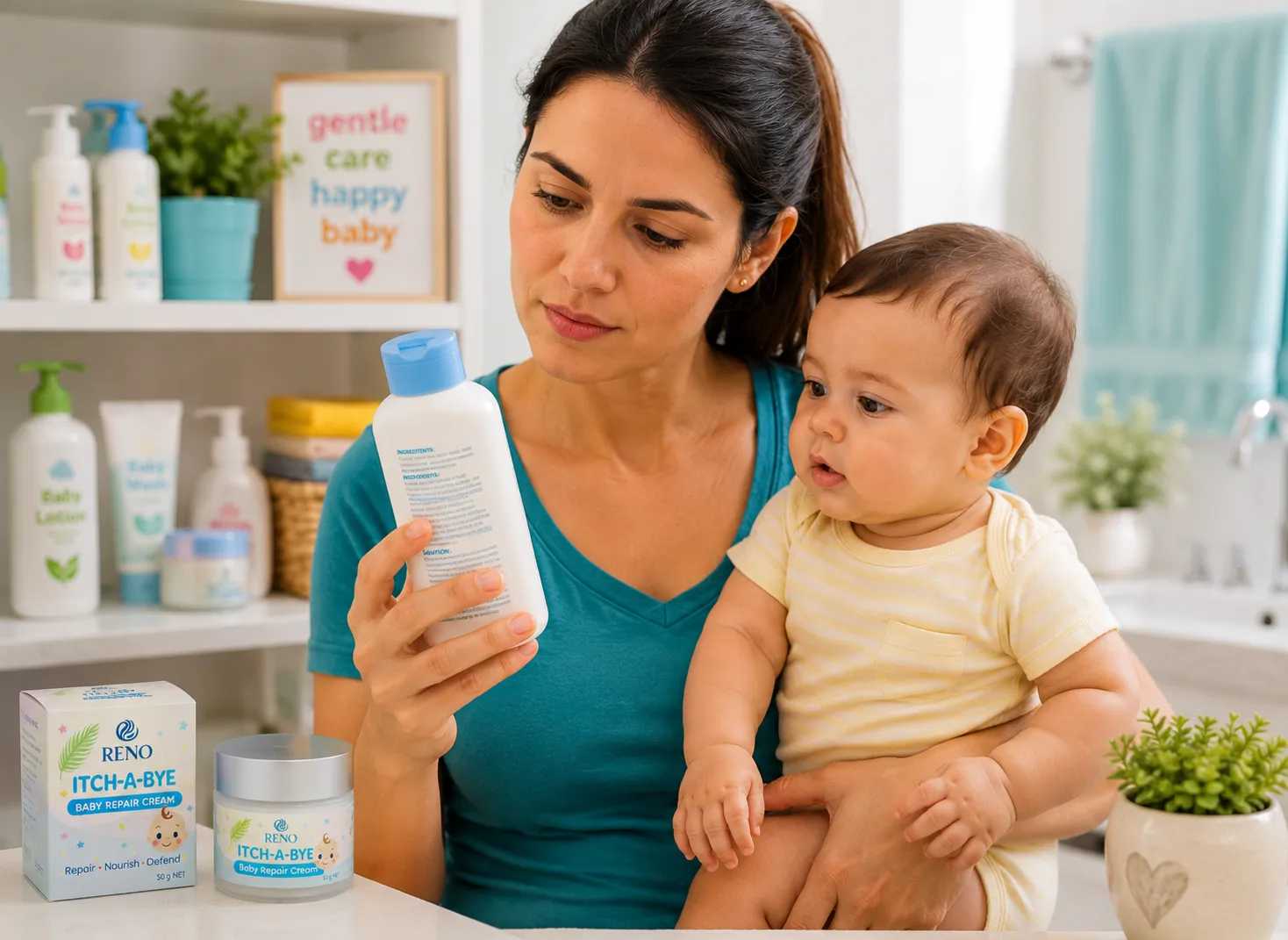
“Paediatrician tested” is another phrase that can make a baby skincare product feel immediately more trustworthy. It sounds as though a children’s doctor has looked closely at the formulation and decided that it is safe, gentle and suitable for babies. For parents caring for dry, itchy or eczema-prone skin, that kind of reassurance can be powerful. But “paediatrician tested” does not automatically mean paediatrician approved, recommended for every baby, or proven to treat a skin condition.
The phrase can still be useful, especially if the testing was relevant, well designed and involved the finished product. The problem is that the words alone do not tell you how the testing was carried out, how many children were involved, how long the product was used or what outcomes were actually measured. The details behind the testing are therefore important. So the real value of the claim depends on the study behind it, not simply on the confidence of the wording on the front of the pack.
What Does “Paediatrician Tested” Usually Mean?
In practical terms, “paediatrician tested” generally means that a paediatrician was involved in some form of product evaluation or testing process involving children or paediatric use. That may involve supervision, review, observation or participation in a study. The exact role can vary between brands and studies. The phrase itself does not standardise the method.
One company may have a paediatrician oversee a small tolerance study, while another may conduct a more structured evaluation involving repeated use. The number and age of participants may also differ. This is why two products can both say “paediatrician tested” while the evidence behind the claim is very different. The phrase describes professional involvement, but it does not tell you the strength of the evidence unless more detail is provided.
Does It Mean a Paediatrician Personally Recommends the Product?
Not necessarily. A paediatrician can be involved in testing without personally endorsing the product for every child. Testing and recommending are different activities. A doctor may supervise a study that simply assesses whether a cream appears to be well tolerated under certain conditions.
That is not the same as saying, “I recommend this product for every baby with eczema-prone skin.” The first statement is about evidence gathered during a test, while the second is a clinical recommendation for an individual or group. The distinction is important when interpreting professional-sounding claims. Parents should be careful not to mentally turn “tested” into “recommended.”
Paediatrician Tested Is Not the Same as Paediatrician Approved
This distinction is easy to miss because both phrases sound professional. Tested tells us that some form of evaluation took place. Approved suggests a stronger level of endorsement or formal acceptance. Unless the company clearly explains what “approved” means and who granted that approval, even that word deserves scrutiny.
The same rule applies to baby skincare more generally. Professional-sounding language can be useful, but it should not be treated as a shortcut around understanding the product itself. The evidence behind the words remains important. The more specific the manufacturer is about who tested the product, how it was tested and what was found, the more meaningful the claim becomes.
What Was Actually Tested?
This is probably the most important question parents can ask. Was the test looking at skin tolerance? Was it checking for visible irritation? Was it assessing ease of use or acceptability? Was it measuring hydration, dryness or another specific outcome?
Those are completely different questions. A study designed to show that a product is tolerated well does not automatically prove that it improves eczema-prone skin. Likewise, a study measuring hydration does not necessarily tell us anything about scratching, microbial pressures or barrier recovery. The result only answers the question the study was actually designed to ask.
Who Was Tested?
The participant group matters enormously. Were newborns included, older babies, toddlers or school-aged children? Were the children’s skin types generally healthy, or did some have dry or eczema-prone skin? Were children with known sensitivities included or excluded?
These details affect how confidently you can apply the results to your own child. A cream that is well tolerated in healthy older children may still be perfectly suitable for babies, but the study does not answer exactly the same question. The relevance of the evidence depends partly on who was actually studied. The closer the study population is to the child you are caring for, the more directly relevant the findings become.
How Long Was the Product Used?
Duration matters too. A product can appear perfectly well tolerated after one application but behave differently after repeated use over days or weeks. Some studies are short because they are designed to detect immediate irritation, while others examine repeated exposure. Both types of testing can provide useful information.
The mistake is assuming they tell you the same thing. A 24-hour tolerance study does not answer the same question as a four-week home-use study. Study duration helps put the findings into context. When a brand shares testing details, duration is one of the most useful pieces of information to look for.
Does Paediatrician Tested Mean Safe for Newborns?
Not automatically. A product may have been tested in a paediatric population without including newborns. Babies change rapidly during the first months of life, and neonatal skin is not identical to the skin of a two-year-old. Age-specific suitability therefore matters.
If you are choosing a product for a very young baby, look for clear age guidance from the manufacturer. Do not assume that every product marketed broadly as paediatric has been specifically tested in the youngest age group. The wording on the package may not tell you which ages were included. “For children” and “tested in newborns” are not interchangeable claims.
Does It Mean the Product Cannot Cause a Reaction?
No. Even a carefully tested product can be unsuitable for an individual baby. Human skin varies, and babies with dry, itchy or eczema-prone skin may respond differently depending on what else is happening to the barrier at the time. Heat, sweat, saliva, friction and scratching can all change the context in which a product is used.
A paediatrician-tested cream can therefore still appear to coincide with irritation in one child. That does not necessarily mean the testing was poor or the product is dangerous. Individual response still matters. It simply means population-level tolerance can never guarantee individual tolerance.
Is Paediatrician Tested the Same as Dermatologically Tested?
No. The two claims relate to different professional involvement. Dermatologically tested generally refers to testing under dermatological supervision or control, while paediatrician tested indicates some form of paediatric professional involvement. A product may carry one claim, both claims or neither.
The distinction can be useful, but once again the words alone do not reveal the methodology. A strong study involving the finished product can be far more informative than several vague professional claims. Parents should look for context wherever it is available. What matters is the quality of the evidence behind the label.
Is It the Same as Hypoallergenic?
No. Hypoallergenic relates to an intention to reduce the likelihood of allergic reaction, whereas paediatrician tested refers to professional involvement in a testing process. A product may be paediatrician tested without being marketed as hypoallergenic. It may also be hypoallergenic without having paediatrician-testing claims.
These words often appear together because they all sound reassuring, but they describe different things. Parents can easily bundle them mentally into one idea of “safe baby product.” Separating the claims makes them easier to evaluate properly. It is more useful to understand each claim separately and then look at the complete formulation.
Is It the Same as Clinically Tested?
Not necessarily. “Clinically tested” generally means some form of structured study involving people has been carried out. A paediatrician may or may not have been involved in that study. Likewise, a product can be paediatrician tested without the company necessarily presenting the work as a formal clinical trial.
The phrase “clinically tested” can sound especially powerful, but it still needs context. What was measured, how many people were involved and how the study was designed all matter. Professional involvement does not remove the need to understand methodology. Professional titles and clinical language are useful only when they are connected to clear evidence.
Why Parents Trust These Words
Parents are not unreasonable for finding these labels comforting. If your baby is scratching, sleeping badly or repeatedly developing dry patches, you want confidence that a product has been taken seriously. A paediatrician’s involvement seems to suggest that someone familiar with children has considered the formulation. That can be reassuring.
The problem is not reassurance itself. The problem is assuming the claim tells us more than it really does. The wording needs to be interpreted within its limits. “Paediatrician tested” can be a positive sign, but it should be one part of the decision rather than the entire basis for choosing a cream.
A Tested Product Can Still Be Too Basic
This is where many parents get frustrated. A cream may be well tolerated, gentle and completely suitable from a safety perspective, yet still leave the skin dry and itchy. That does not necessarily mean the product has failed the test it was designed to pass. It may simply mean the formulation was not designed to provide broader support.
A light moisturiser can be excellent for mild dryness while being insufficient for persistent barrier vulnerability. In that case, the issue is not whether the cream is gentle enough. Tolerance and function are two different questions. The issue is whether it provides enough of the right kind of support for the skin in front of you.
Gentle Is Important, but Gentle Is Not the Whole Story
Parents often have to balance two questions at once. First: will my baby tolerate this? Second: will it actually provide useful support? A product can succeed at the first and still be underpowered for the second.
That is why formulation matters. A cream may contain humectants for hydration, oils for conditioning, soothing ingredients, antioxidants or other supportive components. Another may focus almost entirely on basic moisturisation. Both can be gentle, but they may not be trying to accomplish the same thing.
This Is Why We Think in Terms of Formulation
At Itch-A-Bye, we focus on the formulation as a system. We wanted more than a cream that simply felt gentle or moisturising. We wanted ingredients selected for complementary roles within vulnerable dry, itchy and eczema-prone skin. That became the basis of our Repair, Nourish and Defend philosophy.
The important idea is not that one ingredient does everything. It is that several ingredients contribute different forms of topical support. Hydration, conditioning, soothing and other functions can complement one another. The formulation is stronger when hydration, conditioning, soothing, antioxidant and protective functions can work together.
REPAIR: Supporting the Barrier
The first part of our approach is Repair. Dry and eczema-prone skin can lose water more easily, leaving the surface rough and uncomfortable. Scratching can then place additional physical pressure on that already vulnerable barrier. Supporting hydration and conditioning therefore matters.
Hyaluronic Acid and Glycerin support water retention, while Allantoin contributes soothing and skin-conditioning properties. Other emollient ingredients help support softness and flexibility. These roles complement one another within the formulation. Repair is about giving the barrier a more supportive environment rather than relying on surface moisturisation alone.
NOURISH: The Part the Testing Label Does Not Explain
The words “paediatrician tested” tell you nothing about nourishment. They do not tell you whether the cream contains humectants, oils, vitamins, soothing ingredients or antioxidant support. They only tell you something about the testing process. That is why we separate product claims from formulation function.
Our definition of Nourish goes beyond hydration. It includes ingredients selected for complementary roles, including Glycerin, Hyaluronic Acid, Black Seed Oil, MSM, Allantoin, vitamins and our botanical complex. These ingredients provide different forms of topical support rather than simply repeating the same function. Nourish is about what the formulation deliberately provides, not simply about whether the product passed a tolerance test.
Why Black Seed Oil Matters
Black Seed Oil, Nigella sativa, sits at the centre of the Itch-A-Bye formulation. Its naturally occurring constituents, including thymoquinone, have been investigated for anti-inflammatory, antioxidant and antimicrobial properties. The oil also provides emollient and conditioning characteristics. Those properties are different from simple hydration.
That is why we did not build the formulation around one moisturising mechanism. Black Seed Oil sits alongside humectants, soothing ingredients, vitamins and other components. It contributes one part of a wider ingredient system. Its value comes from its role inside a broader formulation rather than from being presented as a miracle ingredient.
Why MSM Adds Another Layer
MSM, or methylsulfonylmethane, has been investigated in relation to inflammatory and oxidative processes. That made it relevant to our thinking about skin exposed repeatedly to dryness, irritation and scratching. It occupies a different role from Glycerin or Hyaluronic Acid. That difference is intentional.
A formulation can become more useful when ingredients contribute different strengths. The point is not to make the ingredient list as long as possible. Each ingredient should have a reason for its inclusion. The point is to build a coherent system where each ingredient has a reason to be there.
Allantoin Brings Soothing Support
Allantoin has a long history of use in skincare as a soothing and skin-conditioning ingredient. It does not perform the same job as a humectant or an oil. That makes it complementary rather than redundant. Different functions can work together within one formulation.
For dry or itchy skin, comfort can matter just as much as softness. A baby who continues rubbing or scratching places additional physical pressure on the skin. Reducing the pressures surrounding vulnerable skin is part of the wider strategy. Supporting comfort is therefore another piece of the wider barrier-support approach.
What About the Botanical Complex?
Itch-A-Bye contains a selected group of botanical ingredients including Centella asiatica, Chamomile, Licorice, Green Tea, Scutellaria baicalensis, Rosemary, Ginger and Polygonum cuspidatum. These plants contain different phytochemicals and have been investigated across areas including soothing, antioxidant, anti-inflammatory and antimicrobial activity. We do not assume that every botanical performs every function. Each plant has its own evidence profile.
The reason for combining them is diversity of support. One botanical can contribute a different profile from another. They sit alongside the non-botanical ingredients rather than replacing them. This is what we mean by formulation synergy.
DEFEND: Supporting the Skin’s Protective Role
The third part of our philosophy is Defend. Skin is a protective surface that continually interacts with bacteria, fungi, environmental irritants and physical contact. Healthy skin also naturally hosts microorganisms, so the objective is not to sterilise it. The goal is to support the protective environment of vulnerable skin.
Black Seed Oil and several botanical ingredients contain compounds that have been investigated for antimicrobial activity. That research contributed to our ingredient-selection philosophy. This does not make a cosmetic cream a treatment for established infection. Defend means supporting vulnerable skin against everyday microbial and environmental pressures, not treating an established infection.
Paediatrician Tested Does Not Mean Antimicrobial
These are completely different concepts. A paediatrician-testing claim says something about professional involvement in product evaluation. Antimicrobial refers to the activity of specific substances against microorganisms. One claim does not imply the other.
This distinction matters because parents often see professional testing claims as proof that the product does everything. It does not. Each type of claim needs to be interpreted separately. Testing tells you about the test, while the formulation tells you what functions the product was actually designed to provide.
Ingredient Research and Product Testing Are Different
This is another important distinction. Black Seed Oil, MSM, Allantoin and botanical ingredients may each have published research behind them. That does not automatically prove that the finished Itch-A-Bye cream produces every outcome described in those studies. Ingredient evidence and finished-product evidence are not interchangeable.
Likewise, a finished product may undergo paediatric or dermatological tolerance testing without proving every theoretical benefit associated with its ingredients. These are different categories of evidence. Both can be useful when interpreted correctly. Strong product communication keeps them separate rather than combining them into an oversized claim.
Does Paediatrician Testing Prove a Cream Works for Eczema?
No, unless the study was specifically designed to answer that question. A tolerance study may show that participants generally used the product without significant irritation. That is useful information. But it is not the same as proving a therapeutic effect on eczema.
To establish that kind of claim, the study would need appropriate participants, outcomes, controls and methodology. The exact design would matter enormously. Testing needs to match the claim being made. A product can be well tolerated without being clinically proven to treat eczema.
What If My Baby Still Itches With a Paediatrician-Tested Cream?
This can happen. The product may be gentle and well tolerated while dryness, heat, sweat, friction, saliva or scratching continue adding pressure. It may also simply not be rich enough or broad enough in its formulation for what the skin currently needs. That does not make the testing meaningless.
Instead, ask what the product was actually tested to show. If it was tested for tolerance, it may be doing exactly what the claim says while not solving every other issue. A tolerance claim has a narrower purpose than many parents naturally assume. The mistake is expecting one testing claim to answer every question about the skin.
The Skin Threshold Model Helps Explain This
Our Skin Threshold Model asks parents to think about combined pressure rather than one single culprit. Dryness may add some pressure, heat may add more, while sweat, friction, saliva and scratching add further pressure. A product may reduce some of those pressures without controlling all of them. The total still matters.
That helps explain why the same cream can seem adequate during one week and insufficient the next. Several environmental factors may have changed while the formulation remained exactly the same. The skin may simply be carrying a greater total load. Sometimes the product has not stopped working; the skin is simply dealing with more at once.
What Should Parents Look for Beyond the Testing Claim?
Look at the ingredient list and the intended function of the formulation. Does the cream contain humectants for hydration? Does it contain emollient or conditioning ingredients? Are there soothing or other supportive components that make sense for the skin you are trying to care for?
Then look at the baby’s real response. Does the skin remain comfortable for longer after application? Does dryness return immediately? Does scratching continue? The best product decision combines credible testing, intelligent formulation and real-world skin response.
Where Itch-A-Bye Fits
Itch-A-Bye Baby Repair Cream was developed for dry, itchy and eczema-prone baby skin around our Repair, Nourish and Defend philosophy. Our formulation brings together Black Seed Oil, MSM, Allantoin, Hyaluronic Acid, Glycerin, vitamins and a deliberately selected botanical complex. Each ingredient group contributes a different part of the wider strategy. The aim is coordinated support rather than a single headline ingredient.
You can explore Itch-A-Bye Baby Repair Cream here and look at how the formulation has been built. We believe the complete ingredient system matters more than relying on one reassuring testing phrase. The individual ingredients make more sense when viewed as parts of that system. The label can tell you something, but the formulation tells you much more.
Go Beyond the Front of the Pack
This is also one of the main ideas behind Beyond the Skin Barrier. Parents are frequently given short pieces of advice that sound definitive: use something hypoallergenic, choose dermatologist-tested products, use a paediatrician-tested cream. Each can be useful, but none explains the complete picture. Vulnerable skin is influenced by more than labels.
The book explores barrier development, scratching, environmental pressures, immune signalling, the microbiome, the gut-skin axis and our Skin Threshold Model. It helps parents understand why several small pressures can interact and why skincare decisions need context. You can read Beyond the Skin Barrier here if you want to explore that wider framework. It provides a broader way to think about persistent skin problems.
So, What Does “Paediatrician Tested” Really Tell Parents?
It tells you that a paediatric professional was involved in some form of testing or evaluation, but the phrase alone does not tell you exactly how the study was designed, which children participated, how long the product was used or what outcome was measured. It does not automatically mean paediatrician approved, suitable for every newborn, hypoallergenic or proven to treat eczema. Those are separate claims. The details behind the testing determine how informative it really is.
For parents choosing skincare for a baby with dry, itchy or eczema-prone skin, paediatrician testing can certainly be one reassuring factor. But it should sit alongside formulation quality, ingredient function, age suitability and your baby’s actual response. Because the strongest baby skincare decision does not come from finding the most impressive professional phrase on the packaging. It comes from understanding what that phrase really tells you and choosing a formulation designed to help vulnerable skin Repair, Nourish and Defend.