
Why Does Baby Dry Skin Return When You Stop Moisturising?
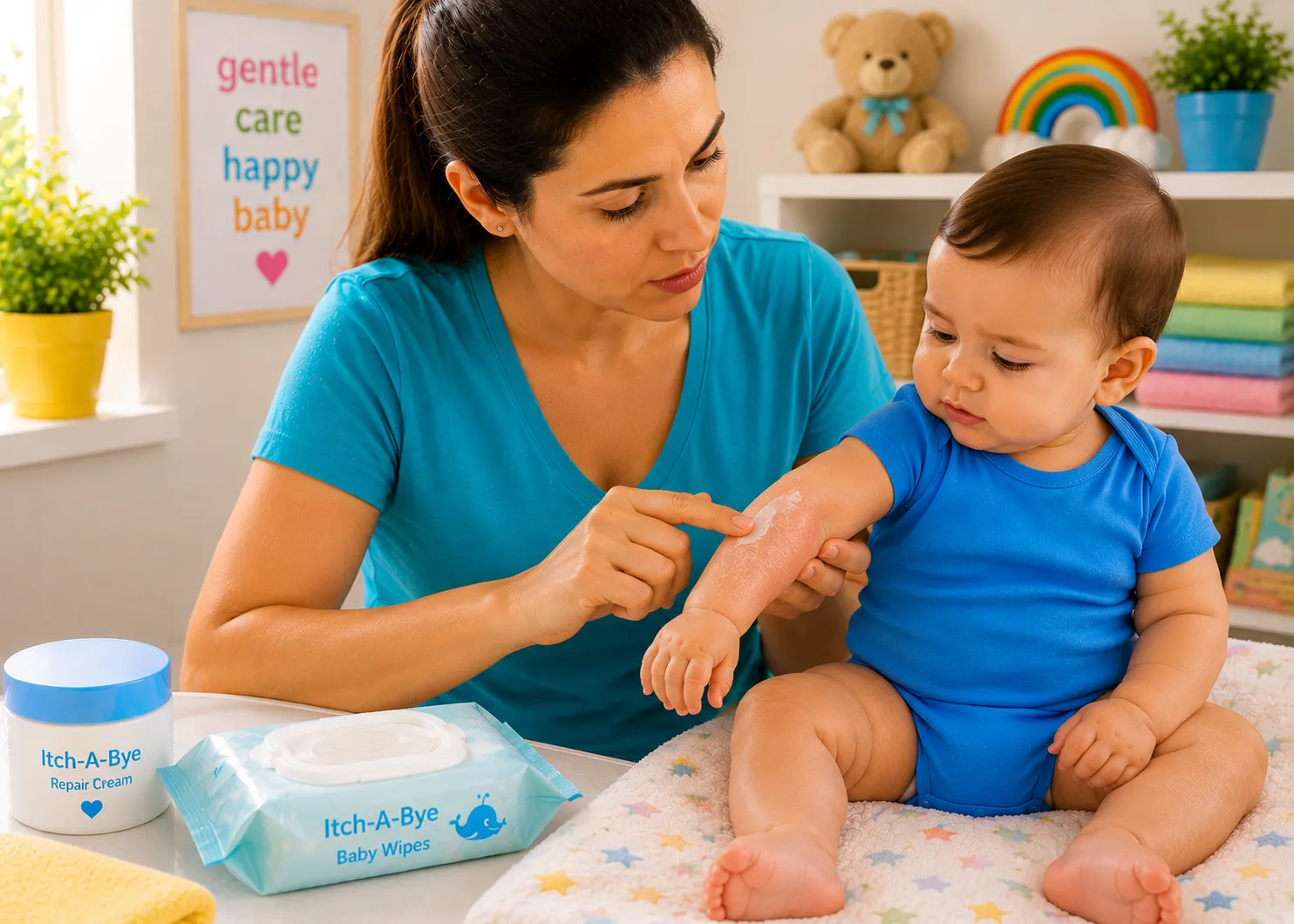
You moisturise your baby’s dry skin every day and, after a while, it begins to feel softer and look much better. Then you stop because everything seems fine. A few days later, the dryness is back.
For many parents, this can feel frustrating because it creates the impression that the moisturiser only works while you are using it. In one sense, that is often true, but not because the product has made the skin dependent on moisturiser. The more useful explanation is that the underlying tendency towards dryness may still be there even after the visible symptoms improve.
Moisturiser Does Not Change Your Baby’s Skin Type Overnight
Some babies naturally have skin that loses water more easily than others. Their barrier may simply need more regular support, particularly during infancy and early childhood when the skin is still developing. A moisturiser can improve hydration and help the surface feel softer, but it does not necessarily remove that underlying tendency permanently.
This is similar to watering a plant during dry weather. The soil may look healthy while it is being watered regularly, but that does not mean the climate suddenly stopped being dry. Once the extra support disappears, the original conditions can become noticeable again.
The Skin Barrier Is Always Working
The outermost part of the skin acts as a barrier between the body and the environment. One of its most important jobs is to slow water loss from the skin while helping protect against irritants and other external pressures. When that barrier is less effective, water can escape more easily.
Moisturising helps support that outer layer by adding water-binding and skin-conditioning ingredients. When you stop, the barrier has to manage without that extra help. If your baby is naturally prone to dry skin, the surface may gradually return to its previous state.
Why the Skin Can Look Normal Before It Is Fully Stable
Visible dryness is only one sign of how the skin is behaving. The surface may look smooth while the underlying barrier is still more vulnerable than average. Parents often stop moisturising as soon as the flakes disappear because the problem appears solved.
That is understandable, but appearance can improve before the skin becomes consistently resilient. Once moisturising stops, water loss may slowly increase again until roughness, tightness and itching become visible. This is one reason maintenance can matter even when the skin looks good.
Dry Skin Often Behaves Like a Tendency, Not a One-Off Event
Some skin problems occur once and disappear completely. Dry skin is often different. It can behave more like a recurring tendency that becomes better or worse depending on the environment.
Cold weather can increase dryness, while heat and sweat can increase itching. Swimming, frequent bathing, soaps, saliva, friction and air conditioning can also place additional pressure on the skin. If these exposures continue after moisturising stops, dryness can gradually return.
This Does Not Mean the Skin Has Become Addicted to Moisturiser
Parents sometimes worry that using moisturiser regularly will make the skin lazy or dependent on it. There is no useful reason to think of moisturising this way. Applying moisturiser does not teach the skin to stop functioning.
Instead, the product helps compensate for water loss and supports the surface environment while it is being used. If the baby’s skin naturally struggles to retain moisture, removing that support can simply reveal the original problem again. That is very different from addiction or dependence.
Think of Moisturising as Maintenance
A helpful way to think about this is to compare moisturising with brushing teeth. You do not brush your teeth for two weeks and then permanently stop because they look clean. Regular care helps maintain the result.
For babies prone to dry skin, moisturising can work in a similar way. The goal is not always to rescue the skin only after it becomes rough and uncomfortable. Ongoing support can help prevent that decline from happening as quickly.
Why Maintenance Is Often Easier Than Recovery
Once the skin becomes very dry, the barrier can become more vulnerable to irritation and scratching. Scratching then creates more surface damage, which can increase discomfort and make the skin even harder to manage. Waiting until the skin becomes severely dry again can therefore create a cycle of deterioration and repair.
Maintenance moisturising aims to interrupt that cycle earlier. Keeping the skin comfortable when it is already doing well can be easier than repeatedly trying to recover after dryness becomes obvious. This is one reason consistency often matters more than dramatic short-term treatment.
The Itch-Scratch Cycle Can Restart Quickly
Dryness can lead to itching, and itching can lead to scratching. Scratching physically disturbs the outer skin surface, which can increase irritation and create even more itching. Once this cycle begins, the original dryness can become a much bigger problem.
Regular moisturising can help keep the skin softer and more comfortable, which may reduce one of the pressures driving that cycle. If moisturising suddenly stops while the skin is still prone to dryness, the cycle may gradually reappear. Parents often notice scratching before they notice visible flakes.
Why Bathing Can Bring the Dryness Back Faster
Bathing itself is not automatically harmful, but frequent exposure to hot water, strong cleansers and long baths can increase dryness. If moisturising previously compensated for some of that water loss, stopping it can make the effect of bathing much more obvious. The skin may begin feeling tight again soon after each bath.
This is why the whole routine matters. Comfortably warm water, gentle cleansing and moisturising after bathing can work together. Removing only the moisturising step while everything else remains the same can make dryness return surprisingly quickly.
Swimming Can Have the Same Effect
Children who swim regularly can also experience recurring dryness. Pool water, repeated rinsing and changes in skin hydration can all affect the surface. A child may appear completely comfortable while post-swim moisturising is part of the routine.
Once that step stops, the cumulative effect of swimming may become more visible. Dryness that seems to have suddenly returned may simply be the original swimming-related pressure becoming noticeable again. The moisturiser was helping the skin cope with something that had not disappeared.
Weather Can Change How Much Support the Skin Needs
A baby may need more moisturising in winter than in summer, or more during a hot dry spell than during mild humid weather. Air conditioning and indoor heating can also reduce environmental humidity. This means the amount of support skin needs can change even when the child and product remain exactly the same.
If you stop moisturising during a period of low humidity, dryness may return quickly. The same baby might tolerate less frequent moisturising under different conditions. Skincare routines often work best when they adapt to the environment rather than follow one rigid rule.
This Is Where the Skin Threshold Model Helps
In Beyond the Skin Barrier, we describe the Skin Threshold Model as a way of thinking about cumulative pressures on vulnerable skin. Dryness is rarely happening in isolation. Heat, sweat, bathing, swimming, friction, saliva, environmental dryness and scratching can all add to the total load.
Moisturising may reduce one part of that load enough to keep the skin below its visible symptom threshold. When moisturising stops, the total pressure can rise again. Once the threshold is crossed, dryness, roughness or itching become noticeable.
This helps explain why a baby can look completely fine for a few days and then suddenly appear dry again.
The Moisturiser Was Not Hiding the Problem
It can be tempting to think that moisturiser simply covered up the dryness without changing anything. That is not a useful way to think about it. A well-formulated moisturiser can genuinely improve hydration, softness and surface comfort while it is being used.
The underlying tendency towards water loss may still remain. That does not mean the moisturiser failed. It means ongoing support may be part of managing skin that naturally becomes dry easily.
Why We Think Beyond Basic Moisturising
At Itch-A-Bye, this recurring pattern is one reason we developed our formulation around Repair, Nourish and Defend rather than hydration alone. Dry, itchy and eczema-prone baby skin can involve barrier weakness, irritation, scratching and environmental pressures alongside simple water loss. Supporting one part of that picture while ignoring the others may not be enough for every child.
Repair focuses on supporting the barrier and reducing repeated surface stress. Nourish includes hydration but also a wider network of soothing, conditioning and antioxidant ingredients. Defend recognises the skin’s protective role against bacteria, fungus and other environmental pressures.
The three pillars are intended to work together rather than as separate ideas.
Nourish Means More Than Replacing Lost Water
Moisturising is essential, but we do not define Nourish as hydration alone. We selected ingredients with complementary roles because dry and itchy skin can involve multiple overlapping needs. The objective is to support hydration, comfort and the wider skin environment at the same time.
This is why Glycerin and Hyaluronic Acid sit alongside Black Seed Oil, MSM, Allantoin, Vitamin C, Vitamin E and selected botanical extracts in the Itch-A-Bye formulation. Each ingredient contributes something different. The value is in how those functions complement one another.
Why Glycerin Helps With Recurring Dryness
Glycerin is a humectant, meaning it helps attract and retain water in the outer layers of the skin. This makes it especially useful for skin that repeatedly becomes dry after washing, swimming or environmental exposure. By helping the surface hold onto water, it supports softness and flexibility.
This benefit is particularly relevant when parents notice that the skin quickly becomes tight again after moisturising stops. Glycerin does not permanently change the skin’s natural tendency towards dryness. It helps the outer layers maintain better hydration while it is present.
Why Hyaluronic Acid Adds Another Layer of Hydration Support
Hyaluronic Acid also helps bind water and support skin hydration. It is well known for its ability to associate with water molecules, which makes it useful in formulations designed to keep the surface feeling supple. In Itch-A-Bye, it works alongside Glycerin rather than replacing it.
Using more than one hydration-supporting mechanism allows the formula to provide a broader moisturising environment. Again, the aim is not to create dependence. It is to give vulnerable skin additional support when its own moisture retention is not enough.
Why Black Seed Oil Matters Beyond Hydration
Black Seed Oil from Nigella sativa is one of our cornerstone ingredients because it brings more than basic emollient support. Its constituents, including thymoquinone, have been studied for anti-inflammatory, antioxidant and antimicrobial activity. This combination made it particularly interesting for dry, itchy and easily irritated skin.
The oil also helps condition and soften the surface. This means it contributes to both the Nourish and Defend parts of our framework. Instead of simply adding oil to dry skin, we wanted an ingredient with a wider supporting profile.
Why MSM Fits Into Long-Term Skin Support
MSM, or methylsulfonylmethane, was selected for its soothing, anti-inflammatory and antioxidant potential. When recurring dryness repeatedly leads to itching and scratching, comfort becomes an important part of maintenance. Hydration alone may not address the whole experience of irritated skin.
MSM therefore complements the water-binding ingredients and oils. Its role is not to moisturise in the same way as Glycerin or Hyaluronic Acid. It adds another layer of support within the broader formulation.
Why Allantoin Helps With Dry, Rough Skin
Allantoin is widely used for soothing, conditioning and skin-protective purposes. It can help rough skin feel softer and more comfortable while supporting a surface environment that is easier to maintain. That is particularly useful when dryness has already encouraged scratching.
Within our framework, Allantoin sits naturally between Repair and Nourish. It helps support comfort while other ingredients address hydration and conditioning. Again, the formulation works as a system.
Why Vitamins C and E Are Included
Vitamin C and Vitamin E derivatives contribute antioxidant and skin-conditioning support. The skin is continually exposed to environmental oxidative pressures, so antioxidant ingredients can complement a formulation designed for regular use. Vitamin E also works well alongside oils within a cream formulation.
These vitamins are not included as miracle ingredients. Their purpose is to broaden the overall support provided by the formula. They work alongside the hydration, soothing and botanical components.
Why We Use Multiple Botanical Extracts
Our botanical complex includes specially selected extracts such as Centella asiatica, Chamomile, Licorice, Scutellaria baicalensis, Green Tea, Rosemary, Polygonum cuspidatum and Ginger. These plants contain different groups of phytochemicals associated with soothing, antioxidant, conditioning and anti-inflammatory properties. We selected them as a complementary group rather than relying on one fashionable botanical.
Centella is widely used in skin-conditioning formulations, Chamomile is valued for soothing, Licorice contains compounds investigated for calming properties and Green Tea contributes antioxidant polyphenols. The remaining botanicals broaden the phytochemical profile. Their role is to strengthen the Nourish and Defend sides of the formulation.
Why Ingredient Synergy Matters for Maintenance
Maintenance skincare is rarely about one spectacular ingredient. It is about creating a formulation that supports the skin consistently enough that it remains more comfortable over time. This is where synergy becomes more important than marketing language.
Humectants help with water retention. Oils help condition the surface. Soothing ingredients support comfort. Antioxidants and botanicals broaden the supportive environment. The combined effect is what matters.
This is why we think of Itch-A-Bye Baby Repair Cream as a formulation system rather than a collection of hero ingredients.
Should You Moisturise Even When the Skin Looks Good?
For a baby or child who is clearly prone to recurring dryness, ongoing moisturising can be useful even when the skin appears comfortable. This does not always mean applying large amounts several times a day. The right frequency depends on the child, environment and how quickly dryness returns.
Some families may find once-daily support is enough. Others may need additional application after bathing, swimming or whenever the skin begins feeling dry. The goal is to maintain comfort without making the routine unnecessarily complicated.
Can You Gradually Reduce How Often You Moisturise?
Yes, if the skin remains comfortable. You do not necessarily have to maintain exactly the same frequency forever. As the child’s skin changes, the climate changes or the underlying dryness improves, you can observe whether less frequent moisturising still keeps the skin comfortable.
The important thing is to change gradually and watch what happens. If dryness quickly returns when you reduce frequency, the skin may still benefit from more regular support. Let the child’s response guide the routine.
What If the Skin Returns to Normal and Stays Normal?
Then the maintenance routine may be reduced or stopped. Not every episode of baby dry skin becomes a long-term problem. Some dryness is temporary and related to weather, bathing habits or a short period of environmental stress.
If the skin stays soft and comfortable without moisturiser, there is no need to apply products simply for the sake of applying them. Good skincare should be purposeful. The routine should match the child’s actual needs.
What If Dryness Comes Back Every Time?
If dryness reliably returns each time moisturising stops, that pattern is useful information. It suggests that the skin still has an ongoing tendency towards moisture loss or continues to face environmental pressures that require support. In that situation, maintenance may make more sense than repeated cycles of stopping and restarting.
This does not mean you have failed to solve the problem. It means you have learned something about how the child’s skin behaves. Understanding the pattern is often more useful than constantly searching for a permanent one-time fix.
When Moisturising Alone May Not Be Enough
If the skin remains intensely itchy, significantly inflamed, cracked, weeping, crusted or painful despite regular moisturising, the child may need additional assessment. Eczema and other skin conditions can involve inflammation that moisturiser alone may not control. Appropriate medical treatment may need to work alongside regular barrier care.
It is also worth seeking advice when dryness repeatedly disrupts sleep or daily activities. A healthcare professional can help determine whether another condition is contributing. Moisturising remains useful, but it should not be expected to replace treatment when treatment is needed.
Frequently Asked Questions
Why does my baby’s skin get dry again after I stop moisturising?
Because the underlying tendency towards water loss may still be present. The moisturiser was helping the outer skin layers retain water and stay comfortable. When that support stops, the skin can gradually return to its natural level of dryness.
Does moisturiser make baby skin dependent on it?
No. Moisturiser does not make the skin lazy or addicted. It provides external hydration and conditioning support while it is being used. If dryness returns afterwards, that usually reflects the skin’s underlying tendency rather than dependence caused by the product.
Should I moisturise my baby every day?
If your baby’s skin repeatedly becomes dry without regular support, daily moisturising can be a practical maintenance approach. Some children need less frequent use while others benefit from additional application after bathing or swimming. The routine should be based on how the individual child’s skin behaves.
Can I stop moisturising once the dryness disappears?
You can try reducing or stopping if the skin remains comfortable. However, children with recurring dry skin may experience a return of roughness or itching when maintenance stops. Reducing gradually can help you understand how much support the skin still needs.
Why does dryness come back faster after bathing?
Bathing can remove surface oils and increase water loss, particularly when hot water or strong cleansers are used. If moisturising after bathing was helping compensate for that effect, stopping it can make dryness more noticeable. A gentler bathing routine can reduce that pressure.
Why does swimming make the dryness return?
Pool exposure and repeated rinsing can increase dryness in some children. When post-swim moisturising stops, that extra pressure may become more obvious. Rinsing and restoring moisturising support after swimming can help maintain comfort.
Is it better to moisturise before the skin gets dry?
For children prone to recurring dryness, maintenance can be easier than waiting until the skin becomes rough and itchy again. Supporting the barrier before symptoms become severe may help reduce repeated cycles of dryness and scratching. The exact frequency should still be based on the child’s needs.
Why does Itch-A-Bye contain more than moisturising ingredients?
Because our Nourish pillar is broader than hydration alone. Glycerin and Hyaluronic Acid help with moisture retention, while Black Seed Oil, MSM, Allantoin, vitamins and botanical extracts contribute complementary soothing, conditioning, antioxidant and other supportive properties. The formulation is built around Repair, Nourish and Defend.
Can Itch-A-Bye be used as a maintenance cream?
Yes. Itch-A-Bye Baby Repair Cream can be used once daily or as needed according to the child’s skin. Families with recurring dry or itchy skin may find regular use useful as part of a simple maintenance routine. Frequency can be adjusted according to how the skin responds.
Why does my baby’s skin look fine but become itchy when moisturising stops?
Visible appearance and barrier behaviour are not always identical. The skin can look smooth while still losing moisture more easily than average. Once external support stops, the barrier may gradually become drier until itching appears again.
The Goal Is Maintenance, Not Dependence
When baby dry skin returns after moisturising stops, it does not mean the moisturiser failed and it does not mean the skin became dependent on it. More often, the product was helping compensate for an ongoing tendency towards water loss or environmental pressure. Once that support disappeared, the original pattern gradually returned.
For children who are repeatedly dry or itchy, the most effective routine may therefore be the least dramatic one: regular, consistent support before the skin becomes uncomfortable. That is the thinking behind Repair, Nourish and Defend. Support the barrier, provide the ingredients the skin needs to stay comfortable and help it maintain its protective role.
And if you find yourself wondering why the same child’s skin changes from week to week despite using the same products, Beyond the Skin Barrier explores that bigger picture in much more depth. The goal is not simply to chase dryness after it appears, but to understand why it keeps returning in the first place.