
Why Does Moisturiser Seem to Make My Baby’s Eczema Worse?
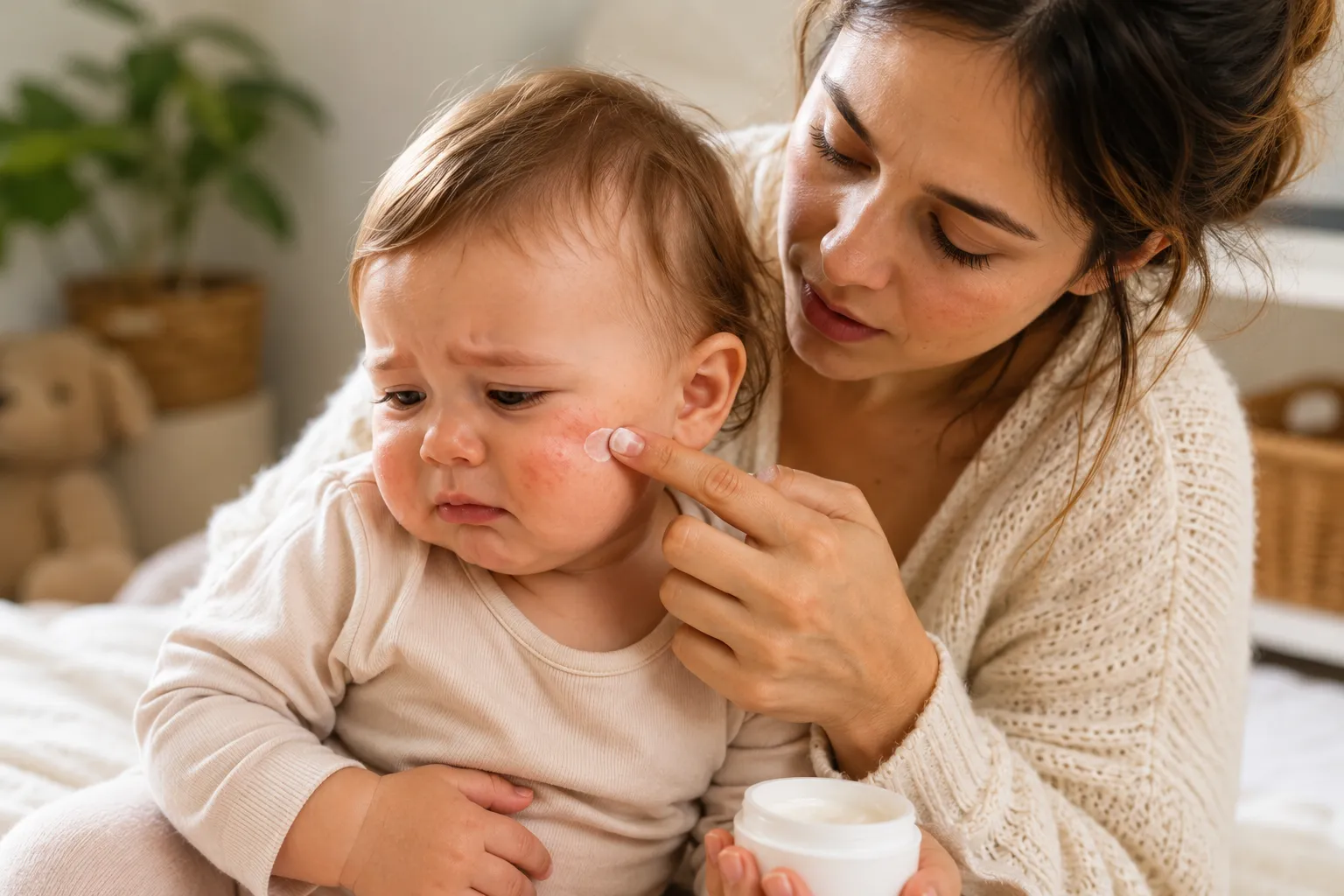
You moisturise in the morning. You moisturise after the bath. You apply another layer before bed, and sometimes you find yourself reaching for the cream again in the middle of the night because your baby has started scratching. The skin becomes softer for a while, but the itching returns, the redness comes back and before long you are back where you started.
After doing this for weeks or months, many parents start asking a very reasonable question. If moisturising is supposed to help eczema prone skin, why does the problem keep coming back? Why does a cream seem to make the skin feel softer without actually changing the pattern? And why does it sometimes feel as though you are simply covering the problem rather than helping the skin recover from it?
We think one reason is surprisingly simple. Most ordinary moisturisers were primarily designed to moisturise. They may add water, reduce moisture loss and leave the surface feeling softer, but dry, itchy and eczema prone skin can be dealing with far more than a shortage of moisture.
Dryness May Be What You See, Not the Whole Problem
When you look at your baby’s skin, dryness is often the most obvious thing. The cheeks feel rough. The arms look flaky. The folds become uncomfortable and the skin may appear tight or dull. Naturally, the first response is to put moisture back in.
That makes sense, and hydration absolutely matters. But dryness can be one part of a much larger picture involving barrier weakness, inflammation, scratching, heat, sweat, friction, environmental exposure and interactions with microorganisms on the skin. Moisture alone does not automatically address all of those pressures.
This is where we think parents are often given an incomplete explanation. They are told that the skin is dry, so they moisturise it, almost as though the expectation is that once enough moisture has been applied, the skin will simply take care of everything else. Sometimes it does improve beautifully, but sometimes the skin appears to need a broader support structure.
A Moisturiser Can Make Skin Softer Without Solving What Is Driving the Problem
Think about what a conventional moisturiser is usually expected to do. It can help attract water into the outer layers of the skin, reduce water evaporation and create a smoother surface. Those are valuable functions, particularly when the skin barrier is dry.
But what if the skin is also inflamed? What if scratching has damaged the surface? What if your baby is sweating at night, rubbing against bedding and repeatedly irritating the same area? What if vulnerable skin is also being challenged by bacteria, fungi and other microorganisms that are naturally present in the environment?
Simply adding more moisture does not automatically deal with all of those factors. You can successfully moisturise the surface while other pressures continue underneath and around it.
This Is Why Parents Can End Up With a Cupboard Full of Creams
Many parents of children with eczema prone skin eventually become reluctant skincare collectors. There is the lotion somebody recommended online, the thick cream suggested by a friend, the pharmacy moisturiser, the natural balm, the ointment and the expensive product that promised something different. Each new product brings another small burst of hope.
Sometimes one works for a while, yet the same cycle eventually returns. The skin improves, something changes, the scratching starts and suddenly the parent is looking for another product. After several rounds of this, it is easy to conclude that nothing works.
But perhaps that is not always the right conclusion. Perhaps the products are doing the job they were designed to do, but the job itself is too narrow.
Moisture Matters, but Vulnerable Skin May Need More Than Moisture
We think eczema prone skin should be looked at as a protective system rather than simply a dry surface. The skin barrier needs enough hydration to remain flexible and comfortable, but it also needs support while dealing with physical damage, inflammation and environmental pressure. The skin must continue performing its protective role while being scratched, washed, wiped, heated, cooled and exposed to the outside world.
That is a lot to ask from a surface that is already vulnerable. If the only support being provided is water retention, some of the other pressures may continue untouched. The skin may feel softer without necessarily becoming more resilient.
This is the thinking that eventually led us away from the idea of creating just another moisturiser.
What Happens When Inflammation Is Part of the Picture?
Inflammation is one of the major reasons irritated skin can remain red, itchy and uncomfortable. When inflammatory signalling is active, simply making the skin wetter does not necessarily address what is driving that discomfort. This is one reason a child can have beautifully moisturised skin and still scratch.
Our formulation includes ingredients selected partly because of their researched anti inflammatory properties. Black Seed Oil, Nigella sativa, contains bioactive compounds including thymoquinone and has attracted considerable dermatological research for anti inflammatory and antimicrobial activity. Reviews of Nigella sativa have examined its potential across inflammatory skin conditions, including atopic dermatitis and wound healing.
MSM is another ingredient we selected because it is not simply a moisturising ingredient. It has been studied for anti inflammatory and antioxidant activity, giving it a different supportive role within the formulation. The point is not that one ingredient should be expected to fix everything, but that inflammation deserves to be considered when formulating for irritated, vulnerable skin.
What About Damaged Skin That Is Trying to Repair Itself?
When your baby scratches, skin can become physically damaged. Tiny breaks may appear long before there is obvious bleeding, and repeated scratching places even more stress on a barrier that is already struggling. Moisturising helps provide hydration, but repair also involves cellular activity, re epithelialisation, collagen related processes and restoration of the protective surface.
This is where ingredients such as Allantoin and Centella asiatica become particularly interesting to us. Allantoin has a long history in skin conditioning and soothing formulations and has also been studied in the context of wound recovery. Centella asiatica has been investigated much more extensively for tissue repair, fibroblast activity, collagen synthesis, re epithelialisation and modulation of inflammation.
Research into topical Centella has described active compounds such as asiaticoside, madecassoside, asiatic acid and madecassic acid, with reported effects involving collagen synthesis, antioxidant protection and inflammatory pathways. That does not mean a cosmetic cream should be described as a wound treatment, but it does explain why we see Centella as much more than a decorative botanical ingredient.
This Is What We Mean When We Say Nourish
For us, Nourish does not mean simply adding water to the skin.
It means giving vulnerable skin a carefully selected combination of ingredients that bring different supportive functions. Some support hydration. Some have been studied for soothing and anti inflammatory activity. Some are associated with antioxidant protection, skin conditioning and processes involved in repair.
Hyaluronic Acid is an excellent example of the hydration side of Nourish because of its strong water binding properties and its role in maintaining skin hydration. Research supports its value in topical formulations for improving hydration and skin quality.
But if our formulation contained only Hyaluronic Acid and Glycerin, we would still consider that incomplete for what we wanted Itch A Bye to do. Hydration matters, but our idea of Nourish was always broader.
Vitamin C Is There for More Than Marketing
Vitamin C has an important biological relationship with collagen synthesis and antioxidant protection in skin. Topical vitamin C and its derivatives have been widely investigated because vitamin C participates in collagen formation and helps protect against oxidative stress.
That makes vitamin C particularly relevant to our philosophy of supplying skin with ingredients associated with the processes it uses to maintain and restore itself. We are not asking one vitamin to heal eczema. We are using it as one part of a much broader ingredient system.
This distinction is important. Itch A Bye was not formulated around one miracle ingredient. It was built around ingredient synergy.
Black Seed Oil Gives the Formula Another Dimension
Black Seed Oil is one of the ingredients we consider particularly important within Itch A Bye. Nigella sativa contains thymoquinone and numerous other bioactive compounds that have generated interest for anti inflammatory, antimicrobial and antioxidant properties. Research has explored Nigella sativa in dermatological contexts ranging from inflammatory skin conditions to wound healing.
That means Black Seed Oil brings a very different set of potential skin supporting properties from something such as Hyaluronic Acid. One is not replacing the other. They are performing different roles within the same formulation philosophy.
This is exactly what we mean by synergy. Hydration plus soothing support plus inflammatory support plus barrier support plus antimicrobial related properties creates a much broader formulation concept than hydration alone.
The Botanical Extracts Were Selected for a Reason
It would have been much easier to put one fashionable plant extract on the label and call the product botanical. That was never what interested us. Our botanical complex was selected because different plants have different researched properties, and we wanted those properties working alongside the core ingredients.
Centella asiatica has substantial research interest around wound repair, collagen production, fibroblast activity, antioxidant activity and modulation of inflammation. Clinical evidence is not identical across every use, but the biological rationale for skin support is much stronger than simply saying Centella is a natural plant.
Chamomile, Chamomilla recutita, has long been used in topical preparations and has evidence supporting anti inflammatory activity in skin. Reviews of topical herbal medicines have identified chamomile as one of the better documented herbal options for cutaneous inflammation, although evidence specifically for treating atopic dermatitis remains more limited.
Scutellaria Adds Another Anti Inflammatory and Antimicrobial Dimension
Scutellaria baicalensis contains bioactive flavonoids including baicalin, baicalein and wogonin. Research has associated these compounds with anti inflammatory, antioxidant, antibacterial and antiviral activities. They have also been studied for effects on inflammatory mediators including IL 1β, IL 6 and TNF α.
Again, we do not interpret that to mean a cosmetic cream containing Scutellaria becomes a pharmaceutical treatment. What it does mean is that we deliberately selected a botanical with biological properties relevant to the types of pressures vulnerable skin may experience.
That is a very different formulation philosophy from adding an extract simply because its name sounds natural.
Licorice Brings Its Own Supportive Properties
Glycyrrhiza, commonly known as licorice, contains compounds including glycyrrhizin and related constituents that have been studied for anti inflammatory, antimicrobial and immunomodulatory properties. Research into glycyrrhizin has identified antibacterial activity through several mechanisms as well as effects on inflammatory pathways.
Licorice has a long history in botanical skin formulations because of its calming potential. In our formulation, it is not expected to carry the entire product. It is another contributor to the broader synergy we are trying to create.
Layer after layer, the formulation begins to look less like a basic moisturiser and more like a deliberately constructed support system.
Green Tea Helps Address Oxidative and Inflammatory Pressure
Camellia sinensis, or Green Tea, is rich in polyphenols including EGCG. These compounds have been extensively studied for antioxidant and anti inflammatory activity in skin. Topical green tea preparations have also demonstrated biological activity in clinical dermatology research, including studies involving inflammatory skin processes.
Oxidative stress is another form of pressure that skin constantly experiences from metabolism and environmental exposure. Antioxidant ingredients can therefore contribute another useful dimension to a formulation intended to support stressed skin.
Once again, that is not something a simple occlusive moisturiser is necessarily designed to provide.
Rosemary Is Much More Than a Fragrant Herb
Rosmarinus officinalis, or rosemary, contains polyphenolic compounds including rosmarinic acid and carnosic acid. Reviews have reported antioxidant, anti inflammatory, antimicrobial and wound related activity associated with rosemary and its constituents. Research has also examined activity against bacteria and fungi, although clinical relevance depends greatly on extract, concentration and formulation.
More recent work continues to investigate rosemary in dermatological formulations for antioxidant, antimicrobial and inflammatory properties. Some laboratory formulations have shown activity against organisms including Staphylococcus aureus and Candida albicans, though that should not be interpreted as proof that every rosemary containing cream treats those organisms clinically.
This is why we talk about supporting the skin’s protective environment rather than pretending a cosmetic cream is an antibiotic medicine.
Ginger Adds Anti Inflammatory and Antioxidant Support
Zingiber officinale, or ginger, contains compounds such as gingerols and shogaols that have been studied for anti inflammatory and antioxidant activity. Dermatological reviews have also discussed antimicrobial properties and potential skin applications.
Ginger therefore contributes another layer of complementary support within the botanical system. It is not there simply to make the ingredient list longer. Its researched biological properties overlap with some ingredients while complementing others.
That overlap is deliberate.
Polygonum Cuspidatum Brings Polyphenol Support
Polygonum cuspidatum is naturally rich in compounds including resveratrol and other polyphenols. Research on the plant and resveratrol has identified antioxidant and anti inflammatory properties, with dermatological research exploring their potential relevance to inflammatory and environmentally stressed skin.
Resveratrol is particularly interesting because of its relationship with oxidative stress and inflammatory signalling. Again, we are not claiming that the presence of this botanical converts Itch A Bye into a pharmaceutical eczema treatment. We are saying that we selected ingredients whose researched properties make sense within our broader formulation philosophy.
That philosophy is to give vulnerable skin multiple forms of support at the same time.
What About Bacteria, Fungus and Other Microbial Pressures?
Healthy skin is not sterile. It lives alongside an enormous community of bacteria, fungi and other microorganisms. Most are harmless or beneficial, but damaged skin can change the relationship between the barrier and the microbial world around it.
When eczema prone skin is repeatedly scratched, the physical barrier can become compromised. This is one reason microbial pressure matters when thinking about vulnerable skin. It is also why our Defend pillar exists.
Several ingredients in our botanical system have documented antimicrobial activity in laboratory or experimental research, including Nigella sativa, rosemary, licorice, Scutellaria and ginger. Some have shown antibacterial activity, some antifungal activity and some broader antimicrobial or antiviral properties in experimental settings.
Defend Does Not Mean Sterilise the Skin
This distinction is important.
We are not trying to sterilise your baby’s skin, and healthy skin should never be thought of as something that must be disinfected constantly. The skin microbiome is part of normal biology.
Our Defend philosophy is about supporting a vulnerable protective surface while recognising that damaged skin interacts constantly with microbial pressures. That is why we deliberately chose several ingredients that bring researched antimicrobial properties alongside their other roles.
The intention is broader support, not aggressive sterilisation.
Repair, Nourish and Defend Were Created to Work Together
This brings us to the heart of Itch A Bye.
We did not think the answer to dry, itchy and eczema prone skin was simply to make another moisturiser and put a baby friendly label on it. We wanted to ask a different question: what kinds of support might vulnerable skin need when several things are going wrong at once?
That question eventually became three pillars.
Repair. Nourish. Defend.
Repair
Repair begins with the skin barrier.
When skin becomes dry, irritated and repeatedly scratched, its protective surface can become less effective. More moisture may escape and everyday environmental pressures may become harder for the skin to tolerate. Supporting that barrier therefore becomes fundamental.
This is why the formulation combines hydration and skin conditioning ingredients with ingredients associated with soothing, tissue support and recovery. Hyaluronic Acid, Glycerin, Allantoin, Centella and the lipid components of the formulation all contribute different pieces to this objective.
We do not expect one ingredient to repair everything. The formulation is designed so that several ingredients can contribute toward the same broader goal from different directions.
Nourish
Nourish is where Itch A Bye differs most strongly from the idea that moisturising simply means putting water back into the skin.
Hyaluronic Acid and Glycerin support hydration. Black Seed Oil brings researched anti inflammatory, antioxidant and antimicrobial properties. MSM contributes anti inflammatory and antioxidant support, while Allantoin brings soothing and skin conditioning properties.
Vitamin C contributes antioxidant and collagen related support. Centella brings research around collagen, fibroblast activity, inflammation and skin repair, while our botanical complex adds further antioxidant, anti inflammatory, soothing and antimicrobial related properties.
That is what we mean by nourishing the skin. It is not simply hydration. It is supplying a range of topical ingredients selected because their properties complement the functions vulnerable skin is trying to perform.
Defend
Then comes Defend.
The skin is your child’s physical interface with the outside world. It encounters heat, sweat, water, clothing, saliva, environmental particles, bacteria, fungi and countless other pressures every day.
When that surface is damaged through dryness and scratching, its defensive role becomes even more important. This is why our formulation includes multiple ingredients whose constituents have been studied for antibacterial, antifungal, antioxidant or other antimicrobial related properties.
Repair supports the structure. Nourish supplies complementary support. Defend recognises the environment the skin has to face.
Why We Do Not Believe Dry Skin Should Be Treated as Just a Moisture Problem
If your baby spills water from a cup, adding more water solves the immediate problem.
Skin is not that simple.
Dryness may reflect impaired barrier function. It may coexist with inflammation. Scratching may be physically damaging the surface. Environmental pressures may be continually challenging the same area.
That is why repeatedly applying a basic moisturiser can sometimes feel as though you are filling a bucket with a hole in the bottom. You keep adding moisture, but you have not necessarily addressed all the reasons the skin continues struggling.
Does That Mean Ordinary Moisturisers Are Useless?
No.
A good moisturiser can be extremely valuable for dry and eczema prone skin. Hydration and reduction of water loss are fundamental components of skin barrier care, and moisturisers remain an important part of eczema management.
The distinction we are making is different. Moisturisation may be necessary without always being sufficient.
If your child responds beautifully to a simple moisturiser, that is excellent. But if you have been moisturising faithfully and the skin remains persistently dry, itchy and easily irritated, it may be worth thinking about the problem more broadly.
This Is Why Itch A Bye Was Created
Itch A Bye was created because we wanted something more comprehensive than a basic moisturiser.
We wanted a formulation designed around the reality that vulnerable skin may simultaneously need hydration, barrier support, soothing support, antioxidant support, ingredients associated with inflammatory modulation and support against microbial pressures. Instead of asking one ingredient to perform every job, we built the formulation around synergy.
Black Seed Oil does not do the same job as Hyaluronic Acid. Hyaluronic Acid does not do the same job as Allantoin. Allantoin does not bring the same properties as Centella, MSM, Green Tea, Licorice, Scutellaria, Rosemary or Ginger.
And that is precisely the point.
It Is the Combination That Matters
The easiest marketing story would be to choose one hero ingredient and tell parents that this is the secret.
We do not think skin works that way.
Skin is a complicated biological system. Dryness, inflammation, scratching, barrier damage, oxidative stress and environmental pressure can overlap. A formulation designed to support vulnerable skin should therefore reflect some of that complexity.
That is why we see Itch A Bye as more than a moisturising cream.
It is a deliberately constructed skin support formulation built around multiple ingredients performing complementary jobs.
If You Have Been Saying, “I Moisturise Constantly and Nothing Changes”
You may not necessarily need to moisturise more.
You may need to think about what the skin is dealing with besides dryness.
Is the skin inflamed? Is your baby scratching repeatedly? Is heat or sweat contributing? Is friction continually damaging the same area? Is the barrier struggling to recover between one episode and the next?
Those questions change the conversation from “How much moisturiser should I apply?” to “What does this vulnerable skin actually need in order to function better?”
That is the question that eventually led us to Itch A Bye.
A Different Way to Think About Your Baby’s Cream
Your baby’s skincare does not need to become complicated.
But the formulation itself can be sophisticated so that the routine does not have to be.
Instead of layering five different products because one hydrates, another soothes and another contains botanical ingredients, we wanted those functions considered together within one carefully designed formulation.
That is our philosophy.
Repair the vulnerable barrier.
Nourish it with ingredients selected for complementary supportive properties.
Defend the skin as it faces microbial and environmental pressure.
Moisturising Is the Beginning, Not the Whole Strategy
For decades, parents dealing with dry and eczema prone skin have heard the same instruction: moisturise, moisturise, moisturise.
We agree that moisture matters.
But we do not believe the conversation should end there.
Vulnerable skin is trying to hydrate itself, maintain a physical barrier, regulate inflammation, recover from scratching and interact safely with an entire microscopic world at its surface. Asking a simple moisturiser to solve every one of those problems can be asking it to perform a job it was never designed to do.
That is why we created Itch A Bye Baby Repair Cream.
Not simply to put moisture over dry skin.
But to provide a broader support structure for vulnerable skin through ingredient synergy.
Repair. Nourish. Defend.
Because sometimes the skin does not just need another layer of moisture.
It needs better support.