
Can You Put Moisturiser on a Newborn? A Parent’s Guide
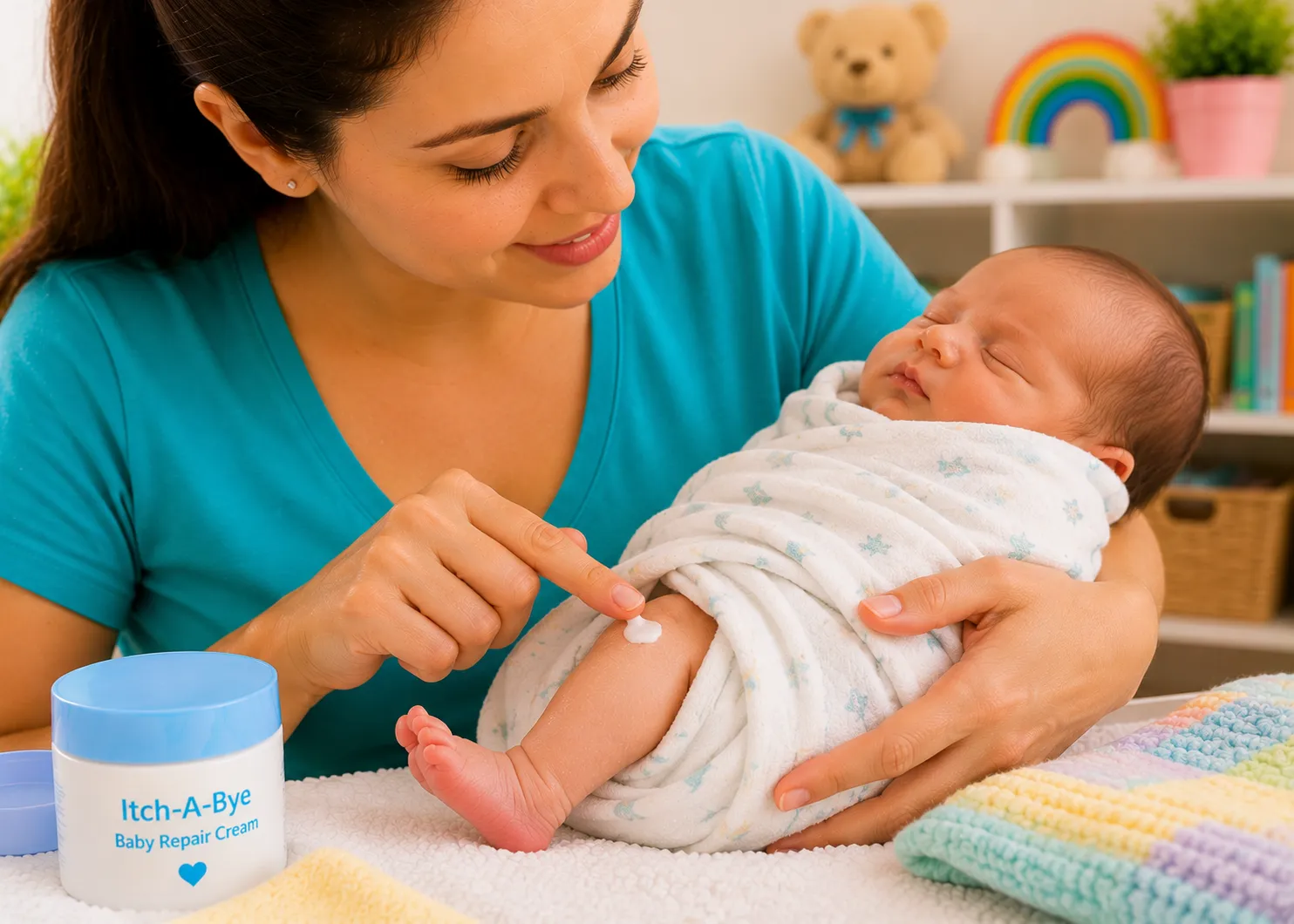
A newborn’s skin can look perfect one day and suddenly become dry, flaky or slightly rough the next. That can be unsettling, especially when your baby is only a few days or weeks old and you are trying not to put anything unnecessary on such delicate skin. One of the first questions many parents ask is: can you put moisturiser on a newborn?
In most cases, yes, an appropriate moisturiser can be used on newborn skin. The more important questions are when it is needed, what kind of product you choose, how much you use and how your baby’s skin responds. Newborn skin is still adapting to life outside the womb, so the simplest routine is usually the best place to start.
The Short Answer
Yes, you can put moisturiser on a newborn when the skin is dry, rough or in need of extra support. Many babies experience some degree of peeling or dryness during the early weeks as their skin adjusts to a much drier environment than the womb. A gentle moisturiser can help reduce that dry, tight feeling and support the outer skin barrier.
That does not mean every newborn needs to be covered in moisturiser from head to toe several times a day. Some babies remain naturally soft and comfortable with very little intervention. Others develop persistent dryness and benefit from a regular moisturising routine. The right approach depends on the baby.
Why Newborn Skin Can Become Dry So Quickly
Inside the womb, a baby’s skin develops in a warm, fluid environment. After birth, that same skin is suddenly exposed to air, clothing, bathing, temperature changes and much lower humidity. The outer skin barrier then has to adapt to controlling water loss in a completely different environment.
Newborn skin also continues developing after birth. The structure and function of the outer barrier are not simply identical to adult skin in miniature. This helps explain why some newborns lose moisture more easily and why environmental exposures can affect them quickly. Dryness in the first few weeks can therefore be very common.
Is Peeling Normal in a Newborn?
Many newborns peel, particularly around the hands, ankles, wrists and feet. This can be more noticeable in babies born after their due date. The peeling often looks dramatic but may simply be part of the normal transition of the skin after birth.
You do not necessarily need to scrub, exfoliate or remove the peeling skin. In fact, rubbing can create unnecessary friction on delicate areas. A small amount of gentle moisturiser may make the skin feel more comfortable while the peeling naturally settles. Patience is often more useful than trying to speed the process up.
When Does a Newborn Actually Need Moisturiser?
If your baby’s skin feels soft, comfortable and flexible, you may not need to apply anything routinely. Newborn skincare does not have to begin with a complicated product schedule. There is nothing wrong with leaving comfortable skin alone.
Moisturiser becomes more useful when the skin feels dry, rough, tight or repeatedly loses moisture. You may also notice that certain areas, such as the legs, cheeks, wrists or ankles, become dry while the rest of the body remains comfortable. In that case, you can start by moisturising only the areas that need it. Follow the skin rather than an automatic routine.
You Do Not Have to Moisturise Everywhere
One common assumption is that once you start using baby cream, you need to apply it across the entire body. That is not necessarily true. If your newborn has two dry ankles and everywhere else is soft, targeted application may be enough.
If the dryness is more widespread, broader moisturising may make sense. Some babies develop dryness across the arms, legs and torso, particularly after bathing or during cooler weather. In those situations, a light application over larger areas can be practical. We explore this question in more detail in our guide, Should You Put Baby Cream Everywhere or Only on Dry Patches?.
What Kind of Moisturiser Is Best for a Newborn?
For newborn skin, simpler is usually better. Look for a product designed for delicate skin and avoid assuming that stronger fragrance, more botanical extracts or a longer ingredient list automatically means better skincare. What matters is how the formulation behaves on the skin.
A moisturiser should help reduce dryness without creating unnecessary irritation. Richer creams can be useful for skin that loses moisture easily, while lighter lotions may feel more comfortable for mild dryness. The texture itself is less important than how well the product supports the skin and how the baby responds. The formulation should earn its place in the routine.
Fragrance Is Worth Thinking About
Fragrance is one of the most common reasons parents become cautious about newborn skincare. A product can smell pleasant and still be unnecessary for the skin’s main job, which is barrier protection and moisture control. For very young or easily irritated skin, reducing avoidable exposures can be sensible.
That does not mean every fragranced product will cause a problem. It means fragrance is not required for moisturising to work. When choosing a product for a newborn, many parents prefer fragrance-free or minimally fragranced formulations for that reason. The fewer unnecessary variables, the easier it is to understand how the skin responds.
What About Essential Oils?
The word “natural” can make essential oils sound automatically gentle, but natural does not always mean suitable for newborn skin. Essential oils contain concentrated plant compounds and can sometimes be irritating, particularly on very young or compromised skin. Their pleasant smell is not evidence that they are appropriate for every baby.
This is why it is important to judge an ingredient by what it does rather than by whether it comes from a plant. A newborn’s skincare routine should prioritise barrier support, hydration and comfort. There is usually no need to expose the skin to highly concentrated aromatic ingredients simply for fragrance. Gentle should be judged by performance, not marketing language.
How Much Moisturiser Should You Use?
Start with a small amount. Spread it gently over the dry area and add a little more only if you cannot create a light, even covering. You usually do not need to leave a thick white layer sitting on the skin.
A common mistake is to assume that more cream must mean more moisture. Once the skin is evenly covered, adding increasingly thick layers may simply leave the baby greasy without producing a proportional benefit. This can also become uncomfortable underneath warm clothing. Our guide How Much Baby Cream Should You Apply? explains this in greater detail.
Should You Rub the Cream In?
Newborn skin does not need vigorous massage every time moisturiser is applied. Use clean hands and spread the cream gently across the area. Smooth application is generally preferable to repeated rubbing, particularly when the skin is already dry or irritated.
Friction is another form of pressure on the skin barrier. If you are trying to help dry skin feel more comfortable, aggressively rubbing it can work against that goal. Think about placing and spreading the moisturiser rather than forcing it into the skin. Gentle technique matters.
When Is the Best Time to Moisturise?
There is no single perfect time, but after bathing can be useful for babies whose skin becomes dry afterwards. Gently pat rather than rub the skin dry, then apply moisturiser to areas that tend to lose moisture. This can become a simple and predictable routine.
You can also moisturise at another time of day if the skin becomes dry. There is no need to wait until the next bath if the cheeks or legs become rough beforehand. The timing should respond to the skin rather than an arbitrary clock. Consistency matters more than complexity.
Do Newborns Need Daily Baths?
No. Newborns do not usually need long daily baths to stay clean, particularly during the first weeks. Frequent bathing, hot water and strong cleansers can sometimes contribute to dryness by removing some of the protective lipids at the skin’s surface.
If your baby’s skin is already dry, the bathing routine is worth considering before simply applying more and more moisturiser. Shorter baths, comfortable water temperature and gentle cleansing may reduce some of the pressure on the barrier. Skincare works best when the routine itself is not constantly undoing the benefit. Sometimes less bathing is more helpful than more cream.
Why Water Can Still Leave Skin Dry
It seems strange that water can contribute to dryness, but soaking the skin and then allowing that water to evaporate can leave the outer layer feeling tight. Cleansers can also remove oils that help slow moisture loss. This is especially relevant for skin that already has a tendency to lose water easily.
That is why moisturising after a bath can be useful for some babies. The goal is not simply to replace water but to help support the outer barrier that controls how quickly water escapes. This is an important difference. Hydration and barrier support are related, but they are not identical.
What About Baby Oil?
Baby oil can reduce water loss by forming an occlusive layer, but oils and creams do not behave in exactly the same way. Some oils mainly sit on the surface, while creams can combine oils, water-binding ingredients and other skin-supportive components within one formulation. Which is more useful depends on what the skin needs.
If the skin is mildly dry, a simple oil may be enough for some babies. If the skin repeatedly becomes rough, itchy or uncomfortable, a more comprehensive cream may provide broader support. The important thing is not to assume that every slippery product is providing the same type of skincare. Texture alone does not tell you everything.
What About Petroleum Jelly?
Petroleum jelly is a strong occlusive and can be useful for reducing moisture loss from very dry areas. It is simple, widely used and can help create a protective surface layer. For some babies, that straightforward function is exactly what is needed.
But petroleum jelly mainly works by reducing water escape rather than supplying the wider range of hydrating, soothing and conditioning ingredients that may be found in a formulated cream. There is no need to turn this into a competition between products. Different formulations can serve different purposes. The right choice depends on the skin and the situation.
Can You Use Adult Moisturiser on a Newborn?
It is usually better to choose a product that has been formulated with delicate skin in mind. Adult moisturisers may contain fragrance, acids, retinoids, exfoliating ingredients or other actives that are unnecessary for newborn skin. Even products marketed as gentle can vary considerably in formulation.
The issue is not that every adult moisturiser is automatically unsafe. It is that newborn skin generally does not need the complexity of many adult skincare products. When the goal is simply hydration and barrier support, choosing a straightforward product is easier. Newborn skincare should remain uncomplicated.
Can You Put Moisturiser on a Newborn’s Face?
Yes, when the face is dry and the product is appropriate for facial use. Apply a very small amount and avoid getting the cream into the eyes, mouth or nostrils. The cheeks can become particularly dry because they are exposed to air, bedding, saliva and repeated touching.
You do not need to cover the whole face if only one or two areas are dry. A thin layer over the affected area may be enough. If the cheeks become dry repeatedly, you can begin looking for the pattern rather than simply treating each episode as a new problem. Location often gives useful clues.
What About Around the Mouth?
The skin around the mouth can be affected by milk, saliva and repeated wiping. This can create a cycle where the skin becomes wet, is wiped dry, then becomes irritated and dry again. A small amount of appropriate moisturiser can help support the area.
Try to reduce unnecessary rubbing at the same time. Patting away moisture is often gentler than repeatedly wiping with pressure. If the environment keeps disturbing the skin, applying more moisturiser alone may not fully solve the problem. The routine around the skin matters too.
What About the Nappy Area?
The nappy area is different from ordinary dry skin because it is exposed to moisture, urine, stool, friction and prolonged occlusion. A general moisturiser may not be the most appropriate product for every nappy-related issue. Barrier creams designed specifically for the nappy area are often used because they create a stronger protective layer against those exposures.
If the skin is simply dry around the outer edges, a gentle moisturiser may still be useful. But persistent redness, broken skin or worsening irritation deserves closer attention. Do not assume every red area simply needs more moisturiser. Different causes can look similar at first.
What About the Scalp?
Newborn scalps can become dry or develop flaky areas. Sometimes this is simple dryness, while other babies develop cradle cap with more noticeable scaling. Applying heavy moisturiser across the scalp is not automatically necessary.
If the scalp is just mildly dry, a small amount of gentle emollient may help. If scaling is thick, greasy or persistent, the approach may be different. Again, it is useful to understand what you are looking at before adding more product. The scalp has its own patterns.
Can Moisturiser Make Newborn Skin Worse?
Yes, any skincare product can potentially cause irritation in an individual baby. If the skin becomes noticeably redder, hotter, more uncomfortable or more inflamed after a new product, stop and reassess. More application is not always the answer.
Sometimes the issue is an ingredient. Sometimes the skin was already becoming irritated and the timing is coincidental. And sometimes friction during application or another exposure occurring at the same time is contributing. This is why introducing one new product at a time can be useful.
Should You Patch Test a Newborn Moisturiser?
A cautious approach can make sense, particularly if your baby has already shown very reactive skin. Apply a small amount to a limited area and watch how the skin behaves before using the product more widely. This makes it easier to identify a potential problem.
Patch testing is not a perfect guarantee that no reaction will ever occur. Skin can change over time, and irritation can depend on dose, frequency and other exposures. But introducing a new product gradually can still be a sensible way to reduce uncertainty. We discuss this in Should You Patch Test a New Baby Skincare Product?.
Why a Product Can Seem Fine at First
Parents sometimes assume that if a moisturiser was tolerated for several days, it can never become a problem later. Skin does not always behave that predictably. Repeated use, changing weather, friction, illness, heat or another new exposure can alter how the skin responds.
This is why a baby can sometimes appear to react to something that previously caused no obvious problem. The product may be involved, or the skin may simply be under more pressure overall. Looking at the whole pattern is more helpful than focusing on one ingredient immediately. Skin behaviour is often cumulative.
The Skin Threshold Model Helps Explain This
In Beyond the Skin Barrier, we use the Skin Threshold Model to help explain why dry, itchy or irritated skin can appear suddenly even when parents feel they have changed nothing. The idea is that the skin is constantly managing several pressures at once. Barrier immaturity, dry air, bathing, friction, heat, sweat, saliva, microbes and scratching can all contribute.
When those pressures remain below the baby’s individual threshold, the skin may look calm. When enough pressures accumulate, dryness or irritation becomes more visible. Moisturising can reduce some of that pressure by supporting hydration and the outer barrier, but it does not remove every other influence acting on the skin. That is why good baby skincare is broader than choosing one cream.
Newborn Skin Is Still Learning to Function Outside the Womb
One of the most important things for parents to understand is that newborn skin is not simply finished skin waiting to grow larger. The barrier continues adapting after birth. Water handling, lipid organisation, surface acidity and the relationship with microbes all continue changing during infancy.
This helps explain why newborn skin can behave differently from the skin of an older child. It can also explain why the same baby may need more support during one period and much less several weeks later. Skincare should evolve as the skin evolves. A newborn routine does not need to become a lifelong routine.
Moisturising Is Only One Part of Barrier Support
Parents often focus on which cream to buy, but several everyday habits can affect the barrier just as much. Bathing temperature, cleanser choice, friction from towels, clothing, overheating and indoor humidity can all influence how quickly skin loses moisture. Changing one of those factors may reduce the amount of moisturiser the baby needs.
For example, a baby having long hot baths every night may remain dry despite frequent moisturising. Shortening the bath and reducing cleanser use can sometimes make the routine work much better. Cream should support the skin rather than constantly compensate for unnecessary pressure. This is the bigger picture.
Repair, Nourish and Defend
This broader thinking is also the foundation of our approach with Itch-A-Bye Baby Repair Cream. We developed the formulation around three complementary principles: Repair, Nourish and Defend. The purpose is to support skin that is dry, itchy or prone to repeated irritation rather than thinking about moisturising as simply adding water.
Repair means supporting the outer barrier and helping create the conditions it needs to function effectively. Nourish includes hydration but also supplies carefully selected ingredients with soothing, conditioning and skin-supportive roles. Defend recognises the barrier’s role in protecting vulnerable skin from bacteria, fungus and other environmental pressures. The three pillars are intended to work together.
Nourish Means More Than Moisture
Hydration is important, which is why Itch-A-Bye includes Glycerin and Hyaluronic Acid. These ingredients help attract and retain moisture in the outer layers of the skin. But simply adding water back does not capture everything we want from a baby skincare formulation.
The cream also contains Black Seed Oil, MSM, Allantoin, Vitamin C and Vitamin E, together with a carefully selected group of botanical extracts. These ingredients bring different soothing, conditioning, antioxidant and skin-supportive properties to the formulation. The aim is ingredient synergy rather than dependence on one headline ingredient. That is what we mean by Nourish.
Why Black Seed Oil Is Important to Us
Black Seed Oil from Nigella sativa is one of the cornerstone ingredients in the Itch-A-Bye formulation. It contains compounds such as thymoquinone that have attracted scientific interest for anti-inflammatory, antioxidant and antimicrobial properties. As an oil, it also helps condition and soften dry skin.
This makes it particularly interesting within the Repair, Nourish and Defend framework. We are not using it simply because it is botanical or fashionable. We chose it because its properties complement the wider goals of the formulation. Ingredients should have a reason to be there.
Why MSM Is Included
MSM contributes another dimension because of its skin-soothing and antioxidant potential. Dry skin can become uncomfortable, and discomfort can encourage rubbing or scratching. Anything that helps support a calmer skin environment can therefore be useful within a wider formulation strategy.
MSM is not intended to do everything on its own. Its value comes from how it works alongside oils, humectants, soothing ingredients and botanicals. That combination is more important than any single ingredient claim. This is the principle of formulation synergy.
Why Allantoin Matters
Allantoin is widely used in skincare because of its soothing, conditioning and skin-protective properties. It is particularly useful in formulations designed for skin that feels rough or uncomfortable. For delicate skin, that combination of gentleness and supportive function makes it valuable.
Allantoin complements the hydration supplied by Glycerin and Hyaluronic Acid and the conditioning contribution of Black Seed Oil. It is another example of why moisturising should not be reduced to one ingredient or one mechanism. Skin support is multifaceted.
What About the Botanical Extracts?
Itch-A-Bye also contains botanical extracts including Centella asiatica, Chamomile, Licorice, Scutellaria baicalensis, Green Tea, Rosemary, Polygonum cuspidatum and Ginger. These plants contain naturally occurring phytochemicals associated with soothing, antioxidant, conditioning and anti-inflammatory properties.
We do not regard any of these extracts as a miracle ingredient. Their value lies in how they complement one another and the rest of the formulation. Centella, Chamomile, Licorice and Green Tea in particular have long histories of interest in skin-supportive preparations. The strength is in the combination.
Can You Use Itch-A-Bye on a Newborn?
For very young babies, parents should always keep skincare simple and pay close attention to how the skin responds to any product. If you are introducing Itch-A-Bye Baby Repair Cream, begin with a small amount on a limited dry area rather than immediately applying large quantities everywhere. This makes it easier to observe how the baby’s skin responds.
Apply a light, even layer using clean hands and avoid rubbing aggressively. If the skin remains comfortable, you can continue using it on areas that need support. If the skin becomes noticeably more irritated after application, stop and reassess rather than repeatedly adding more. The principle is always thoughtful use rather than maximum use.
How Often Should You Moisturise a Newborn?
There is no universal number that applies to every baby. Some newborns may need moisturiser once daily on a few dry areas, while others may need occasional application only after bathing. Babies with more persistent dryness may benefit from more regular support.
The most useful guide is how the skin behaves between applications. If the skin stays comfortable, there is little reason to apply more simply because a certain number of hours has passed. If it becomes dry again, look at what happened during that period as well. Frequency should have a reason.
Can You Moisturise Too Much?
You can certainly apply more product than the skin practically needs. Excess cream can leave the skin greasy, transfer onto clothing and become uncomfortable when combined with heat or sweating. This is especially relevant when parents are understandably anxious and keep adding more product whenever they see the baby touch or rub the skin.
Regular moisturising and excessive moisturising are not the same thing. Use enough to create a comfortable, even layer and then observe the response. More is only useful when the skin genuinely needs more. We explore this in Can You Moisturise Baby Skin Too Much?.
What If Dryness Keeps Returning?
Recurring dryness does not automatically mean the moisturiser is failing. The cream may be doing exactly what it is supposed to do while it is on the skin, but environmental pressures may continue to remove moisture afterwards. Bathing, dry air, friction and repeated wiping can all contribute.
If dryness repeatedly returns, try to identify the pattern. Does it happen after bathing? Is it worse on the cheeks after feeding? Does it improve when the weather changes? Recurring dryness is information.
When Dryness Is More Than Just Dryness
Most mild newborn dryness is manageable, but not every skin change should be treated simply by adding moisturiser. Skin that becomes very red, swollen, painful, cracked, weeping or rapidly worsening deserves closer attention. The same applies if the baby seems unwell or the skin problem is spreading quickly.
The point is not to become alarmed by every dry patch. It is to recognise that moisturiser has a specific role and cannot answer every possible skin problem. If something looks significantly different from ordinary dryness, it deserves appropriate assessment. Good skincare also means knowing when cream is not the whole answer.
Frequently Asked Questions
Can I moisturise my newborn every day?
Yes, you can moisturise a newborn daily if the skin tends to become dry and the product is appropriate. Not every newborn needs daily moisturising, however. If the skin remains consistently soft and comfortable, you may need much less frequent application. Let the baby’s skin guide the routine.
What age can you start using baby moisturiser?
A gentle moisturiser can generally be used from the newborn period when needed. The important considerations are choosing an appropriate formulation, using a small amount and watching how the baby’s skin responds. You do not need to wait until the baby reaches a particular age if the skin is genuinely dry. Keep the routine simple.
Should I moisturise my newborn after every bath?
If bathing leaves the skin dry, moisturising afterwards can be helpful. If the skin remains comfortable, you may not need to moisturise the entire body every time. Focus on areas that tend to lose moisture. The bath itself should also remain short and gentle.
Is newborn peeling normal?
Yes, some peeling is common during the first weeks of life, especially around the hands and feet. You do not usually need to scrub or remove peeling skin. A gentle moisturiser can help the area feel more comfortable while the skin naturally adjusts. Avoid unnecessary friction.
Can I put moisturiser on my newborn’s face?
Yes, when the face is dry and the product is suitable for delicate skin. Use a very small amount and avoid the eyes, mouth and nostrils. You can treat only the dry areas rather than covering the whole face. Targeted application is often enough.
Can newborn moisturiser go on the scalp?
A small amount may be used on a mildly dry scalp, but persistent or thick scaling may need a different approach. Not every flaky scalp is ordinary dryness. If you are unsure what you are seeing, avoid repeatedly adding heavy product without understanding the pattern. The scalp behaves differently from the cheeks or legs.
Should newborn moisturiser be fragrance-free?
Many parents prefer fragrance-free products for newborn skin because fragrance is not required for moisturising to work. Reducing unnecessary exposures can make sense, especially for skin that is already dry or easily irritated. Fragrance-free does not guarantee that a product will suit every baby, but it removes one variable. Simple formulations are often easier to assess.
Can I use coconut oil on a newborn?
Some parents use coconut oil because it can help soften skin and reduce moisture loss. However, not every oil suits every baby, and oils do not provide exactly the same functions as a formulated cream. If you use any new product, introduce it cautiously and watch how the skin responds. Natural does not automatically mean universally suitable.
Can I use petroleum jelly on newborn dry skin?
Petroleum jelly can help reduce moisture loss by forming an occlusive layer on the skin. It may be useful for very dry patches. It does not, however, provide the same combination of humectants, oils and skin-supportive ingredients that may be present in a formulated cream. Different products serve different purposes.
How much moisturiser should I use on my newborn?
Use enough to create a light, even covering over the dry area. Start with a small amount and add more only if needed. You do not need to leave a thick visible layer. Gentle coverage is usually more useful than excess.
What if my newborn’s skin gets red after moisturiser?
Stop using the product on that area and observe what happens. Redness can indicate irritation, although other exposures may also be contributing. Do not automatically keep applying more product because the skin looks worse. If the redness is significant, persistent or worsening, seek appropriate assessment.
Can I use Itch-A-Bye on dry newborn skin?
If using Itch-A-Bye Baby Repair Cream on very young skin, start with a small amount on a limited dry area and observe the response. The formulation combines hydrating ingredients such as Glycerin and Hyaluronic Acid with Black Seed Oil, MSM, Allantoin, vitamins and selected plant extracts within the Repair, Nourish and Defend framework. Use only enough to create a light, comfortable layer.
The Best Newborn Skincare Routine Is Usually the Simplest One
New parents are surrounded by products, routines and advice, which can make baby skincare feel far more complicated than it needs to be. A newborn generally does not need a shelf full of creams, oils, washes and treatments. The skin needs gentle handling, sensible bathing and support when dryness appears.
If the skin is comfortable, leave it comfortable. If it becomes dry, use an appropriate moisturiser in a light, even layer. If dryness repeatedly returns, look at bathing, friction, heat, saliva, weather and other exposures rather than simply adding more product. And remember that newborn skin is still developing.
That is one of the central themes of Beyond the Skin Barrier. The book explores the developing infant skin barrier, microbes, immune signalling, environmental pressures, the gut-skin relationship and the Skin Threshold Model to help parents understand why dry and itchy skin can be more complicated than it appears on the surface.
Because the most useful question is not only, “Can I put moisturiser on my newborn?” It is also: “What does my newborn’s skin actually need right now?”