
The Complete Parent’s Guide to Choosing a Cream for Dry, Itchy and Eczema-Prone Baby Skin
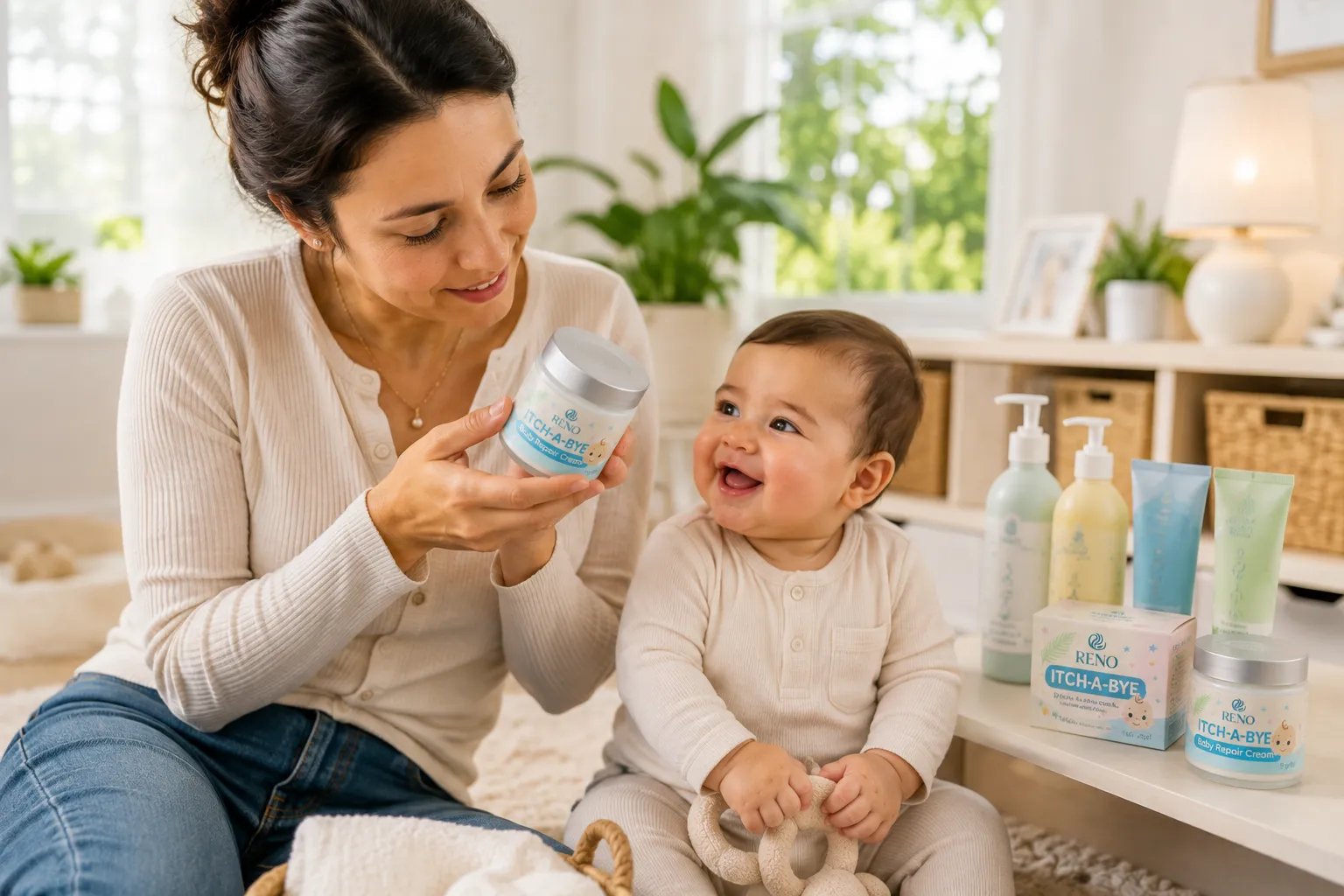
Choosing a cream for a baby with dry, itchy or eczema-prone skin should be simple. Walk into a pharmacy, find something labelled “baby”, “gentle” or “sensitive”, apply it, and the problem should improve. Yet for many parents, that is not what happens. The bathroom cupboard gradually fills with half-used tubs, lotions and balms while the same dry patches, scratching and uncomfortable nights keep returning.
Part of the problem is that parents are often encouraged to choose skincare by looking at the front of the package rather than thinking about what their baby’s skin actually needs. Words such as natural, dermatologically tested, hypoallergenic, soothing and for sensitive skin can sound reassuring, but they do not tell you how a formulation works. Neither does price, packaging or the popularity of a particular brand. To make a more informed choice, it helps to start with the skin rather than the marketing.
First, Understand What You Are Trying to Achieve
When a baby has dry skin, the obvious goal is to moisturise it. That matters, but persistent dry and itchy skin can involve more than a shortage of moisture on the surface. The skin barrier may be losing water too readily, environmental pressures may be repeatedly irritating it, and scratching may be causing further physical damage. In eczema-prone skin, inflammation and barrier vulnerability can make this cycle even harder to interrupt.
This means the question should not simply be, “Which moisturiser is best?” A more useful question is, “What does my baby’s skin need this cream to do?” For some babies, straightforward moisturising may be enough. For babies whose skin repeatedly becomes dry, itchy and uncomfortable, parents may want a formulation designed to provide several complementary forms of support.
Lotion, Cream, Balm or Ointment: What Is the Difference?
The skincare aisle contains products with very different textures and compositions. Lotions generally contain more water and tend to feel lighter, making them convenient for large areas and warmer weather. Creams usually provide a richer balance of water and oils, while balms and ointments tend to be heavier and more occlusive. None of these categories is automatically superior in every situation.
A very light lotion may feel pleasant but may not provide enough lasting support for extremely dry skin. A heavy ointment can be excellent for reducing moisture loss but may feel uncomfortable in hot weather or under clothing for some children. A well-formulated cream can provide a useful middle ground between hydration, emollience and everyday usability. What matters is how the formulation suits your child’s skin, environment and routine.
The First Job of a Baby Cream: Help Reduce Moisture Loss
Healthy skin is remarkably good at keeping water inside the body. When the outer barrier becomes dry or disrupted, however, water can escape more readily into the surrounding environment. This process contributes to the familiar roughness, flaking and tight feeling associated with dry skin. Supporting that outer barrier is therefore one of the most important jobs of everyday skincare.
A useful cream should do more than make the skin feel slippery for several minutes. Look for a formulation that helps hydrate, soften and condition the skin while supporting its ability to retain moisture. Humectants, emollients and more occlusive ingredients can perform different but complementary roles. The best formulation is not necessarily the one containing the largest number of ingredients, but the one in which those ingredients have useful jobs.
Humectants: Ingredients That Help Attract and Hold Water
Humectants are commonly used in moisturising products because they help attract and retain water. Glycerin is one of the best-known examples and has been used successfully in skincare for many years. Hyaluronic Acid is another popular humectant capable of binding water and supporting hydration. These ingredients can be particularly valuable when dryness is a prominent feature.
Hydration alone, however, does not tell the whole story. Water needs to remain within the skin rather than simply providing a temporary sensation of moisture. This is why humectants are often combined with emollients and other barrier-supporting ingredients. A thoughtful formulation brings these different functions together rather than expecting one ingredient to perform every task.
Emollients: Helping Rough Skin Feel Softer
Emollients fill spaces between cells at the skin surface and help dry, rough skin feel smoother and more flexible. Oils, lipids and other conditioning ingredients can perform this role. This can make the skin more comfortable and reduce the rough texture parents often notice when running a hand across their baby’s arms or legs. Emollience is therefore an important part of managing everyday dryness.
Again, the important word is combination. A cream containing hydration support without adequate emollience may not provide the experience very dry skin needs. An extremely oily formulation without sufficient hydration may also have limitations. Good formulation is about creating complementary functions within the same product.
Occlusion: Helping Keep Moisture Where It Belongs
Occlusive ingredients create a physical layer that helps reduce evaporation of water from the skin. This is one reason ointments can be useful for very dry areas. Some creams also contain ingredients that provide a degree of occlusion without creating the extremely heavy texture associated with traditional ointments. The appropriate level depends partly on the child and circumstances.
Climate matters here. A product that feels wonderful during a dry Melbourne winter may feel much heavier during a hot humid summer. Babies who become hot easily may also find very occlusive products uncomfortable under layers of clothing. Skincare should support the skin without creating another source of heat, sweat or discomfort.
For Persistently Itchy Skin, Moisturising Is Only Part of the Story
If your baby’s main problem is simply mild dryness, an uncomplicated moisturiser may be entirely appropriate. But when dryness repeatedly becomes itching, scratching and further skin damage, the needs become broader. The physical barrier needs support, but parents also need to think about soothing the uncomfortable skin and reducing the conditions that perpetuate scratching. That is where a more multifunctional formulation may become useful.
This distinction is important because parents often tell us they have “tried moisturisers” without getting the result they expected. That does not necessarily mean moisturising is useless. It may mean hydration alone has not addressed enough of what is happening. Persistent dry and itchy skin can require a broader strategy.
The Itch-Scratch Cycle Changes What You Need From Skincare
A baby cannot understand that scratching may make an itchy patch worse. When the urge arrives, they rub their face against bedding, drag their fingernails across their arms or scratch unconsciously during sleep. That physical damage can further disturb an already vulnerable barrier. More disturbance can then create more discomfort and another round of scratching.
This is known as the itch-scratch cycle, and it is one of the most frustrating features of persistently itchy skin. Choosing a cream should therefore be considered alongside short nails, comfortable clothing, temperature management and reducing known irritants. No cream can stop every scratch by itself. The formulation should form part of a wider strategy designed to make the skin less vulnerable to the cycle.
Eczema-Prone Skin Deserves a Barrier-First Approach
Eczema-prone skin commonly has problems with barrier function, dryness and inflammation. That does not mean every dry patch is eczema, and parents should seek professional assessment when they are unsure what they are dealing with. But when eczema-prone skin is already known to be part of the picture, barrier support becomes particularly important. Allowing the skin to repeatedly become extremely dry before responding can make everyday management more difficult.
Think of moisturising as maintenance rather than merely rescue. Continue supporting areas that repeatedly become dry even during better periods, according to the advice appropriate for your child. Notice whether the product itself causes stinging, redness or discomfort. A cream can have an impressive ingredient list and still be the wrong cream for an individual baby.
Do Not Choose a Cream Because It Says “Natural”
We believe strongly in the potential of carefully selected natural ingredients and plant botanicals, but the word natural should never end the conversation. Poison ivy is natural, and so are countless substances you would never deliberately apply to a baby. Plant-derived ingredients contain biologically active compounds, which is precisely why their identity, quality, concentration and place within a formulation matter. “Natural” is not a substitute for thoughtful formulation.
Parents should therefore be wary of simplistic claims from both directions. Natural ingredients should not automatically be dismissed as ineffective, but they should not automatically be assumed to be gentle either. A botanical should have a reason for being in a formulation. At Reno Skincare, we prefer the principle that every ingredient should earn its place.
Fragrance Deserves Particular Attention
A beautiful smell can make skincare feel luxurious to an adult, but fragrance is not essential to the function of a baby moisturiser. Babies with already irritated or eczema-prone skin may be more vulnerable to ingredients that their skin does not tolerate well. Fragrance can also be hidden behind appealing descriptions such as botanical aroma or natural scent. Reading the actual ingredient list is therefore worthwhile.
This does not mean every fragranced product will cause a problem for every child. Skin tolerance varies enormously. But if you are trying to simplify a routine for persistently troublesome skin, unnecessary fragrance is an obvious variable to consider removing. The fewer unnecessary exposures you introduce, the easier it becomes to understand the skin’s response.
Essential Oils Are Not Automatically Gentle
Essential oils are another area where the word natural can create misplaced confidence. They are concentrated mixtures of plant compounds and can be irritating or sensitising for some people. This matters particularly when the skin barrier is already dry, inflamed or damaged. A product containing essential oils should not be considered appropriate for a baby merely because the oils came from plants.
There is also an important distinction between an essential oil and a carefully selected botanical extract incorporated into a professionally designed formulation. Concentration, extraction method and the finished formulation all matter. Parents do not need to become cosmetic chemists, but they should resist marketing that reduces skincare science to “chemical bad, plant good”. Baby skin deserves more thoughtful reasoning than that.
Look Beyond the Hero Ingredient
Skincare marketing loves hero ingredients. One oil, vitamin, botanical or molecule is placed on the front of the package and presented as though it explains the entire product. But a finished cream may contain dozens of ingredients performing different jobs. How they work together matters far more than whether one fashionable ingredient appears somewhere on the label.
Imagine an orchestra with an excellent violinist but no coordination between the musicians. The quality of one performer cannot guarantee the quality of the entire performance. Formulation works in a similar way. The real question is not simply whether a product contains a good ingredient, but whether the whole formulation makes sense.
Ingredient Synergy Matters
This idea of ingredients working together is central to the way we think about skincare. A humectant can support hydration, an emollient can soften the skin, an antioxidant can provide another form of support, and selected botanical ingredients may contribute soothing or other useful properties. When these functions complement one another, the formulation becomes more than a list on the back of the package. It becomes a system.
This is especially relevant for dry, itchy and eczema-prone skin because the problem itself can be multifactorial. Moisture loss, barrier disruption, scratching, environmental stress and microbial exposure can overlap. Expecting one ingredient to address all of that is unrealistic. A well-designed formulation can instead approach the skin from several directions simultaneously.
Black Seed Oil: Why We Chose It
Black Seed Oil, derived from Nigella sativa, is one of the key ingredients we selected for Itch-A-Bye. It works as an emollient, helping condition and soften dry skin, but that is not the only reason it interested us. Nigella sativa and its major constituent thymoquinone have been studied for anti-inflammatory, antioxidant and antimicrobial properties. That gives Black Seed Oil an interesting multifunctional profile within a broader skincare formulation.
We do not describe Black Seed Oil as a miracle ingredient, because that would miss the point of formulation altogether. Its value comes partly from what it contributes alongside the other ingredients surrounding it. It can provide lipid-rich conditioning while complementing ingredients selected for hydration, soothing and antioxidant support. That is what we mean when we talk about formulation synergy.
MSM: Another Piece of the Formulation
MSM, or methylsulfonylmethane, is another ingredient included in our approach. It has attracted interest for anti-inflammatory and soothing properties and is used in various topical formulations. Within a cream, its job is not to replace hydration or barrier support. It adds another complementary function to the overall system.
This illustrates why judging a cream solely by its first headline ingredient can be misleading. Different components may support different aspects of skin comfort and condition. The formulation should make those components work together rather than simply including them for label appeal. For parents, understanding the role of ingredients is more useful than counting how many there are.
Allantoin: A Quiet Ingredient That Earns Its Place
Allantoin may not have the fashionable reputation of some newer skincare ingredients, but it has a long history in cosmetic formulations. It is valued for soothing and skin-conditioning properties and is commonly incorporated into products intended for dry or vulnerable skin. For a formulation designed around skin comfort and barrier support, those qualities make sense. It is a good example of an ingredient chosen for function rather than marketing excitement.
Allantoin also demonstrates why ingredient synergy matters. It does not need to perform the same job as Hyaluronic Acid, Black Seed Oil or Glycerin. Each ingredient can contribute something different. The finished formulation is stronger conceptually when those jobs complement one another.
Hyaluronic Acid and Glycerin: Supporting Hydration
Hyaluronic Acid has become famous in adult facial skincare, but its fundamental appeal is straightforward: it can bind water. Glycerin is another highly useful humectant with a long history of use in moisturising formulations. Together with other ingredients, humectants can help create and maintain a better hydrated skin surface. This is especially relevant when dryness is one of the primary problems.
But hydration is only one pillar of the story. A beautifully hydrated surface can still be exposed to friction, scratching, heat and other pressures. This is why we do not describe our approach simply as “moisturising”. Hydration is essential, but vulnerable skin may benefit from a broader framework.
Antioxidant Support Has a Place Too
Skin constantly interacts with its surrounding environment. Antioxidant ingredients are commonly incorporated into skincare formulations to help manage oxidative stress and support the formulation and skin environment. Vitamin E is widely used for its antioxidant and conditioning properties, while Vitamin C derivatives can provide complementary antioxidant support. These ingredients occupy a different role from humectants or emollients.
Again, the objective is not to find one ingredient that does everything. It is to combine useful functions intelligently. Hydration, emollience, soothing and antioxidant support can coexist within the same formulation. This is the difference between choosing ingredients individually and designing a skincare system.
What About Botanical Extracts?
Botanical extracts can contain compounds with interesting biological properties, but they should be selected carefully. Centella asiatica, Chamomile, Licorice, Green Tea, Scutellaria baicalensis, Rosemary, Polygonum cuspidatum and Ginger are among the botanicals used within our formulation approach. Compounds within these plants have been investigated for properties including antioxidant, soothing and anti-inflammatory activity. Their value should be considered as part of the finished formulation rather than as isolated miracle remedies.
This distinction matters because botanical marketing can easily become exaggerated. A cream does not become superior simply because ten plant names appear on its label. Those extracts need to complement the rest of the formula and be used appropriately. We see botanicals as supporting members of the formulation, not decorative ingredients added to make the label sound impressive.
Our Three-Part Test: Repair, Nourish and Defend
After looking at baby skin from many different angles, we developed a simple way of thinking about what vulnerable skin needs. We call it Repair, Nourish and Defend. Rather than asking whether a cream merely moisturises, parents can ask what it contributes across these three areas. It provides a much more useful framework for comparing formulations.
Repair means supporting what has been weakened, particularly the skin barrier and its ability to retain moisture. Nourish means supplying hydration, conditioning ingredients and other supportive components that create better conditions for the skin. Defend means supporting the skin as it faces microbes and environmental pressures while reducing avoidable damage from dryness and scratching. The three pillars are designed to work together rather than compete with one another.
Repair: Ask How the Cream Supports the Barrier
When examining a cream, start by looking for ingredients and formulation characteristics that make sense for dry skin. Does it contain humectants that support hydration? Are there emollient ingredients that soften and condition the surface? Does the formulation help reduce the cycle of moisture loss that leaves the skin rough again shortly after application?
You do not need a chemistry degree to ask these questions. The manufacturer should be able to explain why its formulation is appropriate for the skin problem it claims to address. Be cautious when every explanation revolves around one exotic ingredient while ignoring basic barrier science. A sophisticated marketing story cannot compensate for a poorly conceived moisturising system.
Nourish: Ask What Else the Skin Receives
Nourish goes beyond putting water into the outer skin. We use the term to describe a broader network of supportive ingredients, including humectants, conditioning agents, soothing ingredients, antioxidants, oils and carefully selected botanicals. Each contributes something different to the environment surrounding vulnerable skin. This is particularly relevant when skin is repeatedly dry and uncomfortable.
For Itch-A-Bye, this is where ingredients such as Black Seed Oil, MSM, Allantoin, Hyaluronic Acid, Glycerin, Vitamin C, Vitamin E and our botanical complex fit together. We are not asking one ingredient to carry the entire formulation. We want the ingredients to support one another. Nourish therefore describes a formulation philosophy rather than one particular substance.
Defend: Think About What the Skin Faces Every Day
The skin is the body’s outer boundary, constantly interacting with microbes and environmental pressures. When it is intact, it provides a formidable physical barrier. When it becomes dry, cracked and repeatedly scratched, that protective function can become compromised. Supporting barrier integrity is therefore itself part of helping the skin defend against the outside world.
Some ingredients, including Black Seed Oil and selected botanicals, are also of interest because of antimicrobial properties demonstrated in research. That does not turn a cosmetic cream into an infection treatment. Established or suspected skin infection requires appropriate medical assessment. Defend means supporting vulnerable skin and the environment around it, not attempting to replace medical treatment.
A Cream Cannot Compensate for Everything Else
Even an excellent formulation will struggle if the skin is continually being pushed in the opposite direction. Long hot baths, excessive cleanser, overheating, constant scratching, rough clothing and repeated exposure to an individual child’s irritants can keep adding pressure. Parents sometimes respond by applying more and more cream without examining these surrounding factors. That can become frustrating and expensive.
Think of skincare as one part of an ecosystem. The cream supports the skin while the routine reduces unnecessary pressures around it. Neither side needs to be perfect. Small improvements across several areas can sometimes matter more than one dramatic intervention.
Use the Skin Threshold Model When Evaluating a Cream
In our book, Beyond the Skin Barrier, we introduce the Skin Threshold Model. Imagine the pressures affecting your baby’s skin accumulating in a bucket. Dry weather adds some pressure, heat adds more, swimming adds more, drooling and friction add more, and scratching continues filling the bucket. Once the threshold is exceeded, the skin may become noticeably more troublesome.
A cream can help reduce some of those pressures by supporting hydration, conditioning and barrier function, but it cannot empty the entire bucket by itself. Parents therefore need to consider both the product and the environment in which it is being used. This explains why a cream may appear to work beautifully during one period and struggle during another. The skin surrounding the cream has changed.
Do Not Change Five Things at Once
When a baby is miserable, the instinct to act immediately is understandable. Parents may change the moisturiser, laundry detergent, body wash, bedding and diet in the same weekend. If the skin improves, nobody knows which change mattered. If it worsens, the same problem remains.
Where medically appropriate, make skincare changes in a controlled way. Keep notes and take photographs in similar lighting. Give yourself enough information to see whether a repeated pattern is emerging. Our 7-Day Baby Dry Skin Diary was created specifically to make this easier.
Patch Testing a New Product Can Be Sensible
When introducing a new skincare product to a baby with troublesome skin, starting cautiously can make sense. Apply a small amount to a limited area of intact skin and observe how the child responds before immediately covering large areas. Follow the manufacturer’s directions and stop using the product if it repeatedly produces obvious irritation. This is particularly useful for children with a history of reacting to skincare products.
A small-area trial cannot guarantee that a reaction will never occur. Allergic contact reactions can also develop after repeated exposure rather than appearing on the first use. But introducing products methodically is still more informative than changing several products across the entire body simultaneously. It gives parents a clearer picture of tolerance.
Stinging Is Information
Parents sometimes assume that a cream must be “working” if it stings. That is not a useful rule for baby skincare. Products can sting because skin is cracked or severely irritated, and certain ingredients may be uncomfortable on a damaged barrier. Repeated burning, obvious distress or worsening redness following application deserves attention.
Do not teach yourself to ignore your baby’s response because the package promises that the product is gentle. Watch what actually happens. If one formulation consistently makes your baby uncomfortable while another does not, that information matters. The child’s skin has the final vote.
Be Careful With Open, Bleeding or Weeping Skin
Ordinary cosmetic moisturisers are designed primarily for skin care, not for treating significant wounds or established infection. If your baby has scratched an area until it is actively bleeding, deeply broken or substantially weeping, do not simply cover it with whatever cream happens to be nearby. Gently care for the area and seek appropriate advice if the damage is significant or recurrent. Increasing redness, warmth, swelling, pain or crusting requires closer attention.
This distinction is important for Itch-A-Bye as well. We designed it for dry, itchy and eczema-prone skin as part of everyday supportive care. It should not be presented as a treatment for infected skin or used as a substitute for medical assessment when concerning signs are present. Good skincare includes knowing when skincare is no longer the only thing required.
How Long Should You Try a Cream?
There is no universal number of days that applies to every baby, every product and every skin problem. Some changes in hydration and softness may be noticeable relatively quickly, while recurring patterns require longer observation. The severity of the starting condition and the pressures surrounding the skin also matter. Judging a product after one application is rarely informative unless it causes an obvious adverse reaction.
Look at the trend. Is the skin becoming less rough, more comfortable and easier to maintain? Is scratching reducing, remaining unchanged or worsening? A simple diary can make these changes easier to see than memory alone.
Do Not Confuse Temporary Softness With Solving the Problem
Almost any oily substance can make dry skin feel softer immediately after application. The more meaningful question is what happens several hours later and across repeated days of use. Does the skin remain comfortable? Does dryness return immediately?
Parents should judge a cream by more than the first five minutes after application. Consider how the product fits into the daily routine and whether the skin becomes easier to manage over time. Long-term usability matters because consistency is difficult when a product is unpleasant to use. A cream should make regular care easier, not harder.
Texture Matters More Than People Admit
A theoretically excellent product that parents hate applying will probably not be used consistently. Some creams are sticky, some are extremely greasy, and others disappear so quickly that parents question whether enough protection remains. The ideal texture depends partly on climate, skin severity and family preference. There is no virtue in making everyday baby care unnecessarily difficult.
Ask whether the product spreads easily without excessive rubbing. Consider whether it feels comfortable under clothing and whether it seems to trap too much heat for your child. Notice whether your baby tolerates application. Practical usability is part of formulation quality.
Price Does Not Automatically Equal Quality
Baby skincare ranges from inexpensive pharmacy products to luxury creams costing extraordinary amounts for tiny containers. Expensive ingredients, packaging and small-scale manufacturing can legitimately affect price, but cost alone tells you almost nothing about whether a cream will suit your baby. A modestly priced formulation can be excellent, and an expensive formulation can be unsuitable. Parents should not feel they have failed their child because they cannot buy the most luxurious jar.
Instead, ask what the formulation contains, what it is designed to do and whether the manufacturer can explain its approach. Consider the amount you receive and how much is required per application. A cream that works within a manageable routine offers more practical value than one you are reluctant to use because every application feels financially painful. Value and price are not the same thing.
Marketing Claims Should Make Sense
Be cautious when skincare is advertised as curing eczema, permanently fixing the skin barrier or producing guaranteed results for every baby. Skin varies too much for responsible companies to promise identical outcomes for everyone. A cosmetic cream can provide meaningful support without needing exaggerated claims. Good products do not become weaker because their descriptions are measured.
At the same time, parents deserve more information than vague statements about “loving your baby’s delicate skin.” A manufacturer should be able to explain the logic of its formulation. There is a sensible middle ground between miracle claims and meaningless marketing language. Parents deserve enough substance to make an informed choice.
When a Basic Moisturiser May Be Enough
Not every baby needs a sophisticated multi-ingredient formulation. If your child has occasional mild dryness that responds readily to a straightforward fragrance-free moisturiser, there may be no reason to complicate things. Simple can be excellent. The goal is appropriate care, not maximum skincare.
The situation changes when the skin repeatedly becomes dry, itchy and uncomfortable despite a sensible basic routine. That is when parents may reasonably begin asking whether they need a more comprehensive approach. They should also consider whether the problem requires professional assessment. Persistent symptoms deserve understanding rather than an endless succession of random creams.
When We Think Itch-A-Bye Makes Sense
We developed Itch-A-Bye Baby Repair Cream specifically for parents dealing with dry, itchy and eczema-prone baby and young children’s skin who want something more considered than a basic moisturising approach. Its formulation is built around the philosophy of Repair, Nourish and Defend. The ingredients have been selected to provide complementary hydration, emollient, soothing, conditioning, antioxidant and broader supportive functions. It is intended to fit within sensible everyday barrier care rather than replace medical treatment when that is needed.
That distinction is central to how we position the product. We are not asking parents to believe that one jar eliminates every cause of troublesome baby skin. We are offering a formulation built around the idea that vulnerable skin benefits from several forms of support working together. For families who feel that conventional moisturising alone has not been enough, that is the difference we want them to understand.
A Parent’s Practical Cream Checklist
Before buying another cream, turn the container around and think through what you have learned rather than allowing the front label to make the decision for you. Ask whether the formulation provides meaningful hydration and emollient support, whether unnecessary fragrance or potentially irritating extras are present, and whether the manufacturer explains what its ingredients are supposed to contribute. Consider whether the texture is practical enough for consistent use and whether the product suits the climate and your child’s routine. Most importantly, observe how your baby’s actual skin responds.
Then look beyond the jar. Ask whether heat, sweat, bathing, swimming, drooling, clothing, friction or scratching are repeatedly undermining what you are trying to achieve. Keep the routine simple enough to understand and avoid changing several variables every time the skin has a bad day. The best cream works as part of a sensible system, not as an isolated rescue attempt.
Frequently Asked Questions
What Is the Best Cream for Baby Dry Skin?
There is no single cream that is best for every baby. Look for a formulation that provides appropriate hydration, emollient support and good tolerability without unnecessary ingredients that repeatedly irritate your child. Texture and climate also matter because the product needs to be practical enough to use consistently. Persistent or severe dryness deserves professional assessment.
What Is the Best Cream for an Itchy Baby?
First consider why the baby is itching because dryness is only one possible explanation. If dry or eczema-prone skin is contributing, supporting hydration and barrier function while reducing heat, friction and scratching can be useful. A multifunctional formulation may provide additional soothing and conditioning support. Persistent unexplained itching should be discussed with a healthcare professional.
Should Baby Cream Be Fragrance Free?
For babies with persistently dry, irritated or eczema-prone skin, avoiding unnecessary fragrance can simplify the routine and remove one possible source of irritation or sensitisation. This does not mean every fragranced product causes problems for every child. Individual tolerance varies considerably. When troubleshooting troublesome skin, however, simplicity has advantages.
Are Natural Baby Creams Better?
Not automatically. Natural ingredients can provide valuable functions, but they can also irritate or sensitise some people. The important questions concern which ingredients are used, their concentration, quality and how the complete formulation works. “Natural” should describe ingredient origin, not replace formulation science.
Is a Cream Better Than a Lotion for Baby Eczema-Prone Skin?
Creams are generally richer than lotions, while ointments are typically more occlusive again. Very dry skin may benefit from richer formulations, but climate, comfort and individual tolerance matter. A heavy product that causes excessive heat or is unpleasant to use may reduce consistency. The best format is the one that provides sufficient support while fitting the child’s circumstances.
Can I Use a Cream Every Day on My Baby?
Many moisturising products are designed for regular use, but parents should follow the directions for the particular product. Consistent barrier support can be useful for areas that repeatedly become dry rather than waiting for severe dryness to return. Watch for irritation whenever introducing something new. If the skin is persistently worsening despite regular care, seek professional advice.
Should I Stop a Cream if My Baby Cries When I Apply It?
Repeated distress during application deserves investigation. Very cracked skin can sting even with otherwise suitable products, while a particular formulation may also be poorly tolerated. Stop and reassess if application repeatedly causes obvious burning, marked redness or worsening. Significant broken skin should be assessed when necessary rather than repeatedly experimenting with cosmetic products.
Can a Baby Become Allergic to a Cream They Have Used Before?
Yes, contact allergy can sometimes develop after previous exposures rather than appearing on the first application. A product that was previously tolerated can therefore occasionally become problematic. This is one reason repeated new redness or itching after application should not automatically be dismissed. A healthcare professional can help investigate suspected contact allergy.
Can Cream Cure Baby Eczema?
A cosmetic moisturising cream should not be presented as a cure for eczema. Good skincare can play an important role in supporting the barrier and managing dryness, while diagnosed eczema may sometimes require additional treatment advised by a healthcare professional. The appropriate approach depends on the individual child and severity. Be cautious of products promising guaranteed cures.
Can Itch-A-Bye Treat an Infected Eczema Flare?
No. Itch-A-Bye is designed as supportive skincare for dry, itchy and eczema-prone skin, not as a treatment for established infection. Spreading redness, increasing warmth, swelling, pain, weeping, yellow crusting, fever or a generally unwell baby requires appropriate medical attention. The presence of ingredients with antimicrobial properties does not turn a cosmetic formulation into an infection medicine.
Before You Buy Another Cream
If there is one idea to take from this guide, it is this: do not choose a baby cream by asking only how well it moisturises. Ask how it supports the barrier, what it contributes beyond temporary softness, whether its ingredients have complementary roles and whether it makes sense for the particular pattern your baby is experiencing. Then consider the heat, friction, scratching, bathing, swimming, saliva, weather and other pressures surrounding the skin. That wider picture can completely change how you evaluate a product.
This is the thinking behind the Repair, Nourish and Defend framework, the Skin Threshold Model, our book Beyond the Skin Barrier and ultimately Itch-A-Bye Baby Repair Cream. We believe parents deserve to understand why they are putting something on their child’s skin rather than simply being told that another moisturiser is “gentle”. Once you understand the jobs a formulation needs to perform, the enormous baby skincare aisle becomes much easier to navigate. And that is a far better starting point than buying the next jar simply because the label makes the biggest promise.