
How Long Should You Try a Baby Moisturiser Before Deciding It Isn’t Working?
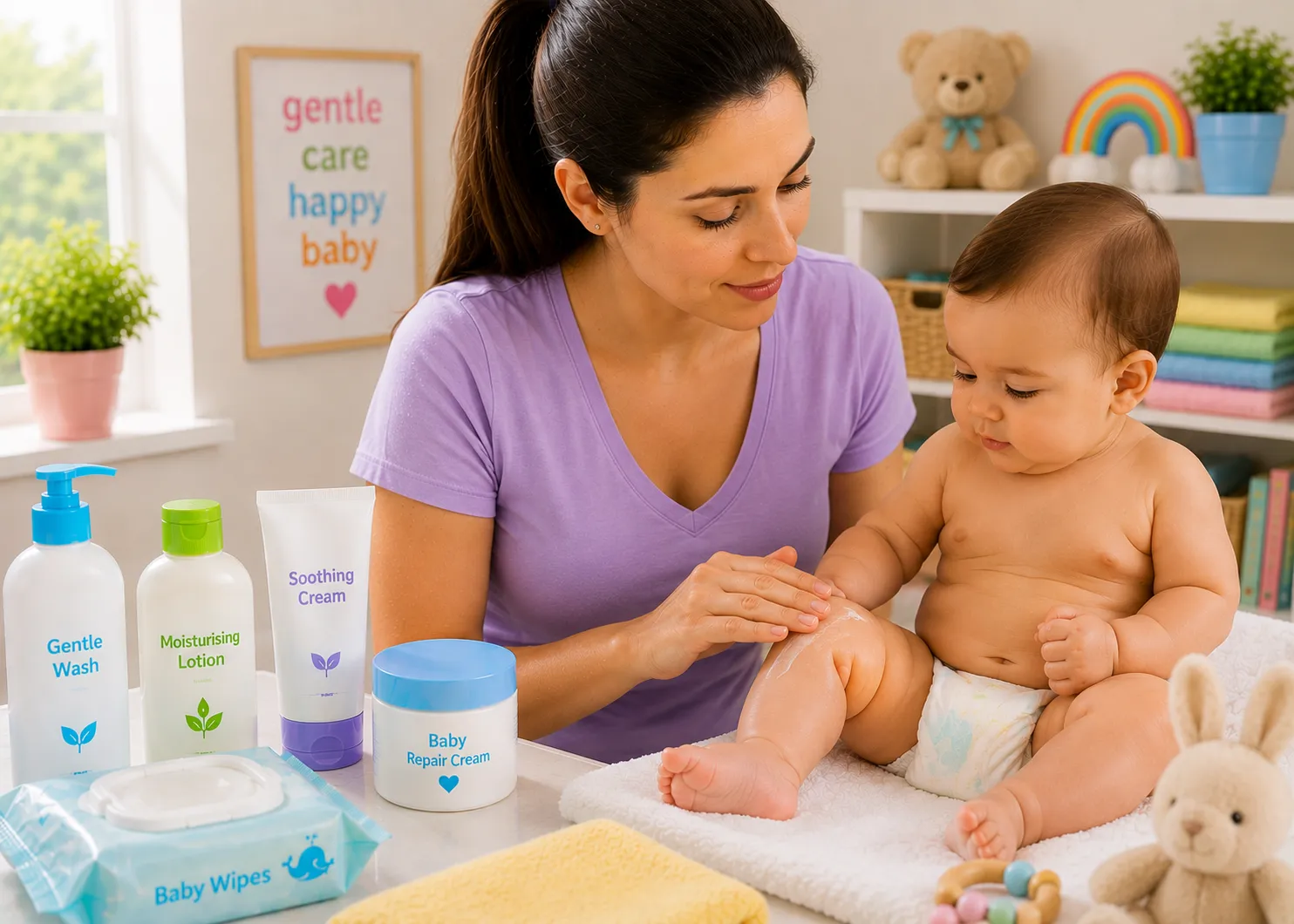
When your baby’s skin is dry, rough or itchy, it is natural to want a moisturiser to work quickly. You apply it once, look again a few hours later and wonder whether anything has changed. By the second or third day, you may already be thinking about replacing it with something else.
The problem is that moisturisers do not all work in the same way, and parents do not always mean the same thing when they say a product is “working.” One cream may make the skin feel softer almost immediately, while meaningful improvement in persistent dryness may require consistent use over several days. The key is knowing what signs to look for and when it makes sense to stop.
The Short Answer
For uncomplicated dry skin, you should usually expect to see some sign of improvement within several days of consistent use if the moisturiser suits your baby’s skin and the rest of the routine is not working against it. That improvement may begin as softer skin, less tightness, reduced roughness or less scratching rather than complete clearing. A product does not need to transform the skin overnight to be useful.
However, there are also situations where you should not continue simply because you are trying to give it time. If the moisturiser repeatedly causes burning, significant redness, swelling, increased itching, blistering or obvious discomfort, stop using it and reassess. Waiting longer is not the right response to a clear adverse reaction.
First Decide What You Expect the Moisturiser to Do
Are you trying to soften ordinary dry skin, reduce roughness after bathing, help a child whose skin becomes itchy after swimming, or expecting the moisturiser to make an inflamed skin condition disappear? These are very different expectations. A moisturiser can support hydration and the skin barrier, but it may not be enough on its own when a baby has a diagnosed inflammatory skin condition requiring prescribed treatment.
What Should Improvement Look Like?
The first changes may be subtle. The skin may feel less rough, remain comfortable for longer after bathing, become less flaky or attract less scratching. These smaller changes matter because they can appear before the skin looks dramatically different.
Give Mild Dryness a Few Consistent Days
When the problem is straightforward dryness, several days of regular use should usually give you useful information. You are not necessarily looking for perfect skin. You are looking for direction: softer skin, longer-lasting moisture and less scratching.
More Persistent Dryness May Take Longer
Skin that has been dry for weeks may not behave like skin that became dry yesterday. Repeated scratching, bathing, cold weather, swimming and friction can create an ongoing pattern of barrier stress. The important thing is that there should be some indication that the routine is moving in the right direction.
Make Sure the Rest of the Routine Is Not Working Against You
Very hot baths, long showers, strong soaps, vigorous towel drying, heat, sweat, swimming and friction can all add pressure to already dry skin. A moisturiser can therefore appear ineffective while other parts of the routine repeatedly strip or irritate the skin. Look at the whole environment rather than judging the jar in isolation.
Why We Use Repair, Nourish and Defend
At Itch-A-Bye, we developed our formulation around Repair, Nourish and Defend because dry, itchy and eczema-prone skin can involve more than water loss. Repair focuses on supporting the physical barrier. Nourish includes hydration and the wider supportive properties of carefully selected ingredients, while Defend recognises the skin’s protective role against bacteria, fungus and environmental pressures.
Nourish Is More Than Hydration
That is why the formulation combines Glycerin and Hyaluronic Acid for hydration with Black Seed Oil, MSM, Allantoin, vitamins and selected plant botanicals. Black Seed Oil provides emollient support alongside constituents studied for anti-inflammatory, antioxidant and antimicrobial activity. MSM, Allantoin, antioxidant vitamins and botanicals contribute complementary soothing, conditioning and supportive properties.
How Long Should You Try Itch-A-Bye?
If your child’s skin tolerates the product well and you are using it for uncomplicated dryness or recurring dry and itchy skin, give the routine several consistent days before judging whether it is moving in the right direction. Look for softer skin, less roughness, longer-lasting comfort and reduced scratching rather than demanding complete transformation after one application.
For more persistent dryness, it may be reasonable to continue longer as long as there is some evidence of improvement. If there is no change at all despite consistent use and a sensible surrounding routine, reassess whether the product is the right fit.
Do Not Continue Through Obvious Irritation
If the skin repeatedly becomes redder, more swollen, increasingly itchy or obviously uncomfortable after application, stop. Our guides on why a new baby cream may seem to make skin redder and how to introduce a new cream explore this in more depth.
The Skin Threshold Model Helps Explain Setbacks
Skin can improve and then become dry or itchy again because the environment changed. Heat, swimming, illness, washing, weather, saliva, friction and scratching can add new pressures. The Skin Threshold Model explained in Beyond the Skin Barrier helps parents consider whether the total pressure acting on the skin has increased rather than assuming one product suddenly stopped working.
Where Itch-A-Bye Baby Repair Cream Fits
Itch-A-Bye Baby Repair Cream was developed around Repair, Nourish and Defend. It combines hydration from Glycerin and Hyaluronic Acid with Black Seed Oil, MSM, Allantoin, antioxidant vitamins and a carefully selected botanical complex to provide supportive care for dry, itchy and eczema-prone baby and young children’s skin.
Frequently Asked Questions
How many days should I try a baby moisturiser?
For uncomplicated dryness, several days of consistent use should usually tell you whether the skin is beginning to move in a better direction. Look for softer skin, reduced roughness and improved comfort rather than complete clearing.
Should a baby moisturiser work immediately?
It may make the skin feel softer immediately, but longer-term improvement in recurring dryness often depends on consistent use. One application cannot tell you everything.
How long should I try Itch-A-Bye?
If the product is comfortable and you are using it for dry or itchy skin support, give it several consistent days and look for signs that the skin is moving in a better direction. Continue according to the child’s needs when improvement is occurring and reassess if it repeatedly causes obvious worsening or discomfort.
Give a Moisturiser Enough Time to Show You Something
A baby moisturiser does not need weeks of blind faith, but it does deserve a fair trial when the skin is tolerating it comfortably. Several consistent days should usually begin telling you whether the skin is becoming softer, less rough and more comfortable. Persistent dryness may require longer support, but there should be some evidence that the routine is helping.
For us, this is why skincare should be understood through Repair, Nourish and Defend rather than moisturising alone. The best routine is not the one that creates the fastest dramatic impression. It is the one that steadily helps vulnerable skin become more comfortable, more supported and easier to live with.