
“I Feel Like I’ve Tried Everything”: A Guide for Parents of Persistently Itchy Babies
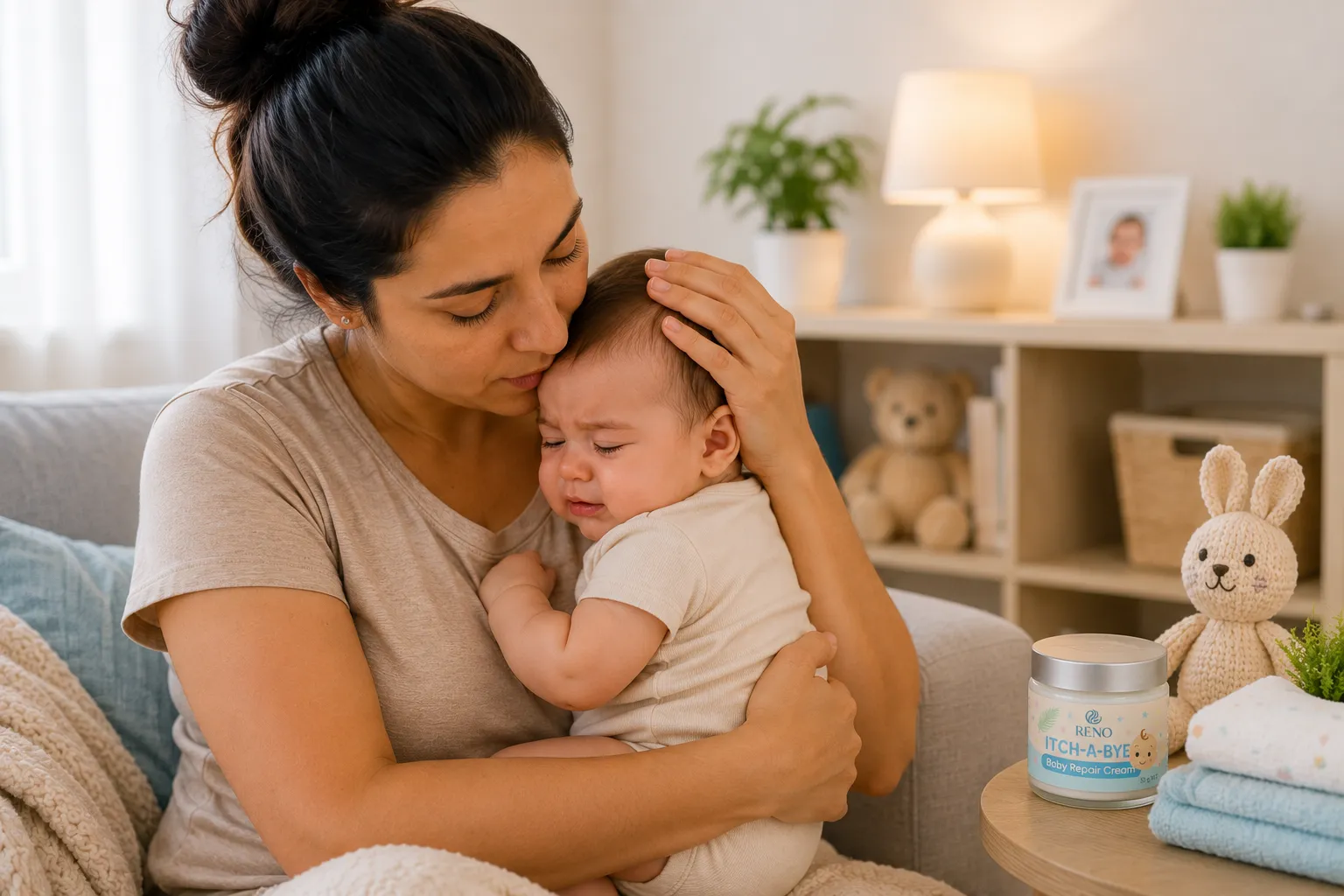
There is a particular kind of frustration that comes with caring for a baby who keeps itching. You change the bath products, wash the bedding again, switch detergents, try another moisturiser and cut the tags out of the pyjamas. For a few days things may look better, then the scratching returns and you are back where you started. After enough cycles like that, it is completely understandable to feel as though you have tried everything.
But “everything” often means something slightly different in real life. It can mean you have tried a long list of individual products without ever getting the chance to step back and look at the whole pattern. It can mean you have been reacting to each flare separately rather than asking what keeps pushing the skin back towards the same place. When itching persists, the answer may not be another random cream so much as a more organised way of understanding what the skin is dealing with.
The First Thing to Know: Persistent Itching Usually Has More Than One Layer
Parents are often encouraged to search for a single trigger. Was it the detergent, the formula, the pool, the heat, the moisturiser or something in dinner? Sometimes there is a clear culprit, but often the reality is more complicated. A baby’s skin can be influenced by dryness, barrier weakness, heat, sweat, friction, saliva, washing, scratching and environmental exposure all at the same time.
That is why removing one suspected trigger does not always make everything disappear. You may eliminate a fragranced bath product but still have overheating, dry air and night scratching working against the skin. You may change the detergent and see no obvious improvement because the biggest pressure is actually drooling around the face or heat inside sleepwear. Persistent itching makes more sense when you stop expecting every flare to have one neat explanation.
“I’ve Tried Everything” Often Means “I’ve Tried Many Products”
This is one of the most useful distinctions parents can make. You may have tried five moisturisers, three baby washes and two “eczema creams,” but that is not the same as addressing the wider environment surrounding the skin. Products are only one part of the picture. The skin is also responding to what touches it, how often it is washed, how warm it becomes, how much it is scratched and how well its barrier is being supported.
That does not mean the products were a waste of time. Some may have helped temporarily, some may not have suited your baby and others may have been used too inconsistently to judge properly. The problem is that constantly changing products can make patterns harder to recognise. If five things change in ten days, it becomes nearly impossible to know which one mattered.
Start by Stopping the Product Carousel
When parents become desperate for relief, it is easy to keep moving from one product to another. A recommendation appears in a parenting group, a friend suggests another cream and an online review promises dramatic results. Before long, the baby’s skin is being exposed to a constantly changing routine. If the skin improves, you may not know why, and if it worsens, you may not know what caused that either.
A more useful approach is to simplify. Keep the routine as stable as possible for long enough to observe what is happening, unless a product is clearly causing immediate irritation or you have been advised to stop it. Use one gentle cleanser or none where appropriate, one main skincare product and a predictable bathing routine. Stability gives you a baseline from which real patterns can begin to emerge.
Look at Where the Itching Happens
Location can tell you a surprising amount. A baby who scratches mainly around the cheeks and chin is experiencing a different skin environment from one who scratches behind the knees or around the ankles. The face may be dealing with saliva, food contact and repeated wiping, while the legs may be dealing more with friction, clothing and dryness. The neck may be exposed to sweat, drool and trapped moisture inside folds.
Instead of saying only “my baby is itchy,” map the body. Write down the areas that are repeatedly affected and the places that almost never cause trouble. Notice whether itching stays in the same spots or moves around. Repeated patterns in location can help you understand what each part of the skin is being exposed to.
Look at When the Itching Happens
Timing is just as important as location. Some babies itch mostly after bathing, while others become worse in the evening or several hours after swimming. Some scratch heavily during sleep even though the skin looked fairly calm at bedtime. Others become noticeably itchy after getting warm in the car or being active outdoors.
The time delay matters too. An exposure does not always create an immediate reaction. A baby may swim in the morning and become noticeably drier that evening, or may drool heavily all day and develop irritation around the mouth by night. Tracking timing can reveal relationships that disappear when each episode is viewed in isolation.
The Two Hours Before Bed Can Be Particularly Revealing
If nights are difficult, watch what happens before the baby goes to sleep. Dinner may involve food and saliva around the face, bath time may involve warm water and cleansers, and pyjamas may increase warmth or friction. The baby may also be tired and rubbing their face more than usual. Several small pressures can accumulate in a very short period.
This is why nighttime itching can sometimes appear mysterious. The skin may have been pushed gradually all day, but the final few pressures arrive close together. By the time the baby is lying in bed, the threshold has been crossed. What looks like “eczema suddenly getting worse at night” may actually be the result of the whole day.
Heat Is Often Underestimated
Many parents instinctively keep babies very warm, particularly at night. But overheating and sweating can make already itchy skin feel much worse. Heat can increase restlessness, and sweat may sting areas where the barrier is dry or irritated. The result is more rubbing and scratching.
Check your baby’s torso and the back of the neck when they wake uncomfortable. If they feel hot or sweaty, temperature may be contributing to the problem. Consider sleepwear, bedding, room temperature and how many layers are being used. Reducing unnecessary heat can sometimes remove one important source of pressure without changing any skincare product at all.
Friction Can Keep the Skin in a Constant State of Irritation
Friction is easy to miss because it is so ordinary. Cuffs rub wrists, waistbands press against the tummy, bibs move across the neck and cheeks, and crawling creates repeated contact with floors and clothing. A baby with healthy comfortable skin may tolerate this easily. A baby with dry or inflamed skin may not.
Look for irritation that appears in areas of repeated movement or contact. Think about seams, fabric texture, tight clothing and anything that repeatedly rubs the same place. Soft, breathable clothing may help reduce some of that load. The goal is not to create a perfect environment, but to reduce pressures that are unnecessary.
Drooling Can Keep Facial Skin Irritated for Hours
Teething babies can spend much of the day with saliva around their mouths, chins and necks. Parents wipe the area repeatedly, bibs become damp and the skin is exposed to moisture and friction again and again. By evening, the face may look much more irritated than it did in the morning. It is easy to blame the skincare product when the main problem may be the environment around the mouth.
Watch whether facial itching increases on heavy drooling days. Change wet bibs when needed and avoid aggressive wiping. Patting gently can be kinder than repeatedly rubbing the same area. The face often needs a different kind of attention because it lives in a different environment from the arms or legs.
Bathing Can Help or Hurt Depending on How It Is Done
Bathing itself is not automatically bad for dry skin. The problem often comes from very hot water, long baths, excessive cleanser use or vigorous drying afterwards. These factors can leave already vulnerable skin feeling tighter and more uncomfortable. A warm bath can also make itching feel more noticeable immediately afterwards.
Try keeping baths gentle and predictable. Pat the skin rather than rubbing aggressively with a towel. Apply your usual skincare promptly if that is part of the routine. Most importantly, notice whether difficult days consistently follow certain bathing patterns rather than assuming bathing is either always good or always bad.
Swimming Can Add Another Layer
Swimming is another exposure that may affect children differently. Chlorinated water, salt water, prolonged water exposure, wet swimwear and post-swim drying can all influence how the skin feels. Some children tolerate swimming well, while others become noticeably drier or itchier later. The effect may not become obvious until several hours after leaving the pool.
If your child swims regularly, include it in your notes. Record whether itching becomes worse on swimming days and what you do immediately afterwards. Rinsing with fresh water and returning to a consistent skincare routine may help some children. The important thing is to observe the pattern rather than automatically blaming or excluding swimming.
Scratching Can Become Its Own Cause of More Itching
At some point, the original trigger may no longer be the only problem. The baby scratches because the skin is uncomfortable, and scratching damages the barrier. Damaged skin becomes more irritated, which creates more discomfort and more scratching. That cycle can continue even after the factor that started the itch has gone.
This is why the itch-scratch cycle matters so much. Keeping nails short and smooth can reduce the damage caused by scratching, particularly overnight. Reducing heat and friction can also help lower the urge to scratch. If the baby is repeatedly breaking the skin or waking constantly because of itching, that level of discomfort deserves medical discussion.
The Skin Threshold Model Can Make Persistent Itching Easier to Understand
In our book, Beyond the Skin Barrier, we describe what we call the Skin Threshold Model. The idea is simple: the skin may tolerate several small pressures individually, but struggle when too many arrive together. Dry weather, swimming, heat, drooling, repeated wiping, long baths and scratching may each add something to the total load. Once that total crosses the skin’s threshold, a flare becomes more likely.
This also explains why the same trigger may cause problems one day but not another. Swimming might be fine on a cool day when the skin is already comfortable, but much harder to tolerate after several dry, hot days. A food contacting the face may not matter much when the barrier is strong, but become irritating when the skin is already cracked. Thinking in terms of total load can be more useful than looking for one universal trigger.
Keep a 7-Day Diary Before You Change Anything Else
When parents say they have tried everything, one of the most useful next steps can be to stop changing things and start recording. A seven-day diary can capture sleep, bathing, swimming, heat, drooling, food contact, clothing, scratching and skincare. It also helps you see whether the skin was dry before the itching began or became red mainly after scratching. Memory alone is rarely reliable enough to detect these patterns.
Our 7-Day Baby Dry Skin Diary was designed for exactly this purpose. You do not need complicated charts or medical language. A few simple notes each morning and evening can be enough. The objective is to replace “it seems random” with something closer to “these difficult nights repeatedly follow these particular conditions.”
Change One Thing at a Time
Once you begin seeing a pattern, resist the urge to change five things at once. If you suspect overheating, adjust sleepwear or room conditions while keeping the rest of the routine stable. If you think a new cleanser is causing trouble, remove that one product rather than replacing every item in the bathroom. When changes are isolated, their effects become easier to judge.
This can feel slow when you desperately want an answer. But constantly changing several variables can keep you trapped in uncertainty for months. A structured approach may actually get you to useful answers faster. It also reduces the chance that a helpful product will be blamed for a problem caused by something else.
Do Not Judge a Cream by One Bad Day
A single bad day does not automatically mean a cream has failed. Skin can worsen because of heat, scratching, swimming, illness, friction or another pressure even while a skincare routine remains unchanged. Similarly, one good day does not prove that a new product has solved the problem. Skin fluctuates.
Look for trends rather than isolated moments. Did the product seem comfortable when applied? Has the skin become more consistently hydrated over several days? Is scratching less frequent, or has the pattern remained unchanged? Evaluating a product in context gives you more useful information than reacting to every daily change.
But Do Not Ignore Clear Product Reactions
Stability does not mean persisting blindly with something that appears to be causing an obvious problem. If a product repeatedly causes immediate burning, intense redness, swelling or significant worsening after application, stop using it and seek appropriate advice. The same applies if the skin becomes increasingly inflamed after each use. A pattern that repeats directly after application deserves attention.
This is one reason patch testing and gradual introduction can be useful with new skincare. It reduces the number of variables you are changing at one time. It also gives you a clearer sense of how the baby’s skin responds. Persistent itching should not become an excuse to keep applying something that clearly seems to aggravate the skin.
Repair Comes Before Chasing Perfection
Our approach to dry, itchy and eczema-prone skin starts with Repair. The skin barrier is responsible for reducing water loss and protecting the body from the outside environment. When that barrier is dry, inflamed or repeatedly scratched, it becomes less effective. Supporting it consistently is therefore more useful than only reacting when the skin looks visibly bad.
Repair does not mean expecting one cream to permanently eliminate every trigger. It means helping the barrier cope better with everyday pressures. Gentle cleansing, avoiding unnecessary friction and keeping the skin consistently moisturised all fit within that idea. The aim is to improve the conditions in which the skin is trying to function.
Nourish Means More Than Hydration Alone
This is an important part of our philosophy. Nourish is not simply another word for moisturise. Hydration matters, but we also look at ingredients that provide soothing, conditioning, antioxidant and supportive properties. The skin needs an environment in which it can repair and perform its normal functions, not simply a temporary wet feeling on the surface.
That is why we think in terms of ingredient synergy. Humectants can help attract water, emollients can help soften the surface and soothing ingredients can help reduce discomfort. Antioxidant and botanical compounds can provide additional supportive functions within the formulation. Nourish means giving the skin several forms of support at the same time.
Defend Matters Because Damaged Skin Is More Vulnerable
The Defend pillar recognises that the skin is constantly interacting with bacteria, fungus and other microorganisms. Healthy intact skin provides a stronger physical defence than skin that is dry, cracked and repeatedly scratched. Supporting barrier integrity therefore has value before infection ever develops. Good nail hygiene and reducing repeated skin damage also form part of that defence.
This does not mean a cosmetic product can treat an established infection. If the skin develops spreading redness, increasing warmth, significant weeping, swelling, yellow crusting or pain, medical assessment may be needed. Fever or a baby who appears unwell makes that even more important. Defend is about supporting vulnerable skin, not replacing medical care.
Why Itch-A-Bye Uses Multiple Supporting Ingredients
Itch-A-Bye Baby Repair Cream was developed around the Repair, Nourish and Defend philosophy for dry, itchy and eczema-prone baby and young children’s skin. The formulation does not rely on one fashionable active ingredient. Instead, it combines ingredients with complementary roles to support hydration, comfort, conditioning and the wider skin environment. That approach makes sense to us because persistent dry and itchy skin rarely has only one pressure acting on it.
Glycerin and Hyaluronic Acid help attract and retain moisture, while Black Seed Oil provides emollient support and naturally occurring compounds such as thymoquinone. Black Seed Oil has also been widely investigated for anti-inflammatory and antimicrobial properties. MSM and Allantoin provide further soothing and skin-conditioning support. Together, these ingredients form a broader support system rather than asking one moisturising ingredient to do all the work.
Our Botanical Choices Are There for a Reason
The botanical complex in Itch-A-Bye includes ingredients such as Centella asiatica, Chamomile, Licorice, Green Tea, Scutellaria baicalensis, Rosemary, Polygonum cuspidatum and Ginger. These plants contain compounds that have been studied for properties including antioxidant, soothing and anti-inflammatory activity. They were not chosen simply because “natural” ingredients sound appealing. Their role is to contribute to the wider synergy of the formulation.
Vitamin C and Vitamin E provide additional antioxidant support. Allantoin is widely used for its soothing and skin-conditioning properties, while Hyaluronic Acid and Glycerin support hydration. MSM contributes another layer of soothing and conditioning support. The idea is that the formulation works as a system, just as the skin itself functions as a system.
Persistent Itching May Need Medical Review Even if the Skin Looks Mild
The severity of itching does not always match the appearance of the skin. A baby can scratch intensely even when there is little obvious redness during the day. If itching repeatedly wakes your baby, causes significant distress or leads to bleeding and broken skin, tell your doctor. Sleep disruption and behaviour are important indicators of impact.
You should also seek assessment if the problem persists despite a sensible and consistent routine. There may be another skin condition, allergy, infection or other issue that needs consideration. The goal is not to keep trying cosmetic products forever. Sometimes the most productive next step is getting a fresh medical review.
Take Photographs Before the Appointment
Skin often behaves badly at home and looks surprisingly calm by the time you get to the doctor. Photographs can bridge that gap. Take clear pictures during difficult periods, preferably in similar lighting and from similar distances. Record the date and approximate time if the changes are occurring quickly.
Pictures can show how a patch develops before and after scratching. They can also reveal whether redness is spreading or whether particular areas keep recurring. Combine photographs with your seven-day diary if possible. Together they can provide far more useful information than trying to remember everything in the consulting room.
Tell the Doctor You Have Tried a Lot, But Bring the Details
Saying “I’ve tried everything” communicates frustration, but it does not tell your doctor exactly what happened. Bring a list of the creams, cleansers and treatments you have used. Include approximately how long each was used and whether it caused improvement, no change or obvious irritation. Tell them whether the skin changes were immediate or appeared over several days.
Also bring information about bathing, swimming, heat, food contact, sleep and scratching. These factors can give important context to the product history. The doctor sees the baby for a short appointment, while you see what happens across the whole week. Your observations are useful when they are organised.
Ask a Better Question Than “What Cream Should I Try Next?”
When parents are exhausted, this is often the first question they ask. But a better question may be, “What do you think is continuing to drive the itching?” That opens the conversation beyond products. It invites consideration of barrier damage, infection, allergies, environmental triggers, treatment needs and the severity of the itch itself.
You can also ask whether the current routine makes sense and whether anything should be simplified. Ask what signs would mean your baby needs review again. If medication is recommended, make sure you understand how and where it should be used. The goal is to leave with a plan rather than just another jar.
Give Yourself Permission to Simplify
Parents of persistently itchy babies often feel as though they should be doing more. More creams, more washing, more searching, more dietary changes and more cleaning can easily creep into everyday life. But more activity does not always mean better skin. Sometimes a simpler routine gives both the skin and the parents a chance to settle.
A stable routine makes observation easier. It reduces unnecessary exposures and lets you see whether the underlying pattern is changing. It also makes it easier to explain what has been happening to a healthcare professional. Simplicity can be a strategy, not a sign that you have given up.
Frequently Asked Questions
Why Is My Baby Still Itchy After Trying So Many Creams?
Creams address only part of the environment surrounding itchy skin. Heat, friction, drooling, bathing, scratching, clothing and other exposures may still be contributing. The barrier may also need consistent support over time rather than frequent product switching. Persistent itching is therefore worth looking at as a pattern rather than as evidence that every cream has failed.
Should I Keep Changing Moisturisers Until I Find One That Works?
Constantly switching products can make it difficult to understand what is helping or worsening the skin. A simpler stable routine is often easier to evaluate. Stop a product if it clearly causes repeated immediate irritation, but otherwise try to avoid changing several things at once. If persistent itching continues, discuss the pattern with your doctor.
What If My Baby Itches but Has Very Little Rash?
Itching can still be significant even when the skin looks relatively clear. Tell your doctor whether scratching occurs before visible redness develops. Also record when the itching happens, where it occurs and whether it disturbs sleep. The behaviour itself is useful information.
Can Heat Cause My Baby to Scratch More?
Yes, overheating and sweating can make already irritated skin feel more uncomfortable. Watch whether scratching increases in warm rooms, heavy clothing or after active play. Reducing unnecessary heat may remove one source of pressure. The skin may still have other triggers at the same time.
Why Does My Baby Seem Worse at Night?
Nighttime itching may be influenced by warmth, bedding, friction, reduced distraction and events that occurred earlier in the day. The skin may also follow normal daily rhythms that make itching more noticeable at certain times. Track what happens during the two hours before bedtime. Daytime events can be just as important as what happens in the bedroom.
How Long Should I Track My Baby’s Skin?
Seven days is a useful starting point because it captures repeated routines and different exposures. Record itching, dryness, sleep, bathing, heat, swimming, drooling and skincare. Longer tracking may be useful if the pattern is intermittent. The aim is to gather enough information to see repetition rather than record every detail forever.
Should I Stop All Skincare and Start Again?
Not usually, unless a healthcare professional advises it or there is a clear product reaction. Suddenly changing everything can make the situation harder to understand. Simplifying the routine is different from abandoning it completely. Keep a predictable baseline and adjust one element at a time.
Can Itch-A-Bye Be Used for Persistently Itchy Skin?
Itch-A-Bye Baby Repair Cream is designed to support dry, itchy and eczema-prone skin through the Repair, Nourish and Defend philosophy. It can be part of a consistent skincare routine when the skin tolerates it well. Persistent or severe itching still deserves medical review, particularly when sleep is disrupted or the skin is repeatedly broken. No skincare cream should replace assessment when the problem is worsening or unexplained.
When Should I Take My Baby Back to the Doctor?
Seek review when itching remains persistent despite a consistent routine, regularly interrupts sleep or repeatedly leads to broken skin. Also seek assessment for spreading redness, warmth, swelling, weeping, yellow crusting, blistering or increasing pain. Fever or a baby who appears unwell deserves prompt attention. A problem does not need to be an emergency to justify another medical opinion.
You May Not Have Tried Everything — You May Have Been Trying Everything Separately
That is often the turning point. Parents can spend months responding to each flare with a new product, a new theory or a new restriction. Yet the skin may be responding to several interacting pressures at once. When those pressures are considered together, the problem begins to look less random.
This is the broader thinking behind Beyond the Skin Barrier and our Repair, Nourish and Defend framework. The barrier needs support, the skin needs more than surface hydration alone and the environment around the skin matters. Heat, friction, scratching, microbes, drooling, bathing and everyday exposures can all contribute to the total load.
So when you reach the point of saying, “I feel like I’ve tried everything,” the next step does not necessarily have to be another product. Simplify, observe, record and look for patterns. Support the barrier consistently and take persistent or worsening symptoms back to your healthcare professional. Sometimes the breakthrough begins when you stop asking, “What else can I try?” and start asking, “What keeps pushing this skin back over its threshold?”