
Newborn Peeling Skin: What’s Normal and What Isn’t?
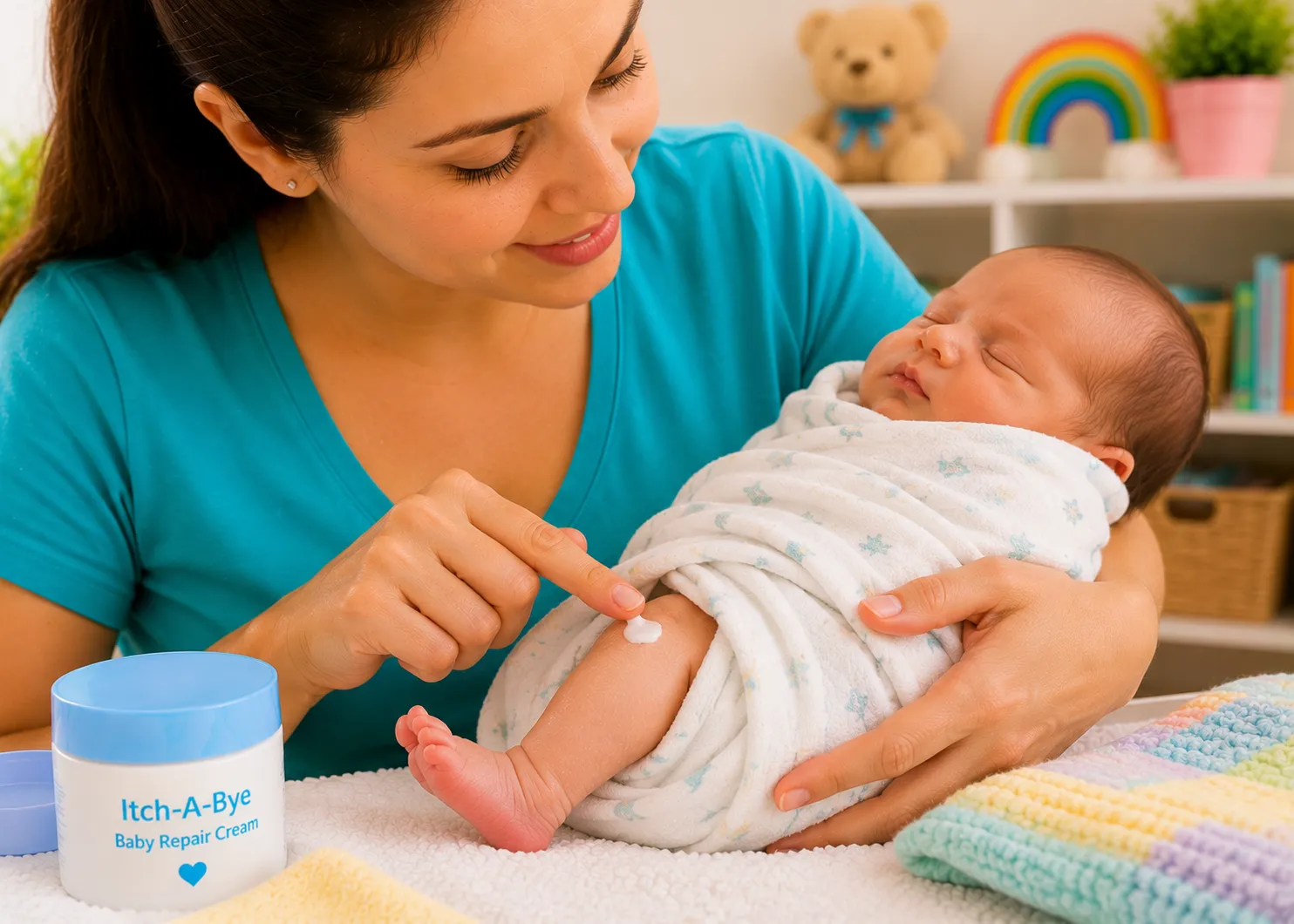
You bring your newborn home, spend what feels like hours looking at every tiny finger and toe, and then notice something you were not expecting. The skin around their ankles is peeling. A day later, you see flakes around the wrists, feet or tummy, and suddenly you are wondering whether their skin is too dry or whether something is wrong.
For many newborns, peeling skin is completely normal during the first few weeks after birth. Their skin has just moved from the protected, fluid environment of the womb into a much drier world filled with air, clothing, nappies, bathing and temperature changes. Some babies peel very little, while others seem to shed surprisingly large amounts of their outer skin. Understanding why this happens can make those first few weeks considerably less worrying.
Why Does a Newborn’s Skin Peel?
Before birth, your baby’s skin develops while surrounded by amniotic fluid. During pregnancy, it is protected in part by vernix caseosa, the creamy white substance that can still be visible on a baby’s skin immediately after delivery. After birth, that environment changes almost instantly.
The skin is suddenly exposed to air and begins adapting to controlling moisture in a completely different way. Some of the outermost skin cells naturally loosen and shed during this transition, which is why peeling often appears during the first days or weeks of life. It can look like very dry skin, but normal newborn peeling is not necessarily evidence that anything is wrong with the baby’s skin barrier.
Where Does Newborn Peeling Usually Appear?
Peeling is particularly common around the hands, feet, ankles and wrists, although it can occur elsewhere on the body. You may notice tiny flakes at first, followed by larger areas where thin pieces of skin appear to lift away. The skin underneath may look completely normal.
Some babies also peel around their legs, tummy or other areas where the skin has been exposed to friction from clothing. The amount of peeling can vary considerably from one baby to another. Two perfectly healthy newborns can therefore look very different during their first few weeks.
Babies Born After Their Due Date May Peel More
Parents of babies born after their estimated due date sometimes notice particularly obvious peeling. This can happen because babies who remain in the womb longer may have less vernix protecting their skin by the time they are born. Once exposed to the outside environment, the outer layers may therefore shed more noticeably.
The appearance can be surprising because the skin may look extremely dry around the hands and feet. But the amount of visible peeling alone does not necessarily tell you that the skin is unhealthy. What matters more is what the skin underneath looks like and how your baby appears to feel.
How Long Does Newborn Peeling Last?
For many babies, peeling is most noticeable during the first couple of weeks and gradually settles as the skin adapts. You may see new areas begin peeling just as other areas start looking smooth again. That can make the process seem as though it is continuing for quite some time.
There is no precise day when every newborn should stop peeling. Babies develop at slightly different rates, and their skin is exposed to different environments after birth. What you want to see is an overall movement towards calmer, more comfortable skin rather than progressively worsening irritation.
Should You Peel the Loose Skin Off?
It can be surprisingly tempting to pull away a little piece of loose skin hanging from your baby’s ankle or foot. Try not to. Even when the skin looks ready to come away, pulling it can tug on skin that is still attached underneath and create unnecessary irritation.
The same applies to scrubbing with a washcloth or trying to exfoliate the flakes during a bath. Newborn skin does not need exfoliation. Let the loose skin shed naturally, handle the area gently and give the skin time to complete the transition itself.
Does Peeling Mean Your Newborn Has Very Dry Skin?
Not necessarily. Peeling and dryness can occur together, but they are not exactly the same thing. Normal newborn peeling is largely about the shedding of the outer skin after birth, whereas persistent dry skin involves the skin losing moisture and becoming rough, tight or uncomfortable.
The distinction becomes clearer when you look at the skin after the flakes come away. If the underlying skin looks soft and comfortable, you may simply be seeing normal newborn shedding. If it remains rough, cracked, irritated or repeatedly becomes dry, then barrier support and moisturising may become more important.
Should You Put Moisturiser on Peeling Newborn Skin?
You do not necessarily have to moisturise every area that is peeling. If your baby’s skin underneath looks comfortable and the peeling is mild, allowing the process to happen naturally may be enough. There is no need to cover healthy newborn skin with multiple products simply because a few flakes are visible.
If the skin also feels noticeably dry or rough, however, a small amount of an appropriate moisturiser can help make it feel more comfortable. Apply a light layer rather than repeatedly coating the area in large amounts of cream. We explain this in more detail in our guide, Can You Put Moisturiser on a Newborn? A Parent’s Guide.
More Moisturiser Is Not Necessarily Better
When parents see peeling, their first instinct can be to keep adding cream until every flake disappears. But moisturiser does not need to remove the peeling skin. Its job is to support hydration and the skin barrier where extra support is actually needed.
A thick layer of cream cannot speed up a normal developmental process simply because more product has been applied. If the skin is comfortable after a light application, give it time before adding more. Newborn skincare is one area where restraint can be just as important as intervention.
Keep Bath Time Gentle
Long baths are unlikely to make normal newborn peeling disappear faster and may actually leave already dry skin feeling tighter afterwards. Newborns generally do not need prolonged daily bathing. Warm rather than hot water and a short, gentle bath are usually enough.
Try not to scrub peeling areas with a towel when the bath is finished. Pat the skin gently and allow it to remain slightly damp before applying moisturiser if the skin actually needs it. The objective is to minimise unnecessary pressure on a barrier that is still developing.
Be Careful With Cleansers
A newborn does not need powerful soap to become clean. Strong cleansers can remove some of the oils at the surface of the skin and may make dryness more noticeable. This is especially relevant when parents are bathing frequently because they are trying to remove the peeling skin.
If you use a cleanser, choose something gentle and use only what is necessary. Pay attention to how your baby’s skin feels after bathing rather than simply following a product routine. If the skin consistently looks drier after baths, the bathing routine itself deserves attention.
What About Baby Oil?
Some parents reach for baby oil when they notice peeling because oil can soften dry-looking flakes. A suitable oil can reduce moisture loss and make the skin feel smoother, but it is still important not to rub or massage peeling skin aggressively. The flakes should be allowed to loosen naturally.
Oils and moisturising creams also do slightly different jobs. Some oils primarily provide an occlusive or conditioning layer, while a formulated cream can combine oils with water-binding ingredients and other skin-supportive components. The best choice depends on whether you are dealing with normal peeling, genuine dryness or both.
What About Coconut Oil?
Coconut oil is another product parents commonly consider because it is familiar and often described as natural. It can soften the skin and has useful emollient properties, but being natural does not automatically make an ingredient suitable for every newborn. Babies can respond differently even to simple products.
If you choose to introduce an oil or moisturiser, use a small amount on a limited area first. This is especially sensible when the baby’s skin is already irritated rather than simply peeling. Introducing one product at a time also makes it easier to understand what the skin likes and what it does not.
When Peeling May Not Be Just Normal Newborn Peeling
The appearance of the skin around the peeling matters. Normal peeling generally occurs without significant swelling, pain, weeping or rapidly spreading redness. Your baby should otherwise appear comfortable and well.
Pay closer attention when peeling occurs alongside significant redness, cracking, bleeding, swelling, blistering, weeping, crusting or obvious discomfort. Skin that is rapidly worsening or accompanied by a baby who appears unwell also deserves prompt attention. In those circumstances, assuming that everything is simply normal newborn peeling may not be appropriate.
What If the Skin Is Red Underneath?
A little variation in colour can occur as newborn skin adapts, but pronounced redness beneath peeling skin deserves closer observation. Think about whether the area is being exposed to friction, saliva, nappies, clothing, heat or a newly introduced skincare product. The location can often provide clues.
If the redness appeared soon after introducing a new cream, oil, wash or wipe, stop and reassess rather than covering the area with additional products. Skin reactions do not always appear instantly, and newborn skin can be particularly vulnerable to unnecessary exposures. Simplifying the routine can make it easier to see what is happening.
What If the Skin Is Cracking?
Fine dry lines are different from deeper cracks in the skin. When the barrier becomes very dry, small fissures can form, particularly in areas exposed to repeated movement or friction. At that point, the problem is moving beyond simple cosmetic peeling.
Cracked skin deserves more attention because an intact skin barrier is part of the body’s physical defence against the outside environment. Supporting moisture and reducing friction become especially important. If cracks are deep, painful, bleeding, weeping or worsening, they should not simply be dismissed as ordinary newborn peeling.
What If There Is Yellow Crusting or Weeping?
Peeling by itself should not normally produce wet, weeping areas or obvious yellow crusting. Those changes can indicate that something more than routine shedding is happening. The protective barrier may have become significantly disrupted, or another skin process may be involved.
This is one of the situations where adding different creams at home can make it harder to understand what is happening. Keep the area clean and avoid repeatedly experimenting with new products. If the changes are persistent or spreading, appropriate assessment is sensible.
What If Your Baby Seems Very Itchy?
Normal newborn peeling should not usually cause relentless scratching or obvious distress. Very young babies move their hands frequently, so occasional touching or rubbing does not necessarily mean they are itchy. Look for repeated behaviour together with changes in the skin.
If the skin is becoming progressively dry, red and uncomfortable, the situation may no longer be simple newborn peeling. That is when it becomes useful to look beyond the flakes and consider what may be putting pressure on the developing skin barrier. Heat, bathing, clothing, friction and skincare products are all worth reviewing.
The Developing Skin Barrier Matters
One of the most useful things parents can understand about newborn skin is that it is still developing after birth. The outer barrier has to manage water loss, environmental exposures, temperature changes, friction and interactions with microorganisms in a world completely different from the womb. That adaptation does not happen in exactly the same way or at exactly the same speed for every baby.
This is why one newborn can barely peel while another sheds noticeably across their hands, feet and legs. It is also why the skincare routine that works beautifully for one baby may be unnecessary for another. Rather than trying to make every newborn’s skin look identical, the goal should be to support each baby’s developing barrier without overwhelming it.
The Skin Threshold Model Gives Parents Another Way to Think About It
In Beyond the Skin Barrier, we use the Skin Threshold Model to explain why skin problems often become visible only after several pressures begin accumulating. A baby’s developing barrier may be managing dry air, bathing, friction, heat, sweat, saliva, microbes and skincare products simultaneously. One of those influences by itself may cause very little trouble.
As those pressures accumulate, however, the skin may eventually cross its individual threshold and become visibly dry, itchy or irritated. This helps explain why parents sometimes feel that a skin change appeared “out of nowhere.” Looking at the entire environment around the baby’s skin can be more useful than searching immediately for one culprit.
Peeling Is a Good Example of Why We Should Not Treat Every Skin Change
Seeing skin come away naturally makes parents understandably want to do something. But sometimes the correct response is gentle observation rather than another treatment. Normal newborn peeling is one of the clearest examples of a visible skin change that often improves largely because the baby’s skin continues adapting.
The important skill is learning to distinguish normal adaptation from skin that is becoming progressively dry or irritated. That means watching what happens underneath the flakes and how the baby behaves. The condition of the barrier matters more than whether every tiny piece of peeling skin has disappeared.
Repair, Nourish and Defend
When dry or easily irritated skin does need more support, our approach with Itch-A-Bye Baby Repair Cream is built around three complementary principles: Repair, Nourish and Defend. Moisturising is part of that approach, but we do not believe supporting vulnerable skin should be thought of as hydration alone. The developing barrier has several jobs to perform.
Repair focuses on supporting the outer barrier and helping reduce unnecessary moisture loss. Nourish means supplying hydration together with carefully selected ingredients that provide soothing, conditioning and supportive properties. Defend recognises the skin barrier’s important role in protecting vulnerable skin against bacteria, fungus and other environmental pressures.
Nourish Means Giving Skin More Than Water
Itch-A-Bye contains Glycerin and Hyaluronic Acid to help attract and retain moisture within the outer layers of the skin. That matters when newborn or infant skin becomes genuinely dry rather than simply undergoing normal peeling. But hydration is only one part of the formulation.
We also use Black Seed Oil, MSM, Allantoin, Vitamin C and Vitamin E, together with selected botanical extracts. These ingredients were chosen for complementary soothing, conditioning, antioxidant and skin-supportive properties. Rather than asking one ingredient to do everything, the formulation is designed around ingredients working together.
Why Black Seed Oil Earns Its Place
Black Seed Oil from Nigella sativa is one of the cornerstone ingredients in the Itch-A-Bye formulation. It contains naturally occurring compounds including thymoquinone that have attracted scientific interest for their anti-inflammatory, antioxidant and antimicrobial properties. The oil also contributes emollient properties that help condition dry skin.
That combination makes Black Seed Oil particularly interesting within our Repair, Nourish and Defend framework. Its purpose is not simply to allow us to describe the cream as botanical. We want every major ingredient to have a functional reason for being included. For us, ingredients should earn their place in the formulation.
MSM and Allantoin Add Different Kinds of Support
MSM brings another dimension to the formulation through its soothing and antioxidant potential. When skin becomes dry and uncomfortable, calming the environment around that skin can be just as important as adding moisture. MSM therefore complements rather than replaces the hydrating components of the formula.
Allantoin is widely valued in skincare for soothing, conditioning and skin-protective properties. It works alongside Glycerin, Hyaluronic Acid and the oils rather than competing with them. This is the kind of ingredient synergy we mean when we talk about Nourish as something broader than hydration.
The Botanical Complex Has a Purpose Too
The Itch-A-Bye formulation also contains carefully selected botanical extracts including Centella asiatica, Chamomile, Licorice, Scutellaria baicalensis, Green Tea, Rosemary, Polygonum cuspidatum and Ginger. These plants contain naturally occurring compounds associated with antioxidant, soothing, conditioning and anti-inflammatory properties. They were selected to complement the rest of the formulation rather than simply lengthen the ingredient list.
No individual botanical should be treated as a miracle solution for newborn peeling or dry skin. Their value comes from the way their different properties work alongside the rest of the formulation. That distinction matters because normal newborn peeling generally does not need to be “treated” in the first place.
Should You Use Itch-A-Bye Just Because Your Newborn Is Peeling?
Not necessarily. If the skin is simply shedding normally and the skin underneath is soft and comfortable, there may be no reason to apply a cream simply to stop the peeling. Let the skin complete its natural transition.
If peeling is accompanied by genuine dryness, roughness or recurring loss of moisture, Itch-A-Bye Baby Repair Cream can be introduced cautiously as a source of broader skin support. Begin with a small amount on a limited area and observe how the skin responds before expanding its use. The objective should always be purposeful skincare, not maximum skincare.
A Simple Routine for Peeling Newborn Skin
Keep bathing short and gentle, avoid hot water and do not scrub the flakes away. Pat the baby dry instead of rubbing vigorously, and choose soft clothing that does not create unnecessary friction over peeling areas. If the skin underneath remains comfortable, you may not need to do anything more.
If the skin feels genuinely dry, apply a small amount of an appropriate moisturiser to the areas that need it. Avoid introducing several oils, creams and washes at the same time because that makes reactions much harder to interpret. Then give the baby’s skin time to do what newborn skin is designed to do: adapt.
Frequently Asked Questions
Is it normal for a newborn’s skin to peel?
Yes. Peeling is very common during the first weeks after birth as the outer skin adapts from the fluid environment of the womb to life in the outside world. It is often most noticeable around the hands, feet, wrists and ankles.
The amount varies considerably between babies. Some barely peel at all, while others shed much more visibly. The condition of the skin underneath is usually more informative than the quantity of flakes.
When does newborn peeling usually stop?
For many babies, the peeling becomes less noticeable over the first few weeks. It may appear in different areas at different times, so the process can seem to last longer than expected. There is no single day by which every baby’s peeling must disappear.
What matters is the overall direction. The skin should gradually become more settled rather than progressively more inflamed, cracked or uncomfortable. Persistent worsening deserves a closer look.
Should I remove peeling skin from my newborn?
No. Avoid picking, pulling or scrubbing away loose pieces of skin. Even a flake that looks almost detached may still be connected to more delicate skin underneath.
Allow it to come away naturally. Gentle bathing and normal movement will usually remove loose flakes over time. There is no benefit in trying to exfoliate a newborn.
Should I moisturise peeling newborn skin?
You can moisturise if the skin is genuinely dry or rough, but visible peeling alone does not always mean moisturiser is necessary. If the skin underneath looks soft and comfortable, observation may be enough.
If you do moisturise, use a light, even amount rather than thick repeated applications. Watch how the skin responds. The goal is comfort and barrier support rather than making every flake disappear immediately.
Can I put moisturiser on my newborn every day?
Yes, when the skin tends to become dry and the product is suitable for delicate skin. Some babies benefit from regular moisturising while others need very little. There is no advantage in applying product simply to satisfy a schedule when the skin is already comfortable.
Look at what happens between applications. If dryness repeatedly returns, also consider bathing, clothing, temperature, humidity and friction. Moisturiser is one part of the environment around the skin.
Why is my newborn peeling mostly on the hands and feet?
Hands and feet are among the most common places for normal newborn peeling. The skin in these areas may shed quite noticeably during the transition after birth. Babies born after their due date can sometimes show particularly obvious peeling there.
If the underlying skin is comfortable and there are no concerning changes, the peeling will often settle naturally. Avoid pulling at the loose skin. Let it detach by itself.
Is newborn peeling the same as eczema?
No. Peeling during the newborn transition and eczema are not automatically the same thing. Normal peeling can occur without significant itching, inflammation or persistent barrier problems.
If the skin becomes repeatedly red, itchy, rough or inflamed rather than simply shedding, there may be more going on. Look at the whole pattern rather than diagnosing the skin from flakes alone. Persistent or worsening changes deserve appropriate assessment.
What does concerning newborn peeling look like?
Peeling deserves closer attention when it occurs with significant redness, swelling, blistering, deep cracking, bleeding, weeping, crusting, pain or rapid worsening. A baby who appears unwell alongside significant skin changes should also be assessed rather than treated only with moisturiser.
These signs are different from a few dry flakes around otherwise comfortable hands or feet. Parents do not need to panic over normal shedding. The key is recognising when the surrounding skin is telling a different story.
Look at the Skin Underneath the Flakes
Newborn peeling can look dramatic precisely because we expect a baby’s skin to be perfectly smooth. In reality, those first weeks are a period of enormous adaptation. The skin is learning to function in an environment completely different from the one in which it developed.
So when you see peeling, resist the urge to judge the skin by the flakes alone. Look underneath them. If the skin is comfortable and your baby is well, gentle care and time may be all that is needed.
If the skin is also becoming dry, rough or easily irritated, that is when thoughtful barrier support becomes more relevant. And if you want to understand the bigger picture behind developing baby skin, dryness, itching, microbes, immune signalling and the pressures that can push vulnerable skin beyond its threshold, Beyond the Skin Barrier takes that discussion much further.
Because sometimes the best thing you can put on newborn skin is an appropriate moisturiser. And sometimes the best thing you can give it is simply time to develop.