
Can Fragrance Make Baby’s Dry, Itchy Skin Feel Worse?
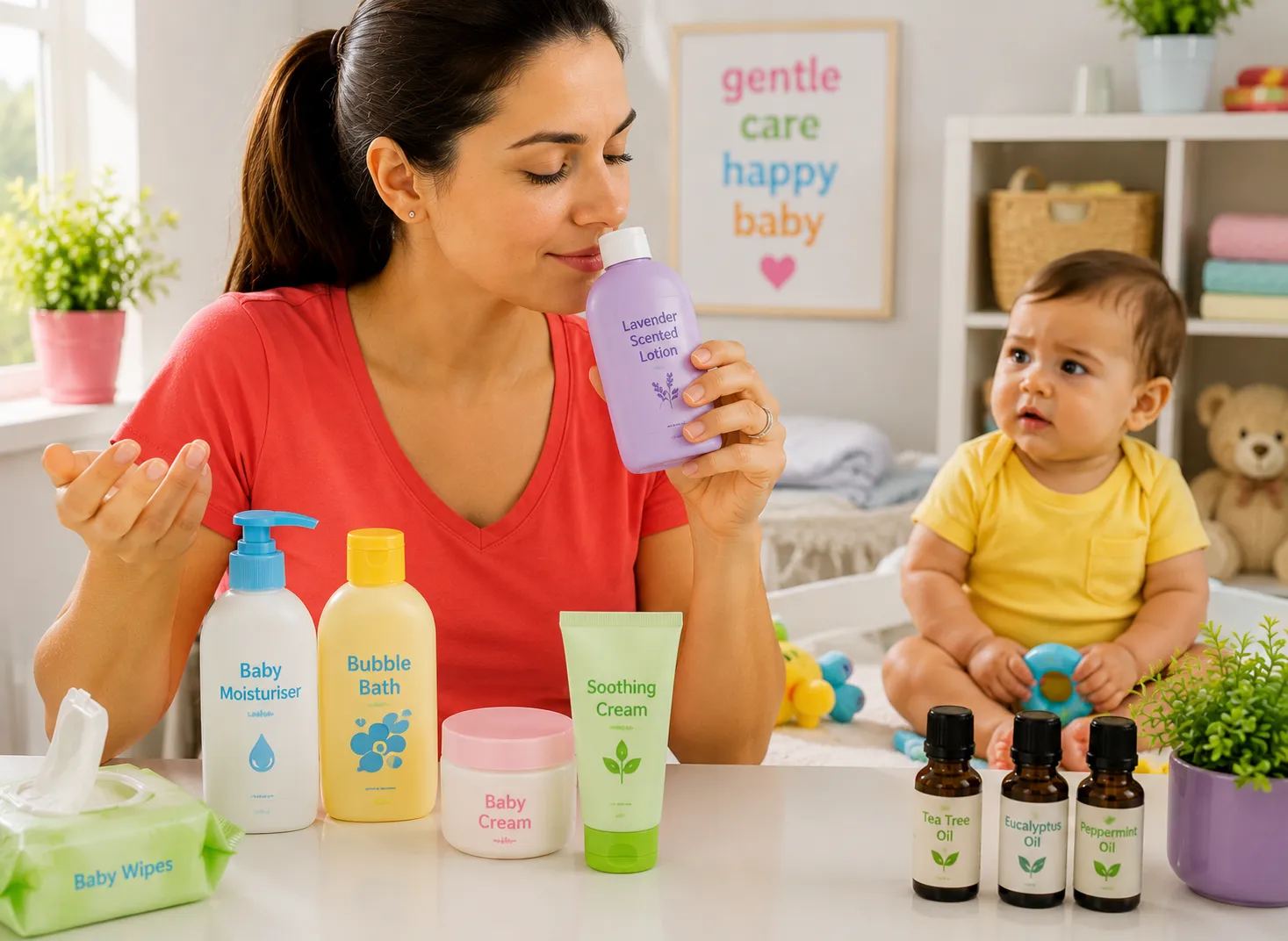
When your baby’s skin is dry, itchy or easily irritated, fragrance is one of those ingredients that is worth paying attention to. It may make a baby wash, lotion or cream smell lovely, but fragrance does not add moisture to the skin or help repair the skin barrier. For many babies, fragranced products cause no obvious problem at all. But when the skin is already very dry or irritated, fragrance can sometimes become another source of discomfort.
This is especially true when several fragranced products are being used at the same time. A baby might come into contact with fragrance through shampoo, body wash, wipes, lotion, laundry detergent, fabric softener and even scented bedding sprays. Each product may seem harmless on its own, but together they can create repeated exposure throughout the day. For already vulnerable skin, that cumulative load can matter.
Why Dry Skin Can React More Easily
A healthy skin barrier helps keep moisture in and irritants out. When that barrier becomes dry, cracked or inflamed, it does not perform that protective role as effectively. Ingredients that normally sit on the surface may become more noticeable or uncomfortable when the skin is already compromised. This is one reason a product your baby previously tolerated can suddenly seem to sting or make the skin feel worse.
Think of it like a wall with tiny gaps appearing in it. When the wall is strong, very little gets through, but once those gaps develop, the inside becomes more exposed. Very dry baby skin can behave in a similar way. That does not mean every ingredient is suddenly dangerous, but it does mean the skin may become less forgiving.
What Is Fragrance Doing in Baby Skincare?
In many baby products, fragrance is there mainly to create a pleasant smell. It can make a wash feel fresher, a lotion feel more luxurious or a bedtime product seem calming and familiar. But fragrance is not there to moisturise the skin or strengthen the barrier. From a skin-function point of view, it is usually optional.
That is why fragrance becomes an obvious ingredient to reconsider when a baby’s skin is persistently dry or itchy. If an ingredient is not contributing to hydration or barrier support and it may irritate susceptible skin, there can be value in reducing exposure. The aim is not to make parents fearful. It is simply to remove unnecessary variables while the skin is under pressure.
Fragrance Is Not Just One Ingredient
One of the confusing things about fragrance is that it can represent a mixture of many aromatic compounds. On a label, parents may simply see words such as “fragrance,” “parfum” or “aroma.” That does not necessarily tell you exactly which individual scent compounds are present. Some people tolerate these mixtures perfectly well, while others may become irritated or sensitised.
This is why two fragranced products can behave very differently on the same child. One lotion may cause no issue, while another seems to make the skin feel warmer, tighter or itchier. The overall formulation matters just as much as the presence of fragrance itself. Still, if your baby’s skin is already struggling, fragrance-free products are often a simpler place to start.
What About Products Labelled “Natural Fragrance”?
The word “natural” can make a product sound automatically gentler, but that is not always the case. Natural fragrance may come from essential oils, plant extracts or naturally derived aromatic compounds. These materials can still contain substances that irritate or sensitise susceptible skin. Natural does not automatically mean non-irritating.
This does not mean all plant-derived ingredients should be avoided. A carefully selected botanical extract used as part of a balanced formulation is very different from adding concentrated aromatic oils simply for scent. Concentration, purpose and formulation all matter. This is why it is more useful to ask what an ingredient is doing than whether it sounds natural.
Essential Oils Can Be Fragrance Too
Parents are often surprised to discover that a product can contain no synthetic perfume and still be strongly scented. Essential oils such as lavender, tea tree, citrus, peppermint or eucalyptus can give products a noticeable fragrance. These ingredients may be used for different reasons, but they still contain aromatic compounds. On very dry or irritated baby skin, those compounds may not always be well tolerated.
Again, the point is not to demonise essential oils. It is to recognise that “essential oil” and “gentle” are not automatically the same thing. Some essential oils can be irritating when highly concentrated or used on compromised skin. When a baby’s skin barrier is already vulnerable, a simpler fragrance-free routine may make more sense.
The Hidden Fragrance Load in a Baby’s Day
Sometimes parents focus entirely on the moisturiser and forget about everything else touching the skin. A baby may start the day with fragranced wipes, be dressed in clothes washed with scented detergent, use a fragranced wash at bath time and then have lotion applied afterwards. Even the bedding may have been washed with heavily scented products. By bedtime, the skin may have been exposed to fragrance repeatedly.
This is one reason it can be helpful to look at the whole routine instead of blaming one product. If your baby’s skin seems persistently dry or itchy, try reducing fragrance exposure across several products at once. That may give you a clearer picture of whether fragrance is contributing to the problem. Sometimes the answer becomes more obvious when the routine is simplified.
Can Fragrance Make Itching Feel Worse?
Itching is complicated because many things can contribute to it. Dryness, heat, sweat, friction, scratching, clothing and the condition of the skin barrier can all influence how itchy the skin feels. Fragrance can sometimes add another source of irritation on top of those existing pressures. When the skin is already uncomfortable, even a small extra trigger may matter.
Parents may notice that a baby becomes more restless after a bath or starts scratching soon after a particular lotion is applied. That does not prove fragrance is the cause, but it is a useful clue. Patterns matter, especially when the same thing happens repeatedly. A short period using fragrance-free alternatives can sometimes help you work out whether fragrance is part of the picture.
Fragrance-Free and Unscented Are Not Always the Same
This is another area where labels can become confusing. A product labelled “unscented” may still contain ingredients used to mask the natural smell of the formulation. A truly fragrance-free product is generally a better fit when the aim is to minimise fragrance exposure. Looking beyond the front label and checking the ingredient list can therefore be useful.
Words such as “gentle,” “pure” and “baby-safe” are marketing descriptions rather than complete explanations of what is inside the product. This does not mean those products are bad. It simply means the ingredient list gives you more information than the front of the bottle. Our guide How to Read a Baby Skincare Ingredient List Without Being a Chemist can help you make sense of those labels.
What Should Parents Watch For?
Your baby’s skin often tells you more than a marketing label can. If the skin repeatedly becomes redder, tighter, warmer or itchier after a particular product, that pattern deserves attention. The same is true if your baby seems distressed during application or starts scratching soon afterwards. You do not need laboratory equipment to notice those changes.
It can help to introduce one new product at a time rather than changing everything at once. That makes it easier to see what your baby tolerates and what may be causing problems. If a fragranced product seems to make things worse, remove it and simplify the routine. For a broader look at ingredients worth reconsidering, see Ingredients Parents May Want to Avoid on Very Dry, Irritated Baby Skin.
A Simpler Routine Can Help You See What Is Happening
When a baby has dry, itchy skin, it is tempting to keep adding products in the hope that one of them will finally solve the problem. But every additional cream, wash and oil also adds another set of ingredients for the skin to deal with. A simpler routine can reduce that noise. It gives you a better chance of recognising what is actually helping.
That may mean using a mild cleanser only where needed, shortening baths and choosing fragrance-free products. It can also mean avoiding heavily scented laundry products and skipping unnecessary sprays or oils. The goal is not to create a perfect sterile environment around your baby. It is simply to reduce avoidable irritation while supporting the skin barrier.
This Is Why We Look Beyond Moisturising Alone
At Itch-A-Bye, we believe dry and itchy baby skin should be looked at as more than a simple lack of moisture. The condition of the skin barrier, irritation, environmental pressures and microbial balance can all matter. That is why our approach is built around three connected ideas: Repair, Nourish and Defend. Moisture is important, but it is only one part of that wider picture.
Repair means supporting the developing skin barrier and helping reduce the cycle in which dryness leads to more irritation. Nourish means supplying hydration alongside carefully selected skin-supporting ingredients. Defend means helping vulnerable skin face bacteria, fungus and other microbial pressures without harshly stripping the barrier. That philosophy sits behind the way we formulate and the way we write about baby skin.
Why Itch-A-Bye Is Fragrance-Free
We developed Itch-A-Bye Baby Repair Cream for babies and young children with dry, itchy and eczema-prone skin. The formula is fragrance-free because we did not see a reason to add unnecessary scent to skin that may already be irritated. Instead, the formulation focuses on ingredients chosen for hydration, skin conditioning and barrier support. You can learn more about this approach on our How Itch-A-Bye Works page.
The formula combines Black Seed Oil, MSM, Allantoin, Hyaluronic Acid, Glycerin, Vitamin C and selected botanical extracts. These ingredients were chosen to work together rather than relying on one fashionable hero ingredient. The aim is to support the skin through the Repair, Nourish and Defend framework while keeping the formulation focused on what vulnerable skin actually needs. Discover Itch-A-Bye Baby Repair Cream here.
Look Beyond the Jar
Fragrance is only one possible source of pressure on dry, itchy baby skin. Heat, sweat, clothing, friction, bathing habits, swimming, scratching and the developing skin barrier can all influence what parents see from one day to the next. That is why simply switching moisturisers does not always provide the full answer. Sometimes the bigger picture matters more than the last product applied.
This is the central idea behind our free book, Beyond the Skin Barrier: Uncovering the Hidden Roots of Dry, Itchy and Eczema-Prone Skin. It was written to help parents understand the different factors that can contribute to recurring dryness and itching instead of endlessly moving from one product to another. The book explores the skin barrier, environmental triggers, scratching, microbes, immune signalling, food-related questions and the gut-skin connection. Get your free digital copy of Beyond the Skin Barrier here.
So, Can Fragrance Make Baby’s Dry, Itchy Skin Feel Worse?
Yes, it can for some babies, particularly when the skin barrier is already very dry, irritated or eczema-prone. That does not mean every fragranced product will cause a problem, and it does not mean fragrance is the only reason your baby may be itchy. But when the skin is already under pressure, fragrance is one of the easier things to remove from the routine. Sometimes reducing that extra exposure can make the skin feel more comfortable.
The simplest approach is often the most useful one. Choose fragrance-free products where practical, keep the skincare routine uncomplicated and pay attention to patterns in your baby’s skin. Support the barrier rather than constantly stripping and replacing what it loses. Because when skin is already dry and itchy, removing one unnecessary irritant can sometimes make more difference than adding another new product.