
Dry Skin in a 3-Month-Old Baby: Common Causes and Care
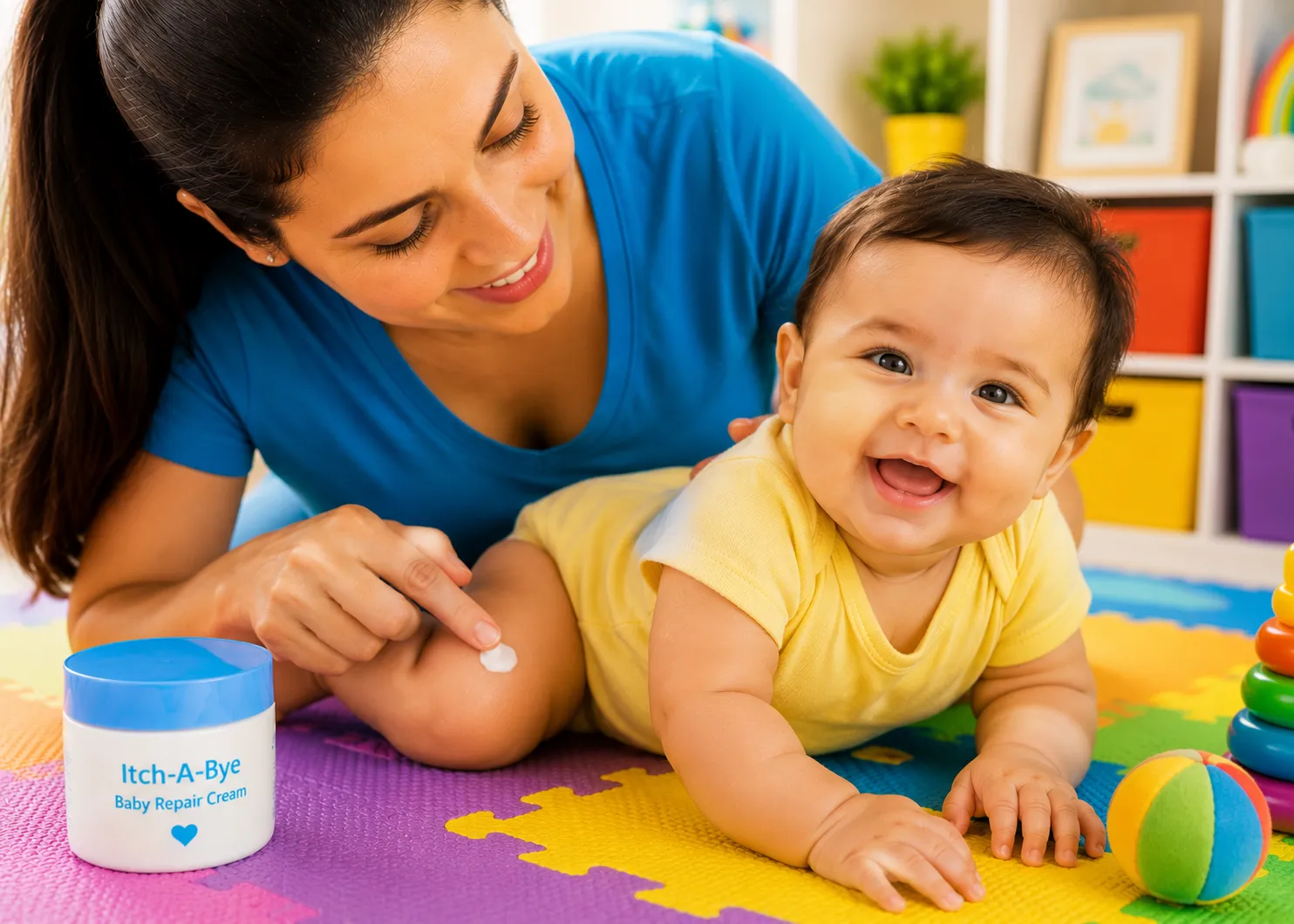
By three months old, your baby may look very different from the tiny newborn you first brought home. They are more alert, moving more, smiling, turning their head towards familiar voices and spending much more time interacting with the world around them. Their skin has also been adapting for three months, but that does not mean dryness should have disappeared completely.
In fact, this is an age when many parents begin noticing particular patterns. Perhaps the cheeks are becoming rough while the rest of the body remains soft, the legs feel dry after bathing, or patches that improve with moisturiser seem to return several days later. You may also notice that heat, clothing, dribbling or a particular skincare product appears to make things worse.
Some dry skin in a 3-month-old baby can still be relatively simple to manage. However, repeated or increasingly uncomfortable dryness deserves a little more attention than the temporary peeling commonly seen immediately after birth. By looking at where the dryness appears, what happens before it worsens and how the skin behaves over time, parents can often begin identifying the pressures affecting their baby’s developing skin barrier.
The Short Answer: Dry Skin at Three Months Is Common, but Look for the Pattern
A three-month-old baby can develop dry skin for many ordinary reasons. Bathing, cleansers, dry air, temperature, friction, clothing and repeated wetting and drying can all influence the amount of moisture retained within the outer layers of the skin. Some babies also appear naturally more prone to dryness than others.
The important question is whether the dryness is mild and occasional or whether it keeps returning and becoming increasingly red, rough or uncomfortable. A small dry patch that improves quickly may require little more than gentle moisturising and observation. Dryness that repeatedly returns to the same areas can tell you that the barrier is experiencing ongoing pressure.
This does not automatically mean eczema or another skin condition. It simply means the skin is giving you useful information. At three months, learning to recognise those patterns can help you create a routine that supports your baby’s skin without overwhelming it.
Three-Month-Old Skin Is Not Newborn Skin Anymore
During the first days after birth, peeling and flaking are often part of the enormous transition from the fluid environment of the womb to the outside world. By three months old, that initial post-birth shedding should no longer explain most persistent dryness. The skin is now responding more directly to everyday life outside the womb.
That everyday life includes bathing, clothing, bedding, indoor air, heat, saliva, milk, cleansers, wipes and whatever skincare products are being used. Your baby is also moving more, which means friction against clothing and bedding becomes increasingly relevant. The face may spend more time rubbing against your shoulder, a play mat or the cot sheet.
The skin barrier is still developing throughout infancy, so these pressures can affect babies differently. One three-month-old may tolerate them without visible difficulty, while another develops rough cheeks or dry legs. That difference is one reason rigid skincare rules rarely work for every baby.
Cause #1: The Developing Skin Barrier
Your baby’s skin barrier is one of the body’s most important protective systems. It helps keep water inside while helping defend against irritants, microbes and environmental exposures. At three months old, this barrier is functioning every moment of the day, but it is still developing and adapting.
When the outer barrier does not retain moisture efficiently enough, water escapes more readily from the skin. The surface can then begin feeling rough, tight or flaky. This is one of the basic mechanisms behind dry skin.
Some babies appear naturally more vulnerable to this moisture loss. Their skin may therefore need more consistent support even when their siblings or other babies seem to require almost nothing. Individual barrier differences matter.
Cause #2: Bathing
Bath time can be lovely at three months. Babies are becoming more expressive, and many begin kicking, splashing and enjoying the experience. Unfortunately, a bath that is fun for the baby can still leave dry skin feeling noticeably tighter afterwards.
Water repeatedly hydrates the surface and is then followed by evaporation as the skin dries. Hot water can make this effect more pronounced, while long bathing can remove some of the surface lipids involved in retaining moisture. Add cleanser to the process and the effect can become more noticeable in babies already prone to dryness.
Keep the water comfortably warm rather than hot and avoid unnecessarily long baths when dryness is an issue. Gently pat the skin dry afterwards rather than rubbing vigorously with a towel. If your baby’s skin consistently looks worse after bathing, treat that as useful information about the routine.
Cause #3: Using Too Much Cleanser
Babies do not usually need their entire bodies heavily cleansed every time they enter the bath. Yet it is easy to squeeze baby wash into the water and use it everywhere because that feels like the normal way to bathe. For a baby with dry skin, that may be more cleansing than the barrier needs.
Cleansers are designed to remove substances from the skin, including oils and dirt. That is useful when cleaning is actually required, but repeated removal of surface lipids can contribute to dryness in susceptible skin. The fact that a cleanser is marketed for babies does not mean every baby will respond to it in exactly the same way.
Use cleanser where it is needed rather than automatically covering the whole body. If dryness improves after reducing cleanser use, you have learned something useful about your baby’s skin. Skincare becomes much easier when you respond to patterns rather than routines inherited from product labels.
Cause #4: Dry Indoor Air
Your baby’s skin is continuously exchanging moisture with the surrounding environment. When indoor air is particularly dry, water can leave the skin more readily. Air conditioning and heating can both contribute to lower indoor humidity depending on the environment.
This can explain why a baby’s skin seems comfortable during one period and becomes noticeably drier several weeks later even though the skincare products have not changed. Parents sometimes assume the moisturiser has suddenly stopped working when the environment around the skin has actually changed.
You do not need to obsessively measure the humidity of every room. Simply include the surrounding air when thinking about recurring dryness. If the weather, heating or air conditioning changes at the same time as your baby’s skin, that connection may be worth considering.
Cause #5: Heat and Overheating
A three-month-old baby cannot tell you, “I’m too warm,” so parents naturally rely on clothing and room temperature to keep them comfortable. The understandable fear of a baby becoming cold can sometimes result in too many layers. Warmth then combines with sweat, moisture and friction against the skin.
This can be particularly troublesome around the neck, chest, back and skin folds. Skin that began as slightly dry can become increasingly irritated when heat and sweat are added. Applying heavier layers of moisturiser without addressing the warmth may not solve the underlying problem.
Comfortable temperature therefore belongs in any discussion about baby skincare. Sometimes removing an unnecessary layer of clothing can be part of caring for the skin. Not every useful skincare intervention comes from a jar.
Cause #6: Clothing and Friction
By three months old, babies are moving much more than they did as newborns. Legs kick, arms wave, heads turn from side to side and bodies wriggle against clothing and bedding. All of this creates friction.
Most healthy skin handles that friction without difficulty. When the barrier is already dry, however, repeated rubbing can make particular areas feel rougher or more irritated. Ankles, wrists, elbows and areas underneath seams can sometimes reveal these patterns.
Soft, breathable clothing can help reduce unnecessary pressure. Clothing should also fit comfortably rather than constantly rubbing tightly against the same areas. If a patch of dryness follows the shape of a seam or elastic band, the location itself may be giving you a clue.
Cause #7: Laundry Products
Clothing does not arrive against your baby’s skin completely neutral. It has been washed in detergent and may also have been exposed to fragrance, fabric softener or other laundry products. Most babies tolerate ordinary laundry routines perfectly well, but some dry or eczema-prone skin may be less forgiving.
If a baby’s dryness suddenly becomes worse after changing detergent or introducing a strongly fragranced laundry product, consider that change as one possible factor. This does not mean detergent is responsible for every dry patch. The goal is simply to notice timing and patterns.
Repeated exposure matters because clothing and bedding remain against the skin for hours. When investigating persistent dryness, the products touching the skin indirectly deserve consideration alongside the creams applied directly to it.
Cause #8: Dribbling and Saliva
Around three months, many parents notice a dramatic increase in dribbling. Babies begin producing more saliva and exploring their mouths, while swallowing coordination is still developing. The result can be a constantly wet chin, mouth area or upper chest.
Repeated wetting followed by drying can place pressure on the skin. Saliva may sit in neck folds, while wiping it away dozens of times a day adds friction. The result can be rough, red or dry-looking skin around the mouth and chin.
Gently pat saliva away rather than repeatedly rubbing the area. Change damp bibs when necessary and pay attention to moisture collecting in the neck folds. Sometimes reducing constant wetness and friction makes as much difference as adding moisturiser.
Cause #9: Milk Around the Face and Neck
Whether your baby is breastfed, formula-fed or combination-fed, milk frequently ends up somewhere other than the mouth. Small amounts can collect around the cheeks, chin and neck, particularly during feeds or after posseting. When milk remains against the skin, it creates another cycle of moisture and drying.
Parents may then repeatedly wipe the area, creating friction on skin that is already becoming rough. This can produce a frustrating cycle in which cleaning contributes to irritation while leaving the area wet contributes to irritation too. Gentle technique becomes important.
Clean away milk when necessary but avoid vigorous rubbing. Pat the skin dry, particularly in folds, and provide moisturising support if the surrounding skin is genuinely dry. The aim is clean, comfortable skin rather than perfectly polished skin after every feed.
Cause #10: Fragranced Skincare Products
Baby lotions and washes are often heavily associated with familiar “baby” fragrances. For many families, that smell is almost part of the experience of having a newborn. But fragrance does not perform an essential skin-barrier function.
Fragrance ingredients can be irritating or sensitising for susceptible individuals, particularly when the barrier is already compromised. That does not mean every fragranced product will cause a reaction in every baby. It does mean fragrance is an exposure that can often be removed without taking anything essential away from the skincare routine.
If your three-month-old has persistent dry or irritated skin, simplifying fragranced products may be worthwhile. A baby’s skin does not need perfume to be healthy. Sometimes the simpler routine provides the clearest information.
Cause #11: Too Many Skincare Products
Parents often add products because they are trying to help. One lotion does not seem to solve the dryness, so an oil is added. Then a different wash appears, followed by another cream recommended by a friend or social-media post.
Before long, the baby’s skin may be exposed to several formulations every day. If the dryness improves, you do not know what helped. If the skin becomes red, you do not know what caused the change.
A simple routine is easier for both the skin and the parent. Introduce products individually, allow time to observe the response and avoid changing everything at once. Skincare troubleshooting becomes far easier when there are fewer variables.
Cause #12: A Natural Tendency Towards Dry or Eczema-Prone Skin
Some babies simply appear to have a barrier that becomes dry more easily. Dryness may repeatedly return despite a generally gentle routine, and certain areas may become rough before others. This can sometimes be an early indication that the skin needs more consistent barrier support.
Persistent dryness does not automatically mean your baby has eczema. Eczema-prone skin generally develops a broader recurring pattern that may include redness, irritation, itching and inflammation as well as dryness. At three months old, these patterns may begin becoming easier for parents to recognise.
Instead of rushing to label the skin, observe it carefully. Where does the dryness appear? What makes it worse? Does it become red? Does your baby seem uncomfortable? Does it repeatedly return after improving? Those questions provide far more useful information than simply asking whether the skin “looks like eczema.”
Dry Cheeks at Three Months
Cheeks are among the most common places for dryness to appear at this age. They are exposed to air, saliva, milk, bedding, clothing and frequent physical contact. Your baby may also increasingly turn and rub their face against your shoulder or the surface underneath them.
Repeated wetting and drying can weaken the comfort of already vulnerable skin. Wiping the cheeks frequently can add friction, particularly if the skin is already rough. A small amount of an appropriate moisturiser can provide useful support when genuine dryness is present.
Also consider what is happening around the cheeks rather than focusing solely on the cream. Reduce unnecessary rubbing, gently remove saliva or milk and pay attention to anything repeatedly contacting the same area. Supporting the environment around the skin can be just as important as moisturising it.
Dry Skin Around the Mouth
The area around the mouth has a particularly difficult job at three months. Saliva is becoming more abundant, milk frequently touches the area, and hands are increasingly finding their way into the mouth. This creates almost constant wetting, drying and contact.
The result can be a rough ring or patches around the lips and chin. Parents sometimes respond by cleaning the area more aggressively because it appears irritated, but repeated wiping can add another layer of friction. Gentle patting is usually kinder to vulnerable skin.
If moisturiser is used around the mouth, apply only a small amount and keep it away from the lips and inside the mouth. The surrounding routine remains important. Keeping the area gently clean and reducing prolonged wetness can make a substantial difference.
Dry Skin Behind the Ears
Behind the ears is another area parents can easily overlook until the skin becomes noticeably rough. Milk, sweat and moisture can collect there, while folds and contact with bedding create a warm environment. The area can therefore become dry in one place and moist in another.
Gently inspect behind the ears during bathing or changing rather than scrubbing the area. Pat it dry carefully and watch for persistent redness, cracking, weeping or crusting. Simple dryness may benefit from moisturising, but moisture trapped in a fold needs a slightly different approach.
Location matters in skincare. The same product applied in the same amount everywhere does not necessarily make sense.
Dry Skin on the Legs
Dry legs are common because they are continuously covered by clothing and repeatedly exposed during bathing and changing. The lower legs may feel slightly rough even when there is little visible redness. Ankles can also remain vulnerable because of movement and clothing friction.
A light application of moisturiser can often make these areas feel considerably more comfortable. If the skin becomes dry again very quickly, however, look at the broader routine rather than simply applying increasingly large amounts. Bathing, indoor air and clothing may all be contributing.
Persistent dryness is often a combination of factors rather than one dramatic mistake. That is an important principle throughout baby skincare.
Should You Moisturise a 3-Month-Old Baby?
Yes, when the skin is genuinely dry, an appropriate moisturiser can provide useful barrier support. There is no need to wait until the skin becomes severely rough before moisturising. Early support can help reduce the repeated cycle of dryness and discomfort.
At the same time, moisturiser should be used thoughtfully. A small dry cheek does not require the same quantity as two dry legs, and comfortable skin does not necessarily need repeated heavy applications. Let the condition and size of the area guide you.
If your baby tends towards persistent dryness, regular moisturising may be more useful than waiting for the skin to become very rough before applying anything. Consistency can matter when the barrier repeatedly loses moisture.
When Is the Best Time to Moisturise?
After bathing can be a useful time because the skin has recently been exposed to water and may benefit from support as it dries. Gently pat away excess water rather than rubbing vigorously, then apply moisturiser to areas that need it. This can help reduce the dry, tight feeling some babies develop after a bath.
Moisturiser can also be applied at other times when the skin becomes noticeably dry. There is nothing magical about the clock. The goal is to support the skin when it needs support.
Observe how long the effect lasts. If dryness returns very quickly despite regular moisturising, consider whether something in the surrounding environment is continuously removing moisture or irritating the barrier.
How Much Cream Should You Use?
More cream does not automatically mean better moisturising. Start with enough to spread comfortably across the dry area in a light, even layer. The skin should feel moisturised rather than buried beneath a thick coating.
Large amounts underneath warm clothing can increase greasiness and occlusion. In skin folds, heavy products may also trap warmth and moisture. Appropriate coverage is therefore more useful than maximum coverage.
If you are unsure about quantity, our guide How Much Baby Cream Should You Apply? explains how to adjust the amount according to the size and condition of the area. The principle is simple: use enough to support the skin without assuming more is automatically better.
Should You Put Cream Everywhere or Only on the Dry Areas?
This depends on the pattern of your baby’s dryness. If there is one small rough patch on an otherwise comfortable body, targeted application may be perfectly reasonable. If dryness is widespread or repeatedly appears across several areas, broader moisturising support may make more sense.
The skin does not have to be treated identically everywhere. A dry cheek, moist neck fold and perfectly comfortable tummy are three different environments. Applying the same quantity of cream to all three simply because they belong to the same baby may not be necessary.
We explored this question in Should You Put Baby Cream Everywhere or Only on Dry Patches?. A skin-led routine is usually more useful than an automatic whole-body routine.
Why Does the Dryness Keep Coming Back?
Parents often become frustrated when moisturiser makes the skin beautifully soft and the dryness returns several hours or days later. It can feel as though the cream has failed. In reality, moisturiser supports the barrier but does not permanently remove every pressure acting on it.
Your baby’s skin continues losing water throughout the day. Clothing rubs against it, air moves around it, baths wash the surface, and products gradually wear away. If the underlying barrier is particularly prone to moisture loss, dryness can naturally return once that support diminishes.
This is why recurring dryness should make you look at the whole system rather than endlessly changing creams. We explore the issue more fully in Why Does Baby Dry Skin Return When You Stop Moisturising?.
The Skin Threshold Model Helps Put the Pieces Together
In Beyond the Skin Barrier, we use the Skin Threshold Model to explain why dry, itchy or irritated skin may appear after several pressures accumulate. Rather than searching for one villain, imagine the skin as having a threshold representing how much pressure it can comfortably manage.
Your three-month-old might already have a naturally dry barrier. Add warm weather, long baths, cleanser, fragranced products, saliva around the face and friction from clothing, and the total pressure increases. None of those factors needs to be catastrophic by itself.
One baby may remain below their threshold and show almost no visible reaction. Another baby’s threshold may be reached sooner, and the first visible sign might simply be persistent dryness. Add further pressure and the skin may become rougher, redder or increasingly uncomfortable.
This model changes the question. Instead of endlessly asking, “What one thing caused this?”, we can ask, “What pressures can we reasonably reduce?” That is often a much more productive way to care for vulnerable skin.
Dryness Is More Than a Cosmetic Issue
It is tempting to think of dry skin simply as something that does not look smooth enough. But moisture retention is one of the fundamental functions of the skin barrier. Persistent dryness can therefore be a useful sign that the outer barrier needs additional support.
This does not mean every dry patch is dangerous or predicts future eczema. Most babies experience some degree of dryness during infancy. The point is simply that comfort and barrier function matter more than cosmetic appearance.
A baby’s skin does not need to look airbrushed. It needs to retain moisture, remain comfortable and perform its protective functions as effectively as possible.
Our Approach: Repair, Nourish and Defend
Our approach to supporting dry, itchy and eczema-prone baby skin is built around three connected principles: Repair, Nourish and Defend. We developed this framework because vulnerable skin needs more than a temporary coating of moisture. The barrier itself performs several jobs at once.
Repair means supporting the outer barrier so that it can retain moisture more effectively and continue performing its protective role. When that barrier is struggling, water can escape more readily and the skin can become dry again soon after moisturising.
Nourish means more than simply adding water. It means providing hydration alongside carefully selected ingredients with soothing, conditioning, antioxidant and skin-supportive properties, helping create the conditions and resources vulnerable skin needs to recover and function.
Defend recognises another crucial function of healthy skin. The barrier helps protect the body against bacteria, fungus, other microbes and environmental pressures. Repair, Nourish and Defend therefore work together rather than functioning as three separate ideas.
Why Itch-A-Bye Was Built Around Ingredient Synergy
Itch-A-Bye Baby Repair Cream was developed specifically for dry, itchy and eczema-prone skin. Rather than placing one fashionable ingredient at the centre of the formula, we selected ingredients with different complementary functions. The intention is to support vulnerable skin as a system.
Glycerin and Hyaluronic Acid contribute to hydration by helping attract and retain moisture within the outer layers of the skin. Emollient components help soften and condition rough areas. These are important parts of the formulation, but they are not the whole meaning of Nourish.
The formulation also combines Black Seed Oil, MSM, Allantoin, Vitamin C, Vitamin E and specially selected plant botanical extracts. These ingredients contribute different soothing, conditioning, antioxidant and skin-supportive properties. Together, they create a formulation designed to do more than temporarily make dry skin feel slippery.
Black Seed Oil: A Cornerstone Ingredient
Black Seed Oil from Nigella sativa is one of the cornerstone ingredients in Itch-A-Bye. It contains naturally occurring compounds including thymoquinone that have attracted scientific interest for anti-inflammatory, antioxidant and antimicrobial properties. The oil also provides useful emollient properties that help condition dry skin.
This gives Black Seed Oil relevance across several parts of our Repair, Nourish and Defend framework. Its conditioning characteristics complement the hydration system, while its wider properties add another dimension to the formulation. It is not included merely because botanical oils are fashionable.
We believe ingredients should earn their place. Their value comes from what they contribute to the complete formulation and how they complement the ingredients around them.
MSM and Allantoin Play Different Roles
MSM contributes another layer of support through its soothing and antioxidant potential. Dry skin does not exist in isolation from the environment around it, and supporting a calmer skin environment can complement hydration and barrier care. MSM therefore works alongside rather than instead of the moisturising ingredients.
Allantoin contributes soothing, conditioning and skin-supportive properties of its own. It is widely used in skincare designed for rough, uncomfortable or compromised-feeling skin. Within Itch-A-Bye, it works alongside Black Seed Oil, Glycerin, Hyaluronic Acid and the wider ingredient system.
No single ingredient is expected to do everything. That is the point of formulation synergy. Different ingredients have different jobs, and together they can provide broader support than relying on one ingredient alone.
The Botanical Extracts Are There for a Reason
The Itch-A-Bye formulation also includes a carefully selected botanical complex containing ingredients such as Centella asiatica, Chamomile, Licorice, Scutellaria baicalensis, Green Tea, Rosemary, Polygonum cuspidatum and Ginger. These plants contain naturally occurring compounds associated with soothing, antioxidant and conditioning properties. Several have also attracted scientific interest for their anti-inflammatory activity.
They are not included simply so that we can describe the cream as botanical. Their properties complement Black Seed Oil, MSM, Allantoin and the hydration system. This creates a formulation in which different ingredients contribute to different parts of the overall strategy.
The useful question is therefore not, “Which single ingredient fixes dry skin?” A better question is, “How can complementary ingredients work together to support vulnerable skin?”
When Itch-A-Bye May Be Useful at Three Months
If your baby’s skin is comfortable and only occasionally develops a tiny dry patch, you do not need to use a product simply because it exists. Skincare should respond to the skin. Purposeful care is better than automatic care.
When the skin is genuinely dry, rough, itchy or showing a recurring tendency towards dryness, Itch-A-Bye Baby Repair Cream can provide broader moisturising and skin-supportive care. Start with a small amount and observe how the skin responds.
If you are introducing Itch-A-Bye for the first time, avoid simultaneously introducing several other new products. Keeping the rest of the routine stable makes the response easier to understand. This is particularly useful for babies whose skin already seems reactive.
What If the Skin Becomes Red?
Dryness accompanied by increasing redness deserves closer attention than dryness alone. The barrier may be experiencing irritation from heat, friction, saliva, cleansers, skincare products or another environmental pressure. Simply applying more moisturiser without addressing those factors may not solve the problem.
Look carefully at where the redness appears. A red chin underneath constant saliva tells a different story from red ankles underneath tight clothing or widespread redness following a new product. Location and timing can provide important clues.
If the redness continues worsening, becomes painful or is accompanied by other concerning changes, appropriate assessment becomes important. The goal is not to diagnose everything yourself but to recognise when ordinary home care is no longer enough.
What If Your Baby Starts Rubbing or Scratching?
At three months, babies are gaining more control over their hands, but they still make many movements that have nothing to do with itching. Face rubbing can happen when babies are tired, hungry or simply exploring movement. One episode of rubbing therefore does not automatically mean itchy skin.
A repeated pattern alongside dry, rough or red skin is more informative. If your baby consistently rubs the same area and the skin there is becoming increasingly irritated, it is reasonable to pay closer attention. Reducing dryness and environmental pressure may help interrupt the cycle before rubbing creates more irritation.
As babies become more coordinated, their behaviour can become another useful source of information about how the skin feels. Look at behaviour and appearance together rather than either one in isolation.
When Dry Skin Needs Closer Attention
Ordinary dry skin should not normally progress into deep cracks, bleeding, blistering, significant swelling or extensive weeping. Yellow crusting, rapidly spreading redness or obvious pain are also changes that deserve closer attention. These patterns move beyond the mild roughness many babies experience.
Your baby’s overall condition is equally important. Significant skin changes alongside fever, unusual lethargy, poor feeding or a baby who appears generally unwell should not simply be treated by trying another moisturiser. Appropriate assessment matters when the skin is only one part of a broader change.
Knowing these signs should not make every dry patch frightening. Most dryness is far less dramatic. Understanding what falls outside the ordinary range actually makes it easier to remain calm about the common changes that can be managed gently.
A Simple Care Routine for a 3-Month-Old With Dry Skin
Keep baths comfortably warm and reasonably short. Use cleanser only where needed, avoid vigorous scrubbing and gently pat rather than rub the skin dry. If dryness is present, apply an appropriate moisturiser in a light, even layer to the areas that need support.
Keep clothing soft and breathable and avoid unnecessary overheating. Gently manage saliva and milk around the mouth, cheeks and neck rather than repeatedly rubbing the skin. Pay attention to whether a particular product, fabric or environmental change repeatedly coincides with worsening dryness.
Most importantly, avoid changing five things at once. Make thoughtful adjustments and observe the skin. A simple routine gives you far more useful information than a bathroom shelf full of products.
Frequently Asked Questions
Is dry skin normal in a 3-month-old baby?
Yes, mild dry skin can occur at three months and does not automatically mean something is wrong. Bathing, dry air, clothing, friction, saliva and the continuing development of the skin barrier can all contribute. Some babies are also naturally more prone to dryness than others.
The pattern is more important than the existence of one dry patch. Mild roughness that improves with gentle care is very different from dryness that repeatedly becomes red, cracked, itchy or inflamed. Watch how the skin behaves over time.
Why are my 3-month-old baby’s cheeks dry and rough?
The cheeks are continuously exposed to air, saliva, milk, bedding and physical contact. Babies at this age may also rub their faces more frequently against clothing, your shoulder or bedding. Repeated wetting, drying and friction can therefore make the cheeks particularly vulnerable.
Gently remove milk or saliva and avoid aggressive wiping. A small amount of appropriate moisturiser can help when the skin is genuinely dry. If redness or irritation keeps increasing, look for other contributing pressures as well.
Why is my baby’s skin dry after a bath?
Water exposure followed by evaporation can leave vulnerable skin feeling drier. Hot water, long baths and repeated cleanser use may increase the effect by removing some of the surface lipids involved in moisture retention. Babies whose barriers already tend towards dryness may notice this more.
Keep baths shorter and comfortably warm rather than hot. Reduce unnecessary cleanser use and moisturise afterwards when needed. If the skin improves after making these changes, the bathing routine was probably contributing.
Should I moisturise my 3-month-old every day?
A baby with consistently dry skin may benefit from regular moisturising, while a baby whose skin remains comfortable may need much less. There is no requirement to cover every three-month-old from head to toe every day. The skin should guide the routine.
If dryness returns quickly despite moisturising, consider bathing, cleansers, indoor air, heat and friction as well. Moisturiser is only one part of the environment affecting the barrier. Reducing other pressures can sometimes reduce how frequently cream is needed.
Is dry skin at three months eczema?
Not necessarily. Dry skin can occur without eczema, and many ordinary environmental factors can contribute. Eczema-prone skin tends to show a recurring pattern that may involve persistent dryness together with redness, inflammation and itching.
Avoid trying to diagnose your baby from one rough patch. Observe where the dryness appears, whether it repeatedly returns and whether your baby seems uncomfortable. Persistent or worsening patterns can then be assessed appropriately.
Can saliva cause dry skin on my baby’s face?
Repeated exposure to saliva can contribute to irritation around the mouth, chin, cheeks and neck. The skin becomes wet and then dries repeatedly, while frequent wiping adds friction. At around three months, increased dribbling can make this particularly noticeable.
Gently pat saliva away and change wet bibs when necessary. Keep neck folds from remaining persistently damp and moisturise genuinely dry surrounding skin when appropriate. Reducing moisture and friction can be just as important as adding cream.
Can I put moisturiser on my baby’s face?
An appropriate moisturiser can be applied carefully to genuinely dry facial skin. Use a small amount and keep it away from the eyes, nostrils and inside the mouth. The cheeks generally require far less product than larger areas of the body.
Also manage whatever is repeatedly contacting the face. Saliva, milk, bedding and wiping can continue placing pressure on the skin even after moisturiser is applied. The best results usually come from supporting both the skin and its environment.
How much moisturiser should I use?
Use enough to create a light, even layer over the dry area. You do not need to leave a thick visible coating for moisturiser to be useful. The amount should reflect the size of the area rather than your baby’s age.
If you cannot spread the product comfortably, add a little more. If large amounts remain sitting heavily on the surface, you may be using more than necessary. Appropriate coverage is the goal.
Why does my baby’s dry skin keep coming back?
Moisturiser provides support, but the skin continues interacting with the environment after application. Water continues leaving the surface, clothing creates friction, baths remove oils and dry air can increase evaporation. If your baby’s barrier naturally tends towards dryness, roughness may therefore return.
This does not necessarily mean the moisturiser has failed. It may mean the skin needs ongoing support while other contributing pressures are reduced. Recurring dryness should encourage you to look at the whole routine.
When should I worry about dry skin in my 3-month-old?
Pay closer attention if dryness becomes deeply cracked, bleeding, blistered, significantly swollen, weeping, crusted, rapidly spreading or obviously painful. Persistent worsening redness also deserves more attention than simple roughness. These patterns are different from ordinary mild dryness.
Your baby’s general wellbeing matters too. Significant skin changes together with fever, unusual lethargy, feeding difficulty or a baby who appears unwell should be appropriately assessed. Skincare products should not be used as a substitute for that assessment.
At Three Months, Patterns Begin to Matter
The first weeks of your baby’s life are largely about transition. By three months, you are beginning to see something different: patterns. You may notice which areas become dry, what seems to make them worse and what helps them become comfortable again.
Those patterns are valuable. They allow you to move away from randomly trying products and towards understanding your baby’s particular skin. Maybe shorter baths make a difference, perhaps saliva is driving the rough cheeks, or perhaps your baby’s barrier simply benefits from more consistent moisturising support.
For parents who want to understand why dry, itchy and eczema-prone skin can develop from several interacting pressures rather than one simple cause, Beyond the Skin Barrier explores the bigger picture. It looks at the developing skin barrier, microbes, immune signalling, environmental pressures, early-life influences, the gut-skin relationship and our Skin Threshold Model.
And when your baby’s skin needs topical support, Itch-A-Bye Baby Repair Cream brings together our Repair, Nourish and Defend approach with Black Seed Oil, MSM, Allantoin, Hyaluronic Acid, Glycerin, antioxidant vitamins and carefully selected plant botanicals.
Because caring for dry skin at three months is not about trying to make every centimetre of your baby look perfectly smooth. It is about understanding what their developing skin is telling you, reducing unnecessary pressure and giving the barrier the support it needs to become stronger and more comfortable.