
Dry Skin Around Baby’s Eyes: What Parents Should Know
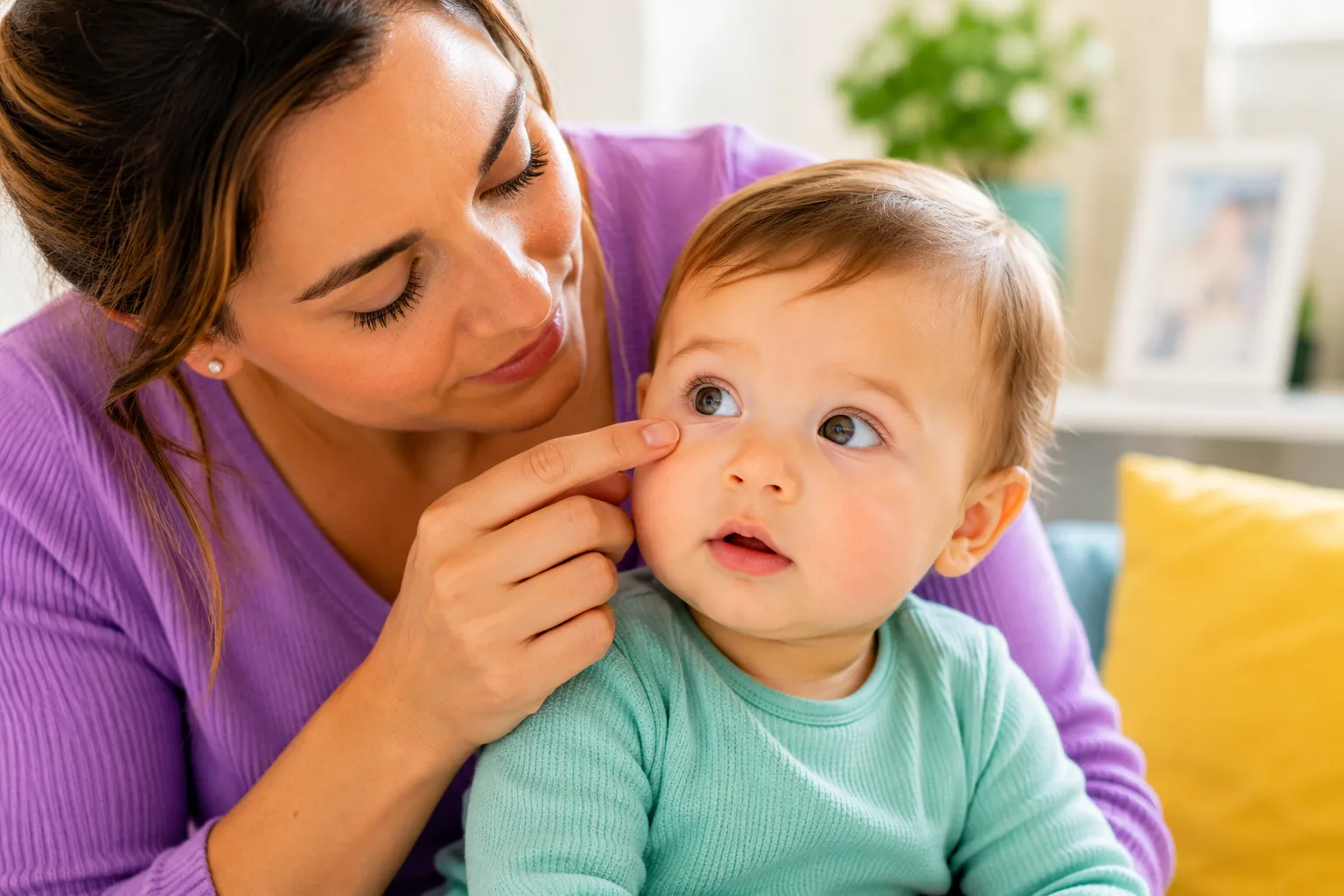
Dry skin around a baby’s eyes can make parents understandably nervous. The skin may look slightly rough one morning, then become flaky, pink or noticeably drier over the next few days. Because the eyes are such a delicate area, many parents are unsure whether they should moisturise the skin, leave it alone or have it checked by a doctor. The difficulty is that dryness around the eyes can have several possible explanations, ranging from ordinary dry skin and environmental exposure to rubbing, irritation or an underlying skin condition. The appearance of the skin is important, but so are the location, your baby’s behaviour and what has recently been touching the area. Knowing what to observe can help you respond gently without experimenting unnecessarily close to your baby’s eyes.
The first distinction to make is between dry skin around the eye and a problem involving the eye itself. Roughness on the surrounding cheek or skin beneath the eyebrow is different from a red, swollen or painful eye. Discharge, significant eyelid swelling, light sensitivity, an eye that appears injured or a baby who seems unable to open the eye comfortably deserves appropriate medical attention. This article focuses primarily on dry, rough or mildly irritated skin surrounding the eyes rather than diagnosing eye disease. When you are uncertain, the location alone is a good reason to be cautious.
Why Is the Skin Around a Baby’s Eyes So Delicate?
The skin surrounding the eyes is naturally thin and receives a great deal of movement throughout the day. Babies blink, cry, rub their faces, press against bedding and touch their eyes with their hands. Tears can repeatedly wet the area, while washing and wiping can add further contact. Cold air, wind, indoor heating and low humidity can affect exposed facial skin as well. When several of these pressures occur together, the area can begin to feel rough or look flaky.
Babies who already tend to have dry skin may show dryness around several facial areas at the same time. You might notice rough cheeks, a dry forehead or patches around the mouth as well as dryness near the eyes. That wider distribution can provide useful context because it suggests the eye area may be part of a broader dry skin pattern rather than an isolated event. Our guide Why Are My Baby’s Cheeks Red, Dry and Rough? explores many of the environmental pressures affecting exposed facial skin. Always look at the whole face before focusing exclusively on one small patch.
What Does Simple Dry Skin Around the Eyes Look Like?
Ordinary dryness may make the surrounding skin look slightly dull, rough or flaky. Fine scaling can sometimes be more obvious in certain lighting, particularly around the outer eye or beneath the eyebrow. The skin may feel different from the surrounding cheek even when there is very little redness. In some babies, the dryness appears alongside similarly rough areas elsewhere on the face or body. Mild dryness also tends not to involve significant swelling or obvious changes to the eye itself.
However, appearance alone cannot reliably identify the cause. Eczema prone skin, irritation and other conditions can also produce dryness or scaling. That is why parents should avoid trying to diagnose a baby from photographs or a single visible feature. Instead, consider how long the problem has been present, whether it is spreading, whether your baby is rubbing it and whether anything recently changed. Patterns often tell you more than one snapshot.
Why Might a Baby Rub Around Their Eyes?
Eye rubbing is extremely common in babies and does not automatically indicate a skin problem. Babies rub their eyes when tired, while settling to sleep and sometimes simply because they are exploring their faces. However, dry or itchy skin can give them another reason to rub. Once rubbing begins, the physical friction may make already vulnerable skin look redder or rougher.
This can create a cycle that is difficult to interpret. Parents see redness and assume the baby is rubbing because the skin is irritated, when sometimes rubbing may have contributed to the redness in the first place. Watch when your baby rubs rather than simply noting that they do it. If rubbing occurs almost exclusively before sleep, tiredness may be important; if it happens repeatedly alongside visible dry patches throughout the day, skin discomfort deserves more attention. Our related article Why Does My Baby Rub Their Face Into the Mattress? looks more closely at the overlap between tiredness, self soothing, friction and itchy skin.
Can Tears Make the Skin Around a Baby’s Eyes Dry?
Tears repeatedly wet the skin immediately surrounding the eyes and can sometimes contribute to irritation when that area is constantly damp and wiped. A baby who has been crying frequently may therefore develop a different skin environment around the eyes than usual. Parents naturally wipe tears away, adding another repeated physical contact. As we have seen elsewhere on the face, repeated wetting and wiping can matter even though the substance involved is mostly moisture. This does not mean normal tears are harmful.
Observe whether the dryness follows areas where tears repeatedly travel. If the skin beneath one eye is consistently affected while the rest of the face is comfortable, that pattern may be worth mentioning to your baby’s healthcare professional, particularly if there is persistent watering or discharge. Avoid assuming that recurring watering is merely a skincare issue. The eye itself may need to be assessed.
Could Face Washing Be Contributing?
Babies do not usually need aggressive facial cleansing. Repeated washing, hot water and frequent use of cleansers can potentially make already dry skin feel less comfortable. The eye area deserves particular care because products used elsewhere on the face may migrate toward the eye. Even products described as gentle should be used according to their directions.
Lukewarm rather than hot water is generally the sensible choice when washing a baby’s face. Avoid scrubbing flaky skin away, because mechanically removing visible flakes can further irritate the surface. Pat gently instead of rubbing with a towel. Our guide How to Bathe a Child With Dry, Itchy or Eczema Prone Skin explains how temperature, cleansing, bathing frequency and drying can work together.
Could Shampoo Be Reaching the Eye Area?
Shampoo does not always remain on the scalp. During rinsing, water containing shampoo can travel across the forehead, eyebrows, temples and sides of the face. A baby may then rub their eyes with wet hands, moving residue even farther. If dryness suddenly appears after changing shampoo or another bath product, the timing is worth considering. That does not prove the product caused the problem, but it gives you a useful variable to investigate.
Pay attention to how you rinse your baby’s hair. Try to minimise unnecessary product flowing across already irritated facial skin and rinse according to the product instructions. Avoid introducing several new bath and skincare products simultaneously because doing so makes reactions much harder to interpret. Sometimes understanding a recurring patch requires reconstructing what touched it during the previous few hours.
Could Baby Wipes Irritate the Skin Around the Eyes?
Using ordinary baby wipes around the eyes deserves caution. Products intended for nappy changes or general skin cleansing are not automatically intended for use directly around the eyes. Ingredients and directions vary between products, so parents should read the label rather than assuming all baby products can be used everywhere. Even apart from formulation, repeated wiping creates friction on delicate skin.
If something needs to be cleaned from the eye area, use an approach appropriate to what you are removing and follow healthcare advice where necessary. Do not scrub at dried material around an irritated eye. Persistent discharge or crusting associated with the eye itself is different from ordinary dry facial skin and may require assessment. The closer a problem is to the eye, the less useful skincare experimentation becomes.
Could It Be Eczema Around the Eyes?
Babies with eczema prone skin can develop dry or inflamed areas on the face, including around the eyes. However, parents should not assume that every dry patch in this location is eczema. The wider pattern matters: recurring itchy patches elsewhere, a history of flares and dryness affecting multiple areas may make eczema more relevant. Conversely, a single patch that appeared after repeated rubbing or a new exposure may tell a different story.
Our cornerstone guide Baby Dry Skin vs Eczema: How Can Parents Tell the Difference? explains why recurrence, inflammation and itching can provide useful context. Even then, diagnosis should not be made from a checklist alone. Skin conditions frequently overlap in appearance, particularly on a baby’s face. If the eye area remains inflamed or repeatedly returns, professional assessment is appropriate.
Could It Be Contact Dermatitis?
Contact dermatitis becomes another consideration when something contacting the skin appears to precede the irritation. Possible exposures around the eyes include shampoo, cleanser, moisturiser, sunscreen, wipes and products transferred from a caregiver’s hands. Even laundry products may deserve consideration when a baby repeatedly presses their face against washed bedding or clothing. The challenge is determining whether the relationship is genuine or simply coincidental.
Our guide Baby Eczema vs Contact Dermatitis: What’s the Difference? explores these overlapping patterns in greater detail. If you suspect a recently introduced cosmetic or skincare product, stop applying it around the affected area and review its directions. Avoid replacing it immediately with several other unfamiliar products. Reducing variables can make the skin’s response easier to understand.
What If the Skin Is Dry Near the Inner Corner of the Eye?
Dryness close to the inner corner deserves particular attention because tears normally drain through structures in this region. Some babies experience persistent watering or discharge associated with tear drainage problems, and the surrounding skin may then remain damp. That is not something parents should attempt to diagnose solely from the appearance of dry skin. Persistent watering, discharge or recurring irritation around one eye is worth discussing with your baby’s healthcare professional.
Gently observe whether one side behaves differently from the other. Does one eye water continuously while the other does not? Is there repeated crusting after sleep? Does the surrounding skin become irritated because it is constantly wet? Those observations provide useful information for a clinician and are more valuable than repeatedly applying different skincare products.
Could Cold Weather and Wind Dry the Eye Area?
The face is one of the few parts of a baby’s body that often remains exposed outdoors. Cold air and wind can therefore affect the cheeks, temples and surrounding eye area even when the rest of the baby is warmly covered. Indoor heating may then expose the skin to relatively dry air once you return home. Babies already prone to dryness can show these environmental effects more noticeably.
Seasonal patterns are useful clues. If rough cheeks and dryness around the eyes appear mainly during colder months, the environment may be contributing. The same baby may have almost completely comfortable facial skin during warmer, more humid weather. Environmental contribution does not exclude eczema or other causes, but recognising it can prevent unnecessary product switching.
Can Hot Weather Affect the Area Too?
Heat creates different pressures. Babies may sweat around the forehead, hairline and face, and they may rub more when warm or uncomfortable. Sweat itself can sting already irritated or scratched skin. Heat can also make itching feel more noticeable in some children, increasing the likelihood of rubbing.
Our guide Why Does My Baby Itch More When Hot? explores this pattern more fully. Avoid unnecessary overheating and observe whether your baby’s skin changes with temperature. Clothing, bedding and room conditions may be relevant even though none of them directly touches the dry patch around the eye.
Is Dry Skin Around Both Eyes Different From One Eye?
The distribution can provide clues, although it cannot establish a diagnosis. Similar dryness around both eyes may fit with a broader environmental or dry skin pattern, particularly when the cheeks and forehead are affected too. A persistent problem concentrated around one eye may make local exposures, repeated rubbing or watering more relevant. Neither pattern proves a particular cause.
Compare both sides under similar lighting rather than relying on memory. Also look at photographs taken several days apart if the problem keeps returning. If one eye is persistently watering, swollen or producing discharge, mention that specifically when seeking medical advice. Asymmetry can be useful information even when parents cannot explain it.
Should You Moisturise Dry Skin Around a Baby’s Eyes?
This is where caution matters. A moisturiser that is suitable for a baby’s body is not automatically intended for application immediately beside the eyes. Products can migrate when babies rub their faces, and ingredients that are comfortable on ordinary skin may sting if they enter the eye. Always follow the product’s instructions and warnings regarding facial and eye area use.
If your baby’s healthcare professional recommends moisturising the area, apply the advised product carefully and exactly as directed. Do not place cosmetic products inside the eye or along the eyelid margin unless they are specifically intended or prescribed for that purpose. If a product accidentally enters the eye, follow its label instructions for eye exposure. For general dry skin away from the immediate eye area, our guide How to Moisturise Your Child’s Dry Skin Properly explains broader moisturising principles.
Be Particularly Careful With Eyelids
Dryness around the eyes and dryness on the eyelids overlap, but eyelid involvement deserves extra attention. The product you would comfortably apply to a baby’s arm may not be appropriate immediately beside the eyelashes. Eyelid redness can also occur for reasons other than ordinary dry skin. Significant swelling or changes involving the eye itself should not be managed simply by applying moisturiser.
Our next guide, Baby’s Eyelids Are Dry and Red: When Should You Worry?, examines eyelid specific concerns in much greater detail. For now, the important principle is to distinguish the surrounding face from the eyelid itself. The closer you get to the eye, the more conservative you should be about experimenting with products.
Avoid the Temptation to Try Several Products
Parents naturally want to fix visible facial dryness quickly. This can lead to applying a new moisturiser in the morning, an oil in the afternoon and a different balm before bed. If the skin improves, you do not know which product helped. If it becomes redder, identifying the culprit becomes equally difficult.
The eye area is a particularly poor place for trial and error. Keep the routine simple and introduce changes only when appropriate. Read labels carefully and respect warnings about avoiding contact with eyes. When symptoms are persistent enough that you feel you need to keep experimenting, that is often a good point to seek professional advice instead.
Watch Your Baby’s Hands
A baby’s hands travel everywhere. They touch food, saliva, toys, bedding, hair and skincare products before returning to the face. During feeding or teething, wet fingers may repeatedly rub around the eyes. Older babies may also rub their faces when tired or frustrated.
Keep nails appropriately trimmed to reduce accidental scratching. Our guide Why Does My Baby Scratch Their Head? explores how scratching behaviour can sometimes provide clues about dryness and irritation elsewhere on the face and scalp. The important point is that the thing irritating the eye area may not have been applied there directly. Hands can transfer exposures from one part of the baby’s environment to another.
Look at What Touches Your Baby’s Face During Sleep
Bedding remains against a baby’s face for much longer than most skincare products do. A baby may rub their cheek or eye area against the sheet while settling, waking or moving during sleep. Saliva and tears can also make sections of bedding damp. Detergent residue, fabric texture, warmth and friction therefore become reasonable things to consider when irritation repeatedly looks worse after sleep.
This does not mean you should start changing everything in the nursery. First observe whether there is actually a pattern. Does one side of the face repeatedly become rougher? Is your baby rubbing their face heavily before sleep? Does the dryness look worse in the morning than it did the previous evening? Good observation should come before intervention.
Where Itch A Bye Fits Into a Dry Skin Routine
Itch A Bye Baby Repair Cream was developed for babies and young children with dry, itchy and eczema prone skin, using our Skin Trifecta approach of Repair, Nourish and Defend. However, the eye area requires particular caution with any skincare product. Always follow the product directions and warnings and avoid direct contact with the eyes. A product intended to support dry skin should never be used as a substitute for assessing an eye problem or unexplained persistent irritation.
This distinction is important throughout our educational series. Skincare can support dry skin, but it cannot tell you why an eye is watering, diagnose eczema or determine whether inflammation is caused by contact dermatitis. When dryness occurs safely away from the eye itself, an appropriate skincare routine may form part of the broader approach. When symptoms involve the eye or eyelid directly, professional guidance becomes much more important.
Try a Three Day Observation Before Changing Everything
When symptoms are mild and there are no concerning eye symptoms, a short record can help reveal patterns. Note whether the dryness is worse after bathing, sleeping, crying, outdoor exposure or particular skincare routines. Record which side is affected and whether your baby is rubbing the area. Look for dryness elsewhere on the face and body at the same time.
Take photographs in similar lighting if you need to compare changes. The purpose is not to diagnose your baby from photographs but to create a useful record of what actually happened. If professional advice becomes necessary, this information can make your description much clearer. It also protects against the common problem of changing five variables and then having no idea which one mattered.
When Should Dry Skin Around a Baby’s Eyes Be Checked?
Seek medical advice when dryness around the eye is persistent, worsening, repeatedly returning or accompanied by symptoms involving the eye itself. Significant swelling, pain, marked redness, discharge, persistent watering, blistering, weeping or crusting deserve more attention than ordinary mild dryness. An injury or suspected chemical exposure involving the eye should also be handled according to appropriate urgent medical or poison information guidance. If your baby appears unwell or you are concerned about their vision or ability to open the eye normally, do not treat the problem as routine dry skin.
The threshold for asking for professional advice can reasonably be lower around the eyes than on an ordinary dry patch elsewhere on the body. You do not need to identify the diagnosis before seeking help. Describe what you see, when it started and what other symptoms are present. Knowing when not to experiment is an important part of good skincare.
What Should You Tell the Doctor?
Explain when you first noticed the dryness and whether one or both eyes are affected. Mention rubbing, persistent watering, discharge, swelling, crusting and whether the eye itself looks red. Tell them about recently introduced skincare products, shampoos, cleansers or other exposures. Photographs showing how the area changed over several days can sometimes be helpful.
Also mention whether your baby has dry or itchy patches elsewhere. A localised eye area problem and a broader recurring skin pattern provide different clinical information. Do not worry about arriving with the correct terminology. A clear description of what happened is more useful than trying to diagnose it yourself.
Look Beyond the Visible Dry Patch
One of the most useful habits parents can develop is to ask not only what does this patch look like? but also what has been happening to this skin? Around the eyes, the answer might involve tears, rubbing, shampoo, washing, weather, bedding, transferred products or broader dry skin. Several small pressures may overlap. That is why one visible symptom does not always have one simple explanation.
This broader way of understanding children’s skin is explored in Beyond the Skin Barrier: Uncovering the Hidden Roots of Dry, Itchy and Eczema Prone Skin. The book looks at developing skin, environmental pressures, the itch scratch cycle and everyday triggers as interconnected parts of the picture. It is designed to help parents recognise patterns and ask better questions without encouraging self diagnosis. You can read the complete digital edition free at www.itchabye.com/free-book.
The Bottom Line on Dry Skin Around a Baby’s Eyes
Dry skin around a baby’s eyes can be associated with ordinary dryness, weather, repeated washing, tears, rubbing, product exposure, eczema prone skin or contact irritation. The location makes careful observation especially important because symptoms involving the eye itself should not simply be treated as another dry skin patch. Look at whether one or both sides are affected, whether your baby rubs the area and whether watering, discharge or swelling is present. Also check the rest of the face because rough cheeks, forehead or other patches may reveal a broader dry skin pattern. What surrounds the symptom often provides as much information as the dry patch itself.
Keep cleansing gentle, avoid scrubbing flakes away and be cautious about applying products close to the eyes unless they are appropriate for that location. Resist the temptation to experiment with several new products at once. Seek professional advice when symptoms persist, worsen, involve the eyelids or eye itself, or are accompanied by significant redness, swelling, pain, discharge, weeping or other concerning changes. For mild dryness, careful observation can help identify whether environment, rubbing or routine is contributing. Around a baby’s eyes, gentle care and knowing when to seek advice matter more than trying to make every visible patch disappear immediately.
This article provides general educational information only. It is not intended to diagnose eczema, dermatitis, eye conditions, infection, allergy or any other medical condition, and it does not replace advice from your child’s doctor, pharmacist or another appropriately qualified healthcare professional.