
Dry Skin Behind Baby’s Ears: Causes and Gentle Care
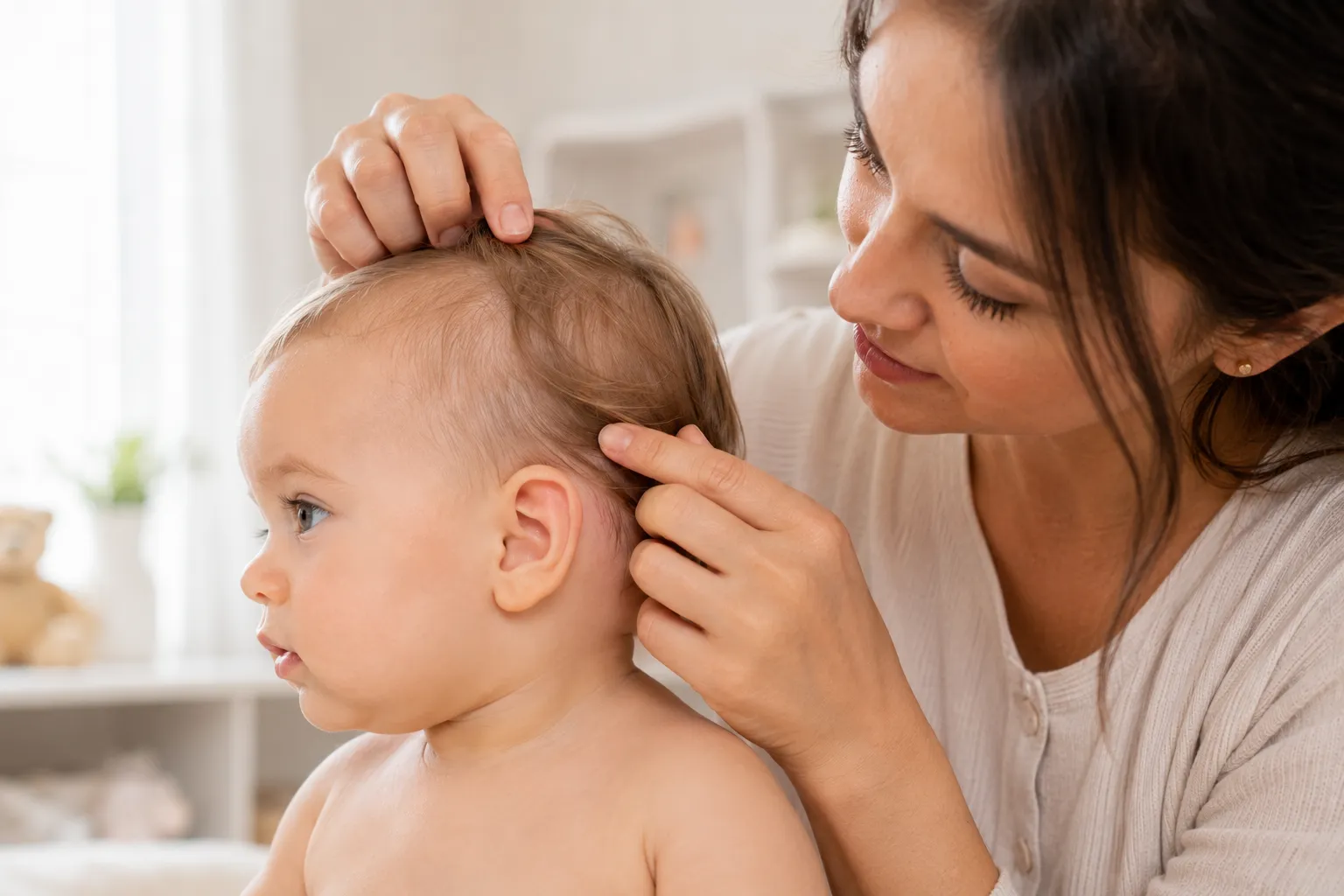
The skin behind a baby’s ears is easy to overlook. You may notice nothing unusual from the front, then gently move the ear and discover a dry, flaky, red or irritated patch hidden in the crease behind it. Sometimes the area simply looks rough, while in other babies it becomes itchy enough for them to rub their head, pull at their ears or scratch around the side of the face. Because the skin sits inside a narrow fold, dryness, moisture, sweat, skincare residue and friction can all affect the same small area. That means dry skin behind the ears does not automatically point to one particular condition. The most useful starting point is to look closely at what the skin is doing and what repeatedly comes into contact with it.
This is also an area where apparently opposite problems can occur together. The surface may look dry and flaky while the deepest part of the fold remains damp from sweat, bath water or milk. A baby may have generally dry skin but experience additional irritation behind the ears because moisture becomes trapped there. Cradle cap or eczema prone skin can sometimes involve this area too, and scratching can make almost any underlying irritation look worse. Rather than immediately trying several different products, it helps to work through the possibilities systematically. Location, appearance, recurrence, moisture and your baby’s behaviour can provide useful clues.
Why Is the Skin Behind a Baby’s Ears So Vulnerable?
Behind each ear is a natural skin crease with relatively little airflow. Sweat, bath water, shampoo and other moisture can remain there after the rest of the baby appears completely dry. The ear also moves against the surrounding skin as a baby turns their head, feeds or sleeps. Hats, clothing and bedding may add additional contact and friction. If the skin is already dry or irritated, these small everyday pressures can become much more noticeable.
The location can also make early irritation easy to miss. Parents naturally look at the cheeks, scalp, arms and legs when checking their baby’s skin, while the narrow fold behind the ear may receive less attention. By the time a patch is discovered, it may have been changing for several days. This does not necessarily mean something serious has developed. It simply makes the area worth including in your normal skin checks.
What Does Simple Dry Skin Behind the Ears Look Like?
Ordinary dry skin may feel slightly rough and appear pale, flaky or mildly pink. The surface can develop very fine scaling without significant swelling or moisture. In some babies, similar dryness can be seen on the cheeks, arms, legs or other parts of the body. Weather, bathing habits, dry indoor air and the baby’s individual skin can all influence how noticeable it becomes. Mild dryness may also fluctuate from one week to another.
The surrounding pattern matters because one dry patch does not tell the entire story. If your baby has dryness in several places, the patch behind the ear may simply be another vulnerable area. If the problem is repeatedly confined to exactly the same fold, local factors such as moisture or friction become more important to consider. If it is very itchy, inflamed or keeps returning, a broader eczema prone pattern may also deserve consideration. The aim is to understand the pattern rather than diagnose a baby from one symptom.
Check Whether the Area Is Actually Damp
A flaky appearance can make parents assume the area needs more moisture, but first touch the surrounding skin gently and look inside the crease. Is it dry throughout, or is the deepest part of the fold moist? Has bath water remained behind the ear? Does the baby sweat heavily around the head during sleep or feeding? These observations can completely change how you think about the problem.
Constant dampness can soften and irritate skin rather than making it healthier. Once the surface becomes uncomfortable, rubbing and scratching can add further damage. Applying more and more product without recognising trapped moisture may therefore miss an important part of the problem. Sometimes the simplest improvement is ensuring the fold is gently dried after bathing and whenever it becomes noticeably wet.
Bath Water Can Hide Behind the Ears
Bathing is an obvious source of moisture, but the amount left behind the ears can be surprisingly easy to miss. Water collects naturally in small folds and may remain there after the hair and body have been dried. Shampoo or body wash can also travel into the crease. If the area is already irritated, residue and repeated moisture may make it less comfortable. This does not mean babies with dry skin should not be bathed.
Technique matters more than simply blaming water. Our guide to How to Bathe a Child With Dry, Itchy or Eczema Prone Skin explains why bath temperature, cleansing, duration and drying should be considered together. After bathing, gently check behind both ears and pat away remaining water rather than rubbing vigorously. It takes only a few seconds but removes one easily overlooked variable.
Shampoo Can Reach Places You Do Not Expect
When shampoo is rinsed from a baby’s scalp, the water naturally travels down the sides and back of the head. Small amounts can settle behind the ears even when you are not deliberately washing that area. If residue remains inside the fold, repeated exposure may contribute to irritation in some babies. Fragrance and other ingredients can also matter for particularly reactive skin. However, the presence of a dry patch does not automatically mean the shampoo is responsible.
Look at timing before replacing products unnecessarily. Did the problem appear shortly after introducing a new shampoo? Does it become more noticeable after hair washing? Is the scalp irritated as well? Changing one variable at a time gives you far more useful information than replacing every product simultaneously.
Could Cradle Cap Spread Behind the Ears?
Cradle cap is usually associated with greasy or flaky scale on a baby’s scalp, but seborrhoeic dermatitis can involve nearby areas too. The eyebrows, hairline and folds around the ears may sometimes be affected. If your baby has obvious scalp scaling together with flaky skin behind the ears, the two areas may be connected. The scale may look somewhat different from straightforward dry skin. It may appear thicker, greasier or more yellowish.
Our guide Baby Eczema vs Cradle Cap: How to Tell Them Apart explores the differences in much greater detail. Cradle cap and eczema are not interchangeable terms, and babies can occasionally have features that make the distinction difficult for parents. If the area becomes very inflamed, persistently uncomfortable or difficult to identify, professional assessment is more useful than trying to diagnose it from photographs. What matters most at home is recognising when the pattern is changing.
Could Dry Skin Behind the Ears Be Eczema?
It can be. Eczema prone skin may affect folds and areas around the face, scalp and ears, although distribution can change with age. Itching, recurrence and inflammation can make eczema more relevant, particularly when similar patches occur elsewhere. A baby who repeatedly scratches behind the ears while also having dry itchy cheeks or body patches presents a different pattern from a baby with one small flaky area after a bath. Looking at the whole child matters.
Our cornerstone article Baby Dry Skin vs Eczema: How Can Parents Tell the Difference? explains why persistence and recurrence are useful clues. Ordinary dryness can be uncomfortable, but eczema is generally associated with a more complex inflammatory and itchy pattern. Neither should be diagnosed from a single photograph on a website. If you are uncertain, particularly when symptoms are significant, have the skin assessed.
Why Babies May Scratch Behind Their Ears
Babies are remarkably good at showing us where something feels uncomfortable even though they cannot explain why. Repeatedly reaching behind an ear may be an attempt to scratch an itch. Some babies rub the side of their head against bedding or a parent’s shoulder instead. Others seem to pull at their ears, making parents wonder whether the problem is actually inside the ear. Behaviour provides information, but it cannot identify the cause by itself.
We explored this distinction in Why Does My Baby Scratch Their Ears?. Ear touching can be associated with tiredness, self soothing, teething and skin irritation, among other possibilities. The skin behind the ear should therefore be inspected rather than assuming the movement comes from inside the ear. Sometimes the explanation is visible only when the ear is gently moved forward.
Scratching Can Turn a Small Patch Into a Larger Problem
A mildly dry area may initially cause very little trouble. Once the baby begins scratching it repeatedly, however, fingernails can damage the surface and increase redness. The damaged skin can then feel even more uncomfortable, producing another urge to scratch. This is the basic logic of the itch scratch cycle. The original trigger and the later appearance may therefore be quite different.
This is why keeping your baby’s nails appropriately short and smooth can be helpful when scratching is frequent. It does not address the underlying reason for the itch, but it may reduce avoidable mechanical damage while you work out what is happening. Our guide Baby Scratching Until They Bleed? How the Itch Scratch Cycle Takes Over Sensitive Skin explains why repeated scratching can become part of the problem itself. Breaking that cycle involves addressing both discomfort and damage.
Sweat Around the Head Can Contribute
Babies can become surprisingly sweaty around the head and neck, particularly during sleep, feeding, cuddling or warm weather. Moisture can then travel toward the ears and remain in the crease behind them. If a baby frequently sleeps with one side of the head against a warm surface, that side may remain warmer and damper for longer. Heat can also make existing itchy skin feel more uncomfortable. The result may be a patch that seems inexplicably worse at certain times of day.
Look for patterns rather than judging one moment. Is the baby’s hair damp after sleep? Does the skin behind the ear look worse after feeding against your arm? Does scratching increase on warm days? These clues can identify heat and moisture as contributing pressures even when they are not the only explanation.
Why One Ear May Be Worse Than the Other
A one sided problem can be particularly confusing. Babies often favour one head position during sleep, feeding or cuddling, meaning one ear experiences more warmth, moisture and friction. Milk or saliva may also travel preferentially toward one side depending on how the baby is held. A hat seam or piece of clothing could repeatedly contact the same location. Small differences in everyday behaviour can therefore create surprisingly localised irritation.
Compare both sides under similar conditions. If one side is consistently affected, think about what repeatedly happens to that side of the baby’s head. Which direction does the baby normally turn? Which side rests against you during feeding? Understanding physical contact can sometimes explain a pattern that initially appears random.
Could Drool or Milk Reach Behind the Ears?
It may seem unlikely, but babies spend a great deal of time lying down. Saliva and small amounts of milk can travel along the cheek or side of the face, particularly during feeding and sleep. Moisture can then collect near the jaw, neck and ear folds. This is more likely to matter when the area is not checked or dried for long periods. Repeated wetting and drying can contribute to irritation.
The same principle applies to the neck, which we explore in Why Does My Baby Scratch Their Neck?. These areas are connected by folds and surfaces that moisture can travel across. Rather than treating each small patch as an unrelated mystery, look at what happens around the baby’s entire face, ears and neck. Sometimes several irritated areas share the same everyday pressures.
Hats and Headwear Can Add Friction
Hats can be useful for appropriate weather protection, but anything repeatedly touching irritated skin can create friction. A seam positioned behind the ear may rub the same spot whenever the baby moves their head. Warm headwear can also increase sweating. If a patch appears or worsens after extended periods wearing a particular hat, that is worth noticing. It does not necessarily mean the fabric itself is harmful.
Check fit, seams, softness and heat. Make sure headwear is appropriate for the conditions and avoid unnecessary overheating. If you suspect a particular item is contributing, removing it when it is not needed and observing the skin can provide useful information. Again, one controlled change teaches you more than replacing the baby’s entire wardrobe.
What About Laundry Detergent?
The skin behind the ears can contact bedding, towels, hats and clothing, all of which carry whatever remains after laundering. In some babies, fragrance or other residues may contribute to irritation. This possibility becomes more interesting when the timing coincides with a new detergent, fabric softener or fragranced laundry product. It is less convincing when the same products have been used without problems and no other pattern points toward them. Context prevents unnecessary conclusions.
Contact irritation is explored further in Baby Eczema vs Contact Dermatitis: What’s the Difference?. Where something touches the skin, when symptoms appear and what happens after the exposure is removed can all provide clues. Contact dermatitis can also occur alongside dry or eczema prone skin. That overlap is one reason simple labels do not always explain everything.
Should You Remove Flaky Skin?
Seeing flakes behind a baby’s ears can create a strong temptation to pick or scrub them away. Avoid doing that. The scale may be attached to already irritated skin, and physically removing it can create tiny areas of damage. Repeated rubbing with a towel can have the same effect. The goal should be comfortable skin rather than perfectly smooth looking skin immediately.
Gentle care often requires patience. Clean only as necessary, avoid aggressive rubbing and allow supportive skincare time to work when dryness is the issue. If scale is thick, persistent or associated with significant inflammation, seek advice about what you are actually dealing with. Removing the visible flakes does not necessarily address why they developed.
How Should You Clean Behind a Baby’s Ears?
During a normal bath, the outer area behind the ears can be cleaned gently without aggressive scrubbing. You do not need to make the skin squeaky clean or repeatedly use soap on an irritated patch. Afterward, pat the fold dry carefully. Make sure no obvious shampoo, cleanser or bath water remains trapped there. Then observe how the skin responds over the following hours.
If the area is already irritated, introducing several new cleansing products may make it harder to identify what helps. Simplicity is useful. A consistent routine also makes changes easier to recognise. The aim is to reduce unnecessary pressure on already uncomfortable skin.
Should You Moisturise Behind the Ears?
When the area is genuinely dry, an appropriate moisturiser can form part of supportive care. The important word is dry. If the deepest part of the fold is constantly damp, addressing trapped moisture is also important. Simply layering a cream over persistent wetness may not solve what is driving the irritation. Look at the skin first rather than treating every patch identically.
Our guide How to Moisturise Your Child’s Dry Skin Properly covers application technique and the role moisturising can play in a wider routine. Apply products gently rather than vigorously massaging irritated skin. Avoid getting products inside the ear canal. If a product consistently makes the area redder or more uncomfortable, stop and reassess rather than continuing simply because the label says it is gentle.
Where Itch A Bye Fits Into Dry, Itchy Skin Care
Itch A Bye Baby Repair Cream was developed for babies and young children with dry, itchy and eczema prone skin. Our Skin Trifecta approach focuses on Repair, Nourish and Defend, providing a broader framework for supporting vulnerable skin rather than treating moisturisation as the only consideration. When dryness is contributing to discomfort behind the ears, supportive skincare can form one part of the routine. The cream is not intended to diagnose what caused a particular patch.
That distinction matters because a damp irritated fold, cradle cap, contact irritation and ordinary dryness may need to be thought about differently. No cosmetic cream should be used as a substitute for assessing a worsening or unusual skin problem. Look first, understand the pattern and then decide what role skincare should play. A product should support good observation, not replace it.
Try a Three Day Observation Before Changing Everything
If the problem is mild and your baby is otherwise well, a short period of careful observation can reveal a surprising amount. Check behind both ears in the morning, after bathing and before bedtime. Notice whether the area is dry or damp and whether scratching happens at particular times. Record recent shampoo, laundry or skincare changes. Also note whether the scalp, cheeks or neck are affected.
Avoid changing five things at once simply because you are anxious to improve the skin. If you change shampoo, moisturiser, detergent, bedding and bathing frequency simultaneously, you lose the opportunity to learn from what happens next. One carefully chosen change can be much more informative. Persistent or worsening symptoms, of course, should not be left indefinitely while you experiment.
When Dry Skin Behind the Ear Needs More Attention
A mild flaky patch is very different from skin that is rapidly becoming painful, swollen, raw or extensively inflamed. Seek professional advice if you notice significant weeping, bleeding, pus, spreading redness, blistering, marked swelling or yellowish crusting that concerns you. An unpleasant smell from an irritated fold also deserves attention. The same applies if your baby develops fever, appears unwell or seems to be in significant pain.
Skin behind the ear can crack when it becomes very irritated, and the narrow fold can make changes difficult to see. Gently inspect the whole area rather than judging it from the visible edge. If you cannot tell whether the problem is ordinary dryness, eczema, seborrhoeic dermatitis, infection or something else, have it assessed. Knowing when to stop guessing is part of sensible skincare.
Look at the Whole Skin Pattern
One small dry patch can sometimes distract parents from a much clearer pattern elsewhere. Check the scalp, cheeks, neck, elbows, knees, wrists and ankles when appropriate. Is dryness widespread or confined to the ear? Does your baby scratch several different areas? Does the problem repeatedly improve and return?
These questions are central to the approach we explore in Beyond the Skin Barrier: Uncovering the Hidden Roots of Dry, Itchy and Eczema Prone Skin. Rather than assuming every flare has one isolated cause, the book looks at how the developing skin barrier, moisture, itching, scratching, environment and other pressures may interact. It is designed to help parents become better observers of patterns without encouraging them to diagnose medical conditions themselves. You can read the complete digital edition free at www.itchabye.com/free-book.
The Bottom Line on Dry Skin Behind Baby’s Ears
Dry skin behind a baby’s ears is common enough to encounter but broad enough to have several possible explanations. Simple dryness, trapped bath water, sweat, shampoo residue, friction, cradle cap, contact irritation and eczema prone skin can all be relevant depending on the pattern. Start by gently looking behind both ears and deciding whether the skin is truly dry, damp, flaky, inflamed or being scratched. Then think about what repeatedly happens to that area during bathing, feeding, sleeping and dressing. Those observations are often more useful than immediately buying another product.
Keep the area gently clean, dry it carefully after bathing and avoid picking at flakes or scrubbing irritated skin. Where genuine dryness is present, an appropriate moisturising routine can help support the skin, while persistent dampness should not simply be covered with more product. Watch for recurrence and consider whether similar dry or itchy areas occur elsewhere on your baby’s body. Seek professional advice when the skin becomes broken, weepy, swollen, painful, crusted, rapidly worse or when your baby appears unwell. Above all, remember that the little fold behind the ear can tell you something about the wider pattern of your baby’s skin if you know to look there.
This article provides general educational information only. It does not diagnose eczema, cradle cap, seborrhoeic dermatitis, contact dermatitis, infection or any other medical condition and does not replace advice from your child’s doctor, pharmacist or another appropriately qualified healthcare professional.