
Dry Skin Behind Baby’s Knees: Why Skin Folds Become Itchy
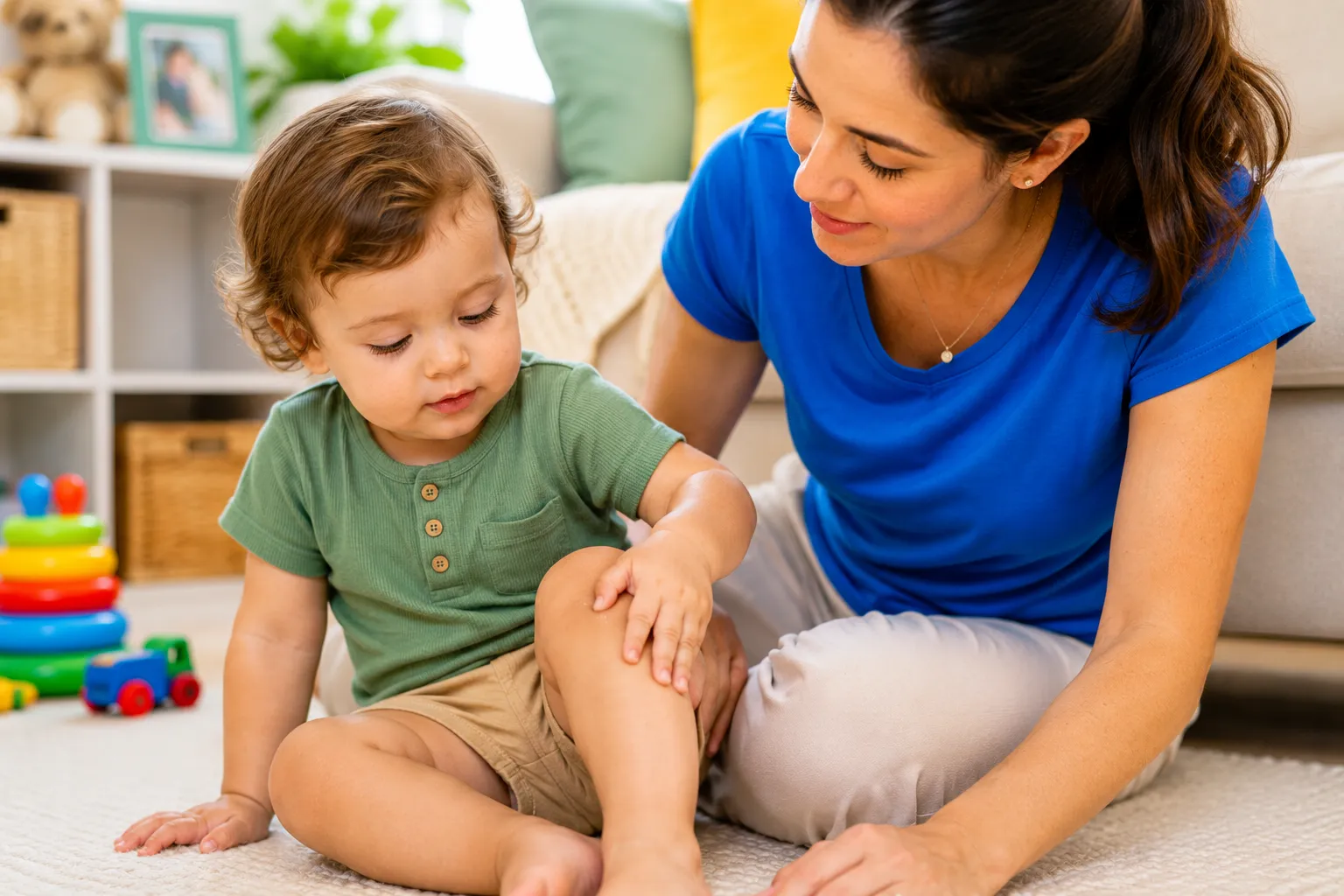
Dry skin behind a baby’s knees can be surprisingly persistent. The area may look fine when the leg is straight, then appear red, rough or flaky when you gently bend the knee and look into the crease. Some babies seem to scratch or rub the backs of their knees more when they are warm, tired or lying in certain positions. Because this area is a skin fold, it experiences a combination of movement, warmth, sweat, friction and reduced airflow throughout the day. That makes it different from a dry patch on the shin or thigh. Understanding what happens inside the fold can help parents care for the skin more gently and recognise when a recurring pattern deserves closer attention.
The backs of the knees are also a common place for eczema prone skin to become uncomfortable, particularly as children get older. However, dryness in this location does not automatically mean eczema. Heat, sweat, clothing, crawling, repeated bending and naturally dry skin can all contribute. Sometimes several of these pressures occur together and make the crease more vulnerable than surrounding skin. The most useful approach is to look at how the skin behaves over time, what makes it worse and whether similar patches appear in other folds.
Why Are the Backs of a Baby’s Knees So Vulnerable?
Every time a baby kicks, rolls, crawls or bends their legs, the skin behind the knees folds and unfolds. This creates constant movement and friction in a relatively small area. The crease can also trap warmth and sweat, particularly under trousers, sleepsuits or blankets. If the skin is already dry, repeated movement may make it feel more irritated. Babies who are active can expose this area to hundreds of small friction events each day.
The fold also receives less airflow than the front of the knee. Sweat may therefore remain there longer, especially during hot weather or sleep. Moisture can make the skin feel uncomfortable while repeated drying can leave it rough. This is one reason a fold can seem both damp and dry at different times of the day. Skin folds often deal with more than one pressure at once.
What Does Dry Skin Behind the Knees Usually Look Like?
Mild dryness may appear as a rough, slightly flaky or dull patch inside the knee crease. The skin can look pink or mildly red, particularly after movement or heat. In some babies, the area feels different from the surrounding skin even when there is little visible change. The patch may also become more obvious after bathing or at the end of a warm day.
Look at whether the problem stays confined to the crease or spreads onto the surrounding thigh or calf. Also check whether the same pattern appears behind both knees. Bilateral patches can sometimes fit with a broader dry or eczema prone skin pattern, while one isolated area may make local friction or irritation more relevant. Neither pattern is diagnostic, but distribution gives you useful clues.
Why Do Skin Folds Often Become Itchy?
Skin folds combine warmth, movement and moisture. If the surface is already dry or irritated, that environment can increase discomfort. Sweat can sting tiny scratches, while repeated bending can rub the same area over and over. A baby may then begin scratching, which adds another layer of friction. This can turn a mild patch into something much more persistent.
Once scratching begins, the itch scratch cycle can become part of the problem. Fingernails may damage the surface, making the skin feel more irritated and creating another urge to scratch. Our guide Baby Scratching Until They Bleed? How the Itch Scratch Cycle Takes Over Sensitive Skin explains why repeated mechanical damage can keep itchy skin going even after the original trigger has reduced.
Heat Can Make the Crease More Uncomfortable
The skin behind the knees can become noticeably warmer under clothing or bedding. Babies may also sweat more during sleep, feeding or periods of active movement. Heat can make existing itch feel stronger and may increase rubbing or scratching. Parents sometimes notice that the backs of the knees look redder at the end of the day than in the morning.
Our guide Why Does My Baby Itch More When Hot? explores this pattern in more detail. If the crease consistently becomes worse in warm conditions, reducing unnecessary overheating may remove one aggravating factor. Temperature may not be the only cause, but it can influence how uncomfortable the skin feels.
Sweat Does Not Mean the Skin Is Well Moisturised
A sweaty knee fold can still be dry. Moisture sitting on the surface is not the same as healthy hydration in the outer layers of the skin. Repeated sweating followed by evaporation can leave the area feeling rough or tight. If parents repeatedly wash the sweat away with soap, the skin may become even drier.
This is the same principle we see in other skin folds. Dampness and dryness can exist in the same area at different times. The important question is whether the fold is persistently moist, genuinely dry or cycling between the two. That distinction can guide how gently you clean, dry and moisturise the area.
Could Clothing Be Rubbing the Backs of the Knees?
Yes. Trousers, leggings, sleepsuits and seams can repeatedly move across the crease as a baby kicks or crawls. Tight clothing may also trap heat and sweat. A fabric that feels perfectly soft in your hand can still create friction when it moves against irritated skin all day. The effect may be especially noticeable in active babies.
Look at whether the redness follows a seam or becomes worse in particular outfits. Does the skin improve when looser clothing is worn? Does a certain fabric correspond with more scratching? These observations can help identify a mechanical contributor without assuming the fabric itself is dangerous.
Cotton, Bamboo and Synthetic Fabrics Can Feel Different
Different fabrics behave differently with heat, moisture and friction. Cotton is often chosen because it is soft and breathable, while some parents prefer bamboo blends for their feel. Synthetic fabrics may trap more heat depending on the weave and garment design. None of these categories guarantees that a particular baby will tolerate every item equally well.
Later in this series we will compare Cotton vs Bamboo for Eczema Prone Baby Skin and discuss whether polyester is always a problem. For now, the practical principle is simple: choose clothing that feels soft, fits comfortably and does not trap unnecessary heat. Watch how your baby’s skin responds rather than relying entirely on the fabric label.
Could Laundry Products Contribute?
The skin behind the knees stays in close contact with clothing for long periods. If a baby is sensitive to a laundry product, a tight fold may be one of the places where irritation becomes noticeable. Fragrance, fabric softeners and detergent residues can all be worth considering when a new pattern appears after a change in laundry routine. However, timing matters.
Do not assume detergent is responsible simply because the skin is red. Look at whether other clothing contact areas are affected too. If symptoms began soon after introducing a new laundry product, that information is more useful than speculation. Change one variable at a time so you can see what actually matters.
Could It Be Contact Dermatitis?
Contact dermatitis can occur where something repeatedly touches the skin. Behind the knees, that could include clothing, laundry residue, topical products or materials from the environment. A reaction may remain localised to the contact area or overlap with naturally dry skin. This can make it difficult to distinguish from eczema by appearance alone.
Our guide Baby Eczema vs Contact Dermatitis: What’s the Difference? explains why timing, location and exposure history matter. If the irritation follows a clearly new exposure, remove that variable and observe. If it persists or spreads, the wider pattern becomes more important.
Could It Be Eczema Behind the Knees?
The backs of the knees are a classic flexural area where eczema can occur, particularly as children get older. Dryness, redness and itching in the crease can fit with that pattern, especially when similar patches appear inside the elbows or in other folds. However, the location alone does not confirm eczema. Ordinary dryness, sweat and friction can produce similar symptoms.
Our cornerstone guide Baby Dry Skin vs Eczema: How Can Parents Tell the Difference? explains why recurrence, itching, inflammation and distribution matter more than one visible patch. A crease that flares repeatedly, itches significantly and appears alongside other affected areas deserves closer attention. Professional assessment is appropriate when the pattern is persistent or difficult to identify.
Why Are Flexural Areas Important?
Flexural areas are places where the skin bends repeatedly, such as behind the knees and inside the elbows. These areas experience friction and occlusion, meaning the surfaces are often pressed together. Heat and moisture can also accumulate there. That combination can make already vulnerable skin more uncomfortable.
When the same type of rash appears in several flexural areas, the pattern becomes more informative. Check behind both knees and inside both elbows. Also look at the neck and wrists if your baby has recurring dry or itchy skin. The distribution may help a healthcare professional understand the problem more clearly.
Crawling Can Add Another Layer of Friction
Once babies become mobile, their legs work much harder. Crawling, kneeling, sitting and repeated bending all increase movement at the knees. Clothing shifts across the crease more frequently and body heat may rise with activity. A patch that was previously mild may become more noticeable during this stage.
This does not mean crawling is harmful to the skin. It simply changes the environment. If the backs of the knees become worse after active periods, friction and heat may be contributing. Adjusting clothing and keeping the baby comfortably cool can sometimes reduce those pressures.
What About Bathing?
Hot water and long baths can make dry skin feel tighter. Soap and cleanser can also affect comfort if used too frequently or too aggressively. Because the backs of the knees are folds, cleanser may remain there longer if it is not rinsed thoroughly. The area should be checked and dried gently after bathing.
Our guide How to Bathe a Child With Dry, Itchy or Eczema Prone Skin explains why water temperature, bath length, cleansing and drying all matter. Patting is generally kinder than vigorous rubbing. Avoid scrubbing the crease in an attempt to remove roughness.
Should You Moisturise Behind the Knees?
If the skin is genuinely dry, moisturising can form part of supportive care. Apply an age appropriate product gently and follow its directions. The fold may need a different approach from an exposed dry patch if it is also very sweaty or damp. Look at the skin before applying anything.
Our guide How to Moisturise Your Child’s Dry Skin Properly explains why timing and consistency matter. Moisturising works best as part of a broader routine that also reduces heat, friction and unnecessary cleansing. More product is not automatically better.
Cream, Lotion or Ointment in a Skin Fold?
Parents often wonder whether a light lotion or a richer cream is better behind the knees. The answer depends on the dryness, the formulation and how the fold behaves throughout the day. A very occlusive product may feel uncomfortable in a hot, sweaty crease, while a lighter product may not be enough for very dry skin. The correct choice is not determined by texture alone.
Later in this series we will compare Cream vs Lotion for Baby Dry Skin, Cream vs Ointment for Baby Eczema Prone Skin and Lotion vs Balm vs Cream. These articles will look at how product format affects feel and moisture retention. For now, focus on using an appropriate product consistently rather than switching frequently.
Where Itch A Bye Fits Into the Routine
Itch A Bye Baby Repair Cream was developed for babies and young children with dry, itchy and eczema prone skin, using our Skin Trifecta approach of Repair, Nourish and Defend. When genuine dryness is part of the problem behind the knees, supportive skincare can form one part of the routine. The product does not determine whether the underlying cause is eczema, friction, heat or contact irritation.
That distinction matters because skin folds often have several overlapping pressures. Moisturising alone may not be enough if the area is constantly hot, sweaty or rubbed by clothing. Likewise, reducing friction may not fully solve a broader dry skin pattern. Good care comes from understanding what the fold is experiencing throughout the day.
Keep Fingernails From Worsening the Skin
If your baby is scratching behind the knees, sharp nails can create tiny breaks in the skin. These scratches may make the area more painful or itchy and can increase the risk of infection. Keep nails appropriately trimmed and smooth. This is especially important when scratching happens during sleep.
Do not focus only on stopping the scratching. Scratching is information that the skin feels uncomfortable. The longer term goal is to reduce the itch itself while protecting the surface from further damage. Managing both the cause and the scratching behaviour gives the skin a better chance to settle.
Why Does It Sometimes Look Worse at Night?
Night time can increase several pressures at once. The baby may be warmer under bedding, sweat may collect in the folds and scratching may happen during partial waking. Less distraction also means itch can become more noticeable. Parents often first notice knee scratching at night for this reason.
Our guide Baby Scratching All Night? Why Itching Gets Worse After Bedtime and What Parents Can Do explores this pattern in more detail. If symptoms are worse overnight, look at sleepwear, room temperature and whether the crease is already irritated before bed. The bedtime environment may be amplifying a daytime problem.
Should You Use Mittens or Cover the Legs?
Covering the skin can sometimes reduce direct scratching, but overheating should be avoided. Tight or heavy clothing may make the fold warmer and sweatier. The goal is not to trap the skin in multiple layers. Use comfortable, breathable clothing appropriate for the temperature.
Later in this series we will explore whether mittens are useful for babies with itchy skin. For the knees, the same principle applies: protection should not create another source of heat or friction. Comfortable clothing is more important than simply covering the area.
Why One Knee Might Be Worse Than the Other
One-sided irritation can happen because babies do not move symmetrically all the time. A baby may favour one crawling pattern, sit with one leg tucked differently or repeatedly rub one knee against a particular surface. Clothing seams may also sit differently on each side. This can create a local pattern.
Compare both knees over several days. Notice how your baby moves and sleeps. If one side is consistently worse, think about repeated local contact. If both sides behave similarly, a broader skin tendency may be more relevant.
Could Grass, Carpet or Flooring Affect the Area?
As babies crawl and play, their legs can contact carpet, rugs, grass and other surfaces. Even when the knees themselves bear most of the contact, movement can shift clothing and increase friction behind the knees. Heat from outdoor play may also increase sweating. Some babies may become more irritated after certain activities.
This does not mean parents need to avoid normal play. Look for consistent patterns. If the crease becomes worse after a particular environment, that observation is useful. Our later guide Baby Itching After Being Outside: Heat, Grass, Pollen or Sweat? will explore this type of situation more deeply.
Try a One Change at a Time Approach
When the backs of the knees are persistently dry, it is tempting to change detergent, clothing, bath wash, moisturiser and bedding all at once. That usually creates more confusion. If the skin improves, you will not know why. If it worsens, you will have too many new variables.
Start with the most obvious pressure. If the fold is hot and sweaty, focus on temperature and clothing. If it is clearly very dry, review bathing and moisturising. If symptoms began after a new product, consider that exposure. Systematic observation usually teaches you more than rapid product switching.
A Simple Knee Fold Check for Parents
Look behind both knees once or twice a day when your baby is calm. Note whether the skin is dry, damp, red, flaky, cracked or scratched. Check whether the appearance changes after bathing, sleep or active play. Also look at the inside of the elbows and other folds.
This takes less than a minute but can reveal useful patterns. You may discover that the skin is comfortable in the morning but worse after heat and activity. Another baby may have persistent dryness regardless of temperature. These observations help you decide what to focus on and what information to share with a healthcare professional.
When Should Dry Skin Behind the Knees Be Checked?
Seek professional advice when the skin is persistently inflamed, very itchy, repeatedly cracking or not improving with sensible gentle care. Weeping, significant crusting, pus, spreading redness, increasing warmth or pain can suggest infection and deserve assessment. The same applies if your baby develops fever or appears unwell. Deep cracks or bleeding from repeated scratching should not simply be ignored.
If the same type of rash is appearing in several folds, mention that pattern. Flexural distribution can be clinically useful information. You do not need to diagnose eczema yourself before asking for help. Persistent, recurring or significantly uncomfortable skin deserves proper assessment.
Signs Scratched Skin May Be Becoming Infected
Scratching can damage the protective surface of the skin. Once that happens, bacteria can sometimes enter more easily. Increasing redness, warmth, swelling, pus or yellowish crusting are reasons to seek medical advice. A rapidly worsening patch deserves particular attention.
Later in the series, Signs Scratched Baby Skin May Be Infected will explore these warning signs in greater detail. For now, remember that a dry patch should not be managed indefinitely at home if it becomes increasingly painful, wet or inflamed. Infection requires a different level of care from ordinary dryness.
Look at the Whole Skin Pattern
The backs of the knees can provide an important clue about the rest of your baby’s skin. Check whether the elbows, wrists, ankles, neck or cheeks are affected too. Do symptoms become worse with heat or sleep? Does the problem repeatedly return after looking better for a while?
This wider way of thinking is central to Beyond the Skin Barrier: Uncovering the Hidden Roots of Dry, Itchy and Eczema Prone Skin. The book explores how developing skin, environment, moisture, friction, itching and the itch scratch cycle can interact rather than treating every flare as an isolated event. It is designed to help parents recognise patterns without encouraging self diagnosis. You can read the complete digital edition free at www.itchabye.com/free-book.
The Bottom Line on Dry Skin Behind a Baby’s Knees
Dry skin behind a baby’s knees can be influenced by heat, sweat, friction, clothing, bathing, naturally dry skin, contact irritation or eczema prone skin. The fold is vulnerable because it bends constantly and traps warmth and moisture more easily than exposed skin. Look at whether the problem affects one or both knees, whether it becomes worse with heat and whether similar patches appear in other flexural areas. Those patterns can help you understand whether the problem is primarily local or part of a wider skin tendency. Avoid assuming the location alone gives you a diagnosis.
Keep the area gently clean, dry it carefully after bathing and reduce unnecessary heat and friction. Where genuine dryness is present, use an appropriate moisturising routine and keep fingernails smooth to reduce scratching damage. Seek professional advice when the skin is persistently inflamed, very itchy, cracked, weeping, crusted, painful or worsening despite sensible care. The backs of the knees are small folds, but they can reveal a great deal about how a baby’s skin responds to movement, heat and everyday pressure.
This article provides general educational information only. It is not intended to diagnose eczema, dermatitis, infection or any other medical condition and does not replace advice from your child’s doctor, pharmacist or another appropriately qualified healthcare professional.