
Newborn Dry Skin in the First Week: What Parents Should Expect
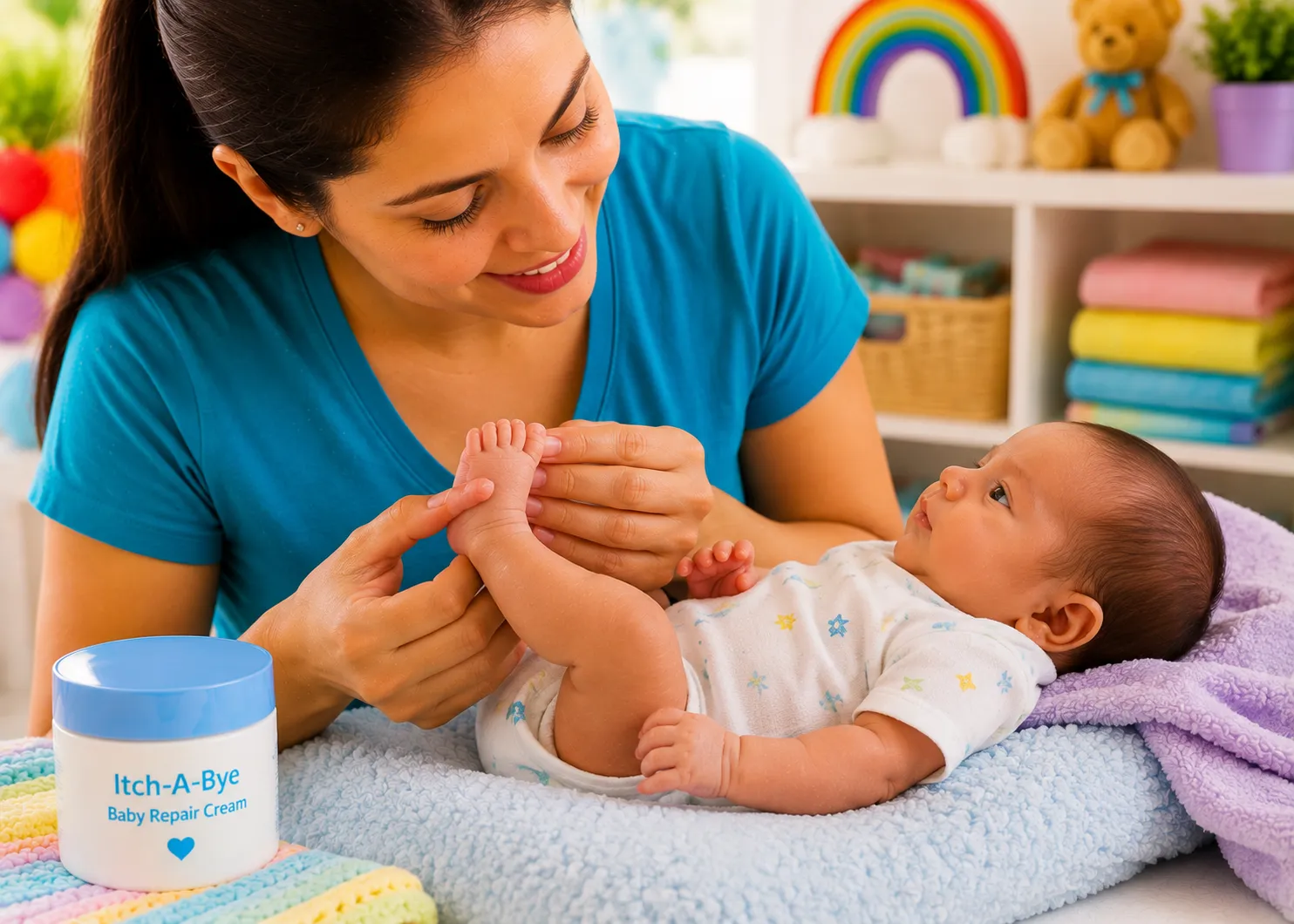
You bring your baby home and suddenly every tiny change seems important. Their breathing, feeding, sleeping and even the texture of their skin can become something you find yourself examining several times a day. Then, somewhere around day three, four or five, you notice that the perfectly soft skin you expected is beginning to look dry, flaky or slightly rough. Their ankles may be peeling, their hands may look dry, and their feet can sometimes appear as though they have spent too long in the sun.
For many newborns, some dry skin during the first week of life is completely normal. Your baby’s skin has just moved from the warm, fluid environment of the womb into a much drier world of air, clothing, nappies, bathing and temperature changes. At the same time, the skin barrier is continuing to adapt to its new job of controlling moisture loss and protecting the body from the outside environment. Understanding this transition can help parents recognise what is expected, what can simply be left alone and when the skin may need additional support.
The Short Answer: First-Week Dryness Is Very Common
Mild dryness, flaking and peeling can all appear during a baby’s first week after birth. The hands, feet, wrists and ankles are particularly common places to notice these changes, although the tummy, legs and other areas can also become dry. Some babies develop only a few tiny flakes, while others shed surprisingly visible layers of skin. The amount of peeling alone does not necessarily tell you whether something is wrong.
What matters more is the condition of the skin underneath and how the baby appears overall. Skin that is mildly dry but otherwise comfortable is very different from skin that becomes progressively red, swollen, cracked, weeping or painful. Watching how the skin changes over several days is therefore often more useful than reacting to one dry patch. In many newborns, the skin gradually becomes smoother as those early weeks progress.
Your Baby’s Skin Has Just Entered a Completely Different Environment
Before birth, your baby’s skin develops while surrounded by amniotic fluid. During pregnancy it is also protected in part by vernix caseosa, the creamy, waxy coating that may still be visible on a baby’s skin immediately after delivery. Vernix contains water, lipids and other components that help protect developing skin before and around birth. Then, within a matter of hours, that environment changes completely.
Instead of being surrounded by fluid, the skin is suddenly exposed to air. Moisture can evaporate from the surface, clothing begins rubbing against it, nappies create a warm and enclosed environment, and bathing introduces repeated wetting and drying. Your baby’s skin also begins interacting with the enormous community of microorganisms that exists in the outside world. It is an extraordinary transition for an organ that is still developing.
Newborn Skin Is Still Maturing
A newborn’s skin performs the same fundamental protective functions as adult skin, but it should not be thought of simply as adult skin in miniature. The structure and function of the outer barrier continue developing during infancy. Water handling, surface lipids and the relationship between the skin and its environment continue changing after birth. This helps explain why newborn skin can sometimes lose moisture more readily or respond quickly to environmental pressure.
It also explains why babies can be so different from one another. One newborn may tolerate frequent bathing without obvious dryness, while another becomes rough and flaky after only a few days. One baby’s cheeks may remain beautifully soft while another baby’s cheeks become dry whenever the weather changes. There is therefore no single skincare routine that every newborn automatically needs.
What Does Normal First-Week Dry Skin Look Like?
Normal newborn dryness is often mild and may make the skin look slightly dull, rough or flaky. You might notice fine white flakes around the ankles or wrists, or thin pieces of skin lifting from the feet and hands. The surface can sometimes look surprisingly dry even though the skin underneath remains soft and comfortable. This appearance can be particularly noticeable several days after birth.
The important distinction is that ordinary dryness should not normally be accompanied by significant swelling, extensive weeping, deep cracks or obvious pain. Your baby may seem completely unaware of skin that looks quite dramatic to you. This difference between appearance and comfort can be reassuring. Newborn skin does not have to look perfectly smooth to be adapting normally.
Dry Skin and Peeling Skin Are Not Exactly the Same Thing
Parents often use “dry skin” and “peeling skin” to describe the same thing, particularly during the first week. The two can certainly occur together, but they are slightly different processes. Peeling involves outer skin cells naturally shedding as the skin transitions after birth, while dryness refers more specifically to reduced moisture within the outer layers of the skin. A baby can therefore peel without the underlying skin being particularly dry.
Another baby may have very little peeling but develop genuinely rough, tight-feeling skin that benefits from moisturising. Looking at what remains after the flakes naturally come away can help you understand the difference. If the underlying skin looks comfortable, you may mainly be seeing normal shedding. We explore this distinction further in Newborn Peeling Skin: What’s Normal and What Isn’t?.
Why Some Newborns Look Much Drier Than Others
Two babies born within hours of each other can look remarkably different by the end of their first week. Gestational age can play a role because babies born after their estimated due date may sometimes show more noticeable peeling. The amount of vernix remaining on the skin around birth can also differ considerably. These natural differences can influence what parents see during those first days.
The environment after birth matters too. Air conditioning, heating, humidity, bathing frequency, clothing and the products being used on the skin can all influence dryness. Friction from blankets and clothing can make certain areas look rougher than others. Individual skin biology adds another layer of variation, which is why comparing your newborn’s skin with another baby’s skin is not always useful.
Day One Can Look Very Different From Day Seven
Immediately after delivery, your baby’s skin may still be partly covered with vernix and can look soft, moist or slightly coated. Over the following days, that protective material gradually disappears and the surface begins adjusting to the outside environment. Areas that appeared completely smooth on the first day may therefore become flaky several days later. Parents sometimes interpret this as the skin suddenly deteriorating.
In many cases, it is simply the next stage of adaptation. Outer cells are shedding while the skin begins managing water loss in air rather than fluid. By the end of the first week, you may actually see more dryness than you saw immediately after birth. That does not automatically mean something has gone wrong.
Why the Hands and Feet Can Look Particularly Dry
Hands and feet are among the most common places for newborn dryness and peeling to appear. Tiny fingers can look wrinkled or flaky, while the soles of the feet may shed thin layers of skin. Around the ankles and wrists, little edges of loose skin can appear that look almost ready to be pulled away. Resist the temptation to remove them.
Even when a flake looks loose, part of it may still be attached to more delicate skin underneath. Pulling can create unnecessary irritation and sometimes tiny areas of broken skin. Let the flakes detach naturally as your baby moves, bathes and is dressed. Newborn skin does not need exfoliation.
The Tummy and Legs May Feel Rough Too
Not all first-week dryness occurs around the hands and feet. Some babies develop a slightly rough texture across the tummy, thighs or lower legs. You may notice it more when gently running your hand over the skin than when simply looking at it. Clothing and blankets can influence these areas because they remain in almost continuous contact with the skin.
Warmth underneath clothing can also affect how the skin behaves. This does not mean clothes are causing a skin problem, but it reminds us that the skin responds to its environment. If the roughness remains mild and the baby appears comfortable, observation may be all that is required. If the skin becomes increasingly dry, moisturising may provide useful support.
Should You Moisturise a Newborn During the First Week?
Not every newborn needs moisturiser simply because they have reached a particular age. If your baby’s skin is comfortable and you are mainly seeing mild normal peeling, you may choose to leave it alone. Healthy skin does not need to be covered in products simply because a few flakes are visible. Sometimes the most appropriate intervention is no intervention at all.
If the skin feels genuinely dry, rough or tight, however, an appropriate moisturiser can help support the outer barrier. Begin with a small amount and spread it gently over the areas that need it. You do not need to immediately cover the baby’s entire body in a thick layer. Our guide Can You Put Moisturiser on a Newborn? A Parent’s Guide explores this question in more detail.
You Do Not Need to Chase Every Flake With Cream
One of the easiest traps for a new parent is believing that every visible flake means the skin needs another application of moisturiser. You apply cream in the morning, notice peeling again in the afternoon and assume the product has stopped working. But moisturiser cannot prevent outer skin cells from completing a normal shedding process. Some flakes will appear regardless of how much product you apply.
This distinction becomes particularly important during the first week. Repeatedly coating comfortable skin can make the routine unnecessarily complicated without changing what the skin is naturally doing. Focus on how the skin feels underneath rather than whether every flake has disappeared. The goal is comfortable, functioning skin, not a completely flake-free newborn.
How Much Moisturiser Should You Apply?
If moisturiser is needed, start with less than you think. A small amount spread into a light, even layer may be enough for an ankle, cheek or patch of dry skin. If you cannot cover the area comfortably, add a little more. There is generally no advantage in leaving a thick visible layer simply because the skin looks dry.
Using too much can also make the skin greasy and uncomfortable underneath warm clothing. More product does not automatically produce more benefit once the skin has been adequately covered. This is especially worth remembering when parents are understandably anxious about newborn skin. Thoughtful application is usually more useful than frequent heavy application.
Bathing Can Make Dryness More Noticeable
Bathing introduces another dramatic cycle for newborn skin because the surface becomes wet and then dries again. Long baths, particularly in hot water, can sometimes leave delicate skin feeling tighter afterwards. Cleansers can also remove some of the oils that help the outer barrier slow water loss. A baby who already tends towards dryness may therefore look noticeably drier after bathing.
Keep baths comfortably warm rather than hot and relatively short. Avoid scrubbing areas that look flaky, and gently pat the skin afterwards rather than rubbing vigorously with a towel. If your baby’s skin consistently becomes dry after bathing, a small amount of moisturiser afterwards may help. The bathing routine itself should also be reviewed rather than simply compensating with more cream.
Newborns Usually Do Not Need Long Daily Baths
A newborn does not generally need a lengthy bath every day simply to remain clean. During the first week, much of the necessary cleaning can be targeted to the areas that actually need attention. Excessive bathing can add another source of moisture loss without providing meaningful benefit. This is particularly relevant when the baby’s skin is already noticeably dry.
Parents sometimes bathe more frequently because they are trying to remove peeling skin. That usually works against the goal. The flakes do not need to be washed or scrubbed away. Allow them to shed naturally while keeping the skin clean and comfortable.
A Newborn Does Not Need to Smell Like Baby Products
The baby aisle can make new parents feel as though newborn skincare requires washes, shampoos, oils, lotions, powders and fragranced creams. In reality, the first week is often a good time to keep things extremely simple. Fragrance is not required for healthy skin, and strongly fragranced products introduce another exposure while the barrier is adapting. Using fewer products also makes reactions easier to understand.
If your baby’s skin suddenly becomes irritated, it is much easier to investigate when only one or two products have been used. When six different products were introduced at the same time, identifying the problem becomes far more difficult. Simplicity is therefore not merely minimalist parenting. It can be a useful way of learning how your baby’s skin behaves.
What About Baby Oil?
Baby oil can soften the skin and reduce water loss by leaving an occlusive layer on the surface. For some babies with mild dryness, an appropriate oil may be enough to make the skin feel more comfortable. But oil is not necessary simply because normal peeling is occurring. It should not be used as a way of loosening flakes so that they can be rubbed away.
Oils and formulated moisturising creams can also provide different kinds of support. An oil may primarily condition the surface and slow water loss, while a cream can combine oils with humectants and other skin-supportive ingredients. Neither approach is automatically superior in every situation. The skin should determine what is needed.
What About Coconut Oil?
Coconut oil is commonly suggested because it is familiar, widely available and perceived as natural. It can act as an emollient and may help soften dry skin. However, “natural” should never be interpreted as meaning that every baby’s skin will respond identically. Even relatively simple ingredients can suit one baby better than another.
If you choose to introduce an oil or moisturiser during the newborn period, use a small amount on a limited area first. Avoid introducing several new products on the same day. That way, if the skin changes, you have a much clearer idea of what may have contributed. Newborn skincare benefits enormously from keeping the number of variables small.
Baby Wipes Can Be Part of the Picture
Wipes are incredibly convenient during the newborn period because nappy changes seem almost endless. For most babies, appropriate wipes cause no obvious problem, but they still involve ingredients, moisture and repeated contact with the skin. The amount of rubbing during cleaning can also matter when the barrier is already irritated. Gentle technique is therefore important.
The nappy area behaves differently from an ordinary dry ankle because it is warm, occluded and repeatedly exposed to urine and stool. Do not automatically assume that every patch of redness or dryness there needs ordinary moisturiser. Location changes what the skin is experiencing. Persistent nappy-area irritation may require a different approach from general newborn dryness.
Clothing Can Influence How the Skin Feels
During the first week, your baby spends almost every hour in contact with clothing, blankets, wraps or bedding. Soft, breathable materials can help minimise unnecessary friction against skin that is already dry or peeling. Rough seams or scratchy fabrics may make vulnerable areas feel less comfortable. Clothing that is too tight can add another source of friction.
Overheating deserves attention as well. Parents naturally worry about newborns becoming cold, but excessive layers can make a baby very warm and sweaty. Heat, moisture and friction together create a different type of pressure on the skin. Comfortable clothing and temperature are therefore part of skincare even though they do not come in a bottle.
The Face May Behave Differently From the Body
A baby’s cheeks may become dry even when the torso remains beautifully soft. The face is continuously exposed to air and physical contact and may come into contact with milk, clothing and bedding. As feeding develops, moisture around the mouth can also influence the surrounding skin. This can create a different environment from the covered skin on the body.
There is no reason to apply the same quantity of moisturiser everywhere simply for consistency. A tiny amount may be enough for a dry cheek while another area needs nothing. Be especially careful around the eyes, mouth and nostrils. A skin-led routine is more useful than treating the whole baby as one identical surface.
What About Dryness Around the Ankles and Wrists?
The little folds around newborn ankles and wrists can make dryness appear particularly dramatic. Flakes can collect in creases, and movement makes loose pieces of skin more noticeable. If the underlying skin remains comfortable, this can simply be part of the normal first-week transition. Keep the area clean and allow loose skin to come away naturally.
If those folds become persistently red, moist or uncomfortable, however, consider the possibility that dryness is not the only issue. Folds can trap warmth and moisture, especially underneath clothing. Applying increasingly heavy layers of cream to already moist skin may not help. Again, look at the environment around the skin rather than responding only to its appearance.
Leave the Umbilical Cord Area Alone
The umbilical cord stump is not simply another dry area and should not be treated like one. Keep moisturisers, oils and creams away from the stump unless you have specifically been advised otherwise. Its drying and separation are part of a completely different process from ordinary newborn skin dryness. Follow the cord-care advice provided after your baby’s birth.
Pay attention to significant redness spreading from the area, discharge, swelling, an unpleasant smell or a baby who appears unwell. Those changes should not be managed by experimenting with skincare products. The location and accompanying signs change the significance of what you are seeing. This is another reason why “dry skin” should never be treated as one universal category.
The Scalp Can Be Flaky Without Being Ordinary Dry Skin
A newborn scalp may also appear flaky, but scalp flakes can behave differently from dry skin on the arms or legs. Oil production and retained skin cells can contribute to scaling, and some babies later develop cradle cap. Aggressively picking flakes from the scalp is unnecessary and can irritate the skin underneath. Gentle washing when needed is usually enough during the early days.
Repeated shampooing in an attempt to make the scalp perfectly clear can sometimes make dryness worse. If scaling becomes thick, greasy or persistent, the situation may require a slightly different approach. The important point is that not every flake on a newborn has the same cause. Location and texture provide useful information.
Indoor Air Can Influence Newborn Dryness
Your baby’s skin is constantly interacting with the air around it. Air conditioning can reduce indoor humidity, while heating can create similarly dry conditions. Depending on the season and where you live, the difference between the womb and the surrounding air may be substantial. That environmental shift can contribute to how quickly moisture leaves the skin.
You do not need to turn your home into a controlled laboratory. Simply remember the environment when dryness repeatedly returns despite gentle skincare. A baby’s skin may need more moisturising support during very dry conditions and less during humid weather. These patterns can begin becoming visible surprisingly early.
The First Week Is Not the Time for a Complicated Skincare Routine
When new parents notice something unexpected, the instinct to fix it can be powerful. That can lead to one moisturiser on Monday, a different oil on Tuesday and another wash by Wednesday. If the skin then becomes red, it is almost impossible to know what contributed. If it improves, you also have no idea which product was actually useful.
A simple routine gives you much clearer information. Keep bathing gentle, minimise unnecessary fragrance, choose soft clothing and moisturise only where genuine dryness needs support. Introduce new products one at a time and observe. Your baby’s skin does not need to demonstrate tolerance to an entire skincare collection during its first seven days.
When First-Week Dryness Is No Longer Just Ordinary Dryness
Mild flaking and roughness are very different from skin that becomes significantly inflamed. Pay closer attention if dryness is accompanied by deep cracking, bleeding, blistering, swelling, weeping, yellow crusting, rapidly spreading redness or obvious pain. These signs move the situation beyond the mild dryness many newborns experience. The direction in which the skin is changing matters.
Your baby’s overall condition matters too. Significant skin changes alongside a newborn who appears unwell, unusually lethargic, feverish or difficult to feed deserve appropriate assessment rather than simply another layer of moisturiser. The point is not to make parents anxious about normal dry skin. It is to make the difference between normal adaptation and concerning change easier to recognise.
What If the Dryness Starts Becoming Red and Uncomfortable?
Very young babies naturally move their hands and arms frequently, so not every movement means itching. But repeated rubbing together with increasingly red, rough or inflamed skin can suggest that something more than normal first-week dryness is developing. At that point, look at the entire routine rather than automatically increasing moisturiser. Consider what has changed around the baby.
Has a new wash, cream, oil or wipe been introduced? Are baths becoming more frequent, or is the baby spending long periods very warm underneath several layers? Has a rough fabric begun rubbing the same area? Sometimes removing one source of pressure can be more useful than adding another product.
The Skin Threshold Model Helps Explain Why Babies Respond Differently
In Beyond the Skin Barrier, we use the Skin Threshold Model to explain why visible skin problems often emerge after several pressures accumulate rather than because of one dramatic trigger. A newborn’s developing barrier may already be adapting to air, temperature, water loss, clothing, microbes, bathing and friction. Most of the time, it manages these pressures remarkably well. But every baby’s capacity is different.
Add dry indoor air, overheating, frequent cleansing and several new skincare products, and the total pressure on the barrier can increase. One baby may tolerate those exposures without obvious difficulty, while another develops roughness, dryness or irritation. That does not necessarily mean that the second baby’s parents have done something wrong. It may simply mean that the baby’s individual threshold is different.
This way of thinking changes the question from “What single thing caused this?” to “What pressures can we reasonably reduce?” Sometimes improving several small things can make a meaningful difference. Skin responds to the total environment around it.
The First Week Is Really About Supporting Adaptation
It is easy to interpret every visible skin change as something that needs fixing. But your baby’s skin is doing something remarkable during these first days. It is learning to function as a protective barrier in an environment completely different from the one in which it developed. It must control water loss while interacting with fabrics, microorganisms, temperature changes and constant physical contact.
Some temporary dryness during that transition is therefore understandable. The objective should not be to stop every flake or make the skin look airbrushed. A better goal is to minimise unnecessary pressure while providing support when the skin genuinely needs it. That philosophy also shapes how we think about skincare beyond the newborn period.
Repair, Nourish and Defend
When newborn or infant skin becomes genuinely dry and needs additional support, our approach with Itch-A-Bye Baby Repair Cream is built around three complementary principles: Repair, Nourish and Defend. We do not think of moisturising simply as making the surface feel temporarily softer. The skin barrier performs several interconnected jobs, and supporting it should reflect that complexity.
Repair focuses on supporting the outer barrier so that it can better retain moisture and perform its protective function. Nourish means providing hydration together with carefully selected ingredients that offer soothing, conditioning, antioxidant and skin-supportive properties. Defend recognises that the skin barrier also helps protect vulnerable skin against bacteria, fungus and other environmental pressures. These three functions are designed to complement rather than compete with one another.
Nourish Means More Than Adding Moisture
Hydration is an important part of supporting dry skin, which is why the Itch-A-Bye formulation contains Glycerin and Hyaluronic Acid. These humectant ingredients help attract and retain moisture within the outer layers of the skin. But we deliberately do not define Nourish as hydration alone. Vulnerable skin can benefit from several types of support.
The formulation also contains Black Seed Oil, MSM, Allantoin, Vitamin C and Vitamin E, together with selected botanical extracts. These ingredients contribute different soothing, conditioning, antioxidant and skin-supportive properties. Rather than relying on one fashionable ingredient, the formulation is built around complementary functions. That synergy is central to what we mean by Nourish.
Why Black Seed Oil Is Important to the Formula
Black Seed Oil from Nigella sativa is one of the cornerstone ingredients in Itch-A-Bye. It contains naturally occurring compounds including thymoquinone that have attracted scientific interest for anti-inflammatory, antioxidant and antimicrobial properties. The oil itself also provides emollient properties that help condition dry skin. These characteristics make it particularly interesting within a formulation designed around vulnerable skin.
Its role therefore reaches across more than one part of the Repair, Nourish and Defend framework. The conditioning effect complements the hydration system, while its broader properties add another dimension to the formulation. We do not include Black Seed Oil simply because it is botanical or sounds appealing on a label. Ingredients should earn their place.
MSM and Allantoin Bring Different Support
MSM contributes through its soothing and antioxidant potential. When skin becomes dry and uncomfortable, creating a calmer environment around that skin can be useful alongside restoring moisture. MSM therefore complements rather than replaces the humectants and oils within the formula. Its value comes from the way it participates in the wider system.
Allantoin adds another layer through its soothing, conditioning and skin-protective properties. It works alongside Glycerin, Hyaluronic Acid and Black Seed Oil to support skin that feels rough or uncomfortable. No single one of these ingredients is expected to do everything. The formulation is stronger conceptually because the ingredients have different jobs.
The Botanical Complex Has a Purpose
Itch-A-Bye also contains carefully selected botanical extracts including Centella asiatica, Chamomile, Licorice, Scutellaria baicalensis, Green Tea, Rosemary, Polygonum cuspidatum and Ginger. These botanicals contain naturally occurring compounds associated with antioxidant, soothing, conditioning and anti-inflammatory properties. They were selected because their characteristics complement the rest of the formulation. They are not there simply to create a longer ingredient list.
No botanical should be treated as a miracle solution for newborn dryness. The more useful concept is synergy, where ingredients with different properties contribute to a wider formulation strategy. That is also why we distinguish ordinary first-week dryness from skin that genuinely needs more support. Even a thoughtfully designed cream should be used for a reason.
Should You Use Itch-A-Bye During the First Week?
If your newborn is simply experiencing mild normal peeling and the skin underneath remains soft and comfortable, you do not need to apply Itch-A-Bye merely to make the flakes disappear. Give the skin time to complete its natural transition. Not every visible newborn skin change needs a product. Sometimes observation and gentle care are enough.
If the skin is genuinely becoming dry, rough or uncomfortable, Itch-A-Bye Baby Repair Cream can be introduced cautiously as a source of broader skin support. Begin with a small amount on a limited dry area and observe the response rather than immediately applying large quantities everywhere. The skin should determine whether continued or broader use is necessary.
Itch-A-Bye was developed to support dry, itchy and eczema-prone skin, not to convince parents that every newborn requires a jar of cream from the moment they are born. That distinction is important. Purposeful skincare is better than automatic skincare.
A Simple First-Week Skincare Routine
During the first week, keep bathing gentle and relatively short. Avoid hot water, strong cleansers and any attempt to scrub away flakes. Pat rather than rub the skin dry, and use soft clothing that does not create unnecessary friction. If the skin remains comfortable, you may need very little else.
When an area is genuinely dry, apply a small amount of an appropriate moisturiser and observe how the skin responds. Avoid introducing several creams, oils and washes simultaneously because that makes changes harder to interpret. Then give the skin something parents sometimes forget is part of skincare: time.
Your baby spent months developing in one environment and has had only a handful of days to adapt to another. A little dryness during that transition is not surprising. The developing barrier deserves patience as much as it deserves products.
Frequently Asked Questions
Is dry skin normal in a one-week-old baby?
Yes. Mild dryness, flaking and peeling are very common during the first week and early weeks after birth. Your baby’s skin is adapting from the fluid environment of the womb to air, clothing, bathing and temperature changes. The amount of visible dryness can vary considerably between babies.
What matters is how the underlying skin looks and whether the overall pattern is improving or worsening. Mild dryness on comfortable skin is very different from deep cracks, weeping, significant redness or obvious discomfort. Watching the direction of change can therefore be more useful than focusing on one patch.
Why did my newborn’s skin become dry after leaving hospital?
The timing often reflects normal adaptation after birth rather than something that happened specifically after leaving hospital. Vernix gradually disappears, outer skin cells begin shedding and the skin starts managing water loss in air. These changes can become more visible several days after delivery. Dry indoor conditions, bathing and clothing may add to the effect.
This means the skin can actually look drier on day five than it did on day one. That does not automatically indicate deterioration. It may simply be progressing through its normal transition. The condition of the underlying skin remains the more important clue.
Should I put moisturiser on my newborn’s dry skin?
If the skin is genuinely dry or rough, an appropriate moisturiser can be used in a small amount. Mild normal peeling does not automatically require moisturiser if the skin underneath remains comfortable. Start with the areas that actually need support rather than automatically covering the entire body.
Introduce one product at a time and watch how the skin responds. If the skin remains comfortable after a light application, there is little reason to immediately add more. Newborn skincare is usually easier to manage when it remains simple.
Should I moisturise my newborn every day?
Some newborns with genuinely dry skin may benefit from regular moisturising, while others need little or none. There is no universal rule requiring every baby to be moisturised from head to toe every day. Frequency should reflect the baby’s skin rather than the calendar.
If dryness repeatedly returns, look at bathing, indoor air, clothing, temperature and friction as well. Moisturiser is one part of barrier support, not the entire environment around the skin. Sometimes changing another factor reduces how much product is needed.
Can I use baby oil on first-week dry skin?
An appropriate oil can soften dry skin and help reduce water loss from the surface. It is not necessary simply because normal peeling is visible, however. Avoid using oil as a way to loosen flakes so they can be rubbed away.
If you introduce an oil, use a small amount and observe the response. Natural products can still affect individual babies differently. Introducing one new product at a time makes reactions much easier to understand.
Why are my newborn’s hands and feet so dry?
Hands, feet, ankles and wrists are common places for first-week dryness and peeling. The appearance can sometimes be quite dramatic even when the skin underneath is comfortable. Babies born after their due date may show particularly noticeable peeling. In many cases, it gradually settles naturally.
Avoid pulling at loose skin or trying to exfoliate it. Let flakes come away on their own. If the underlying skin is genuinely dry, a small amount of appropriate moisturiser can be used for comfort.
Is first-week dry skin a sign of eczema?
Not necessarily. Normal newborn dryness and peeling can occur without eczema and often improve as the skin adapts after birth. A few dry areas during the first week should therefore not automatically be labelled as eczema. The pattern over time matters much more.
Skin that becomes persistently red, itchy, inflamed or repeatedly dry may deserve closer consideration as the baby grows. Eczema involves more than a few flakes during the newborn transition. Avoid making conclusions from appearance alone during those first days.
Should I bathe my newborn every day if their skin is dry?
Daily bathing is not automatically necessary for a newborn with dry skin. Long baths, hot water and excessive cleansing can sometimes make dryness more noticeable. Short, gentle bathing is generally a better approach when the barrier is already dry. Pay attention to how the skin looks afterwards.
If the baby repeatedly becomes drier after bathing, shorten the bath, reconsider how much cleanser is being used and moisturise afterwards if needed. The routine should adapt to the baby’s response. More bathing is rarely the solution to peeling skin.
When should newborn dry skin concern me?
Pay closer attention when dryness occurs alongside deep cracking, bleeding, blistering, significant swelling, weeping, crusting, rapidly spreading redness or obvious pain. A newborn who appears unwell alongside significant skin changes also deserves appropriate assessment. These signs are different from ordinary mild flaking.
Understanding what normal dryness looks like can actually reduce unnecessary worry. Parents can observe mild changes without assuming the worst while still recognising when something falls outside the usual pattern. Context is more useful than the word “dry” by itself.
How long does newborn dry skin usually last?
There is no exact deadline because babies adapt at different rates. For many newborns, obvious dryness and peeling gradually improve during the first few weeks. One area may become smooth while another is still shedding. That variation can be completely normal.
Look for an overall trend towards calmer, more comfortable skin. If dryness instead becomes progressively worse, inflamed or persistently uncomfortable, reassess the routine and seek appropriate advice when needed. The direction of change often tells you more than the number of days.
Your Newborn’s Skin Does Not Have to Look Perfect
One of the most reassuring things a new parent can learn is that healthy newborn skin does not always look perfect. It can wrinkle, flake, peel and change texture while adapting to life outside the womb. The impossibly smooth newborn skin we see in photographs is not necessarily what real babies look like throughout their first week. Real newborn skin is developing skin.
So when you notice tiny dry ankles or flaky feet on day four, you do not automatically need three different products. Look at the skin underneath, consider whether your baby seems comfortable and give the barrier time to adapt. When genuine dryness appears, support it gently rather than overwhelming it.
And if you want to understand why some babies move through these early changes easily while others later develop persistent dry, itchy or eczema-prone skin, Beyond the Skin Barrier explores that bigger picture. It looks beyond the surface to the developing skin barrier, microbes, immune signalling, environmental pressures, the gut-skin relationship and our Skin Threshold Model.
Because during your baby’s first week, the goal is not perfectly smooth skin. The goal is to give developing skin the gentle environment, nourishment and support it needs to learn how to do its remarkable job.