
Why Does My Baby Scratch Their Neck?
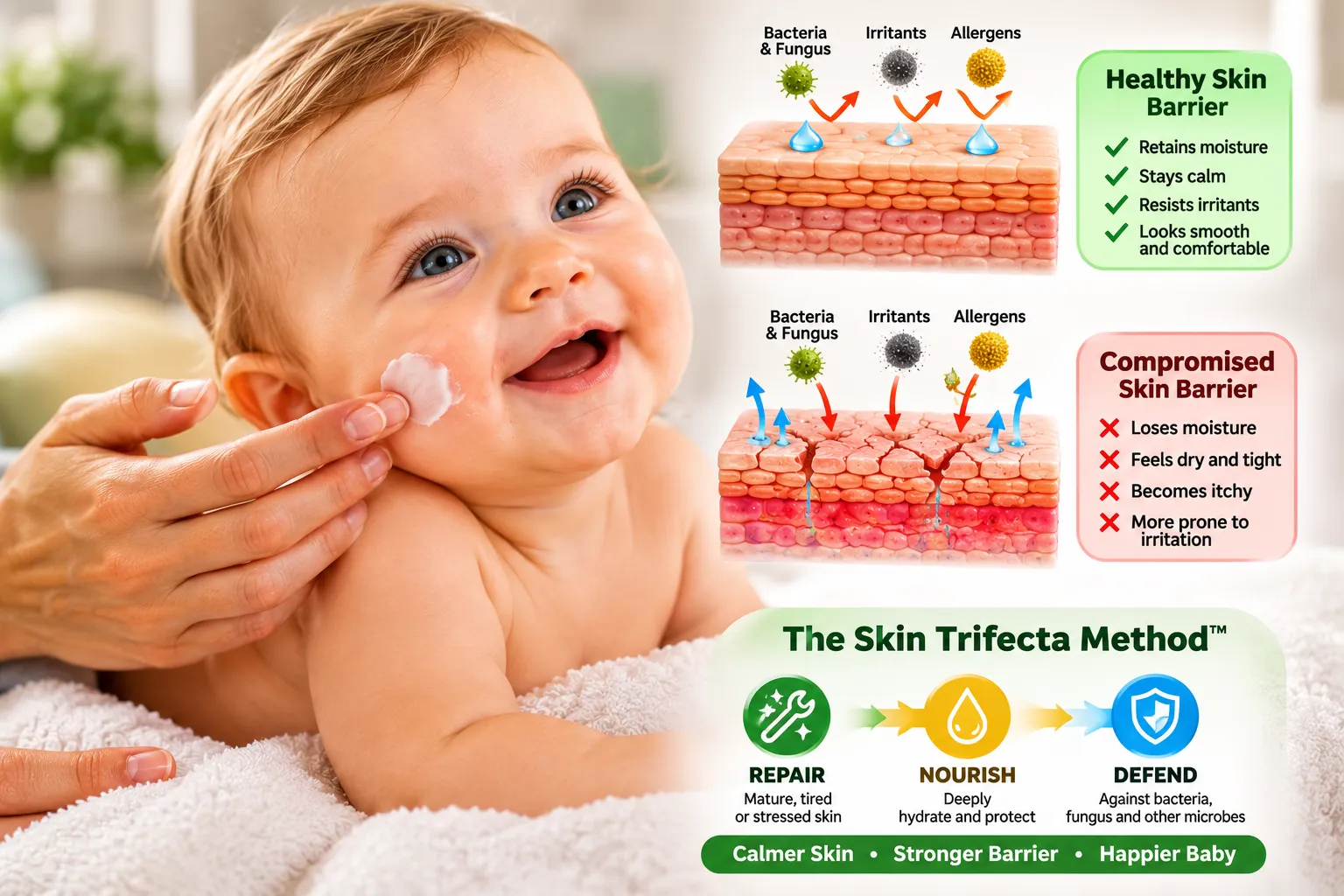
A baby repeatedly scratching their neck can leave parents wondering what they are missing. You may notice tiny scratch marks beneath the chin, redness along the sides of the neck, or your baby constantly reaching toward the same area during feeds, sleep or play. Sometimes the skin looks obviously dry and irritated, while at other times there seems to be very little there at all. The neck is particularly vulnerable because it combines skin folds, warmth, sweat, moisture, friction and limited airflow in one small area. For a baby with dry, itchy or eczema prone skin, several of these pressures can occur at the same time. Understanding the pattern is usually more useful than assuming there must be one single cause.
The first thing to remember is that scratching is a behaviour, not a diagnosis. A baby may scratch because the skin is dry, because sweat has collected in a neck fold, because drool has remained against the skin, or because clothing is rubbing the same spot repeatedly. Eczema can certainly affect the neck, but not every itchy neck is eczema. Heat rash, contact irritation and simple friction can sometimes produce similar looking redness. Looking at where the irritation begins, when the scratching becomes worse and what has been touching the skin can provide important clues.
Why the Neck Is Such a Vulnerable Area
A baby’s neck is not quite like the skin on the arms or legs. Young babies often have several soft folds where the chin meets the chest, and those folds can remain warm and relatively enclosed for long periods. Milk, saliva, sweat and bath water can collect there without being immediately noticed. Clothing, bibs and bedding can then rub against the damp skin. That combination can make an otherwise small irritation surprisingly uncomfortable.
This also explains why neck problems sometimes seem to appear very quickly. The skin may look reasonably comfortable in the morning and become noticeably red by evening after several feeds, naps and periods of sweating. Once itching begins, scratching introduces another source of friction. Fingernails can then damage already irritated skin. What began as mild moisture or dryness can therefore become a more persistent itch and scratch cycle.
Start by Looking Inside the Neck Folds
When parents notice neck scratching, they often examine the exposed sides of the neck but overlook the deeper folds underneath the chin. Gently lifting the chin can reveal redness, dampness, roughness or residue that was otherwise hidden. Look without aggressively rubbing or repeatedly stretching irritated skin. Pay attention to whether the area is predominantly dry, moist, flaky, bumpy or simply red. Those differences can help you understand what may be contributing.
Also compare one side with the other. If irritation is concentrated beneath a particular fold, moisture and friction become especially relevant. If dry itchy patches extend from the neck onto the cheeks, chest or other areas, a broader dry skin or eczema prone pattern may be more likely. If there are suddenly many tiny bumps after a hot day, overheating deserves consideration. The distribution of the problem can tell you almost as much as its appearance.
Drool Is One of the Most Easily Missed Contributors
Babies do not need to be actively teething to drool. Saliva can run beneath the chin and settle inside the neck folds, particularly when a baby is lying down. Bibs may absorb some of it while simultaneously holding damp fabric against the skin. Repeated exposure to moisture, followed by drying and more moisture, can make the area uncomfortable. Once the baby starts scratching, the resulting friction may increase redness further.
This is similar to what can happen around the mouth and chin. The important lesson is that moisture does not necessarily mean the skin is well hydrated. Skin can be exposed to saliva repeatedly and still become dry, irritated and uncomfortable. Keeping the area comfortably dry is different from stripping the skin with constant wiping. Gentle care usually gives you more useful information than aggressive cleaning.
Milk Can Hide Beneath the Chin
Milk is another overlooked source of moisture around a baby’s neck. During breast or bottle feeding, small amounts can run from the corner of the mouth and disappear beneath the chin. Because the neck folds are difficult to see, the residue may remain there after the feed has finished. Repeated feeding throughout the day can keep the area damp. The baby may then begin scratching or rubbing without parents immediately connecting the behaviour with feeding.
After feeds, gently check beneath the chin rather than assuming the bib caught everything. If moisture is present, carefully pat the area dry instead of scrubbing it. Pay particular attention if the scratching seems to become more noticeable during or shortly after feeding. Our series will explore Baby Scratching During Feeding: What Could Be Triggering It? in greater depth. Timing can provide an important clue.
Heat and Sweat Can Make an Itchy Neck Worse
The neck is naturally warm, and babies can become overheated surprisingly easily. Heavy clothing, warm rooms, car seats, carriers and prolonged contact with a parent’s body can all increase heat around the neck. Sweat may then collect inside the folds. For already dry or irritated skin, that combination can increase discomfort and scratching. Some babies seem almost completely comfortable until they become hot.
If scratching becomes noticeably worse in warm conditions, that pattern deserves attention. Feel the back of the baby’s neck rather than relying only on their hands or feet when assessing whether they seem warm. Damp hair or a sweaty neck can be useful clues. Our upcoming guide Why Does My Baby Itch More When Hot? will examine this connection more closely. Reducing unnecessary overheating can sometimes remove one pressure without changing the entire skincare routine.
Could It Be Heat Rash?
Heat rash can appear when sweat becomes trapped in the skin, and the neck is one of the places parents may notice it. It can look like clusters of small red or clear bumps and may appear during hot weather or after the baby has been heavily dressed. The appearance is not always dramatic. Because heat rash, irritation and eczema can sometimes overlap visually, photographs on the internet are not a reliable way to diagnose your baby’s skin. The surrounding circumstances matter.
Ask what happened before the rash appeared. Was the baby particularly warm? Had they been sleeping against a hot surface or spending time in a carrier or car seat? Did the bumps appear relatively suddenly? If the pattern is persistent, severe or unclear, have it assessed rather than repeatedly treating it as something you have diagnosed yourself.
Dry Skin Can Still Affect a Sweaty Area
It may sound contradictory for a baby’s neck to be both sweaty and dry, but the two can occur together. Sweat on the surface does not necessarily mean the outer skin is functioning comfortably. Repeated cycles of heat, moisture, evaporation and cleansing can leave skin feeling rough or irritated. A baby with an underlying tendency toward dryness may therefore scratch the neck even when the area sometimes feels damp. This is one reason appearance alone can be misleading.
The broader skin pattern is useful here. Does your baby also have dry cheeks, rough arms or itchy patches elsewhere? Does scratching continue when the weather is cooler? Does moisturising help some areas while the neck remains troublesome? Looking beyond one patch helps distinguish a local moisture problem from a wider dry skin tendency.
Could It Be Eczema?
Eczema can affect the neck, particularly as babies get older and the pattern of affected areas changes. Itching is an important feature, but itching alone cannot confirm eczema. Recurrent dry, inflamed patches elsewhere on the body may make eczema more relevant. A family history of eczema, asthma or allergic conditions may also be useful information for your healthcare professional, but it still does not provide a diagnosis by itself. The overall pattern matters.
If you are unsure whether you are looking at ordinary dryness or something more persistent, read Baby Dry Skin vs Eczema: How Can Parents Tell the Difference?. That guide examines recurrence, itching, inflammation and distribution rather than trying to diagnose skin from one photograph. This distinction is particularly important when an area keeps returning after appearing to improve. Persistent patterns deserve more attention than isolated episodes.
Clothing Can Irritate the Neck Without You Realising
The neckline of a bodysuit, sleepsuit or shirt can repeatedly move against the same piece of skin. Seams, labels and rough fabrics may add further friction. A garment can look perfectly comfortable while still rubbing when the baby turns their head hundreds of times throughout the day. Moisture from sweat or drool can make this friction more noticeable. The resulting irritation may then resemble a skincare problem.
Look closely at where the redness sits relative to the clothing. Does it follow the edge of a collar? Does the baby scratch more when wearing a particular outfit? Does the area improve on days when the neckline is looser? Small observations like these can reveal patterns that are easy to miss when attention is focused only on creams.
Bibs Can Help and Irritate at the Same Time
A bib can protect clothing from drool and milk, but a constantly damp bib can also sit against the neck for hours. The edge may rub beneath the chin whenever the baby moves. If it remains wet, the combination of moisture and friction can increase irritation. This does not mean parents should stop using bibs. It means wet bibs should not become part of the baby’s clothing for the rest of the day.
Change them when they become damp and check the skin underneath periodically. Choose materials that feel soft against the baby’s neck and avoid unnecessarily tight fastenings. If one particular bib design seems to correspond with irritation, remove it for several days and observe what happens. Changing one variable at a time is more informative than replacing the entire skincare routine.
Could Laundry Products Be Involved?
Laundry detergent, fragrance products and fabric treatments can sometimes contribute to irritation, especially where clothing fits closely against the skin. The neck may be repeatedly exposed to washed fabric throughout the day and night. If symptoms appeared soon after changing detergent or introducing a new fabric product, the timing is worth noting. That does not automatically prove an allergy. It simply identifies a variable worth investigating.
Our guide Baby Eczema vs Contact Dermatitis: What’s the Difference? explains why location and exposure history can matter. Contact irritation can also occur alongside naturally dry or eczema prone skin, making the picture less straightforward. If removing a suspected irritant improves the problem, that observation is useful. If nothing changes, avoid endlessly eliminating products without evidence.
Shampoo and Body Wash Can Reach the Neck
During bathing, shampoo and body wash naturally run from the scalp and face toward the neck. Small amounts can remain inside skin folds if they are not rinsed away thoroughly. A product that seems fine on the scalp may still be irritating when residue remains trapped against vulnerable skin. This can be particularly difficult to notice because the baby appears clean after the bath. The problem may only become obvious later.
Rinse neck folds gently and thoroughly, then pat rather than rub them dry. Avoid repeatedly washing already irritated areas in an attempt to make them cleaner. Over cleansing can become another source of irritation. Our guide to bathing a child with dry, itchy or eczema prone skin explains why gentle cleansing, water temperature, drying and what happens immediately after the bath should be considered together.
Why Scratching Can Continue After the Redness Improves
Parents often expect scratching to stop as soon as the skin looks better. Unfortunately, behaviour and visible appearance do not always change at exactly the same time. A baby may continue reaching for an area that has been itchy for several days. The skin may also remain uncomfortable even after obvious redness has reduced. Repeated scratching itself can then keep the area irritated.
This is why Why Does My Baby Scratch Even When Their Skin Looks Clear? is such an important companion guide. Parents naturally judge improvement visually, but babies communicate sensation through behaviour. When the two disagree, do not dismiss either one. Instead, look at whether scratching is gradually becoming less frequent and less intense.
Watch What Happens During Sleep
Night time can reveal useful information about an itchy neck. Babies may become warmer after they have been asleep for a while, particularly if sleepwear or bedding is too heavy for the environment. The neck can become sweaty and scratching may increase during partial waking. Some babies also rub their neck against bedding rather than using their fingernails. Parents may therefore hear movement without immediately recognising it as itch related behaviour.
Our guide Baby Scratching All Night? Why Itching Gets Worse After Bedtime and What Parents Can Do explores this pattern in detail. If scratching is predominantly nocturnal, look at room temperature, sleepwear, sweating and the condition of the skin before bed. The bedtime environment may not be the original cause, but it can amplify an existing problem. Small adjustments sometimes reveal which factors matter most.
Keep Fingernails From Becoming Part of the Problem
A baby’s fingernails can be surprisingly sharp. Once neck scratching becomes frequent, tiny scratches may appear quickly. Damaged skin can then become more uncomfortable and create an even stronger urge to scratch. This is how the itch scratch cycle can transform mild irritation into a much more persistent problem. Preventing unnecessary mechanical damage therefore matters.
Keep nails appropriately short and smooth, checking for sharp edges after trimming. Clothing that naturally covers the hands may sometimes reduce accidental scratching in very young babies, but overheating should still be avoided. Do not restrain a baby’s hands simply to stop scratching. The longer term goal is to understand and reduce whatever is making the neck uncomfortable.
Clean Does Not Mean Scrubbed
When parents discover milk, saliva or residue inside a neck fold, the natural reaction can be to clean the area very thoroughly. Unfortunately, vigorous wiping can add another source of friction. Repeated use of wipes, soap or strongly fragranced products can also make vulnerable skin less comfortable. Gentle cleaning is usually more appropriate than trying to make the skin feel squeaky clean. Patting dry matters just as much as washing.
This principle applies throughout baby skincare. Skin that is already irritated does not necessarily benefit from more intervention. Sometimes the best approach is to remove obvious aggravating factors while keeping the routine simple and consistent. More washing is not automatically better. The objective is comfortable, supported skin rather than aggressively cleaned skin.
Should You Moisturise an Itchy Baby’s Neck?
If the neck itself is dry, an appropriate moisturiser may help support the skin and reduce dryness. However, a persistently wet neck fold presents a different situation from a dry exposed patch. Applying layers of product without addressing trapped moisture may not solve the underlying problem. This is why looking at the skin before applying anything is important. A routine should respond to what is actually happening rather than treating every red patch identically.
Our guide How to Moisturise Your Child’s Dry Skin Properly explains the broader principles of moisturising dry skin. Later in this series we will also compare cream, lotion, balm and ointment formats so parents can better understand why texture and formulation matter. The objective is not to use the greatest possible number of products. It is to use an appropriate routine consistently while removing avoidable sources of irritation.
Where Itch A Bye Fits Into the Routine
Itch A Bye Baby Repair Cream was developed for babies and young children with dry, itchy and eczema prone skin. Our Skin Trifecta approach focuses on Repair, Nourish and Defend, rather than viewing moisturisation as the only consideration in uncomfortable skin. The cream can form part of a supportive skincare routine where dryness is contributing to discomfort. It is not intended to diagnose the reason a baby is scratching.
That distinction is particularly important with the neck because moisture, heat and friction may sometimes be the dominant problem. If an area is persistently wet, broken, weeping or worsening, simply adding more cream is not the answer. Look at the surrounding circumstances and seek professional advice when appropriate. Good skincare begins with understanding the skin rather than automatically putting a product on every symptom.
Try the One Change at a Time Approach
When parents become worried about persistent scratching, it is tempting to change the detergent, bath wash, moisturiser, clothing, bedding and diet simultaneously. The problem is that if the skin improves, you will have little idea what actually helped. If it becomes worse, identifying the responsible change becomes equally difficult. A more useful approach is to observe carefully and remove obvious aggravating factors systematically. Keep notes if the problem is recurring.
For example, you might first focus on keeping neck folds gently dry and changing damp bibs promptly. Then observe whether overheating corresponds with scratching. Next, consider clothing friction or recently introduced products. This does not mean ignoring significant symptoms while conducting experiments. It simply means avoiding unnecessary guesswork when the baby is otherwise well and the irritation is mild.
Create a Simple Neck Check Routine
A useful neck check takes less than a minute. Look beneath the chin after feeding, after periods in a carrier or car seat, after bathing and before bedtime. Check whether the area is dry, damp, hot, rough or visibly irritated. Notice whether scratching occurs before or after these situations. Over several days, a pattern may begin to emerge.
You may discover that scratching happens mainly after feeds because milk collects beneath the chin. Another baby may scratch almost exclusively when hot. Another may have persistent dryness that extends beyond the neck and behaves more like a wider eczema prone pattern. Observation transforms a vague problem into information you can actually use.
When Should You Seek Medical Advice?
Have your baby’s neck assessed if the skin becomes significantly swollen, painful, blistered, weeping, bleeding or increasingly inflamed. Yellowish crusting, spreading redness, an unpleasant smell, pus or other signs suggesting infection should not simply be managed by repeatedly applying cosmetic products. Seek advice as well if your baby develops fever, appears unwell or seems unusually distressed. Very persistent scratching that repeatedly breaks the skin also deserves professional attention.
This is especially important because skin folds can sometimes hide how extensive irritation has become. A problem may look small until the chin is lifted and the entire fold is examined. If you cannot determine what you are seeing, a healthcare professional can assess it directly. Online photographs and skincare articles are educational tools, not substitutes for examining a baby.
Think Beyond the One Red Patch
One of the biggest lessons from recurring baby skin problems is that the most visible patch is not always the whole story. A red neck may involve moisture, but the baby may also have generally dry skin. Heat may increase the scratching, while friction from clothing helps keep the area irritated. Drool may add another pressure during teething. The result can be several ordinary factors interacting rather than one mysterious cause.
This broader way of thinking is explored in our free book Beyond the Skin Barrier: Uncovering the Hidden Roots of Dry, Itchy and Eczema Prone Skin. It looks at the developing skin barrier, moisture loss, environmental pressures, itching, the itch scratch cycle and other factors that may influence recurring skin discomfort. The aim is to help parents recognise patterns rather than chase a different explanation every time the skin changes. You can read the digital edition free at www.itchabye.com/free-book.
The Bottom Line on Baby Neck Scratching
If your baby keeps scratching their neck, start with the simplest question: what is happening to that skin throughout the day? Look for dryness, sweat, trapped drool or milk, clothing friction, damp bibs, heat and recently introduced products. Consider whether the irritation is isolated to the neck or part of a broader pattern of dry, itchy or eczema prone skin. Then pay attention to timing because scratching during feeds, sleep, hot weather or particular activities can provide additional clues. You do not need to identify a single culprit immediately.
Keep the neck gently clean and comfortably dry without repeatedly scrubbing it. Reduce unnecessary heat and friction, keep fingernails smooth and support genuinely dry skin with an appropriate routine. If the scratching persists, damages the skin or is accompanied by weeping, crusting, swelling, spreading redness, pain or illness, seek professional advice. Most importantly, treat scratching as information rather than merely a behaviour that needs to be stopped. Your baby’s hands may be drawing your attention to where the skin feels uncomfortable, even when the reason is not immediately visible.
This article provides general educational information only. It does not diagnose eczema, heat rash, contact dermatitis, infection or any other medical condition and does not replace advice from your child’s doctor, pharmacist or another appropriately qualified healthcare professional.